
The Best Way to Make Tender Pulled Pork
Pulled pork is less about a perfect timer and more about choosing the right cut and giving it enough gentle cooking time. Pork shoulder has the connective tissue and fat that suit a covered braise. When it is ready, two forks should pull it apart easily, and a little cooking juice brings the shredded meat together.
Why this method works
Covered cooking limits moisture loss while the shoulder softens. Lean loin has a different structure and can dry out before it becomes easy to pull. Fork tenderness is a quality test; the minimum safe temperature and the tenderness endpoint are separate checks.
Ingredients and equipment
The quantities below are a practical starting batch. Adjust seasoning to taste and keep the same preparation method when scaling.
- 3–4 pounds boneless pork shoulder or pork butt
- 1 tablespoon olive oil, optional for browning
- 2 teaspoons paprika
- 1 teaspoon garlic powder
- 1 teaspoon onion powder
- 1½ teaspoons fine salt, or to taste
- ½ teaspoon black pepper
- ¾ cup broth or water, plus more as needed
- Optional: sliced onion and barbecue sauce
Equipment: Covered Dutch oven or appropriately sized slow cooker, tongs, food thermometer, and two forks.
How to make it, step by step
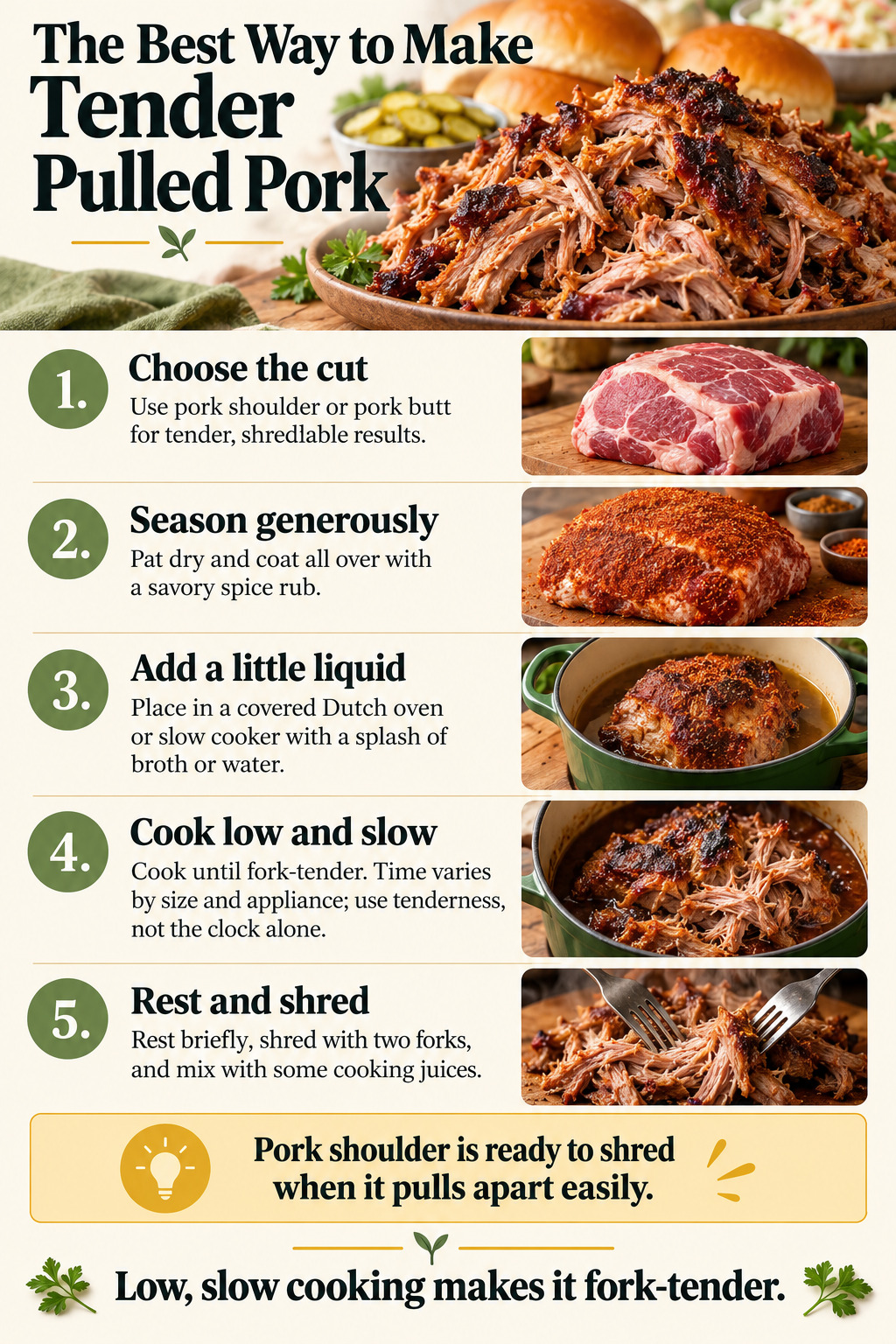
1. Choose the cut
Use pork shoulder or pork butt, two names commonly used for shoulder cuts. Avoid substituting lean pork loin and expecting the same texture. Trim thick external slabs of fat while leaving some fat on the meat. If the cut has a bone, expect a different yield and check temperatures away from it.
2. Season generously
Pat the pork dry and mix the salt, pepper, paprika, garlic powder, and onion powder. Coat all sides. For an oven braise, you may brown the pork in a little oil before adding liquid. Browning adds flavor, but the long covered cooking stage is what makes the meat shreddable.
3. Add a little liquid
Set the pork in a Dutch oven with broth or water and optional onion, then cover tightly. The liquid need not submerge the meat. For a slow cooker, thaw the pork fully first and follow the appliance instructions for size, fill level, and liquid; keep the lid in place.
4. Cook low and slow
For the Dutch oven method, cook covered at 300°F (150°C), checking the liquid periodically and adding a little hot water if the pot becomes dry. A roast this size often needs several hours. A slow cooker may take most of a day on low. Timing varies: shoulder is done for pulling only when a fork enters easily and the meat separates with little resistance. Whole pork cuts must at least reach 145°F with a 3-minute rest, but shoulder generally needs further cooking for shreddable texture.
5. Rest and shred
Rest the cooked pork briefly on a clean platter, then pull it apart with two forks. Remove the bone if present and discard large pieces of fat. Skim excess fat from the cooking liquid and add the juices a spoonful at a time. Taste before adding barbecue sauce or more salt.
Common mistakes and how to fix them
The pork will not shred
It usually needs more covered cooking time. Return it to the pot with enough liquid to prevent scorching, then check again. Do not force tough meat into dry stringy pieces.
The meat is swimming in greasy liquid
Lift out the pork and skim or separate the fat before adding the juices back. You do not need to return every drop to the shredded meat.
The bottom of the pot is drying out
Add a little hot water or broth, cover tightly, and confirm the oven temperature. A loose lid can let too much liquid escape.
Flavor variations and substitutions
Use cumin and oregano for taco-style pork or add smoked paprika for a smoky seasoning. Keep barbecue sauce separate if you want to use the pork in several meals. Check broth, spice blends, and sauces for gluten or other ingredients you avoid.
What to serve with it
Serve on buns with pickles and slaw, spoon over baked potatoes, or make rice bowls. For a wheat-free option, use corn tortillas or lettuce cups. Add a crunchy vegetable side to balance the rich meat.
Storage and reheating
Divide leftovers into shallow containers and refrigerate promptly, within 2 hours of cooking (within 1 hour above 90°F). Keep the refrigerator at 40°F or below and use cooked leftovers within 3–4 days. Freeze portions if you need longer storage. Reheat leftovers to 165°F; heat shredded pork in a covered pan with a spoonful of its saved juices, stirring so the middle warms evenly.
Frequently asked questions
Is pork butt different from shoulder?
Both are shoulder-area cuts suited to slow cooking. Packaging names vary; look for a cut intended for braising or pulled pork.
Can I use pork tenderloin?
It is better suited to quicker cooking. It does not behave like shoulder in a long braise.
Should I add sauce before cooking?
A spice rub and broth give you more flexibility. Add sweet barbecue sauce after shredding so its flavor stays distinct and it is less likely to scorch.
Kitchen reminder: Rest the cooked pork briefly on a clean platter, then pull it apart with two forks.
Food-safety reference: USDA food handling, cooking, and leftover guidance.


