
The Best Way to Cook Salmon in the Oven
Oven-baked salmon is a practical way to get a flavorful fish dinner on the table without standing over a skillet. A little olive oil, lemon, and dill are enough to complement the fish. The key is to choose similar-size fillets and check the thickest part early, especially when the pieces are thin.
Why this method works
Moderate oven heat cooks the fillet with little handling, which helps it stay intact. Keeping the skin underneath supports the delicate flesh. Similar thickness matters more than identical weight, because a thin wide piece cooks differently from a tall narrow one.
Ingredients and equipment
The quantities below are a practical starting batch. Adjust seasoning to taste and keep the same preparation method when scaling.
- 4 salmon fillets, about 5–6 ounces each
- 1 tablespoon olive oil
- ½ teaspoon fine salt, or to taste
- ¼ teaspoon black pepper
- 1 lemon, cut into wedges or thin slices
- 1–2 tablespoons chopped dill or parsley
Equipment: Rimmed sheet pan, parchment suitable for the oven temperature, paper towels, and a food thermometer.
How to make it, step by step
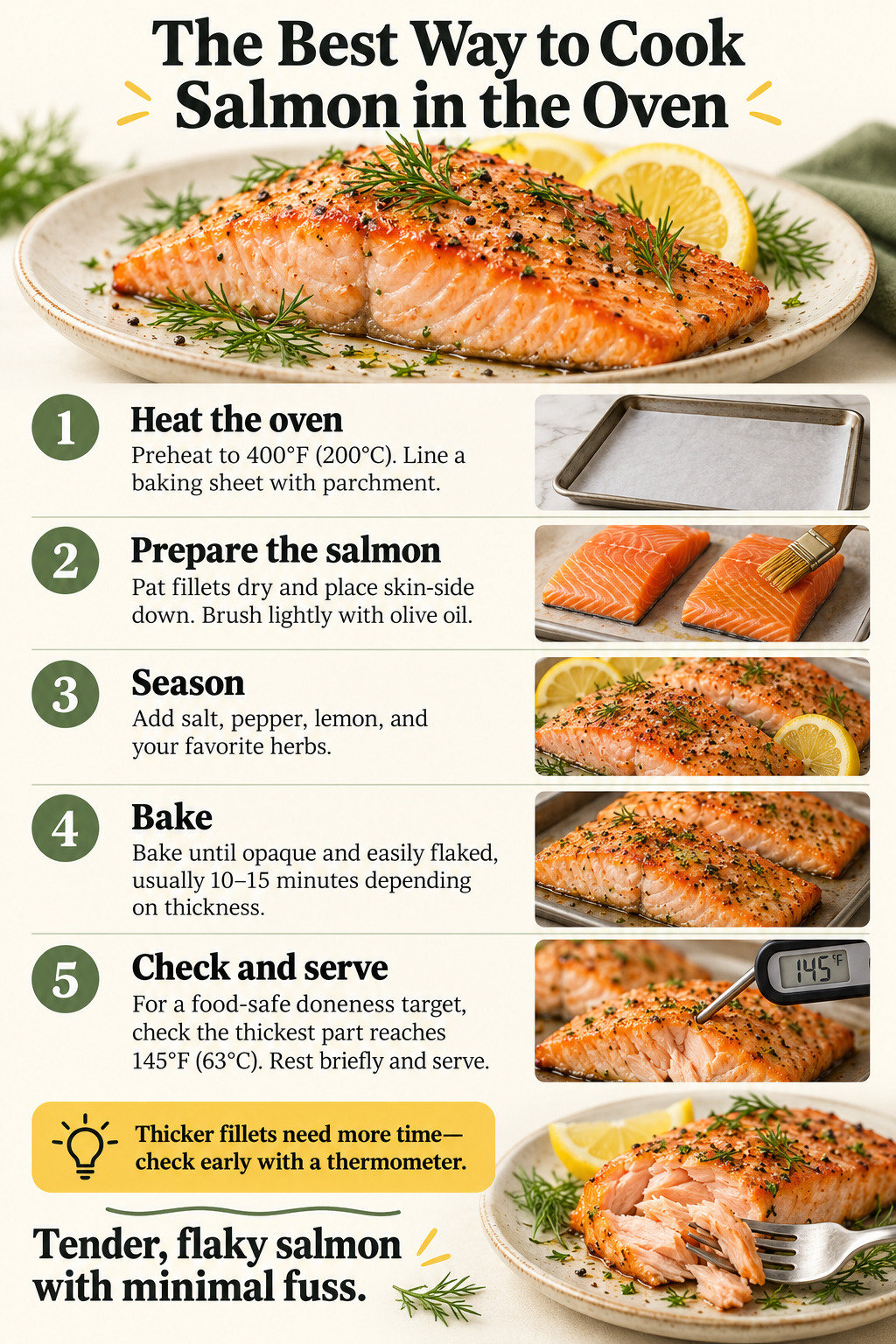
1. Heat the oven
Preheat to 400°F (200°C) and line a rimmed baking sheet with parchment. Let the oven reach its set temperature before putting in the fish. A sheet pan keeps the fillets easy to separate and allows you to remove thinner pieces before thicker ones if necessary.
2. Prepare the salmon
If frozen, thaw safely in the refrigerator first. Pat the fillets dry and place them skin-side down on the pan. Brush lightly with olive oil. Check for pin bones and remove any you find with clean tweezers. Avoid crowding or stacking the fillets.
3. Season
Sprinkle with salt and pepper and add lemon and herbs. A thin lemon slice over the top gives a mild citrus flavor; serving wedges alongside lets everyone adjust the acidity. Keep additional toppings light so you can see the fish as it cooks.
4. Bake and check early
Bake for roughly 10–15 minutes, depending on thickness. Thin tail pieces may finish sooner, while thick center cuts can need longer. Look for the flesh becoming opaque and separating readily with a fork, but do not use those visual signs as your only doneness check.
5. Check and serve
Use a thermometer in the thickest part to confirm 145°F (63°C). Rest briefly, then serve with lemon wedges and fresh dill. Thicker fillets need more time; check early with a thermometer and continue baking as needed instead of following a rigid timer.
Common mistakes and how to fix them
The fish is dry
Check earlier next time and remove each piece once it reaches the target. For the current meal, serve with a light yogurt sauce, olive oil and lemon, or a spoonful of warm broth.
There is white material on the surface
The white material commonly seen on cooked salmon is coagulated protein. It is not a reason to discard properly handled fish. It can be more noticeable when the fish cooks quickly or for longer.
One fillet is done before the others
Move the finished fillet to a clean plate and continue cooking the thicker pieces. Do not overcook an entire tray to wait for the largest piece.
Flavor variations and substitutions
Use parsley and garlic powder, a little smoked paprika, or a light Dijon mustard coating. Choose gluten-free mustard or sauces if needed and check packaged seasonings. Add a small amount of honey to a glaze if you like, keeping an eye on browning.
What to serve with it
Pair salmon with rice and green beans, roasted asparagus, or a crisp cucumber salad. Add lemon after plating for a bright finish. Leftover salmon can be served chilled in a salad if it has been stored safely.
Storage and reheating
Divide leftovers into shallow containers and refrigerate promptly, within 2 hours of cooking (within 1 hour above 90°F). Keep the refrigerator at 40°F or below and use cooked leftovers within 3–4 days. Freeze portions if you need longer storage. Reheat leftovers to 165°F; use a covered dish with a little moisture and check the temperature. Small portions reheat more evenly than a thick stack of fish.
Frequently asked questions
Should I remove the skin before baking?
You do not need to. Baking skin-side down makes handling easier, and you can separate the cooked flesh from the skin when serving.
Can I bake salmon from frozen?
This guide is written for thawed fillets. Frozen fish requires a different timing approach; follow the package instructions or thaw safely first.
How can I check a thin fillet?
Insert the thermometer from the side so its sensing area sits in the thickest center rather than touching the hot pan.
Kitchen reminder: Use a thermometer in the thickest part to confirm 145°F (63°C).
Food-safety reference: USDA food handling, cooking, and leftover guidance. See also the FDA guide for seafood and eggs.


