
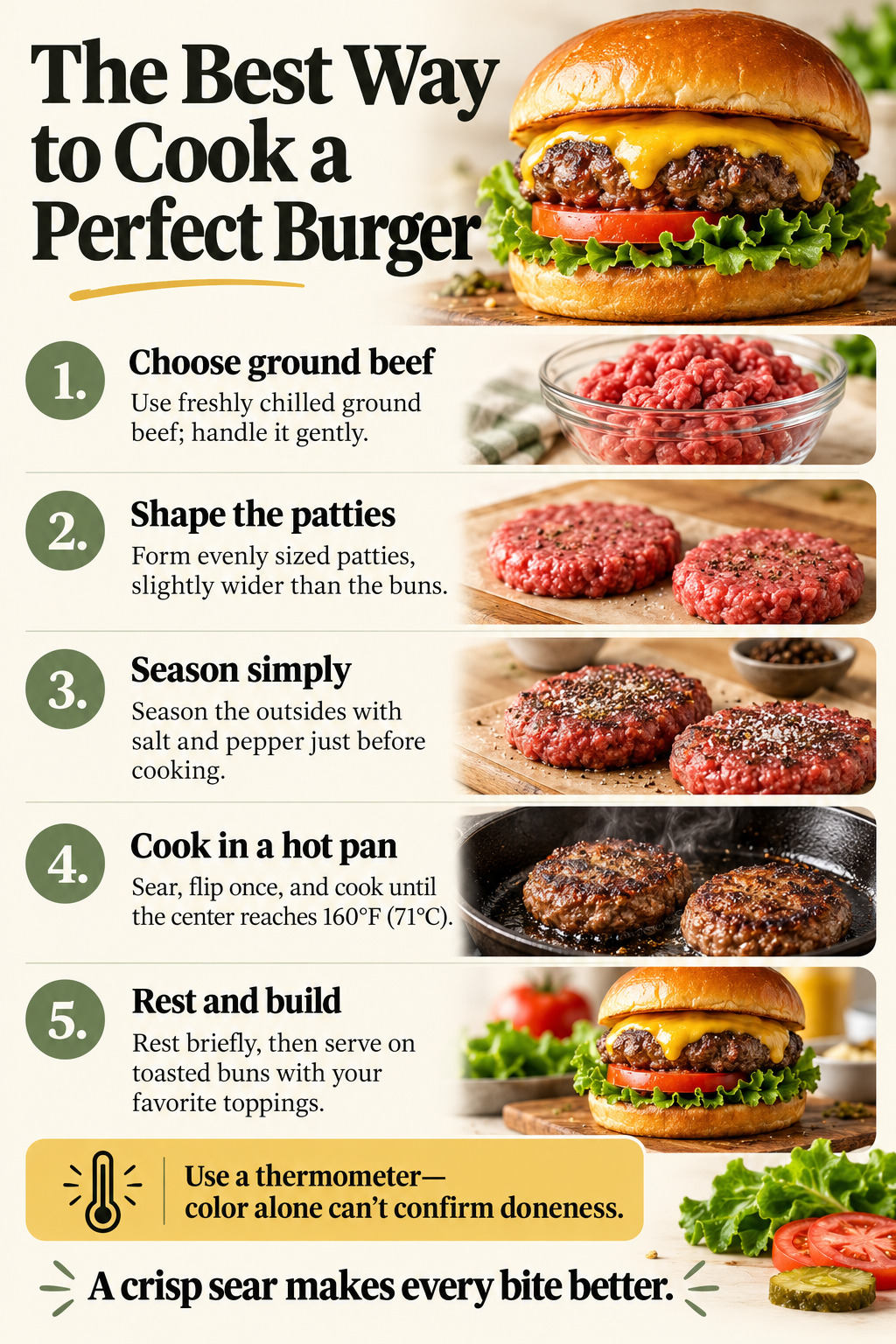
The Best Way to Cook a Perfect Burger
A good skillet burger needs a browned surface, a patty that holds together, and a center cooked safely. You can get there without complicated mix-ins. Keep the beef chilled, shape it with a light hand, season the outside, and use a thermometer instead of judging the middle by its color.
Why this method works
Gentle shaping preserves a looser burger texture, while a hot pan develops a crust. Surface seasoning keeps the flavor straightforward. Ground meat requires a different safe endpoint from a whole steak because grinding distributes the meat throughout the patty.
Ingredients and equipment
The quantities below are a practical starting batch. Adjust seasoning to taste and keep the same preparation method when scaling.
- 1 pound chilled ground beef, such as 80/20
- ¾ teaspoon fine salt, or to taste
- ½ teaspoon black pepper
- 4 burger buns
- Optional: sliced cheese, lettuce, tomato, onion, and pickles
- Optional: a little olive oil for a leaner beef blend
Equipment: Heavy skillet, wide spatula, food thermometer, and a clean platter.
How to make it, step by step
1. Choose ground beef
Start with freshly chilled ground beef and keep it refrigerated until shaping. An 80/20 blend offers a richer burger; a leaner blend can work but has less fat to keep it moist. Do not leave the meat on the counter to warm up. Wash your hands before and after handling it.
2. Shape the patties
Divide the beef into four equal portions and gently form patties slightly wider than the buns. Make the thickness consistent and avoid packing the meat tightly. A shallow depression in the center can help with a patty that puffs as it cooks. Keep the shaped burgers chilled if the pan is not ready.
3. Season simply
Season both sides with salt and pepper just before cooking. You do not need egg or breadcrumbs for this method. Mixing salt deeply through the beef and kneading it repeatedly changes the texture, so keep the shaping gentle and put the seasoning on the surface.
4. Cook in a hot pan
Heat a heavy skillet over medium-high heat. Place the patties in without crowding, sear until the undersides brown, and flip once when practical. Reduce the heat if the outside browns too quickly. Cook the center to 160°F (71°C), checking from the side with the thermometer. Cooking time varies with thickness; color alone cannot confirm doneness.
5. Rest and build
Move the cooked burgers to a clean plate and rest briefly while you toast the buns. Add cheese near the end of cooking if desired. Build the burgers with toppings and serve promptly. Use clean utensils for cooked burgers rather than ones coated in raw beef juices.
Common mistakes and how to fix them
The burger becomes dense
Use fewer motions when shaping and avoid kneading. Pressing hard to make a perfectly smooth patty is not necessary.
The outside is dark but the middle is underdone
Lower the heat and keep cooking, checking the center. Thick patties need a gentler finish after searing.
The patty loses a lot of juice
Avoid pressing it down with the spatula during cooking. Check doneness early rather than leaving it in the pan for an arbitrary extra few minutes.
Flavor variations and substitutions
Try a light dusting of garlic powder or smoked paprika on the outside. Use a lettuce wrap or gluten-free bun if needed. For turkey or chicken burgers, use a recipe suited to that meat and cook the center to 165°F rather than applying the beef temperature.
What to serve with it
Pair burgers with roasted potatoes, corn on the cob, or a crunchy green salad. Put sauces on the table so each person can choose. Keep wet toppings away from the bun until assembly to reduce sogginess.
Storage and reheating
Divide leftovers into shallow containers and refrigerate promptly, within 2 hours of cooking (within 1 hour above 90°F). Keep the refrigerator at 40°F or below and use cooked leftovers within 3–4 days. Freeze portions if you need longer storage. Reheat leftovers to 165°F; warm patties separately from buns and fresh toppings, covering the meat with a little moisture if needed.
Frequently asked questions
Can I cook burgers from frozen?
The timing and browning will differ. Follow the product instructions and check the center with a thermometer. This method is for thawed, chilled beef.
Can I use very lean beef?
Yes, but it can be drier. Handle it gently, add a little oil to the pan if necessary, and serve with a flavorful topping.
Does a pink center mean the burger is unsafe?
Appearance alone does not tell you. Check for 160°F with a thermometer; a burger may change color before or after reaching that point.
Kitchen reminder: Move the cooked burgers to a clean plate and rest briefly while you toast the buns.
Food-safety reference: USDA food handling, cooking, and leftover guidance.


