
The Best Way to Make Fluffy Baked Potatoes
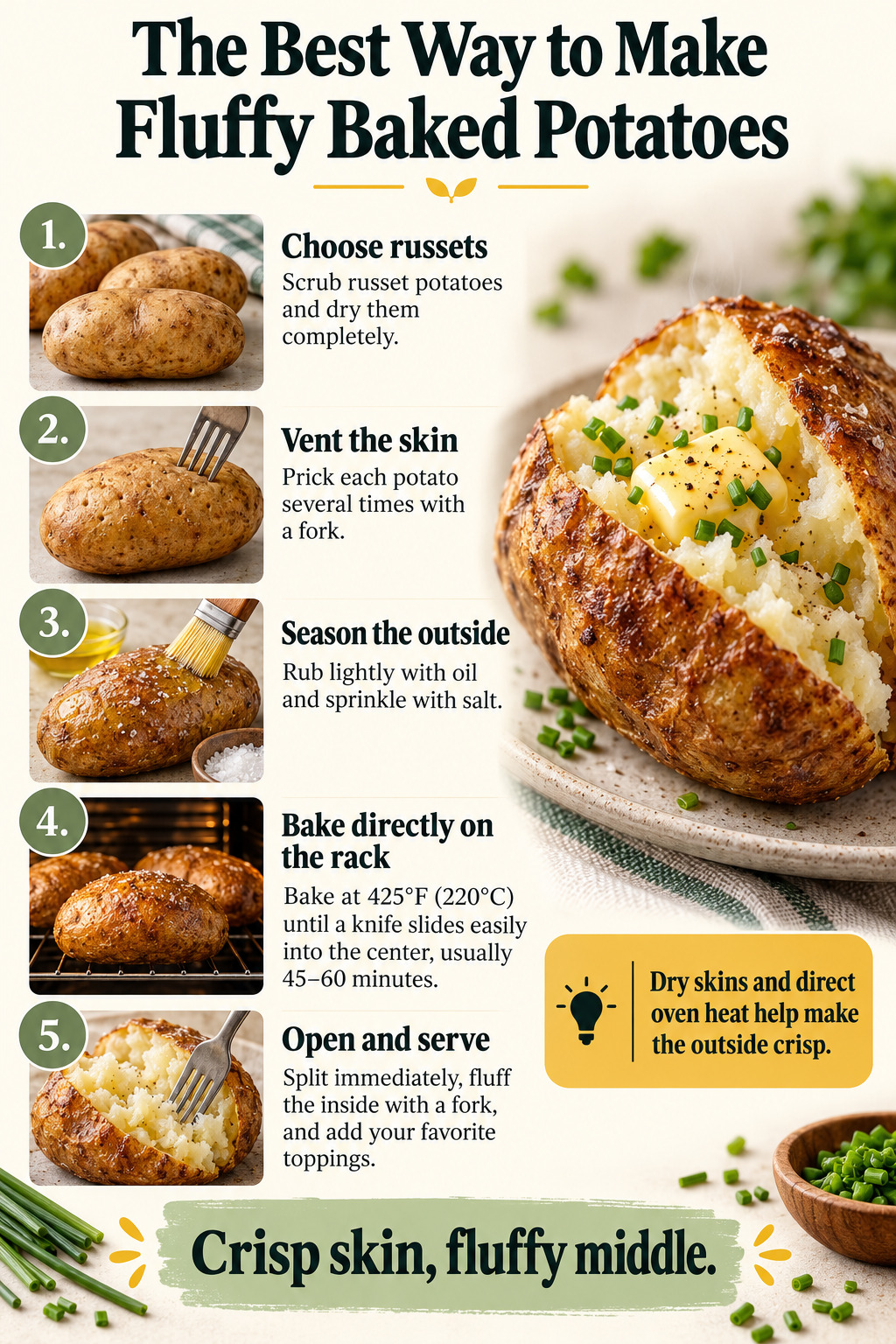
A fluffy baked potato is a simple dinner foundation, but wrapping it tightly in foil changes the result. For crisp skin and a soft middle, start with a dry russet, season lightly, and bake directly on the oven rack. Open it soon after cooking so the steam can escape before you add toppings.
Why this method works
Direct oven heat reaches the skin without a foil wrapper trapping moisture around it. Thorough drying gives the exterior a head start. The center needs enough time to soften completely; a crisp-looking skin cannot tell you whether a large potato is done inside.
Ingredients and equipment
The quantities below are a practical starting batch. Adjust seasoning to taste and keep the same preparation method when scaling.
- 4 medium russet potatoes, similar in size
- 1 tablespoon olive oil
- ¾ teaspoon salt, or to taste
- Optional: butter, chives, plain yogurt, cheese, or cooked vegetables
Equipment: Scrub brush, fork, oven rack, a tray on the rack below for drips, and a knife.
How to make it, step by step
1. Choose russets
Choose potatoes of similar size so they finish at roughly the same time. Scrub well, trim damaged areas, and dry completely. Russets are a good fit for this method because their cooked interiors become fluffy. Smaller or waxier varieties give a different texture.
2. Vent the skin
Prick each potato several times with a fork. Pierce the skin rather than making deep channels through the entire potato. This provides openings for steam as the potato heats. Keep the potatoes whole until after baking.
3. Season the outside
Rub lightly with oil and sprinkle with salt. The surface should have a thin coating rather than a dripping layer. Preheat to 425°F (220°C). Put a tray on the rack below the potatoes if needed to catch drips, following your oven instructions.
4. Bake directly on the rack
Set potatoes on the oven rack with space around them and bake until a knife slides easily into the center, usually 45–60 minutes for medium potatoes. Large ones can take longer. Check each potato, because size matters more than the timer. Do not wrap in foil when crisp skin is the goal.
5. Open and serve
Split each potato promptly after baking, being careful of hot steam. Fluff the center with a fork and add toppings. Opening lets steam escape instead of condensing inside a closed potato. Serve hot, with additional seasonings at the table.
Common mistakes and how to fix them
The skin is soft
The potato may have been wet or wrapped in foil. Use a dry surface and direct heat next time, and open promptly after baking.
The middle is firm
Continue baking until a knife enters easily. Very large potatoes need more time than medium ones.
The inside becomes dense after sitting
A whole closed potato traps steam. Split and fluff shortly after baking rather than leaving it sealed until dinner is nearly over.
Flavor variations and substitutions
Top with butter and chives, plain yogurt and pepper, pulled pork, or broccoli and cheese. Olive oil and herbs make a dairy-free option. Add moist toppings after the potato is opened so the skin is not soaked during baking.
What to serve with it
Serve as a side with pork chops or chicken, or make it a main meal with cooked meat, beans, and vegetables. Put toppings in separate bowls so each person can choose. A fresh salad contrasts well with the warm potato.
Storage and reheating
Divide leftovers into shallow containers and refrigerate promptly, within 2 hours of cooking (within 1 hour above 90°F). Keep the refrigerator at 40°F or below and use cooked leftovers within 3–4 days. Freeze portions if you need longer storage. Reheat leftovers to 165°F; remove cold toppings before warming and reheat the potato until hot throughout. Refrigerate leftovers promptly; do not leave cooked potatoes out overnight.
Frequently asked questions
Can I microwave first?
Yes, as a different shortcut method, but the skin and timing will differ. Finish in the oven if you want a crisper surface.
Should I use foil?
Skip foil for this crisp-skin method. Foil traps moisture around the potato.
Can I use sweet potatoes?
They need a slightly different guide and have a softer, sweeter interior. Do not assume identical timing.
Kitchen reminder: Split each potato promptly after baking, being careful of hot steam.
Food-safety reference: USDA food handling, cooking, and leftover guidance.


