
The Best Way to Cook Corn on the Cob
Fresh corn needs a brief cook and a simple finish. Boiling is convenient when you want several ears ready at once, and a short time in the pot keeps the kernels pleasantly tender. Have butter and seasonings ready before the corn finishes so you can serve it while hot.
Why this method works
Boiling heats the kernels directly and evenly without needing a grill. A short cook preserves a pleasant bite. Freshness affects texture and flavor, so boiling longer is not a solution for every less-than-ideal ear of corn.
Ingredients and equipment
The quantities below are a practical starting batch. Adjust seasoning to taste and keep the same preparation method when scaling.
- 4 ears fresh corn
- Water to cover the ears
- 2 tablespoons butter or olive oil for serving
- Salt and black pepper to taste
- Optional: chopped parsley, lime wedges, or paprika
Equipment: Large pot, tongs, and a serving platter.
How to make it, step by step
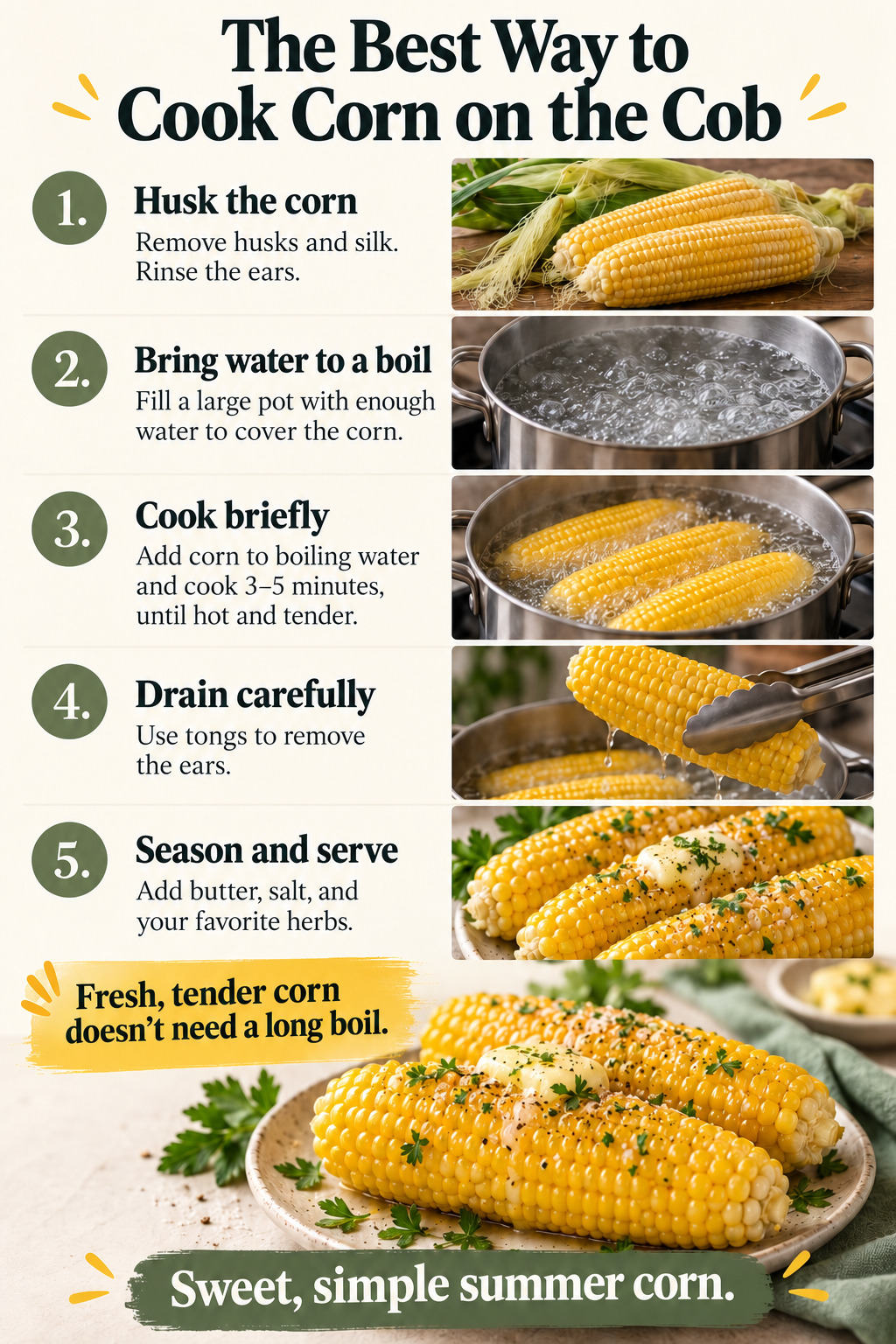
1. Husk the corn
Pull away the husks and silk, then rinse the ears. Rub off remaining silk gently and trim damaged tips if needed. Choose corn with plump kernels and use it soon after purchase for the best eating quality. Cut large ears in half if that helps them fit the pot.
2. Bring water to a boil
Fill a large pot with enough water to cover the corn while leaving room to prevent overflow. Bring to a boil before adding the ears. Do not add so much corn that the pot is tightly packed; the water needs to circulate around it.
3. Cook briefly
Add the ears carefully and return the water to a gentle boil. Cook for about 3–5 minutes, until hot and tender. Fresh tender corn generally needs a short boil; older or larger ears may take a little longer. Taste a kernel from a safely handled ear if you are uncertain about texture.
4. Drain carefully
Use tongs to lift each ear from the water and allow it to drip over the pot. Transfer to a platter rather than trying to pour a heavy pot of boiling water into the sink. Keep hands clear of rising steam.
5. Season and serve
Add butter or olive oil, salt, pepper, and herbs. Turn the ears to spread the seasoning evenly. Serve promptly with extra butter or lime at the table. If preparing for children, let the corn cool to a comfortable eating temperature before serving.
Common mistakes and how to fix them
The kernels are tough
The corn may be older or cooked longer than needed. Try a shorter cook with fresh ears next time. Cut kernels off for a skillet side or soup if the current ears are awkward to eat.
The corn cools before serving
Have the toppings and other dishes ready first. Cook the ears near the end of dinner preparation.
The pot threatens to overflow
Use a larger pot or cook in batches. Water displaced by the ears needs space above it.
Flavor variations and substitutions
Try lime and chili powder, parsley and pepper, or a little Parmesan after cooking. Olive oil replaces butter for a dairy-free side. Keep elaborate toppings optional so the natural corn flavor remains clear.
What to serve with it
Corn pairs with burgers, ribs, chicken thighs, and summer salads. Cut cooked kernels from the cob for rice bowls or a cold vegetable salad. Hold the cob securely on a board when cutting, rather than balancing it on a slippery plate.
Storage and reheating
Divide leftovers into shallow containers and refrigerate promptly, within 2 hours of cooking (within 1 hour above 90°F). Keep the refrigerator at 40°F or below and use cooked leftovers within 3–4 days. Freeze portions if you need longer storage. Reheat leftovers to 165°F; warm ears with a little moisture in a covered dish, or cut the kernels off and heat them in a skillet.
Frequently asked questions
Should I salt the boiling water?
It is optional. This method seasons after cooking so you can control each serving.
Can I boil frozen corn on the cob?
Yes, but follow its package instructions because timing differs from fresh corn.
Can I leave it in the hot water until dinner?
A long hold continues cooking and can soften the texture. Remove when ready and plan to serve soon afterward.
Kitchen reminder: Add butter or olive oil, salt, pepper, and herbs.
Food-safety reference: USDA food handling, cooking, and leftover guidance.


