
The Best Way to Make Tender Ribs in the Oven
Oven ribs are a good option when you want slow-cooked tenderness without tending a grill. A sealed foil packet holds the ribs and their juices during the long bake, then a short broil caramelizes the sauce. Baby back ribs and spare ribs need different amounts of time, so tenderness matters more than a universal timer.
Why this method works
The covered bake gives the meat time to soften without exposing the surface to dry heat the entire time. The final broil is a separate browning stage, not the main cooking step. Keeping the foil sealed also makes the amount of liquid in the packet more predictable.
Ingredients and equipment
The quantities below are a practical starting batch. Adjust seasoning to taste and keep the same preparation method when scaling.
- 1 rack pork ribs, about 2½–3½ pounds
- 2 teaspoons paprika
- 1 teaspoon garlic powder
- 1 teaspoon onion powder
- 1 teaspoon fine salt, or to taste
- ½ teaspoon black pepper
- ½ cup barbecue sauce, or enough for a light coating
Equipment: Rimmed baking sheet, heavy foil, small bowl, brush, tongs, and thermometer.
How to make it, step by step
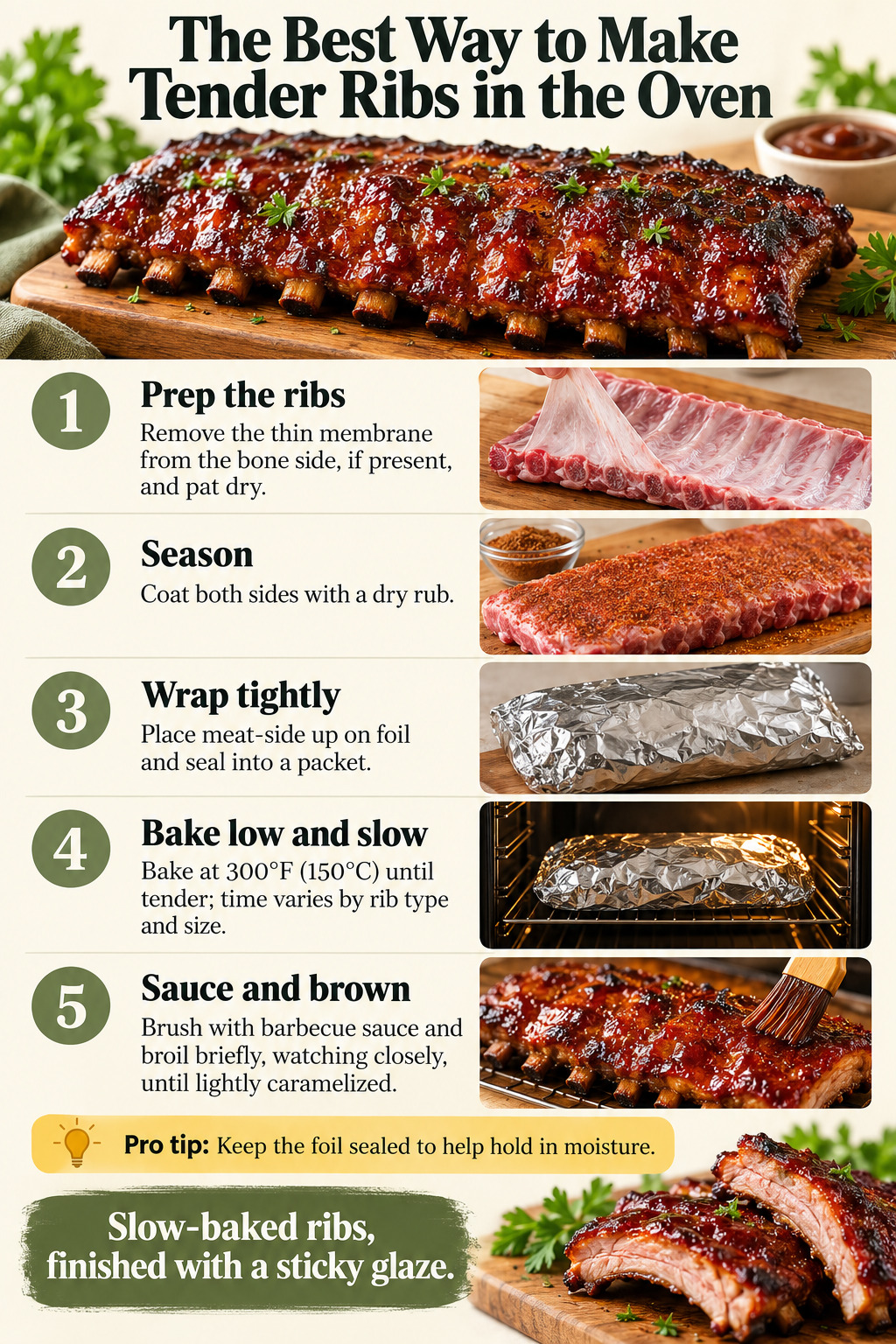
1. Prep the ribs
If a thin membrane covers the bone side, loosen an edge and pull it off using a paper towel for grip. Pat the ribs dry. Trim loose excess fat if desired. Keep raw pork away from ready-to-eat foods and wash hands after handling.
2. Season
Combine the dry spices and season both sides evenly. A thin consistent layer is better than thick piles. You can season ahead and refrigerate covered, but keep the ribs chilled until you are ready to bake.
3. Wrap tightly
Place meat-side up on heavy foil and seal into a packet, leaving some room above the meat. Set the packet on a rimmed baking sheet to catch leaks. Use a second foil layer if the rack has sharp bones that could puncture the wrapping.
4. Bake low and slow
Bake at 300°F (150°C) until tender. Begin checking baby back ribs around 2½ hours; larger spare ribs often need longer. These are planning estimates, not promises. Whole pork must reach at least 145°F with a 3-minute rest, while ribs typically need further cooking to become tender. Open the packet carefully to avoid steam burns.
5. Sauce and brown
When the meat is tender, uncover and brush lightly with barbecue sauce. Broil briefly until lightly caramelized, watching continuously because sugary sauce burns quickly. Rest briefly, cut between the bones, and serve. Do not put exposed foil close to an element where your oven instructions prohibit it.
Common mistakes and how to fix them
The ribs are tough
They likely need longer covered cooking. Reseal the packet and continue until a fork enters the meat easily. A safe minimum temperature does not automatically mean tender ribs.
The sauce burns
The broiler stage was too long or too close to the heat. Use a lighter coat and stay at the oven.
The ribs dry out
Check for a leaking foil packet and avoid continuing uncovered baking after the meat is tender.
Flavor variations and substitutions
Try smoked paprika, a cumin-based rub, or a less sweet barbecue sauce. Keep sauce on the side for diners who prefer a dry-rub finish. Check purchased rubs and sauces for gluten and other ingredients you avoid.
What to serve with it
Serve with corn on the cob, roasted potatoes, and slaw. Cut the rack into manageable portions before bringing it to the table. A crisp vegetable side balances the rich pork and sweet glaze.
Storage and reheating
Divide leftovers into shallow containers and refrigerate promptly, within 2 hours of cooking (within 1 hour above 90°F). Keep the refrigerator at 40°F or below and use cooked leftovers within 3–4 days. Freeze portions if you need longer storage. Reheat leftovers to 165°F; cover with foil and a spoonful of liquid while heating, then uncover briefly if you want to refresh the glaze.
Frequently asked questions
Are baby back and spare ribs interchangeable?
The method is similar, but spare ribs are often larger and take longer. Use tenderness checks for the specific rack.
Do I need to boil ribs first?
No. The covered oven method cooks them directly and keeps the seasoning with the meat.
Should the meat fall completely off the bone?
That is a preference, not a safety test. Cook until tender enough for the texture you want and verify proper cooking separately.
Kitchen reminder: When the meat is tender, uncover and brush lightly with barbecue sauce.
Food-safety reference: USDA food handling, cooking, and leftover guidance.


