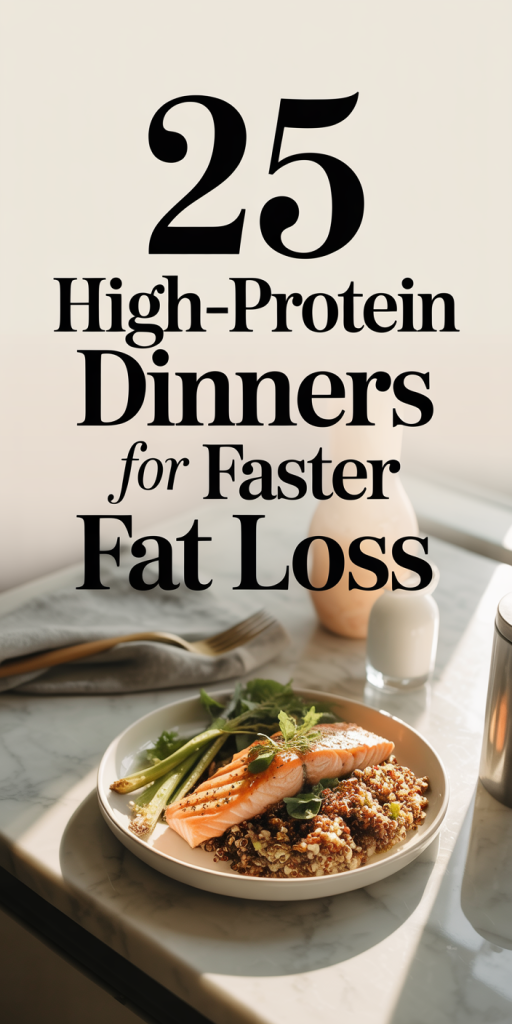
25 High-Protein Dinners for Faster Fat Loss
We want dinner to do two things: satisfy us and help us lose fat without leaving us hungry by 9 p.m. That’s where high-protein dinners shine. Protein preserves lean mass, boosts satiety, and increases the thermic effect of food, all helpful for faster fat loss. In this guide we lay out 25 dinner recipes (and smart swaps) that prioritize protein, practical portioning, and flavors we’ll actually enjoy. Use what fits into your preferences and calories: we’ll show you how to scale each meal for results.
Why High-Protein Dinners Speed Fat Loss
We’re often asked which macronutrient matters most for fat loss. In practice, protein is a high-leverage tool. Here’s why:
- Muscle retention: When we’re in a calorie deficit, dietary protein helps preserve lean muscle. Keeping muscle matters, it sustains resting metabolic rate and makes progress feel like progress (our strength stays up, not down).
- Satiety and appetite control: Protein is the most filling macronutrient per calorie. A protein-focused dinner lowers evening snacking and late-night calorie creep.
- Thermic effect and calorie burn: Protein requires more energy to digest than carbs or fat. That small extra burn adds up over weeks.
- Supports performance: Higher-protein dinners help recovery and keep evening training quality high if we work out later in the day.
All together, these effects make a high-protein dinner one of the easiest, most reliable tactics we can apply to accelerate fat loss while preserving how we look and feel.
How To Use This List
This list is both recipe inspiration and a practical toolkit. Here’s how we suggest using it:
- Pick meals you enjoy and rotate 4–7 dinners per week. Repetition simplifies shopping and increases consistency.
- Match portions to your calorie and protein targets (we offer quick portion guidelines below). If you’re tracking macros, use the listed meal themes to estimate protein and calories.
- Use the substitution and scaling section to lower or raise calories without losing protein density.
- For meal prep, batch components (protein, veg, sauces) rather than full assembled dishes, that keeps variety and freshness.
We designed the recipes to be realistic for busy evenings. If you want, start by choosing 3 poultry/seafood, 2 plant-based, and 1 beef/pork option to keep costs and variety balanced.
Meal-Building Principles And Portion Guidelines
We build dinners using three pillars: protein priority, non-starchy vegetables for volume, and controlled starchy carbs or healthy fats for satiety and performance. Below are quick practical targets.
Protein Targets Per Meal
- General weight-loss target: 30–45 g protein per dinner. This supports muscle preservation and satiety for most adults.
- Athletic or higher-protein target: 45–60+ g if we train hard and have higher daily protein goals.
- Lighter dinners or calorie-restricted nights: 20–30 g can work if other meals in the day compensate.
Typical portion approximations:
- 4–5 oz (115–140 g) cooked chicken/lean beef/pork/fish ≈ 25–35 g protein
- 6 oz (170 g) Greek yogurt or skyr ≈ 15–20 g
- 1 cup cooked lentils/quinoa/edamame ≈ 15–20 g
- 1 block (6–8 oz) firm tofu ≈ 20–25 g
- 2 whole eggs + 3 egg whites ≈ 25–28 g
Balancing Carbs And Fats For Satiety And Performance
- For evening training or longer hunger windows, add 25–45 g of quality carbs (sweet potato, rice, quinoa) plus 10–20 g fat (olive oil, avocado, nuts).
- For low-carb nights we prioritize non-starchy veg and increase fats slightly (15–25 g) to maintain fullness.
- Keep an eye on liquid calories (cream sauces, dressings), they add up quickly.
Quick Macro Examples For Different Goals
- Fat-loss moderate activity: 35 g protein / 25 g carbs / 15 g fat (≈ 420–500 kcal)
- Fat-loss intense training: 45–55 g protein / 40–60 g carbs / 15–20 g fat (≈ 550–700 kcal)
- Maintenance/light activity: 30–40 g protein / 60–80 g carbs / 20–30 g fat (≈ 600–800 kcal)
These are jumping-off points: we adapt portions to our individual calorie targets and hunger cues.
25 High-Protein Dinners For Faster Fat Loss
Below we list 25 dinners grouped by protein type. Each entry includes the main idea, why it’s effective for fat loss, and quick serving suggestions.
Grilled Lemon-Herb Chicken Breast (Poultry)
Lean, flavorful, and reliable. Grill 5–6 oz chicken breast, dress with lemon/garlic/herbs, and pair with 2 cups mixed greens and 1/2 cup roasted sweet potato. Protein-focused and low on filler, great for day-after strength sessions.
Turkey And Vegetable Stir-Fry With Cauliflower Rice (Poultry)
Ground turkey browns quickly and absorbs flavors. We sauté lean turkey, broccoli, bell peppers, and ginger: serve over cauliflower rice for a low-calorie, high-protein plate. Add a splash of soy and sesame for depth.
Balsamic Chicken With Roasted Brussels Sprouts (Poultry)
Pan-seared chicken thighs (skin removed for lower fat) tossed in a reduced balsamic glaze, with roasted Brussels sprouts and a small quinoa scoop. It’s filling and keeps evening cravings at bay.
Greek Yogurt-Marinated Chicken Skewers With Tzatziki (Poultry)
Marinate chicken in Greek yogurt, garlic, and oregano. Grill on skewers and serve with cucumber-tomato salad and yogurt tzatziki. The yogurt adds extra protein and tang.
Cedar-Plank Salmon With Asparagus (Seafood)
Salmon is rich in protein and omega-3s. A 5–6 oz fillet on a cedar plank with lemon and dill plus roasted asparagus gives us working fats and satisfied hunger for hours.
Spicy Shrimp And Broccoli Stir-Fry (Seafood)
Shrimp cook in minutes: paired with broccoli and a chili-garlic sauce over a small portion of brown rice, this meal balances speed and protein density.
Seared Tuna Steaks With Mixed Greens (Seafood)
Firm, high-protein tuna seared rare keeps calories reasonable while delivering about 40–45 g protein per steak (6 oz). Toss with a mixed greens salad, olives, and a light vinaigrette.
Salmon Cakes With Lemon-Dill Yogurt (Seafood)
We combine canned or fresh salmon with egg white, herbs, and minimal breadcrumbs, pan-sear, and top with lemon-dill yogurt. Portable, high-protein, and lower in added fat than traditional cakes.
Lean Steak Fajita Bowl With Peppers (Beef)
Use flank or sirloin (4–5 oz cooked), sautéed with peppers and onions. Serve over cilantro-lime cauliflower rice or 1/2 cup brown rice. Flavor-forward while keeping calories controlled.
Beef And Vegetable Stir-Fry With Shirataki Noodles (Beef)
Lean strips of beef with snap peas and bell peppers tossed in a ginger-soy glaze over shirataki noodles, very low-carb, still satisfying thanks to the beef and veg volume.
Slow-Cooker Beef Chili With Beans (Beef)
Lean ground beef or a lean chuck slow-cooked with tomatoes, spices, and moderate beans. Chili provides sustained satiety: we keep portion sizes reasonable and load up on leafy sides.
Pork Tenderloin With Roasted Root Vegetables (Pork)
Pork tenderloin is lean and tender. Roast with rosemary, garlic, and a side of roasted carrots & parsnips. We trim visible fat to keep protein-to-calorie ratio favorable.
Turkey Meatballs In Tomato Sauce Over Zucchini Noodles (Poultry)
Lean turkey meatballs baked and simmered in tomato sauce, served over zucchini noodles. It’s comforting, macro-friendly, and quick to assemble.
Cottage Cheese And Herb-Stuffed Bell Peppers (Dairy-Forward)
Cottage cheese mixed with herbs, diced turkey or egg white, and spices, stuffed into bell peppers and baked. Cottage cheese is an underrated, high-quality protein source.
High-Protein Lentil And Quinoa Stew (Vegetarian)
Lentils and quinoa together provide a complete protein profile. Add tomatoes, spinach, and warming spices for a hearty, nutrient-dense dinner that keeps us full.
Tofu Stir-Fry With Edamame And Brown Rice (Plant-Based)
Firm tofu pan-fried for texture, tossed with edamame (extra protein), mixed veg, and a tamari-based sauce over brown rice. We press tofu to remove water for better searing.
Tempeh Taco Salad With Avocado Lime Dressing (Plant-Based)
Crumpled tempeh seasoned like taco meat atop mixed greens, pico de gallo, and a modest avocado-lime dressing. Tempeh has concentrated protein and a pleasant chew.
Chickpea And Spinach Curry With Cauliflower Rice (Plant-Based)
Canned chickpeas and spinach simmered in a spiced tomato-coconut base (use light coconut milk). Serve over cauliflower rice to keep calories down and protein density high.
Egg White Frittata With Mushrooms And Spinach (Egg-Based)
Egg whites plus a couple whole eggs cooked with mushrooms, spinach, and scallions. Frittatas are great for batch cooking and deliver clean protein for a light dinner.
Smoked Salmon And Avocado Salad With Hard-Boiled Eggs (Seafood/Egg)
Smoked salmon, avocado, and sliced hard-boiled eggs on a bed of greens with capers and lemon. High in protein and healthy fats, very low prep time.
Blackened Cod With Cabbage Slaw (Seafood)
White fish like cod is lean and quick. Blackened seasoning gives flavor without heavy sauces: pair with a vinegar-based cabbage slaw to keep it light and crunchy.
Greek-Style Baked Fish With Tomatoes And Olives (Seafood)
White fish baked with tomatoes, olives, garlic, and oregano. We serve with a side of sautéed greens for a Mediterranean protein-forward dinner.
Protein-Packed Stuffed Portobello Mushrooms (Vegetarian)
Large portobello caps stuffed with a mixture of cottage cheese, spinach, chopped nuts, and herbs, then baked. Earthy and filling with a surprising protein punch.
Quick Sardine Toast With Whole-Grain Crispbreads And Greens (Seafood)
Canned sardines are cheap, protein-dense, and high in omega-3s. Top crispbreads with mashed sardines, lemon, and arugula for a 10-minute high-protein meal.
Meal Prep, Shopping, And Time-Saving Tips
We don’t need hours to eat well. A few smart habits remove friction and keep us consistent.
Batch Cooking And Smart Storage Strategies
- Cook a few protein bases (grilled chicken, baked salmon, lentil stew) and portion into airtight containers. Proteins keep 3–4 days refrigerated.
- Roast a tray of mixed vegetables and a pan of sweet potatoes: combine differently across meals to avoid boredom.
- Store dressings and sauces separately to prevent soggy greens: a small mason jar works wonders.
High-Impact Items To Keep On Your Shopping List
- Lean proteins: chicken breasts, turkey, salmon, canned tuna/sardines
- Plant proteins: tofu, tempeh, lentils, chickpeas, edamame
- High-protein dairy: Greek yogurt, cottage cheese
- Quick veg: bagged spinach, baby kale, pre-cut broccoli
- Smart carbs: sweet potatoes, brown rice, quinoa
- Flavor boosts: soy/tamari, vinegars, citrus, dried herbs
Fast Weeknight Shortcuts And 30-Minute Variations
- Use canned beans/legumes and canned fish for instant protein.
- Pre-sliced veg slashes prep time, a hot pan and 10–12 minutes is all we need.
- Sheet-pan meals: toss protein and veg with oil and spices, roast at 425°F for 20–25 minutes. Minimal cleanup, high yield.
Substitutions, Add-Ons, And Scaling For Calories
We can tweak any recipe for lower calories, higher protein, or to accommodate allergies.
Swaps For Lower Calories Or Higher Protein
- Swap fattier cuts for leaner ones: choose chicken breast over thighs (remove skin), lean pork tenderloin over rib cuts.
- Increase protein without many calories: add egg whites, low-fat Greek yogurt sauces, or extra fish/seafood.
- Reduce calories: replace starchy sides with extra non-starchy vegetables or cauliflower rice.
Vegetarian And Allergy-Friendly Alternatives
- Dairy-free swap: replace cottage cheese or yogurt with silken tofu blended with lemon and herbs.
- Gluten-free: use rice or gluten-free grains: ensure soy sauces are tamari (gluten-free).
- Nut allergies: replace nut toppings with seeds (pumpkin or sunflower) for crunch and healthy fats.
How To Scale Portions For Weight Loss Or Maintenance
- For weight loss: reduce starchy sides by 25–50% and keep protein intact. This lowers calories while preserving muscle support.
- For maintenance or muscle gain: increase protein portions by 25–40% and add 1 serving of quality carbs.
- Track a few meals across a week to learn their calorie ranges, once we know our typical meal calories, scaling becomes intuitive.
Sample 7-Day Dinner Plan Using These Recipes
Here’s a practical week that balances protein sources, budget, and prep time. Portions assume an average fat-loss target (≈35–45 g protein per meal). Adjust as needed.
Day 1: Grilled Lemon-Herb Chicken + roasted asparagus + 1/2 cup sweet potato (Prep note: double chicken for Day 3)
Day 2: Spicy Shrimp & Broccoli Stir-Fry over 1/2 cup brown rice (Quick: 20 minutes)
Day 3: Turkey Meatballs over zucchini noodles + side salad (Use leftover chicken for lunch)
Day 4: High-Protein Lentil & Quinoa Stew with spinach (Batch-friendly)
Day 5: Cedar-Plank Salmon + mixed greens + quinoa (Prep note: bake extra salmon for Day 7 salad)
Day 6: Tempeh Taco Salad with avocado lime dressing (Fast assembly)
Day 7: Smoked Salmon & Avocado Salad with hard-boiled eggs + crispbread
Balanced Weekly Layout With Macros And Prep Notes
- Protein variety: 3 seafood, 2 poultry, 1 plant-based, 1 mixed dairy/egg, keeps amino acids balanced.
- Prep notes: Batch-cook grains and proteins on Sunday: pre-chop veg. Hard-boil eggs for two days.
One-Week Grocery List Based On The Plan
Proteins: chicken breasts (3–4), salmon fillets (2), shrimp (1 lb), tempeh (1–2 packs), canned lentils or dry lentils, smoked salmon (small pack), eggs (1 dozen), Greek yogurt/cottage cheese.
Veg & Fruit: mixed greens, zucchini, broccoli, asparagus, avocado, tomatoes, onions, lemons, spinach.
Pantry: brown rice, quinoa, cauliflower rice (optional), olive oil, tamari, spices (paprika, chili, oregano), canned tomatoes.
This shopping list covers breakfasts/lunches plus to dinners for many of us, which is efficient and budget-friendly.
Conclusion
We’ve shown 25 dinners that prioritize protein without sacrificing flavor or practicality. The core idea is simple: keep protein high, control starchy carbs to match activity, and prioritize volume from vegetables. By rotating these meals, using batch cooking, and adjusting portions to our calorie goals, we can accelerate fat loss while protecting muscle and staying satisfied. Start with a 7-day rotation, track how you feel, and tweak portions. Small, consistent wins at dinner lead to big changes on the scale and in the mirror.