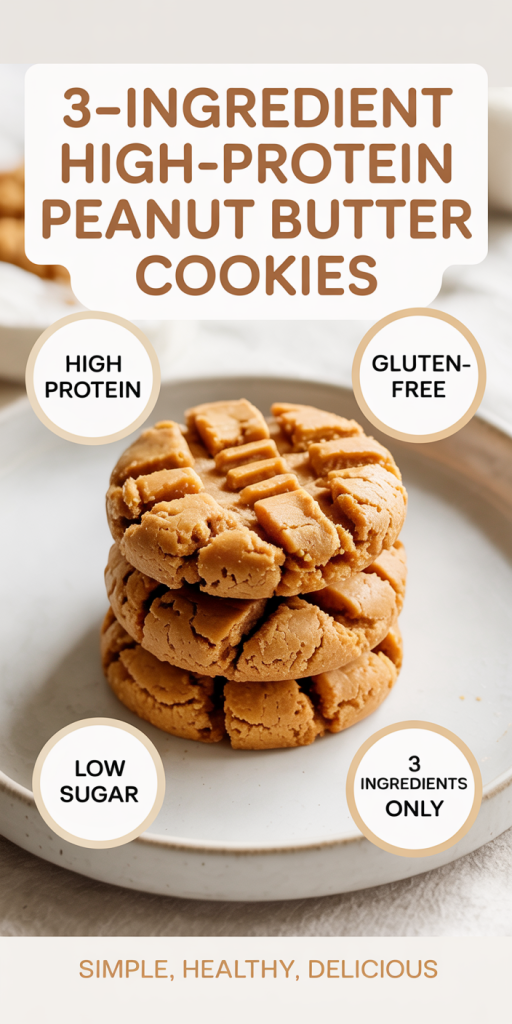
3-Ingredient High-Protein Peanut Butter Cookies
We love a recipe that’s fast, forgiving, and actually helps hit our protein goals. These 3-Ingredient High-Protein Peanut Butter Cookies are exactly that: pantry-friendly, quick to mix, and surprisingly flexible. With creamy peanut butter, a scoop of protein powder, and an egg (or egg substitute), you can have warm, protein-packed cookies on the table in about 20–25 minutes. In this text we’ll explain what these cookies are, why each ingredient matters, how to make them reliably, and ways to customize without losing the simple, three-ingredient advantage.
What These Cookies Are And Who They’re For
These cookies are minimalist, protein-forward treats built around three core components: peanut butter, protein powder, and an egg. They’re not an exact replica of bakery-style cookies, they lean dense and satisfying, trading some traditional indulgence for convenience and macronutrient value.
Who they’re for:
- Busy athletes and gym-goers who want a high-protein snack that’s quick to make.
- Busy parents or professionals who need a portable, protein-rich option for lunchboxes or post-workout fuel.
- People following simple ingredient lists or those who prefer to avoid added sugars and complex baking processes.
Why they work for those audiences: the formula is straightforward, easy to scale, and uses ingredients many of us already have on hand. We can tweak texture to be chewier or cakier, boost protein per serving, and even adapt for egg-free diets, all while keeping the recipe practical. If you expect a bakery cookie with layers of flavor and lots of sugar, this isn’t that. But if you want something wholesome, satisfying, and protein-rich in minutes, these are ideal.
Ingredients And Why They Work
The beauty of this recipe is its transparency: each ingredient has a clear role, and understanding those roles helps us choose the best versions for our goals.
Peanut Butter, Role, Texture, And Best Choices
Peanut butter is the backbone: it provides fat for mouthfeel, flavor, and structural moisture. It’s also naturally protein-rich compared with many other nut spreads. Texture matters, creamy peanut butter yields more uniform dough and smoother cookies: chunky will add pockets of crunch and make the dough a bit firmer.
Best choices:
- Natural peanut butter (no added sugar or hydrogenated oils) if we want cleaner ingredients and more control over sweetness.
- Reduced-sodium or unsalted versions for those watching sodium intake.
- For improved spread and softness, a mixture of 80% natural peanut butter and 20% slightly runnier commercial peanut butter can help.
We should avoid overly oily jars that separate completely unless we stir them thoroughly, the ratio of oil to solids affects dough consistency.
Protein Powder, Types, How Much, And Effects On Texture
Protein powder replaces flour as the primary dry component and determines the protein content and texture. Here’s what to consider:
- Whey concentrate/isolate: gives a more tender, slightly moist cookie. It often blends smoothly and provides a neutral to mildly milky flavor.
- Casein: absorbs more moisture and can make cookies denser and slightly more cake-like.
- Plant-based blends (pea, rice, hemp): they vary a lot: pea protein is often the best substitute for texture, but expect some earthy notes. Blends with a neutral flavor perform better.
- Collagen peptides: low in texture-building but good for protein boost if combined with a bit more protein powder that provides bulk.
How much: We typically use one heaping scoop (about 25–35 g) per 1 cup of peanut butter in most single-batch recipes. That ratio balances structure and protein. If we add more protein powder, cookies can become dry and crumbly: if we use too little, they’ll be very soft and may spread.
Effects on texture: Higher-protein powders (isolate, casein) tend to firm the dough. Plant proteins can make it slightly grainy if not well mixed. We’ll cover fixes for texture later.
Eggs, Binding, Protein Content, And Substitutions
Eggs act as the binding agent and contribute to lift and structure, while adding additional protein. One large egg typically provides 6–7 grams of protein and is often enough for a single small batch.
Role summary:
- Binding: holds the ingredients together so cookies don’t crumble.
- Leavening/structure: egg proteins set during baking and give some internal structure.
- Moisture: egg yolk adds richness and helps tenderness.
Substitutions:
- Flax “egg” (1 tbsp ground flax + 3 tbsp water, let sit 5 minutes): works for most textures but yields slightly denser, nuttier cookies. We may need slightly more peanut butter or liquid.
- Chia egg: similar to flax, but can hydrate more slowly.
- Aquafaba (3 tbsp): mimics egg white binding for a lighter crumb but may require more protein powder to maintain structure.
Using alternatives keeps the recipe effectively three ingredients as long as we include the substitute in place of egg rather than adding extra components.
Optional Small Additions To Keep The Recipe 3-Ingredient Friendly
If we want tiny tweaks without breaking the three-ingredient promise, we can make in-place swaps rather than additions:
- Use a flavored protein powder (chocolate or vanilla) instead of unflavored to add sweetness or depth.
- Use a peanut butter with a touch of honey or maple already blended in, that keeps the ingredient count unchanged while altering sweetness.
- Choose a high-protein peanut butter (some brands fortify with extra milk protein) to raise protein per cookie without adding ingredients.
These moves preserve simplicity while tailoring flavor and macros.
Equipment And Prep You’ll Need
One of the recipe’s strengths is minimal equipment. Here’s what we recommend so the process is smooth:
Essential equipment:
- Mixing bowl: medium size, large enough to fold and stir without spilling.
- Spoon or spatula: for combining. A sturdy silicone spatula is ideal.
- Measuring spoons and a kitchen scale (optional): a scale yields more consistent results, especially with protein powder.
- Baking sheet: rimless or rimmed, lined with parchment paper or a silicone baking mat to prevent sticking.
- Fork (optional): for crisscross patterning on top of cookies.
Nice-to-have but optional:
- Cookie scoop: for even-sized cookies and predictable baking times.
- Cooling rack: helps cookies cool evenly and maintain texture.
Prep tips:
- Preheat oven before mixing so we can bake immediately, these cookies have a short bake time.
- Stir natural peanut butter well if oil has separated: measure after stirring so ratios are accurate.
- If using chilled peanut butter, let it sit at room temperature 10–15 minutes to soften: cold peanut butter can make mixing harder and lead to uneven texture.
With these few tools and a couple minutes of prep, we’re ready to make the dough.
Step-By-Step Recipe (Yield, Timing, And Exact Method)
This section gives a single-batch, exact method that’s reliable and scalable. Yields and timing are approximate: adjust if you double the recipe.
Yield: 10–12 medium cookies (about 12–15 g protein per cookie depending on protein powder and peanut butter used)
Timing:
- Prep: 5 minutes
- Bake: 8–10 minutes
- Cool: 5–10 minutes
- Total: 18–25 minutes
Ingredients (single batch):
- 1 cup (approx. 250 g) creamy peanut butter
- 1 cup (one heaping scoop, approx. 25–35 g) protein powder of choice
- 1 large egg (or equivalent substitute)
Exact method:
- Preheat oven to 350°F (175°C). Line a baking sheet with parchment paper or a silicone mat.
- In a medium bowl, combine peanut butter and protein powder. Fold together until the mixture resembles coarse crumbs.
- Add the egg and mix vigorously until the dough comes together and is uniform. The dough should be moist but hold its shape when scooped. If it’s too dry, add a small splash (1 tsp) of water, almond milk, or an extra egg white. If too wet, add 1 tbsp protein powder at a time.
- Portion dough using a cookie scoop or tablespoon and roll lightly between palms to form balls. Place on the baking sheet about 1.5–2 inches apart.
- Flatten each ball with a fork, making a crisscross pattern if desired. This helps even baking and gives the cookies a classic peanut butter look.
- Bake for 8–10 minutes. Edges should be set and bottoms lightly golden: centers may still be slightly soft, they’ll firm as they cool.
- Let cookies cool on the sheet for 5 minutes before transferring to a cooling rack. Serve warm or at room temperature.
Scaling advice: For a double batch, multiply ingredients by two and use two baking sheets or bake in batches. Baking time remains similar: watch the first tray closely as oven load can affect timing.
Baking Tips And Common Mistakes To Avoid
A few small adjustments make the difference between great cookies and disappointing ones. Here are common pitfalls and how we avoid them.
Texture Tweaks: Chewy Versus Cake-Like Cookies
- For chewier cookies: Use a slightly higher-fat peanut butter, add an extra 1–2 teaspoons of oil (or use a peanut butter that’s a bit runnier), and bake on the shorter end of the time range. Whey protein tends to produce chewier results.
- For cake-like cookies: Use more protein powder relative to peanut butter or choose casein/plant blends that absorb more moisture. Bake until centers are fully set.
We recommend testing one cookie first if you’re targeting a specific texture, it’s a quick read on timing and consistency.
Preventing Spread, Burning, And Undercooking
- Preventing excess spread: Chill dough for 10–15 minutes if it seems very loose. Use slightly more protein powder if dough is persistently flat.
- Avoiding burning: Rotate the baking sheet halfway through baking if your oven has hot spots. Use parchment or a silicone mat to buffer direct heat.
- Preventing undercooking: If centers remain wet after the suggested bake time, give an additional 1–2 minutes. Because these cookies are dense, underbaking can leave them gummy.
Adjusting For Different Ovens And Altitudes
- Oven variance: Every oven heats differently. Use the 8–10 minute range as a guideline and check visually. A digital oven thermometer helps if your oven runs hot or cold.
- High altitude: At higher elevations, air pressure affects texture, cookies may rise and collapse or dry out faster. Reduce baking powder (not applicable in our basic three-ingredient formula) and slightly increase the egg or peanut butter for moisture. Increase oven temperature by 15–25°F and reduce bake time by a minute or two if needed.
Focusing to these variables we get consistent results across kitchens.
Variations And Add-Ins (Keeping Protein High)
We can diversify flavor and nutrition while keeping protein high and the recipe still essentially three ingredients by swapping or using protein-forward additions.
Chocolate And Cocoa Variations Without Adding Sugar
- Chocolate protein powder: Replace unflavored powder with chocolate-flavored protein powder for an instant chocolate cookie without adding sugar.
- Unsweetened cocoa: If we want a stronger chocolate hit but maintain three ingredients, swap some portion of peanut butter with a chocolate peanut butter (no sugar added) or use a chocolate-flavored protein powder only.
Tip: Cocoa can dry the dough, so if we use plain cocoa plus unflavored protein, add a tiny bit more peanut butter or an extra egg white to maintain moisture.
Nut, Seed, And Fruit Add-Ins That Complement Protein
We can add mix-ins so long as we treat them as optional and understand they technically increase ingredients. To keep the “3-ingredient spirit” we recommend incorporating these only by substituting rather than adding extra components.
- Use a peanut butter with chopped peanuts mixed in for crunch.
- Use a peanut butter blended with chia or ground flax for a subtle texture and omega-3 boost.
- Fold in a few dark chocolate chips (this adds an ingredient but is a common, minor exception many of us make).
For a clean approach: choose fortified peanut butters (with seeds or extra milk protein) instead of separate add-ins.
Vegan Or Egg-Free Alternatives While Preserving Structure
- Flax or chia “egg”: Mix 1 tbsp ground flax or chia with 3 tbsp water. Let sit until gelled. This usually creates denser cookies but keeps the ingredient list botanically friendly.
- Aquafaba: Three tablespoons of aquafaba (the liquid from a can of chickpeas) mimics egg white binding. It’s lower in protein than a real egg, so consider using a slightly larger scoop of protein powder if protein per cookie is a priority.
If using vegan substitutes, bake times may shift slightly and texture often leans toward chewy or denser, adjust protein powder by 1 tbsp if needed to stabilize dough.
Nutritional Breakdown And Protein Comparison
Let’s break down typical macros so we understand where these fit in a day’s nutrition plan.
Per-Serving Macros And Calorie Estimate (Typical Serving)
Note: Exact values depend on peanut butter brand and protein powder. The following is an estimate for cookies made with standard creamy peanut butter (1 cup ≈ 250 g) and a whey protein powder scoop (30 g):
- Yield: 12 cookies
- Per cookie (approx):
- Calories: 120–150 kcal
- Protein: 10–15 g
- Carbohydrates: 4–6 g
- Fat: 8–11 g
How we arrive at this: 1 cup peanut butter ≈ 1,500 kcal and ~60 g protein (varies by brand): a 30 g whey scoop ≈ 110–120 kcal and 24 g protein: one egg ≈ 70 kcal and 6 g protein. Dividing that total across 12 cookies yields the per-cookie estimates above.
How These Cookies Compare To Store-Bought Protein Snacks
- Store-bought protein bars often have 10–20 g protein but can contain 200–300+ calories, added sugars, and longer ingredient lists with preservatives. Our cookies are generally lower in sugar (depending on peanut butter and protein powder choice) and use simpler ingredients.
- Compared to protein cookies sold commercially, our homemade version typically has similar or slightly lower calories and fewer additives while allowing clearer control over protein source and flavor.
Adjusting Serving Size Based On Protein Goals
- For a light snack: One cookie (10–12 g protein) pairs well with a small piece of fruit or yogurt.
- Post-workout option: Two cookies give ~20–30 g protein depending on powder, a solid choice for many recovery needs.
- Meal replacement: Combine two cookies with a glass of milk or a scoop of Greek yogurt to increase calories and satiety.
We recommend tracking macros for the exact brands we use to tailor portions precisely to our goals.
Storage, Freezing, And Make-Ahead Tips
These cookies are great for making ahead. Here’s how to store them so taste and texture hold up.
Short-Term Storage: Containers And Shelf Life
- Room temperature: Store in an airtight container at room temperature for 3–4 days. Keep them in a single layer or separate layers with parchment to prevent sticking.
- Refrigeration: For longer freshness (up to 10–14 days), refrigerate in an airtight container. Chilling firms them and can make them chewier.
Note: Refrigeration can intensify the peanut butter flavor and slightly change texture: allow a few minutes at room temperature before eating if too firm.
Freezing Dough Or Baked Cookies: Best Practices
- Freezing dough balls: Portion dough onto a tray, freeze until solid (1–2 hours), then transfer to a freezer bag or container. Bake from frozen with an extra 1–2 minutes added to the bake time.
- Freezing baked cookies: Freeze cooled cookies in a single layer on a tray, then transfer to a freezer-safe container or bag. They keep well for 2–3 months.
Label with date and type of protein powder for easy rotation.
Reheating And Thawing For Best Texture
- Thawing baked cookies: Thaw at room temperature for 15–30 minutes. Warm for 8–12 seconds in the microwave to regain that just-baked softness (watch closely to avoid overheating).
- Baking from frozen dough: Bake at the same temperature, adding a minute or two. Keep an eye on the center, because dough was frozen, exterior may darken faster if left too long.
These methods keep the cookies convenient for meal prep and busy weeks.
Troubleshooting Common Problems
When working with only three ingredients, small ratio issues show up clearly. Here are quick fixes for the problems we see most often.
Dough Too Dry Or Too Wet: Fixes
- Too dry (crumbly, won’t hold together): Add moisture in small increments. Mix in 1 tsp of water, almond milk, or an extra egg yolk, and knead until dough holds. Alternatively, a teaspoon of oil or a small additional amount of peanut butter can rescue the mix.
- Too wet (spreading, very sticky): Add protein powder 1 tablespoon at a time until it firms. Chill the dough for 10–20 minutes to reduce spread before baking.
Cookies Too Crumbly Or Too Dense: Fixes
- Too crumbly after baking: Likely not enough binder, add an egg or a tablespoon of melted coconut oil next time. Check that protein powder isn’t overly absorbing, try a different brand or increase the peanut butter ratio.
- Too dense/gummy: Might be underbaked or too much moisture. Increase bake time by 1–2 minutes and let cookies cool completely on the sheet. If gummy persists, reduce added liquid next batch.
Unpleasant Aftertaste From Protein Powder: Solutions
- Use flavored protein powder (vanilla or chocolate) to mask bitter notes: these often blend seamlessly with peanut butter.
- Add a pinch of salt (if acceptable within your 3-ingredient constraint by choosing salted peanut butter) to balance bitterness.
- Switch to a different brand or type, some plant proteins have more pronounced beany flavors. A whey isolate or a neutral plant blend usually reduces aftertaste.
With small experiments and minimal adjustments, we consistently improve cookie quality batch to batch.
Conclusion
These 3-Ingredient High-Protein Peanut Butter Cookies prove that simplicity and nutrition can coexist. By understanding the role of each ingredient, peanut butter for fat and flavor, protein powder for structure and protein density, and eggs for binding, we can make reliable, high-protein snacks in minutes. They’re easy to adapt for texture, dietary preferences, and flavor while remaining a straightforward option for meal prep, post-workout recovery, or a quick protein boost.
We encourage you to start with the base recipe, experiment with your favorite protein powder and peanut butter, and note small tweaks that deliver your ideal cookie. With practice, we can have consistent, tasty, protein-packed cookies ready whenever hunger strikes.