
The Best Way to Roast a Whole Chicken
A whole roast chicken can be the centerpiece of dinner and the start of tomorrow’s lunch. The preparation does not need to be elaborate: dry the bird, season the skin, roast breast-side up, and check more than one spot. This guide focuses on an unstuffed chicken so the cooking process stays straightforward.
Why this method works
A dry skin surface browns better than a wet one. Roasting breast-side up exposes the top skin to oven heat, while checking several locations accounts for the different thicknesses and shapes within a whole bird. Clear juices or a browned skin cannot replace a thermometer.
Ingredients and equipment
The quantities below are a practical starting batch. Adjust seasoning to taste and keep the same preparation method when scaling.
- 1 whole chicken, about 4–5 pounds, fully thawed
- 1½ tablespoons olive oil or softened butter
- 1½ teaspoons fine salt, or to taste
- ½ teaspoon black pepper
- Optional: 1 lemon, halved; 4 garlic cloves; fresh thyme or rosemary
Equipment: Roasting pan or oven-safe skillet, optional rack, paper towels, thermometer, and carving board.
How to make it, step by step
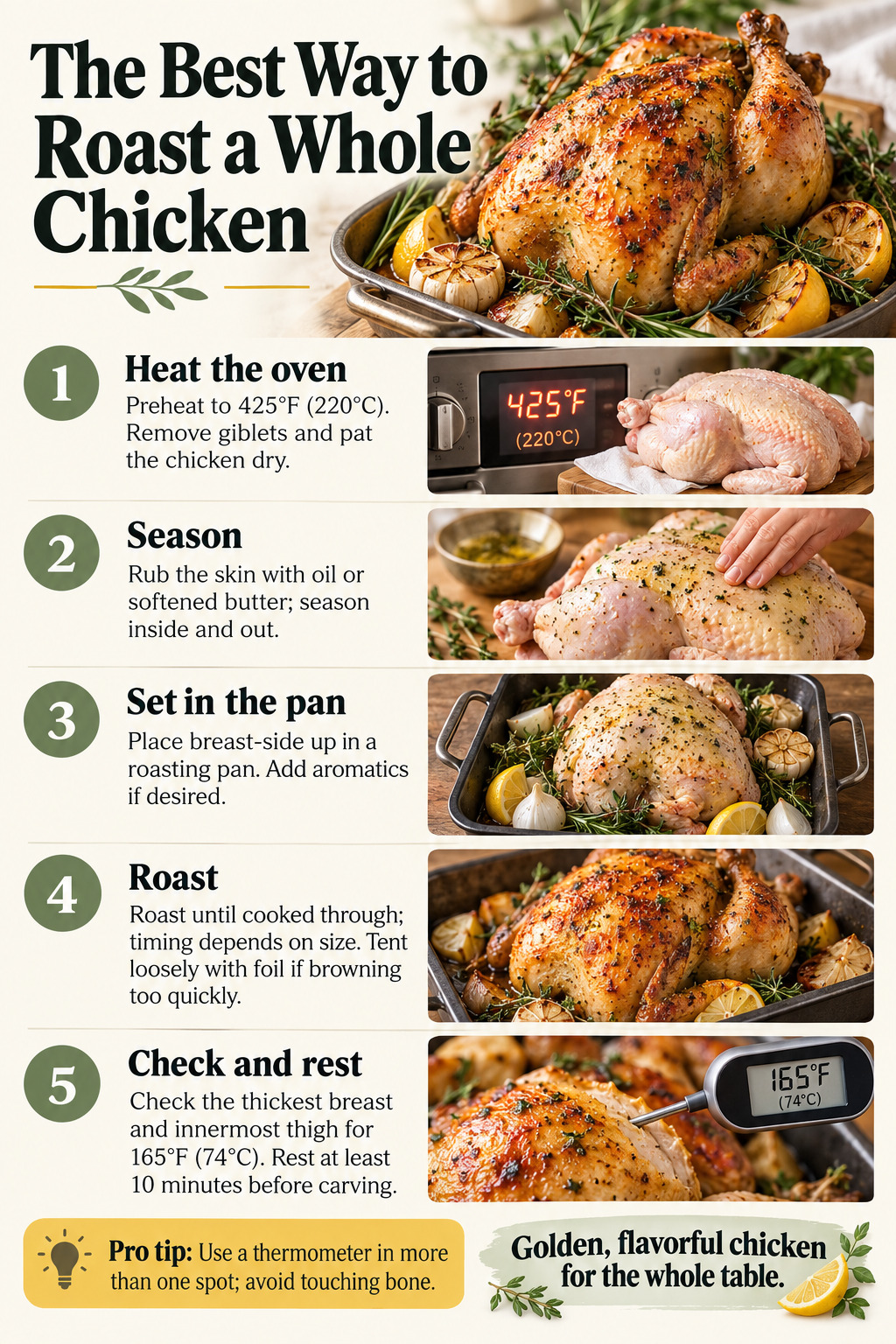
1. Heat the oven
Preheat to 425°F (220°C). Remove any giblets from the cavity and pat the chicken dry inside and out. Do not rinse raw poultry. Use a pan that leaves some space around the bird but is not so enormous that all drippings evaporate immediately.
2. Season
Rub the skin with oil or softened butter and season inside and out with salt and pepper. Add a modest amount of herbs if desired. Keep raw-chicken utensils separate from serving utensils, and wash hands after seasoning the bird.
3. Set in the pan
Place breast-side up in the roasting pan, using a rack if you have one. Tuck the wing tips under to reduce scorching. Put lemon and herbs loosely in or around the cavity; do not tightly stuff it with bread filling in this method. Vegetables around the bird should have room to cook.
4. Roast
Roast until cooked through, starting to check a 4–5 pound chicken around 60 minutes. It may need longer; bird shape and oven performance change the timing. If the skin becomes too dark before the center is ready, tent loosely with foil and continue. Add a little hot water if the pan juices threaten to burn.
5. Check and rest
Check the thickest breast, innermost thigh, and innermost wing area for 165°F (74°C), keeping the probe away from bone. Check more than one spot. Rest the chicken at least 10 minutes before carving, then separate legs, wings, and breast meat on a clean board.
Common mistakes and how to fix them
The breast is done but the thigh is not
Continue cooking until all required spots reach the target, loosely shielding dark areas with foil. Make sure your thermometer is not touching bone or reading an empty cavity.
The drippings burn
The pan may be too large or dry. Add a small amount of hot water carefully and monitor it; do not pour a large quantity that steams the entire bird.
The skin turns soft
A tightly covered rest traps steam. Use a loose tent if needed rather than sealing the chicken in foil.
Flavor variations and substitutions
Try paprika and garlic powder, lemon and thyme, or rosemary and black pepper. Use oil instead of butter for a dairy-free preparation. Keep sweet glazes for the final part of roasting and watch them closely.
What to serve with it
Serve with mashed potatoes and green beans, or roast potatoes on a separate tray. Spoon skimmed pan juices alongside the meat. Carve and refrigerate leftovers promptly for sandwiches, salads, or a quick soup.
Storage and reheating
Divide leftovers into shallow containers and refrigerate promptly, within 2 hours of cooking (within 1 hour above 90°F). Keep the refrigerator at 40°F or below and use cooked leftovers within 3–4 days. Freeze portions if you need longer storage. Reheat leftovers to 165°F; portion the meat before warming, add a little broth, and cover so the breast does not dry at the edges before the center heats.
Frequently asked questions
Can I roast a frozen chicken this way?
This guide assumes a fully thawed bird. Thaw in the refrigerator and allow adequate time; follow separate directions if cooking from frozen.
Do I need to truss it?
No. Tucking wing tips helps, but elaborate trussing is optional. Check each area for doneness regardless.
Where should I put the thermometer?
Measure in the thickest breast and innermost thigh and wing areas. Avoid bone and do not let the probe sit in the cavity.
Kitchen reminder: Check the thickest breast, innermost thigh, and innermost wing area for 165°F (74°C), keeping the probe away from bone.
Food-safety reference: USDA food handling, cooking, and leftover guidance.


