
The Best Way to Make Creamy Mashed Potatoes
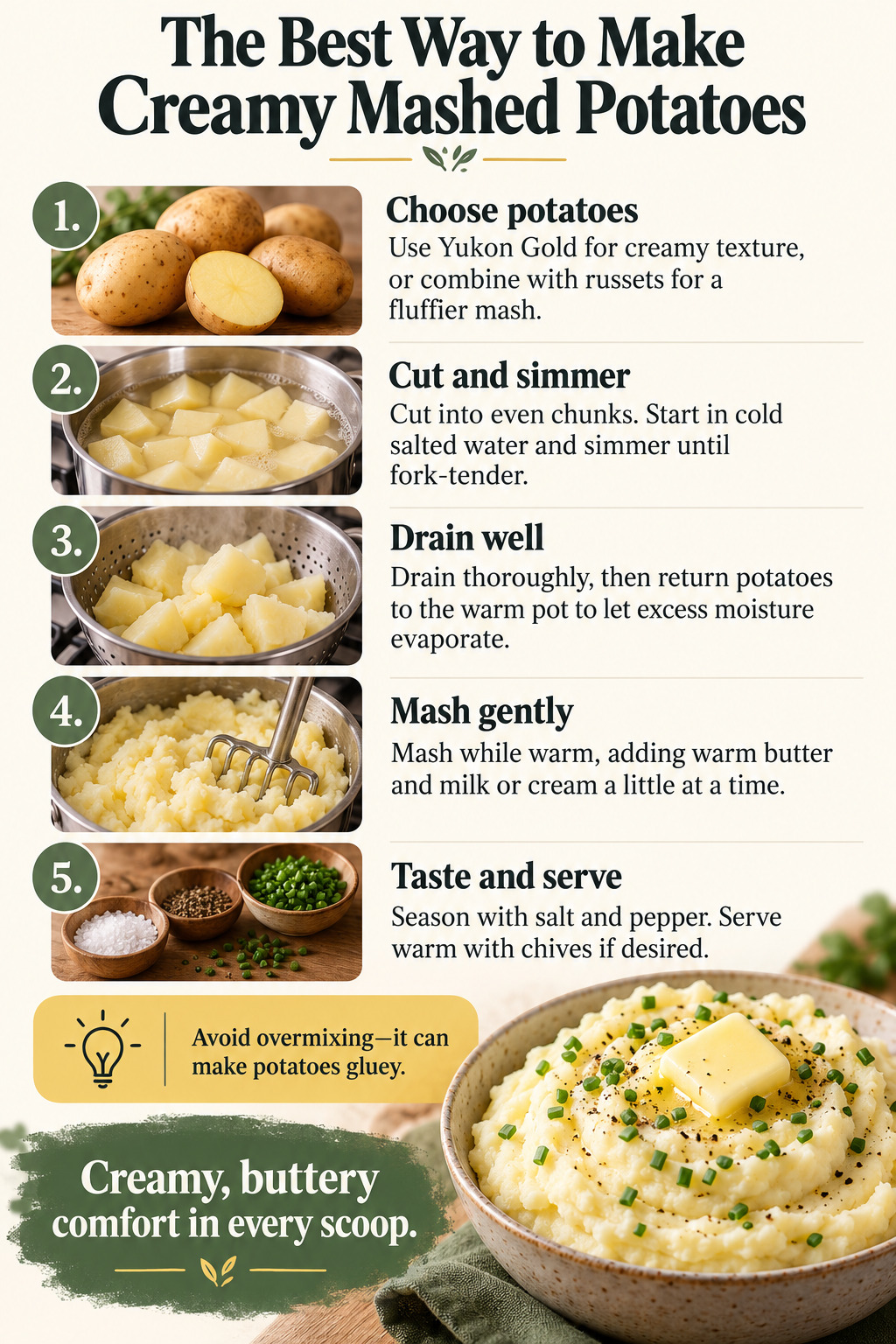
Creamy mashed potatoes depend as much on handling as on the butter. Cook even chunks until tender, drain them thoroughly, and mash gently while they are warm. This method lets you adjust the richness without turning the potatoes into a gluey paste, and it works with either Yukon Gold potatoes or a Yukon Gold–russet mix.
Why this method works
Starting in cold water helps the chunks warm evenly. Draining and briefly drying them prevents a watery mash that needs excess mixing. Gentle handling limits the release of starch that can create a sticky texture.
Ingredients and equipment
The quantities below are a practical starting batch. Adjust seasoning to taste and keep the same preparation method when scaling.
- 2 pounds Yukon Gold potatoes, or half Yukon Gold and half russet
- 3 tablespoons butter
- ½–¾ cup warm milk or cream, added gradually
- Salt for the cooking water and seasoning
- ¼ teaspoon black pepper, optional
- Optional: chopped chives
Equipment: Large pot, colander, potato masher or ricer, small saucepan or microwave-safe cup, and spoon.
How to make it, step by step
1. Choose potatoes
Yukon Gold potatoes give a creamy texture, while russets add fluffiness. Peel if you want a smooth mash, or keep thin well-scrubbed skins for a rustic version. Cut away damaged areas. Avoid waxy salad potatoes if your goal is a fluffy, easily mashed side.
2. Cut and simmer
Cut into even chunks and put them in a pot of cold salted water. Bring to a simmer and cook until a fork slides through easily, often around 15–20 minutes depending on chunk size. Do not remove them while the centers are still hard; hard bits are difficult to fix once mashed.
3. Drain well
Drain thoroughly and return the potatoes to the warm pot over very low heat for a minute or two, stirring gently so they do not stick. Let excess moisture evaporate. Meanwhile, warm the milk and melt or soften the butter so cold additions do not cool the mash abruptly.
4. Mash gently
Mash or rice the warm potatoes, add butter, and pour in warm milk or cream a little at a time. Stop when the texture suits you. Use a masher, ricer, or food mill rather than a blender or food processor. Work only enough to combine the ingredients.
5. Taste and serve
Season with salt and pepper after adding the dairy, then finish with chives if desired. Serve warm. If you need to hold the potatoes briefly, keep them warm in a suitable covered dish and stir gently before serving, adding a little warm milk only if needed.
Common mistakes and how to fix them
The potatoes are gluey
They were probably processed too aggressively. You cannot fully undo the texture, but you can spread them into a casserole and bake with toppings. Use a masher or ricer next time.
The mash is watery
Drain more carefully and add dairy slowly. Warm the current batch gently to evaporate some moisture without vigorous stirring.
There are hard lumps
The chunks needed more cooking. Check several pieces before draining, especially the largest ones.
Flavor variations and substitutions
Add roasted garlic, a little grated Parmesan, or browned butter for a different finish. For a dairy-free version, use olive oil and warm unsweetened dairy-free milk with a flavor you enjoy. Add seasonings gradually so they complement the potatoes.
What to serve with it
Serve with pot roast, roasted chicken, turkey breast, or pork chops. Leave a small well in the top for pan juices or gravy. A green vegetable adds a useful contrast to the soft, rich side.
Storage and reheating
Divide leftovers into shallow containers and refrigerate promptly, within 2 hours of cooking (within 1 hour above 90°F). Keep the refrigerator at 40°F or below and use cooked leftovers within 3–4 days. Freeze portions if you need longer storage. Reheat leftovers to 165°F; warm gently in a covered pan or baking dish, adding milk or broth as needed and stirring without beating.
Frequently asked questions
Can I make mashed potatoes ahead?
Yes. Refrigerate promptly in shallow containers, then reheat with a little liquid. The texture may be slightly thicker after chilling.
Should I use hot or cold milk?
Warm milk incorporates more easily and keeps the potatoes warm. Add it gradually rather than pouring in the entire amount at once.
Can I leave the skins on?
Yes, especially with thin-skinned potatoes. Expect a rustic texture rather than a smooth mash.
Kitchen reminder: Season with salt and pepper after adding the dairy, then finish with chives if desired.
Food-safety reference: USDA food handling, cooking, and leftover guidance.


