
The Best Way to Cook Fluffy Rice
Fluffy rice is an everyday skill that becomes easier when you use one rice variety, measure carefully, and leave the lid alone. This guide is for regular long-grain white rice on the stovetop. Brown rice, short-grain rice, and instant rice need different proportions or cooking times, so do not apply this ratio to every bag in your pantry.
Why this method works
The lid keeps steam available to cook the grains as they absorb water. A covered rest lets moisture distribute before you fluff. A strong boil can evaporate water too quickly and scorch the bottom, so the low setting should maintain a gentle simmer.
Ingredients and equipment
The quantities below are a practical starting batch. Adjust seasoning to taste and keep the same preparation method when scaling.
- 1 cup regular long-grain white rice
- 1½ cups water, or the ratio specified on your rice package
- ¼ teaspoon fine salt, optional
- Optional: 1 teaspoon butter or olive oil
Equipment: Measuring cup, fine-mesh strainer, saucepan with a tight lid, and fork.
How to make it, step by step
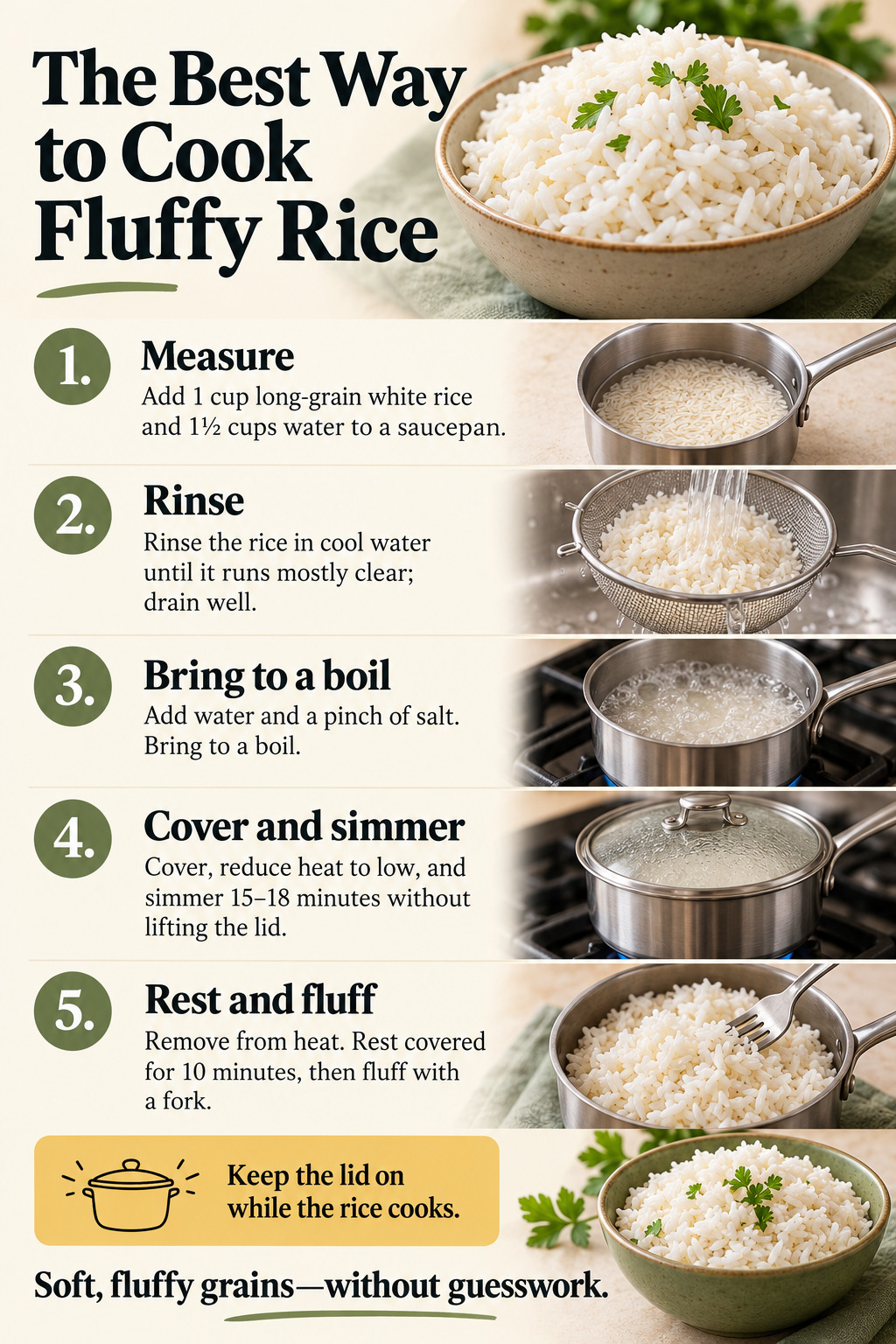
1. Measure
Measure the dry rice and water separately. The starting ratio here is 1 cup regular long-grain white rice to 1½ cups water, but use package directions if they recommend a different amount. Do not add the measured cooking water until after rinsing; otherwise you will pour it away during the next step.
2. Rinse
Put the rice in a fine-mesh strainer and rinse under cool water until the runoff is mostly clear. Drain well. Rinsing removes loose surface starch, which can contribute to stickiness. You do not need to wait for perfectly transparent water or rub the grains aggressively.
3. Bring to a boil
Add the drained rice, measured water, and optional salt to the saucepan. Bring to a boil over medium-high heat. Stir once to distribute the rice, then stop. Choose a pot that gives the contents some room so the boiling liquid does not spill over.
4. Cover and simmer
Cover, reduce the heat to low, and simmer for about 15–18 minutes. Keep the lid in place rather than repeatedly checking or stirring. The liquid should simmer gently, not boil hard. Follow the rice package if its timing differs; rice variety and the fit of your lid affect the result.
5. Rest and fluff
Remove the pan from the heat and leave covered for 10 minutes. Fluff with a fork, lifting rather than mashing the grains. If the rice is still firm after cooking and resting, sprinkle in a small amount of hot water, cover, and cook gently a little longer.
Common mistakes and how to fix them
The rice is gummy
It may have had too much water, too much stirring, or inadequate draining after rinsing. Fluff gently and use it in a bowl or soup; adjust one variable at a time on the next batch.
The bottom scorches
The heat is too high or the pan is thin. Move to a lower burner setting and use a heavier pot. Do not scrape burnt grains into the rest of the rice.
The grains stay crunchy
There may be too little liquid or steam escaping from a loose lid. Add a little hot water, cover, and continue gently, checking the package ratio next time.
Flavor variations and substitutions
Swap water for a suitable broth and adjust added salt. Stir in parsley, lemon zest, or a small amount of butter after fluffing. Add cooked vegetables at serving time rather than loading the pot with ingredients that change moisture needs.
What to serve with it
Use rice beneath chicken, salmon, shrimp, or pulled pork. A plain batch is flexible for meal prep because you can add different seasonings to each serving. Portion it soon after cooking rather than leaving the whole pot on the counter.
Storage and reheating
Divide leftovers into shallow containers and refrigerate promptly, within 2 hours of cooking (within 1 hour above 90°F). Keep the refrigerator at 40°F or below and use cooked leftovers within 3–4 days. Freeze portions if you need longer storage. Reheat leftovers to 165°F; add a spoonful of water, cover, and heat until hot throughout. Cool rice promptly in shallow portions rather than leaving it at room temperature.
Frequently asked questions
Does this ratio work for brown rice?
No. Brown rice typically needs more time and a different liquid amount. Follow directions specific to the variety.
Can I double the recipe?
Often, but the pot size and evaporation change. Use a suitable saucepan and follow any larger-batch directions on the package.
Should I stir while it simmers?
No. Stir once before covering, then leave it alone. Stirring repeatedly can break grains and release more starch.
Kitchen reminder: Remove the pan from the heat and leave covered for 10 minutes.
Food-safety reference: USDA food handling, cooking, and leftover guidance.


