
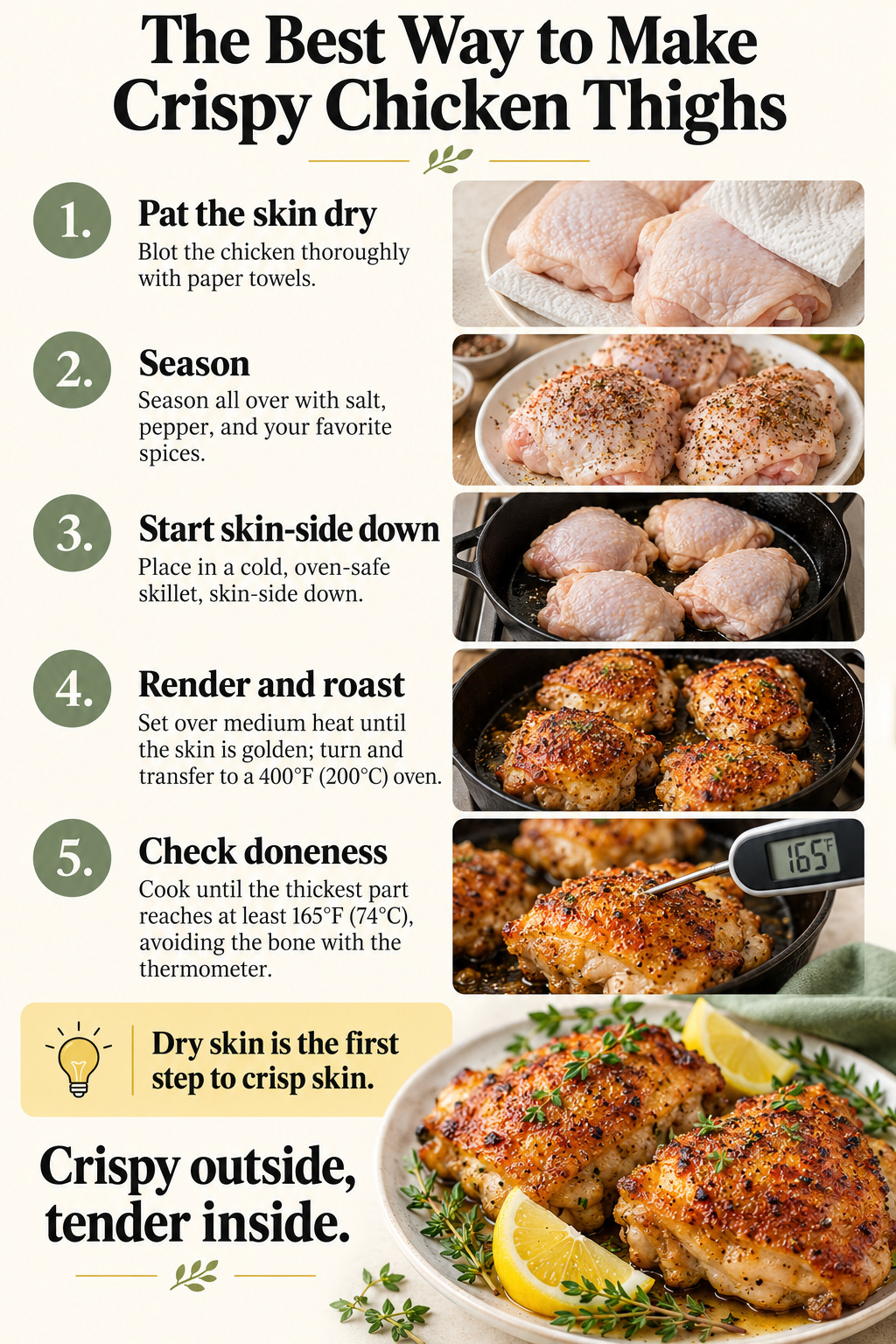
The Best Way to Make Crispy Chicken Thighs
Bone-in, skin-on chicken thighs are a good choice when you want rich flavor and a crisp surface. Starting the skin in a cold skillet gives the fat time to render before an oven finish cooks the meat through. Dry skin, moderate stovetop heat, and a thermometer are the three details that keep this method manageable.
Why this method works
The cold-pan start allows fat under the skin to render as the temperature rises. Turning the pieces before the oven finish keeps the browned skin exposed. An oven-safe pan is essential; plastic handles and pans with unsuitable coatings should not go into the oven.
Ingredients and equipment
The quantities below are a practical starting batch. Adjust seasoning to taste and keep the same preparation method when scaling.
- 4 bone-in, skin-on chicken thighs
- 1 teaspoon fine salt, or to taste
- ½ teaspoon black pepper
- ½ teaspoon paprika
- ½ teaspoon garlic powder
- Optional: fresh thyme and lemon wedges
Equipment: Heavy oven-safe skillet, tongs, paper towels, thermometer, and oven mitts.
How to make it, step by step
1. Pat the skin dry
Blot the chicken thoroughly with paper towels, paying attention to folds in the skin. Do not rinse raw poultry. Trim loose hanging pieces of skin if needed, but leave the main skin surface intact. Wash hands and clean any surfaces that touched raw chicken.
2. Season
Sprinkle salt, pepper, paprika, and garlic powder over both sides. Lift any folded skin so it sits flat. Keep the layer of spices light; thick deposits can darken before the skin is crisp. Preheat the oven to 400°F (200°C) so it is ready for the finish.
3. Start skin-side down
Place the thighs skin-side down in a cold, heavy oven-safe skillet. Set them in one layer without overlap. Start over medium heat and let the pan warm gradually. The skin should begin sizzling as fat renders; do not use high heat just to speed up this stage.
4. Render and roast
Let the skin become golden and release from the pan, usually taking around 10–15 minutes but varying with the pan and pieces. Adjust the heat if it darkens too quickly. Turn the thighs, carefully spoon off excessive fat into a heat-safe container, and transfer the skillet to the oven. Roast until cooked through, beginning to check after about 15 minutes.
5. Check doneness
Check the thickest part of each thigh for at least 165°F (74°C), keeping the probe away from the bone. Continue cooking pieces that need more time. Rest briefly before serving, keeping the skin uncovered so it is less likely to soften. The skillet handle remains hot after leaving the oven.
Common mistakes and how to fix them
The skin is pale and rubbery
It may have been damp or flipped too early. Give it sufficient stovetop time, at a heat that sizzles without burning.
The spices blacken
Reduce the heat and move to the oven once the skin has browned. Next time use a lighter seasoning layer or finish with extra flavor after cooking.
The skin softens after resting
Covering tightly traps steam. Rest uncovered or only very loosely tented, and serve with sauces beside the chicken rather than over the skin.
Flavor variations and substitutions
Use dried rosemary or thyme, a little smoked paprika, or lemon zest after cooking. If making a pan sauce, remove the chicken first and use the drippings sparingly so the sauce is not greasy. Serve sauce under or alongside the thigh.
What to serve with it
Roasted potatoes, green beans, and a lemon-dressed salad make a complete plate. Rice works well with a small amount of the pan juices. For meal prep, store the meat separately from wet sides when crisp skin is a priority.
Storage and reheating
Divide leftovers into shallow containers and refrigerate promptly, within 2 hours of cooking (within 1 hour above 90°F). Keep the refrigerator at 40°F or below and use cooked leftovers within 3–4 days. Freeze portions if you need longer storage. Reheat leftovers to 165°F; use the oven with the skin exposed and check that the center is hot enough; microwave reheating tends to soften the skin.
Frequently asked questions
Can I use boneless thighs?
They cook faster and may not have skin. Use a method suited to the cut and check 165°F in the thickest part.
Do I need to add oil?
A skin-on thigh usually releases enough fat in a heavy skillet. The amount varies; avoid adding a large quantity that turns the method into shallow frying.
What if my skillet cannot go in the oven?
Transfer the browned thighs skin-side up to a suitable roasting dish and finish there. Handle both dishes carefully and continue checking the meat temperature.
Kitchen reminder: Check the thickest part of each thigh for at least 165°F (74°C), keeping the probe away from the bone.
Food-safety reference: USDA food handling, cooking, and leftover guidance.


