
The Best Way to Make Perfect Scrambled Eggs
Soft, creamy scrambled eggs come from gentle heat and patient folding. You do not need a splash of cream to make them pleasant; butter and careful cooking can do the work. The goal is tender, fully set curds with no liquid egg remaining, rather than eggs that are browned and dry.
Why this method works
Low heat slows the setting of egg proteins, giving you time to fold tender curds before they dry out. A nonstick pan and butter make it easier to lift the eggs cleanly. The small batch is easier to control than a crowded pan holding a dozen eggs.
Ingredients and equipment
The quantities below are a practical starting batch. Adjust seasoning to taste and keep the same preparation method when scaling.
- 4 large eggs
- 1 tablespoon butter
- ¼ teaspoon salt, or to taste
- Optional: black pepper and chopped chives
- Optional: toast for serving
Equipment: Bowl, whisk or fork, nonstick skillet in good condition, and heat-safe silicone spatula.
How to make it, step by step
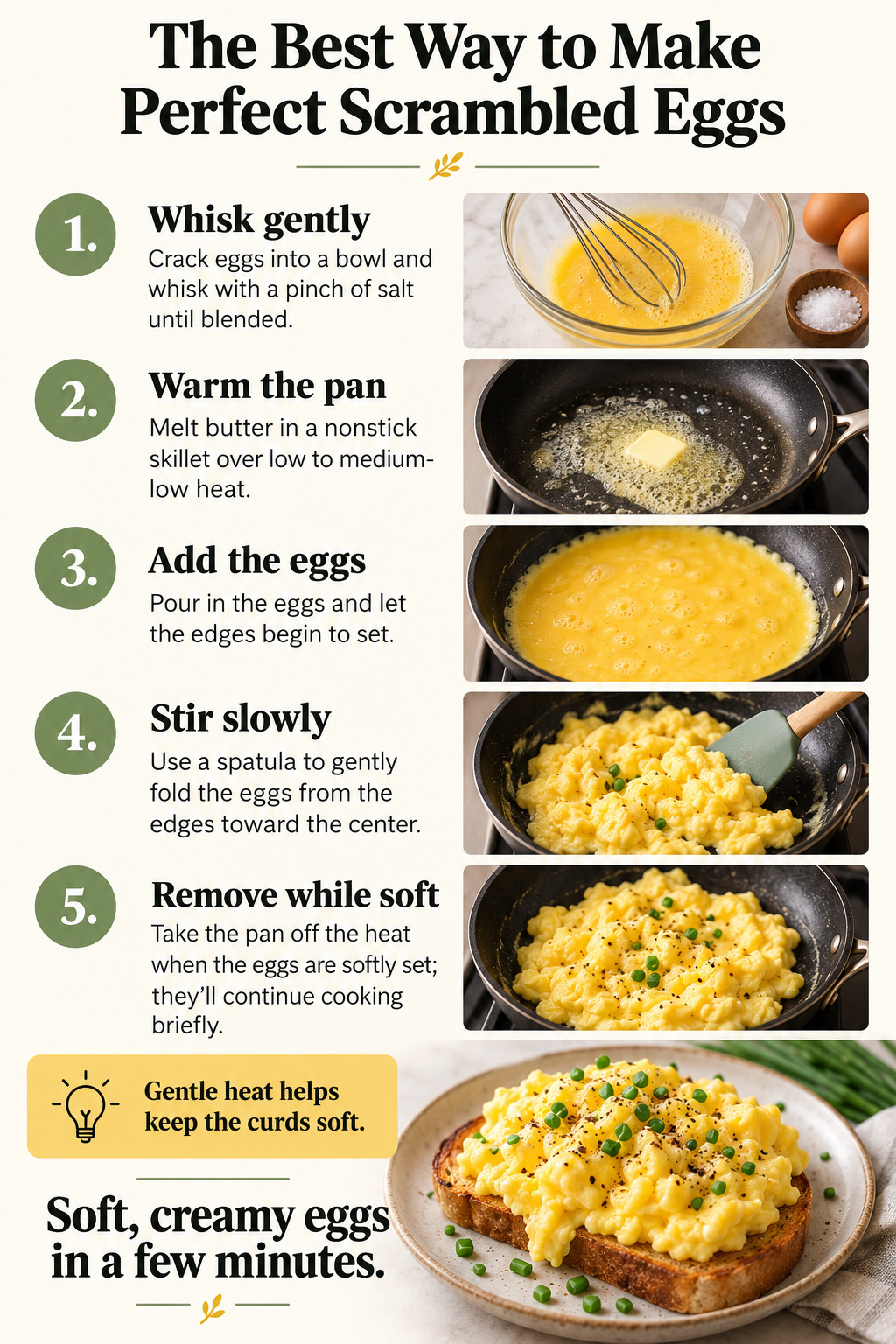
1. Whisk gently
Crack eggs into a bowl and whisk with salt until the whites and yolks are blended. Break up long strands of white, but there is no need to whip in a large volume of air. Keep the shells and raw egg away from serving dishes and wash your hands afterward.
2. Warm the pan
Melt butter in a nonstick skillet over low to medium-low heat. The butter should melt and lightly foam rather than brown rapidly. A pan that is too hot cooks the underside before you can fold it, producing dry layers.
3. Add the eggs
Pour in the blended eggs and let the edges just begin to set. Keep the heat gentle. If they sizzle aggressively or immediately form a browned rim, lower the heat or briefly lift the pan off the burner.
4. Stir slowly
Use a spatula to fold the eggs from the edges toward the center. Pause between folds so soft curds can form. Scrape the bottom gently instead of chopping constantly. Move the pan on and off the heat as needed to keep the cooking gradual.
5. Remove while tender
Take the pan off the heat when the eggs are set and tender, with no visible liquid egg. Residual heat continues cooking briefly, so transfer promptly to plates. The infographic’s soft finish refers to texture, not serving raw egg. For preparations intentionally left undercooked, use pasteurized eggs and follow food-safety guidance; fully cooked eggs are the safer default.
Common mistakes and how to fix them
The eggs are dry
The heat was too high or they stayed in the pan after finishing. Use gentler heat and plate promptly.
The curds have browned spots
Lower the heat and check that the pan is not preheated too long. Browning is not the goal for this method.
The eggs release liquid
Undercooked portions or a long hot hold can affect texture. Cook until fully set and serve without leaving them sitting in the skillet.
Flavor variations and substitutions
Fold in chives, a little grated cheese, or cooked vegetables near the finish. Drain watery vegetables first. Use olive oil instead of butter for a dairy-free version, and serve on gluten-free toast if needed.
What to serve with it
Serve with toast, roasted potatoes, or sliced avocado and fruit. Keep wet toppings alongside rather than stirring a large quantity into the curds. Scrambled eggs are best freshly cooked, even though leftovers can be stored safely.
Storage and reheating
Divide leftovers into shallow containers and refrigerate promptly, within 2 hours of cooking (within 1 hour above 90°F). Keep the refrigerator at 40°F or below and use cooked leftovers within 3–4 days. Freeze portions if you need longer storage. Reheat leftovers to 165°F; warm gently in a covered dish, stirring and checking temperature. Expect a firmer texture after reheating.
Frequently asked questions
Do I need milk?
No. Milk is optional and changes the mixture. This method relies on butter and gentle heat.
Can I make a larger batch?
Yes, but use a larger pan and expect more stirring. Cooking two smaller batches gives better control.
Should the finished eggs look wet?
They can look moist, but no liquid egg should remain for the fully cooked version. Do not confuse tender curds with an undercooked finish.
Kitchen reminder: Take the pan off the heat when the eggs are set and tender, with no visible liquid egg.
Food-safety reference: USDA food handling, cooking, and leftover guidance. See also the FDA guide for seafood and eggs.


