
The Best Way to Cook Turkey Breast
Turkey breast makes a smaller centerpiece than a whole bird, but its lean meat still needs careful timing. A moderate oven, a simple herb coating, and temperature checks in the thickest area are more dependable than one cooking time for every package. Bone-in, boneless, and rolled breasts all behave differently.
Why this method works
Moderate roasting heat gives you time to monitor a lean cut. Skin or an herb coating contributes flavor, while a thermometer protects against both undercooking and unnecessary extra time. A boneless rolled roast may have a very different thickness from a bone-in breast of the same weight.
Ingredients and equipment
The quantities below are a practical starting batch. Adjust seasoning to taste and keep the same preparation method when scaling.
- 1 turkey breast, about 3–5 pounds, fully thawed
- 2 tablespoons softened butter or olive oil
- 1½ teaspoons fine salt, or to taste
- ½ teaspoon black pepper
- 1 teaspoon dried thyme or rosemary
- Optional: onion wedges and ½ cup broth for the pan
Equipment: Roasting pan, rack if available, paper towels, food thermometer, and carving board.
How to make it, step by step
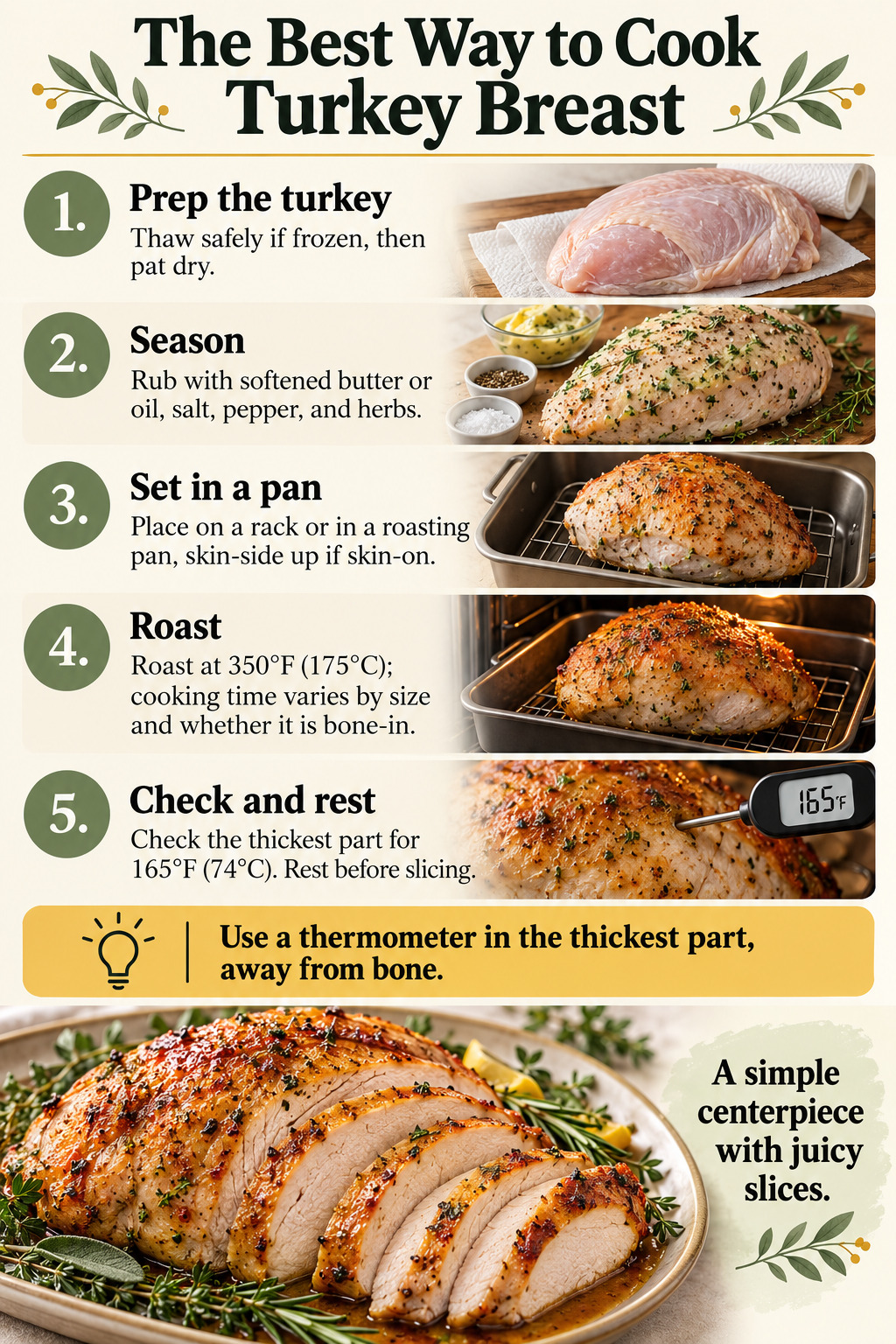
1. Prep the turkey
Thaw safely in the refrigerator if frozen. Remove packaging and any inserts according to the label, leaving oven-safe netting on a rolled roast when directed. Pat dry; do not rinse raw poultry. Check whether the product is pre-seasoned or contains added salt before seasoning.
2. Season
Rub with softened butter or oil, then add salt, pepper, and herbs. For skin-on turkey, gently spread some seasoning under the skin if practical without tearing it. Use less added salt for an injected or brined product.
3. Set in a pan
Place on a rack or in a roasting pan, skin-side up when skin-on. Add onion wedges if desired. A little broth in the bottom can help protect drippings, but do not submerge the turkey. Preheat to 350°F (175°C).
4. Roast
Roast at 350°F and use the package timing as a planning guide. Begin checking well before its estimated finish, especially for a small boneless breast. If the skin browns too quickly, tent loosely with foil. Size, bones, shape, and netting affect timing, so avoid a fixed promise.
5. Check and rest
Check the thickest part for 165°F (74°C), away from bone. Measure more than one thick location when the roast is uneven. Rest about 10–15 minutes before slicing, then carve across the grain. Remove netting as instructed after cooking.
Common mistakes and how to fix them
The breast is dry
Check earlier on your next roast and remove once properly cooked. Serve the current turkey with pan juices or gravy.
The skin browns too fast
Use a loose foil tent and continue checking the center. The color of the outside does not establish doneness.
The turkey tastes too salty
Pre-brined products already contain seasoning. Read the label and reduce the added salt accordingly.
Flavor variations and substitutions
Try lemon zest and thyme, rosemary and garlic powder, or paprika and black pepper. Olive oil makes the coating dairy-free. A simple pan gravy can be thickened with cornstarch if avoiding wheat, using a suitable broth.
What to serve with it
Serve with mashed potatoes, roasted Brussels sprouts, and green beans. Leftovers make sandwiches, rice bowls, or a quick soup. Carve the remaining meat before refrigerating to help it cool efficiently.
Storage and reheating
Divide leftovers into shallow containers and refrigerate promptly, within 2 hours of cooking (within 1 hour above 90°F). Keep the refrigerator at 40°F or below and use cooked leftovers within 3–4 days. Freeze portions if you need longer storage. Reheat leftovers to 165°F; warm sliced turkey covered with a little broth, checking the thickest stacked portion for safe reheating.
Frequently asked questions
Can I use a boneless turkey roast?
Yes. Follow its packaging for netting and timing, and still check 165°F in the thickest part.
Should I cover it the whole time?
An uncovered start encourages browning. Tent loosely if it darkens before the center is ready.
Is the pop-up indicator enough?
Use a separate food thermometer in the thickest area to confirm the turkey is cooked.
Kitchen reminder: Check the thickest part for 165°F (74°C), away from bone.
Food-safety reference: USDA food handling, cooking, and leftover guidance.


