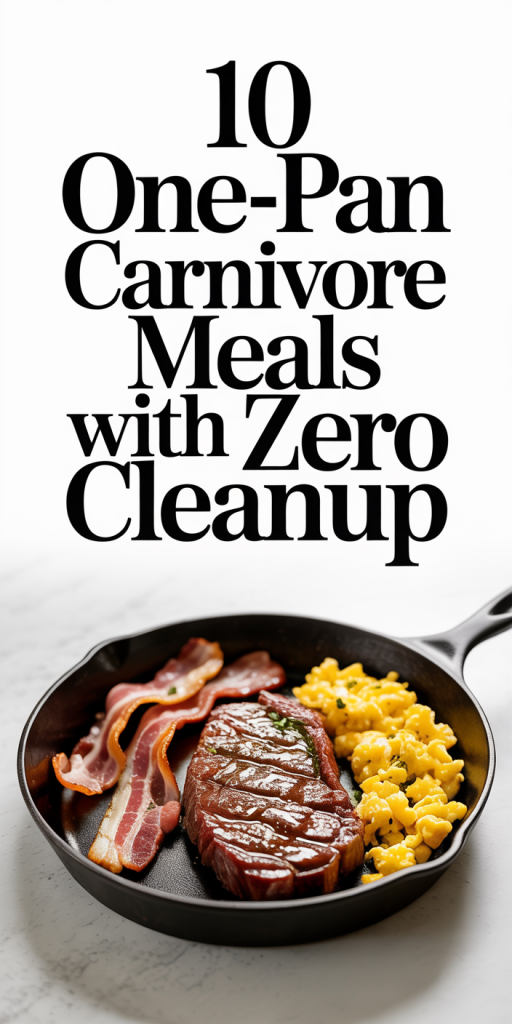
10 One-Pan Carnivore Meals With Zero Cleanup
We love meals that give us maximum flavor with minimum fuss. One-pan carnivore cooking does exactly that: high-protein, high-satisfaction dishes cooked in a single vessel so cleanup is negligible or nonexistent. In this guide we’ll walk through what one-pan carnivore cooking is, the zero-cleanup strategies that actually work, ten specific recipes you can make without dirtying half your kitchen, and practical tips for scaling, storing, and troubleshooting. Whether you’re short on time, avoiding carbs, or just hate doing dishes, these recipes are designed for real life, robust flavors, straightforward techniques, and minimal washing.
What Is One-Pan Carnivore Cooking And Who Is It For?
One-pan carnivore cooking is exactly what it sounds like: meals built around animal proteins cooked in a single pan, tray, or foil packet, with minimal or zero additional ingredients like vegetables, grains, or legumes. The goal is simple, maximize flavor and nutrition while minimizing cookware, time, and cleanup.
Who benefits most?
- Busy professionals and parents who want fast dinner with no sink-full of dishes.
- People following a carnivore, strict low-carb, or elimination diet who prioritize animal-sourced foods.
- Campers or travelers who need portable, minimal-equipment cooking.
- Anyone who likes the convenience of sheet-pan or skillet meals but wants to keep the focus on meat and fat.
Why it works: high-fat cuts render and self-baste: searing and oven roasting create crisp textures: and foil, parchment, or disposable trays let you contain mess at the source. We’ll use these principles in the recipes and strategies that follow.
Zero-Cleanup Strategies For Truly Minimal Washing
If zero-cleanup is the promise, the technique is everything. Below we break down the equipment and prep moves that keep our hands out of the dishwater.
Essential Equipment, Pans, And Disposable Options
- Cast iron skillet: durable, great for sear-plus-oven finishes. We often season and reuse, but for true zero-cleanup, line with heavy-duty foil.
- Nonstick oven-safe skillet: less sticking, easier single-surface cleanup when wiped or lined.
- Sheet pan / rimmed baking tray: perfect for multiple pieces (bacon, sausage, chops). Line with foil or use disposable aluminum trays if you want toss-and-go.
- Disposable aluminum trays: single-use solves the cleanup problem: choose thicker gauges for roasting to prevent warping.
- Foil packets: ideal for fish and delicate proteins, seal juices and flavors in, discard foil after eating.
- Silicone liners and parchment: less waste than foil but still reduce washing: parchment is best under moderate heat (avoid open flame).
We tend to pick the simplest vessel that can withstand the cooking method: sear-first goes in a skillet lined with foil: roast-all-day braises go into a foil-covered oven-safe tray.
Prep Steps To Minimize Mess Before Cooking
- Line the pan: heavy-duty foil directly on cast iron or sheet pans catches drips, carmelized bits, and juices.
- Trim and portion on a single cutting board: clean once by wiping with a paper towel, or use a disposable butcher sheet for raw handling.
- Measure fats and seasonings into small bowls or cups, but keep it minimal, often just fat, salt, and a single binder like butter.
- Preheat properly: get the pan hot so proteins sear and don’t stick. That avoids gouging and stuck-on residue.
A quick workflow: line pan → preheat → season meat → sear/arrange → roast or finish → rest → eat directly from pan or transfer to plate. If you want zero cleanup, eat from the foil-lined pan or use paper plates.
Seasoning, Fats, And Flavor Boosters That Stay Simple
- Salt and pepper: baseline flavors that enhance most cuts.
- Rendered fats: tallow, lard, and duck fat add flavor and nonstick power.
- Butter: for finishing and browning edges, works particularly well with steaks and chicken thighs.
- Simple pan sauces: reduce meat drippings with a splash of lemon or a knob of butter, no extra pots needed.
- Dry spice rubs or compound butters: mix once, spread on protein, skip extra bowls by doing it in the package or directly on the pan.
We prefer low-ingredient boosts that can be spooned right from the pan back onto the meat, this keeps surfaces minimal while maximizing taste.
The 10 One-Pan Carnivore Meals (Step-By-Step, No Cleanup)
Below are ten recipes that follow a one-pan, zero-cleanup ethos. Each includes a short method, timing, and what to line or use so you’re not scrubbing afterward. Cook times assume a preheated oven or hot stove and room-temperature meat.
Pan-Seared Ribeye With Crispy Buttered Edges
Method: Line a cast-iron skillet with heavy-duty foil. Pat ribeye dry, salt liberally 30 minutes before cooking or right before. Heat skillet until smoking lightly, add a tablespoon of tallow or oil. Sear 2–3 minutes per side for medium-rare depending on thickness, spoon a tablespoon of butter over the edges for 30–60 seconds to brown. Transfer skillet to a 400°F oven for 4–6 minutes if thicker. Rest in pan 5 minutes and slice.
Why no-cleanup: foil liner catches the fond and butter: we eat right from the skillet or transfer slices to plates, foil discarded.
Sheet-Pan Breakfast Sausage With Bacon And Eggs
Method: Use a rimmed sheet pan lined with foil. Arrange bacon in a single layer and add breakfast sausage links spaced out. Roast at 400°F for 10–12 minutes, flip bacon briefly, then create small wells in foil and crack eggs directly onto the pan. Return to oven until eggs set to preference (3–6 minutes). Finish with a pat of butter on eggs.
Why no-cleanup: everything cooks on one foil surface: simply fold foil and dispose.
Cast-Iron Chicken Thighs With Herbed Drippings
Method: Line a cast iron skillet with foil. Season bone-in, skin-on thighs with salt and pepper. Heat skillet, place thighs skin-side down to render fat and crisp skin (7–10 minutes), flip and add a knob of herb butter (garlic and parsley mixed into butter). Transfer to 425°F oven for 12–18 minutes until internal temp 165°F. Rest in pan, spoon drippings over thighs.
Why no-cleanup: foil catches grease: the pan can be wiped and foil tossed.
One-Pan Ground Beef Skillet With Cheesy Crust
Method: Use a nonstick or foil-lined cast iron skillet. Brown ground beef with salt and a little rendered fat, break into an even layer. Press down, sprinkle grated cheddar all over, broil 1–2 minutes until cheese is bubbly and crisped. Optionally crack an egg into small wells on top before broiling for runny yolks.
Why no-cleanup: skillet is lined or nonstick: cheese and drippings contained in one pan.
Foil-Wrapped Salmon Fillet With Lemon Butter
Method: Place salmon on a large sheet of foil, top with butter, salt, and a squeeze of lemon. Fold into a sealed packet and bake at 400°F for 10–14 minutes depending on thickness. Open carefully to let steam escape and spoon juices back over the fish.
Why no-cleanup: foil packet contains all juices and skin: open and serve directly from foil.
Sausage-And-Pepper Bake On Disposable Tray
Method: On a disposable aluminum tray, arrange sliced sausages and bell pepper strips with a drizzle of oil, salt, and a handful of sliced onions if desired. Roast at 425°F for 20–25 minutes, stirring once. Serve straight from the tray.
Why no-cleanup: tray is disposable: robust and transportable for gatherings.
Pork Chop With Pan-Roasted Bone Marrow Finish
Method: Line a skillet with foil. Sear bone-in pork chops 3–4 minutes per side until well browned. Nestle small marrow pieces or bone segments with marrow into pan and roast at 400°F for 8–12 minutes. Spoon rendered marrow and pan drippings over chops before serving.
Why no-cleanup: marrow and drippings stay in foil-lined pan: no extra dish for the sauce.
Lamb Shoulder Steak With Garlic Butter Pan Sauce
Method: Use a cast iron or heavy nonstick pan lined with foil. Sear lamb shoulder steaks on high heat 3–5 minutes per side, then lower heat and add several slices of garlic butter. Spoon continuously for 1–2 minutes. Remove and rest in pan.
Why no-cleanup: foil collects juices: garlic butter does double duty as basting and saucing agent.
Duck Breast Seared In Its Own Fat With Crisp Skin
Method: Score duck skin, season lightly with salt. Place skin-side down in a cold pan (no added fat) and warm gently to render duck fat, 15–20 minutes until skin is crisp. Flip and finish for 3–6 minutes until medium-rare. Pour off excess fat into a jar for later use, then rest in pan.
Why no-cleanup: minimal sticking due to rendered fat: pan can be wiped and fat recycled.
Beef Short Rib Braise In Single Oven Dish
Method: Use a deep disposable roasting tray or oven-safe dish lined with foil. Brown short ribs directly in the tray if possible (or sear briefly in the tray on stovetop), add a small amount of beef stock or water (just enough to partially submerge), cover tightly with foil and braise at 300°F for 3–4 hours until tender. Serve from the tray.
Why no-cleanup: braise juices contained: tray or foil discarded after eating.
Each of these meals is adaptable, swap fats, adjust times for thickness, and use foil or disposable trays as needed to maintain the zero-cleanup promise.
Meal Assembly, Timing, And Batch Cooking Tips
Planning and timing turn single-pan recipes into a weekly strategy rather than a one-off. Here are practical notes for assembly, batching, and saving time.
How To Scale Recipes For Singles Or Families
- Singles: halve or use single cuts: choose 8–10″ skillet or small disposable trays so protein stacks don’t steam. Searing times are the same, monitor internal temp.
- Families: use sheet pans or multiple disposable trays. Keep similar-thickness pieces together so doneness is uniform. For large groups, stagger start times in a hot oven and rotate trays.
- Batch cooking: double or triple recipes on multiple trays in the oven. For example, bake several sheet pans of pork chops or sausage. Cool quickly, portion, and refrigerate.
We sometimes roast many thighs or chops on two pans concurrently, this is efficient and still low-cleanup if you line both trays.
Storing, Reheating, And Maintaining Texture
- Storage: cool meat quickly to below 40°F within two hours, use airtight containers. If you used disposable trays, transfer to storage containers to avoid metallic flavor transfer.
- Reheating: low and slow preserves texture, 350°F oven for 10–15 minutes for portions, or reheat gently in a nonstick pan with a splash of fat. Microwave for speed but expect textural changes, especially for crispy skin.
- Maintaining crispness: re-crisp in a hot skillet or under a broiler for a minute or two. Keep sauces separate where possible if you want crispy results later.
Safety, Temperature Guidelines, And Food Handling
- Beef steaks/roasts: safe at 145°F (rest 3 minutes) but many prefer 125–135°F for medium-rare, use an instant-read thermometer.
- Ground meats: 160°F minimum.
- Poultry: 165°F in the thickest part.
- Fish: 125–135°F for medium: 145°F is the USDA recommendation for safety.
- Cooling: refrigerate leftovers within two hours: for hot days shorten that to one hour.
We always recommend an instant-read thermometer for reliable results, nothing wastes a one-pan meal faster than undercooked center or an overcooked sacrifice to safety paranoia.
Troubleshooting, Substitutions, And Flavor Variations
No plan is perfect: here’s how we handle the bumps and tailor recipes to what we have.
Common Problems And Quick Fixes (Soggy, Stuck, Overbrown)
- Soggy skin or crust: finish under a broiler for 1–2 minutes or sear briefly on high heat in a dry pan. Don’t crowd the pan, overcrowding produces steam.
- Stuck meat: usually from insufficient preheating or low fat. Let the pan get hot, add fat, and allow a sear to form before flipping. If stuck, slide a thin spatula under after it releases, don’t force it.
- Overbrowned exterior with raw interior: reduce heat and finish in oven: for thick cuts, reverse-sear next time (low temp roast then high-heat sear).
Ingredient Swaps For Allergies Or Budget Constraints
- Butter/dairy allergy: use tallow, lard, or ghee (if dairy tolerated) for basting.
- Fish swaps: any firm fish (trout, cod) can take salmon foil treatment: adjust cooking times.
- Cheap cuts: braises turn budget-friendly cuts like chuck, short ribs, or lamb shoulder into tender meals, cook low and slow in a single tray.
- Pork for beef or vice versa: many recipes cross over, adjust internal temperatures accordingly.
We lean on rendering animal fats to boost flavor when herbs or citrus are off-limits.
Ways To Add Variety Without Extra Dishes Or Cleanup
- Compound butters: make a few flavored butters in advance: dollop on hot meat for instant sauce, store in parchment and pop frozen knobs onto pans.
- Smoked salts, cured spices, or flavored fats: rotate smoked sea salt, chili flakes, or garlic-infused tallow to change profiles without adding bowls.
- Double textures: add a broil at the end for crunchy finish or a quick pan-sear before roasting to vary mouthfeel.
- Finish oils: a spoonful of warmed bone marrow or duck fat right before serving adds richness without another pan.
Small investments, different salts, a jar of rendered fat, or a tub of compound butter, keep meals feeling new while preserving the one-pan promise.
Conclusion
One-pan carnivore meals are as much about mindset as technique: prioritize bold, simple flavors: choose the right vessel: and plan a cleanup strategy, foil, disposable tray, or an easily wiped skillet. The ten recipes here cover quick sears, gentle braises, and foil-packet magic so we can eat well without spending the evening at the sink.
Try one technique at a time. Start with a foil-wrapped salmon or a sheet-pan breakfast, those provide rapid payoff and teach you how to season, time, and rest meat with zero hassle. Once you’re comfortable, move to cast-iron sears and overnight braises. We promise: a little planning and the right liner will change dinner from chore to pleasure. Now let’s cook, one pan, zero cleanup, all flavor.