
The Best Way to Make Crispy Roasted Potatoes
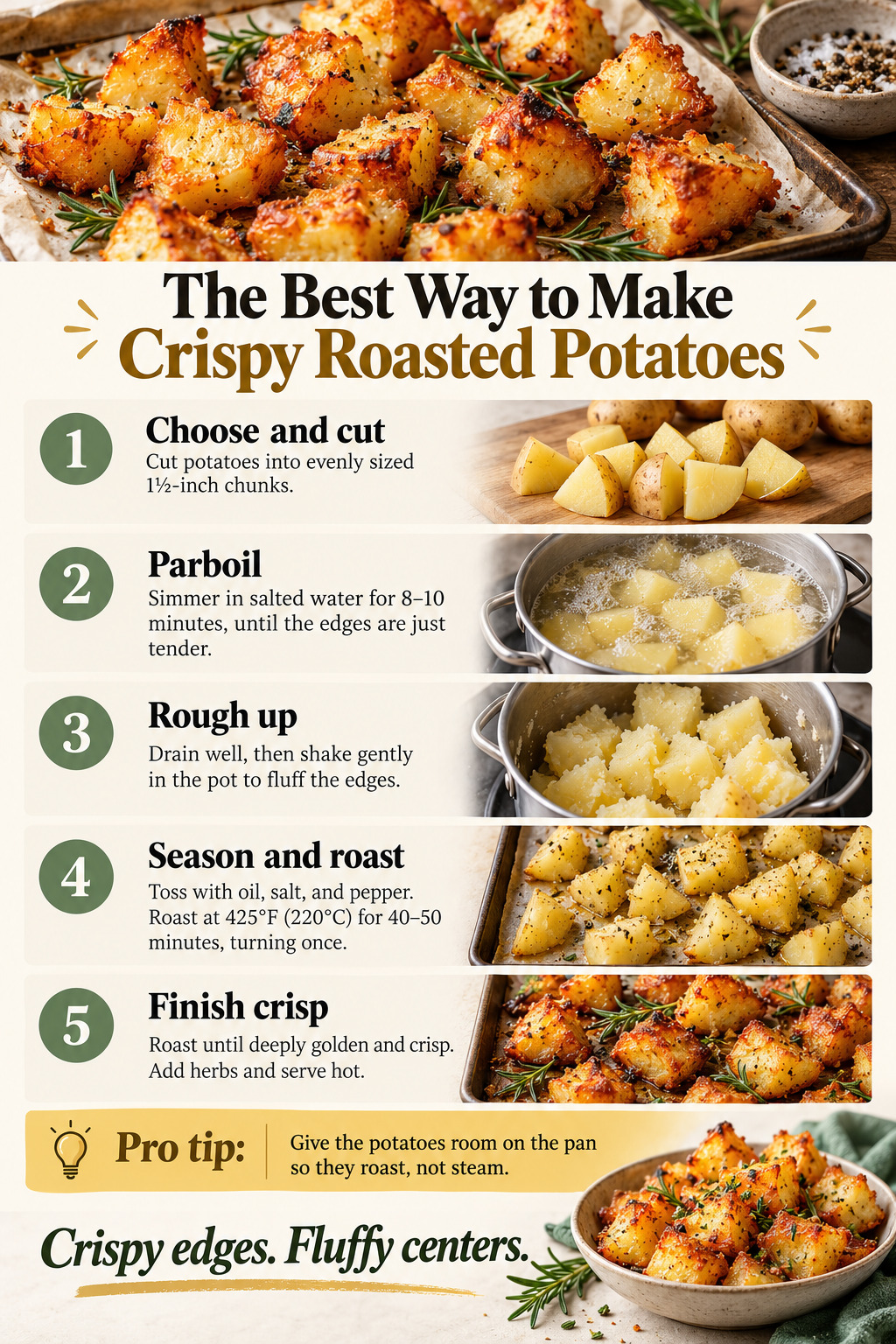
Crispy roasted potatoes start before the tray goes into the oven. A short simmer softens the outside, a gentle shake roughens the edges, and a roomy sheet pan gives those edges a chance to turn golden. The result is a side dish with a fluffy middle and plenty of browned surfaces, using a handful of everyday ingredients.
Why this method works
Parboiling creates a soft outer layer that can roughen when shaken. That uneven coating provides extra surface area for browning. Drying after draining prevents excess water from following the potatoes into the oven. The oil should coat the pieces without forming a deep puddle on the tray.
Ingredients and equipment
The quantities below are a practical starting batch. Adjust seasoning to taste and keep the same preparation method when scaling.
- 2 pounds Yukon Gold or russet potatoes
- 3 tablespoons olive oil
- Salt for the cooking water, plus about ¾ teaspoon for roasting
- ½ teaspoon black pepper
- Optional: 1 tablespoon chopped rosemary or parsley
Equipment: Large pot, colander, sturdy rimmed sheet pan, parchment rated for 425°F, and a spatula.
How to make it, step by step
1. Choose and cut
Scrub the potatoes and peel them if you prefer. Cut into evenly sized 1½-inch chunks. Yukon Gold potatoes hold their shape with a creamy middle; russets make a fluffier, more delicate roast potato. Keep the pieces similar in size so the small ones do not burn while the large ones remain firm.
2. Parboil
Put the chunks in a pot, cover with water, and add salt. Bring to a simmer and cook for about 8–10 minutes, checking the edges with a knife. They should be just tender at the outside while the centers still offer some resistance. Drain before the pieces begin falling apart.
3. Rough up the edges
Drain thoroughly, then let steam escape for a few minutes. Return the potatoes to the empty pot and shake gently to fluff the edges. Stop once you see a slightly fuzzy coating. A forceful shake can break soft potatoes into pieces that are too small to roast evenly.
4. Season and roast
Heat the oven to 425°F (220°C). Toss the potatoes with olive oil, salt, and pepper, coating the rough surfaces. Spread in a single layer on a parchment-lined pan with visible space between chunks. Roast for about 40–50 minutes, turning once when the undersides have browned.
5. Finish crisp
Look for deeply golden edges and a center that a fork enters easily. If needed, give the tray a few additional minutes rather than removing pale potatoes simply because the timer rang. Add fresh herbs after roasting and serve hot, when the crust is at its best.
Common mistakes and how to fix them
The potatoes are pale and soft
Check whether the tray is crowded. Use two pans or roast in batches to leave more space. Also make sure the oven is fully preheated and the potatoes are well drained.
The chunks fall apart
They likely simmered too long or were shaken too hard. Roast the broken pieces separately and check earlier next time. Some crumbling is useful; a pot of mashed fragments is not.
The herbs taste burnt
Delicate fresh herbs are best added at the end. If using rosemary during roasting, use a modest amount and remove dark pieces before serving.
Flavor variations and substitutions
Finish with lemon zest and parsley, smoked paprika, or grated Parmesan after roasting. For garlic flavor, toss with a little garlic-infused oil or add finely minced garlic near the end rather than roasting it for the entire time. Leave out cheese for a dairy-free version.
What to serve with it
These potatoes pair with chicken breast, salmon, pork chops, or a platter of roasted vegetables. A yogurt-and-herb dip or lemon dressing adds a cool contrast. They also make a satisfying breakfast side with thoroughly cooked eggs.
Storage and reheating
Divide leftovers into shallow containers and refrigerate promptly, within 2 hours of cooking (within 1 hour above 90°F). Keep the refrigerator at 40°F or below and use cooked leftovers within 3–4 days. Freeze portions if you need longer storage. Reheat leftovers to 165°F; spread potatoes on a sheet pan and warm in the oven until hot throughout; a microwave softens the crust, so use oven reheating when texture matters.
Frequently asked questions
Do I have to peel the potatoes?
No. Thin Yukon Gold skins can stay on. Scrub them well and trim damaged areas.
Can I skip parboiling?
You can roast raw chunks, but the edges will be smoother and the timing will change. This method uses parboiling specifically to build a craggy crust.
Can I prepare them ahead?
You can parboil and drain them earlier, then refrigerate promptly. Coat with oil and roast when ready, allowing extra time for chilled potatoes.
Kitchen reminder: Look for deeply golden edges and a center that a fork enters easily.
Food-safety reference: USDA food handling, cooking, and leftover guidance.


