3-Ingredient High-Protein Chocolate Cottage Cheese Mousse
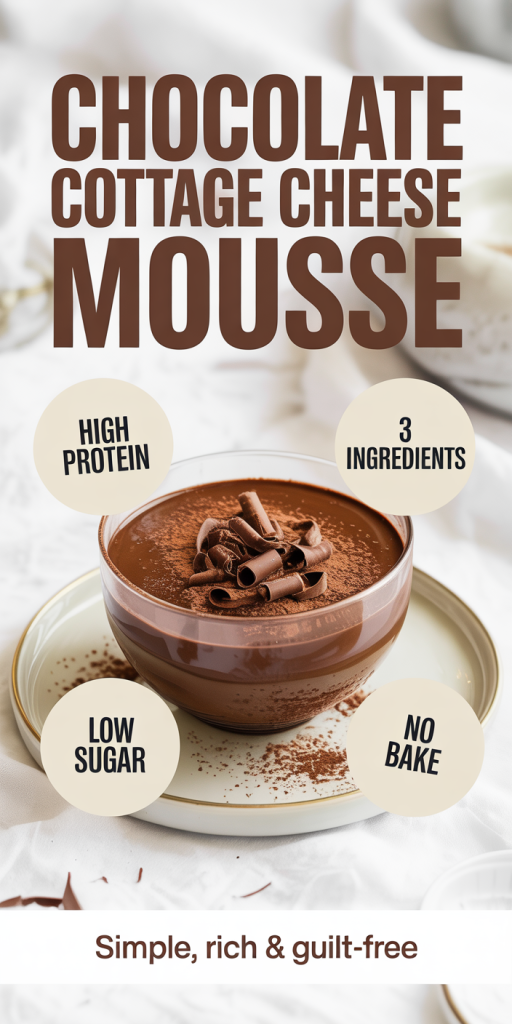
We love recipes that deliver maximum flavor with minimal fuss, and this 3-Ingredient High-Protein Chocolate Cottage Cheese Mousse is exactly that. It’s creamy, chocolatey, and packed with protein, yet made from just three everyday ingredients. Whether we need a post-workout treat, an easy dessert for guests, or a quick breakfast that feels indulgent, this mousse fits the bill. In the sections that follow we’ll walk through why this recipe works, what to buy, step-by-step technique, nutrition, creative variations, storage tips, troubleshooting, and serving ideas so you can make it perfectly every time.
Why This Recipe Works: Quick, Protein-Rich, And Satisfying
There are a few reasons this 3-Ingredient High-Protein Chocolate Cottage Cheese Mousse stands out. First, cottage cheese offers a neutral, creamy base with an impressive protein-to-calorie ratio compared with many traditional dessert bases like mascarpone or heavy cream. Second, cocoa powder brings concentrated chocolate flavor without adding fat-laden chocolate bars or syrups. Third, a modest amount of a sweetener (or naturally sweet ingredient) rounds out the flavor while keeping sugar low if we choose wisely.
Beyond ingredients, the technique is forgiving. A short blitz in a blender or food processor transforms curds into an airy mousse in under five minutes, no tempering, no complicated steps. The texture ends up light and mousse-like because we introduce air during blending and rely on dairy proteins to stabilize the foam as it chills.
Finally, this dessert checks several modern eating boxes: high protein, portable, versatile (we can dress it up or keep it simple), and quick to prepare. For anyone juggling work, workouts, or family dinners, it’s a practical way to enjoy chocolate without derailing nutrition goals.
What You Need: Ingredients And Tools
Pantry Ingredients And Measurements
- 1 1/2 cups (about 340 g) full-fat or low-fat cottage cheese, choose the fat level based on your satiety goals and calories
- 3 tablespoons unsweetened cocoa powder (natural or Dutch-processed depending on desired flavor depth)
- 2–3 tablespoons sweetener of choice (see variations below), typical options: maple syrup, honey, agave, or a liquid low-calorie sweetener like stevia/erythritol blend
Notes on ingredient choices:
- Cottage cheese: We prefer small-curd for a smoother finish after blending, but large-curd works fine if blended longer. Full-fat produces a silkier mouthfeel: low-fat increases protein-to-calorie ratio but may be slightly less creamy.
- Cocoa powder: Natural cocoa is brighter and slightly acidic: Dutch-process is mellower and darker. We recommend using high-quality unsweetened cocoa for the best chocolate notes.
- Sweetener: Start with 2 tablespoons and taste: adjust to preference. Liquid sweeteners blend seamlessly: granular sweeteners require slightly more blending or dissolving.
Optional (but still within the three-ingredient spirit if you already have them): a pinch of fine salt to brighten chocolate, a splash (1/2 tsp) of vanilla extract to round flavor, or a tablespoon of espresso for depth, any of these are optional add-ins, not counted as mandatory ingredients.
Recommended Tools And Prep Tips
- Blender or food processor: A high-speed blender gives the smoothest texture: a food processor works well and is often our go-to for this mousse.
- Rubber spatula: For scraping the blade and jars clean.
- Measuring cups and spoons: Accuracy matters for texture and sweetness.
- Serving glasses or ramekins: Small mason jars or stemless wine glasses make attractive single portions.
- Fine mesh sieve (optional): For sifting cocoa powder into the blender to prevent clumps.
Prep tips:
- Chill the cottage cheese for at least 30 minutes before blending for a colder, firmer mousse after chilling. Cold ingredients whip better and set faster.
- If you want an extra-smooth mousse and have time, press cottage cheese through a fine sieve into the blender to remove whey and large curd pieces.
- Keep the blender jar chilled between uses: a warm container can make the mousse looser.
With these ingredients and tools ready, we’re set to make the mousse in minutes.
Step-By-Step Recipe: How To Make The Mousse
Follow these simple steps and we’ll have chocolate mousse that feels indulgent but is actually packed with protein.
- Measure and prep: Add 1 1/2 cups chilled cottage cheese to the blender or food processor. Sift 3 tablespoons unsweetened cocoa powder on top to avoid clumps. Add 2 tablespoons of your chosen sweetener.
- Blitz: Secure the lid and pulse 6–8 times to break up curds. Then run on high for 30–60 seconds until the mixture looks smooth and aerated. Scrape down the sides with a spatula and blend another 15–30 seconds if needed.
- Taste and adjust: Spoon a little and check sweetness and chocolate intensity. Add another 1/2–1 tablespoon sweetener if needed or a pinch of salt to lift flavor. If chocolate seems weak, add up to 1/2 tablespoon more cocoa (balance with sweetness).
- Portion and chill: Divide into 4 small serving dishes (about 1/2 cup each) and refrigerate for 30–60 minutes to firm up and let flavors meld. Chilling also helps the mousse develop a lighter mouthfeel as proteins relax and bind a bit.
- Garnish and serve: Add desired garnishes (see Serving Ideas) and enjoy chilled.
Blending And Texture Techniques
Texture is where homemade mousse can shine or stumble. We like these small techniques so our 3-Ingredient High-Protein Chocolate Cottage Cheese Mousse turns out velvety every time:
- Pulse first: Short pulses break up curds without overworking the mixture. Then finish with continuous blending to incorporate air.
- Use cold ingredients: Cold cottage cheese and a chilled blender jar prevent warming, which can make the mousse runny.
- Add liquid sparingly: If your cottage cheese is very thick and the blender struggles, a tablespoon of milk or plant-based milk helps the blade move. Use minimal liquid to maintain mousse body.
- Blend longer for smoother texture: If we want an ultra-silky mousse, blend for an extra 20–30 seconds: high-speed blenders reach this quickly.
- Aeration: High-speed blending traps air making the mousse lighter. Don’t overblend to the point of becoming frothy or thin: look for a billowy but stable texture.
Chilling, Plating, And Serving Tips
- Chill time: 30–60 minutes is enough to firm the mousse: for a denser, pudding-like consistency, chill 2–4 hours.
- Serving temperature: Serve chilled but not straight from the freezer. If it’s too cold to taste flavors, take it out 5 minutes before serving.
- Plating: Use clear glasses to show off the mousse’s rich color. For layered desserts, spread a thin layer of fruit compote or crushed cookies first, then pipe the mousse on top for a professional look.
- Garnish ideas: Cocoa nibs, a dusting of cocoa or powdered sugar, fresh berries, chopped toasted nuts, a drizzle of nut butter, or a sprig of mint (see Serving Ideas for more).
Nutrition Breakdown And Health Benefits
This recipe earns attention not only for taste but because it’s a straightforward way to increase daily protein without excess sugar or processed ingredients.
Macros Per Serving And Protein Analysis
Estimated macros for one serving (recipe yields 4 servings):
- Calories: ~170–220 kcal (dependent on cottage cheese fat level and sweetener choice)
- Protein: 18–22 g
- Carbohydrates: 8–12 g (varies with sweetener and added garnishes)
- Fat: 6–12 g (full-fat vs low-fat cottage cheese)
Why protein counts: Cottage cheese is a high-protein dairy product: 1 1/2 cups typically provides roughly 54–60 grams of protein total, which divides into 13–15 grams per 1/2-cup serving, our blended recipe concentrates the protein into a satisfying dessert-sized portion of about 18–22 grams when using full portion sizes or higher-protein cottage cheeses.
For comparison, a typical chocolate pudding or mousse made with cream and sugar offers far fewer grams of protein and more saturated fat and added sugar. Our cottage cheese mousse gives the pleasure of chocolate along with the muscle-repair and satiety benefits of dairy protein.
Health Notes: Satiety, Muscle Recovery, And Ingredient Quality
- Satiety: Protein and fat work together to slow gastric emptying and keep us fuller longer. A dessert that delivers ~20 g of protein can reduce the urge for additional snacks later in the evening.
- Muscle recovery: For active individuals, getting 20–30 g of high-quality protein after exercise supports muscle protein synthesis. This mousse can double as a recovery treat when paired with a small carb source (banana, whole-grain toast) if desired.
- Ingredient quality: We recommend choosing cottage cheese with minimal additives. Look for short ingredient lists (milk, salt, cultures) and minimal gums or stabilizers if you prefer whole-food ingredients. For cocoa, choose unsweetened, additive-free powder to control sugar and flavor purity.
Allergy/nutrient considerations: This recipe is naturally rich in calcium and complete dairy protein. If someone in our household is sensitive to lactose, choose lactose-free cottage cheese or adapt using dairy-free alternatives (see Dietary Adaptations).
Variations And Flavor Customizations
One of the strengths of this recipe is how well it adapts. With small swaps we can tailor sweetness, chocolate intensity, texture, and dietary needs.
Swaps For Sweeteners And Chocolate
- Maple syrup or honey: Adds flavor complexity, maple gives caramel-like notes, honey adds floral sweetness. Use 2 tablespoons to start.
- Agave: Neutral and sweeter than sugar so reduce quantity slightly.
- Liquid sugar substitutes: Stevia-erythritol blends or monk fruit liquid work well: start smaller and taste as you go.
- Granulated sweeteners: If using granulated erythritol or sugar, dissolve in 1–2 tablespoons of warm water or milk first to avoid gritty texture.
- Chocolate swaps: For a more intense chocolate, swap 1 tablespoon of cocoa for 1 tablespoon of melted dark chocolate (70%+). Melt it gently and cool before blending to avoid heating the mousse.
Add-Ins And Texture Variations (Fruit, Nuts, Spices)
- Fruit: Fold in 1/2 cup mashed ripe banana for natural sweetness and creaminess (this increases carbs). Raspberry or cherry compote layered under the mousse creates a classic chocolate-fruit contrast.
- Nuts & crunch: Sprinkle toasted almonds, hazelnuts, or pistachios on top for texture. A tablespoon of chopped dark chocolate or cacao nibs adds a pleasant crunch.
- Spices: Cinnamon, a pinch of cayenne, or ground espresso can add warmth and complexity. We like 1/4 teaspoon cinnamon or 1/2 teaspoon instant espresso for depth.
- Swirls: A swirl of peanut butter or almond butter (1 tablespoon per serving) creates a satiny ribbon and boosts healthy fat and flavor.
Dietary Adaptations: Dairy-Free, Low-FODMAP, And Keto Options
- Dairy-Free: Use a high-protein silken tofu (blend silken tofu with cocoa and sweetener: texture will be smoother but protein lower) or full-fat coconut yogurt thickened with a scoop of unflavored vegan protein powder. Note: flavor and protein will differ from cottage cheese.
- Low-FODMAP: Lactose-free cottage cheese is suitable for many on a low-FODMAP diet in controlled portions. Alternatively, use lactose-free Greek-style yogurts if tolerated.
- Keto: Choose full-fat cottage cheese and swap sweetener for a liquid keto sweetener (liquid stevia or monk fruit) and keep cocoa at 3 tablespoons. Beware that cottage cheese contains some natural lactose: strict keto followers may prefer full-fat ricotta made from sheep’s milk (lower lactose) or a heavy-cream-and-egg-yolk version, though that deviates from the cottage cheese base.
When adapting, we recommend testing small batches to dial texture and sweetness before scaling up.
Storage, Make-Ahead, And Batch Prep Tips
This mousse is friendly to make-ahead plans and batch prep if we follow a few simple rules.
How Long It Keeps And Best Containers
- Refrigerator life: Stored in an airtight container, the mousse keeps well for 3–4 days. Flavor and texture are best within 48 hours.
- Containers: Use small airtight glass jars or individual ramekins with lids for single servings. For batch storage, a shallow airtight container keeps the mousse from compressing and allows faster chilling.
- Layering: If you add crunchy toppings (nuts, granola), store them separately and add just before serving to retain crunch.
Freezing Guidance And Reheating/Thawing Notes
- Freezing: We don’t recommend long-term freezing for texture-sensitive versions: frozen-thawed dairy desserts sometimes separate. But, you can freeze small portions for up to 1 month if necessary.
- Thawing: Thaw overnight in the refrigerator. After thawing, gently whisk or re-blend briefly to smooth out any separation. Expect slightly softer texture vs fresh-chilled mousse.
- Quick refresh: If the mousse firms up too much in the fridge, let it sit at room temperature for 5–10 minutes before serving. If it’s become watery after storage, a short pulse in the blender refreshes the emulsion and texture.
Batch prep strategy:
- Make a double batch and portion into four-to-eight jars, keeping toppings separate. Label with date and use within 3–4 days. This is handy for breakfast menus, post-workout snacks, or an easy dessert during a busy week.
Troubleshooting Common Issues
Even simple recipes can present small problems. Here’s how we fix the common issues we might encounter with this mousse.
If The Mousse Is Grainy, Runny, Or Bitter
- Grainy texture: Often caused by insufficient blending or coarse cottage cheese curds. Fix: Blend longer, pulse, then scrape and blend again. For persistent graininess, press the cottage cheese through a fine mesh sieve before blending.
- Runny consistency: Could be from warm ingredients, too much added liquid, or over-blending causing separation. Fixes: Chill the mixture for 30–60 minutes: add a tablespoon of powdered protein or a small spoon of powdered milk to bind: re-blend briefly and chill.
- Bitter chocolate: Excessive cocoa or low-quality cocoa can taste bitter. Fix: Add a little more sweetener, a pinch of salt, or a small splash of vanilla extract. If bitterness is extreme, a teaspoon of honey or maple syrup usually balances it out.
Adjusting Sweetness And Chocolate Intensity
- Too sweet: Add a tablespoon of cocoa and a small pinch of salt, then blend. The extra cocoa reduces the perception of sweetness and enhances chocolate depth.
- Not chocolatey enough: Add up to 1/2 tablespoon more cocoa or a teaspoon of espresso powder (dissolved in a little water) to amplify chocolate without extra sugar. Taste as you go to avoid overshooting.
When troubleshooting, adjust gradually and taste after each small change. It’s easier to add more than to fix an over-corrected dessert.
Serving Ideas And Pairings
This mousse sits comfortably across occasions, from casual snacks to plated desserts. Here are ways we like to present it.
Simple Garnishes And Presentation Ideas
- Fresh berries (raspberries, strawberries, or halved cherries) for bright contrast and acidity.
- Toasted chopped nuts (almonds, hazelnuts, pistachios) for crunch and savory balance.
- Cocoa nibs or finely chopped dark chocolate for texture and an intense chocolate note.
- A light dusting of cocoa powder or powdered sugar for a café-style finish.
- Whipped cream or a dollop of Greek yogurt for extra creaminess and visual height.
- Herb accents: a small mint leaf adds color and a refreshing scent.
Presentation tips:
- Pipe the mousse into glassware using a zip-top bag with the corner clipped for neat servings.
- For an elegant dessert, layer mousse with a thin cookie crumble or sponge cake and a tart fruit compote.
- For a casual snack, spoon into mason jars, top with granola and berries, and seal for a grab-and-go option.
What To Serve It With: Meals And Occasions
- Post-workout: Pair with a banana or a rice cake for quick carbs plus the mousse’s protein.
- Breakfast or brunch: Serve alongside whole-grain toast and fresh fruit: the mousse stands in as a protein-rich spread.
- Dinner party dessert: Plate with a fruit coulis and a small biscotti or crisp tuile for texture contrast and an elegant finish.
- Snack or treat: Keep single-serve jars in the fridge for an afternoon pick-me-up that satisfies chocolate cravings without a sugar crash.
Because the mousse is modest in calories but substantial in protein, we often choose it when we want an indulgent flavor with functional nutrition.
Conclusion
This 3-Ingredient High-Protein Chocolate Cottage Cheese Mousse proves that delicious doesn’t have to mean complicated. With just cottage cheese, unsweetened cocoa, and a sweetener, we can create a dessert or snack that’s high in protein, adaptable to diets, and quick to prepare. Small technique choices, cold ingredients, sufficient blending, and appropriate chilling, elevate the texture from curds to mousse. Once comfortable with the base, we encourage experimenting with flavors, textures, and pairings to make it our own.
Give it a try this week: make a single serving to test flavor balance, then scale up for meal prep or guests. Between its flexibility, nutrition profile, and ease, this mousse becomes a reliable go-to whenever we want chocolate without compromise.