
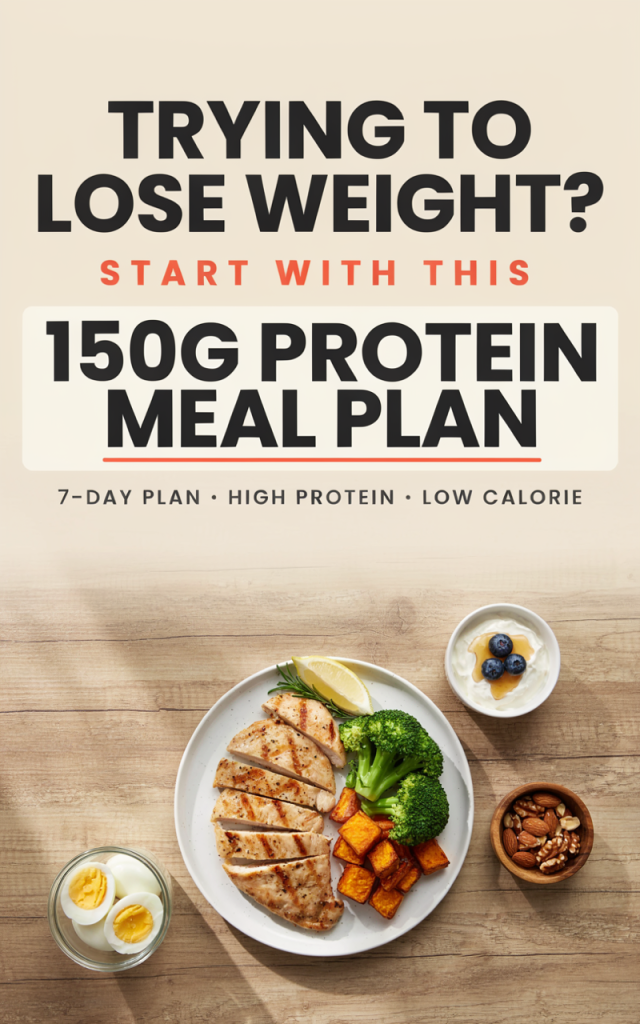
If You’re Trying to Lose Weight, Start With This 150g Protein Meal Plan
Protein is one of the most powerful tools in your weight-loss toolbox. It preserves lean muscle while you lose fat, increases satiety so you eat less overall, and boosts your metabolism through the thermic effect of food. If you want to lose weight without feeling constantly hungry or drained, start with a consistent daily protein target — and 150 grams is a practical, effective goal for many active adults aiming to preserve muscle and support fat loss.
This post gives you a complete, practical, and flexible one-day meal plan that delivers approximately 150g of protein. You’ll get five recipe ideas (breakfast, two snacks, lunch, and dinner), exact ingredients and step-by-step instructions so you can make each meal, plus meal-prep tips, portion swaps, and guidance on how to adapt the plan to your calorie needs.
Note: protein counts are approximate and will vary by product/brand and cooking method. Adjust portions to meet your target precisely.
Why 150g of Protein? (Short Science Summary)
- Protein supports muscle maintenance during calorie restriction. The more muscle you keep, the higher your resting metabolic rate.
- Protein is highly satiating — it reduces hunger more than carbs or fat, which helps cut total calories naturally.
- Digesting protein burns more calories than digesting fat or carbs (the thermic effect of food).
- 150g is a strong target for many active or taller individuals, or those who lift weights and want to preserve or build muscle while losing fat. If you’re smaller or sedentary, your target may be lower (0.7–1.0 g/kg body weight). If you’re very active or a strength athlete, even more protein may help.
How this plan is structured
- Total protein target for the day: ~150 grams
- Meals: Breakfast, AM snack, Lunch, PM snack, Dinner
- Each recipe lists ingredients (bulleted) and step-by-step instructions (numbered) per your request.
- Approximate protein per meal is shown so you can track throughout the day.
Now let’s get to the plan.
The 150g Protein Meal Plan — One-Day Example
Total target: ~150 g protein
- Breakfast — Greek Yogurt Berry Protein Parfait — ~35 g protein
- AM Snack — Cottage Cheese & Almonds — ~20 g protein
- Lunch — Grilled Chicken + Quinoa Power Bowl — ~40 g protein
- PM Snack — Chocolate-Peanut Smoothie — ~15 g protein
- Dinner — Baked Salmon with Lentils & Greens — ~40 g protein
Each recipe below includes ingredients and instructions so you can cook and prep quickly.
Breakfast (≈35 g): Greek Yogurt Berry Protein Parfait
Ingredients
– 1 cup (245 g) plain nonfat Greek yogurt (approx. 23 g protein)
– 1/2 scoop whey protein powder (about 12 g protein) — vanilla or unflavored
– 1/2 cup mixed berries (fresh or frozen)
– 2 tbsp rolled oats or 2 tbsp granola (optional for texture)
– 1 tsp chia seeds or flaxseed (optional)
– 1 tsp honey or a few drops of liquid stevia (optional)
Instructions
1. In a bowl, stir the 1/2 scoop whey protein powder into the Greek yogurt until smooth and fully mixed. Use a whisk or fork for a lump-free mix.
2. Layer or fold in the berries and chia or flaxseed.
3. Sprinkle oats or granola on top for crunch if using.
4. Taste and sweeten lightly with honey or stevia if desired.
5. Serve immediately, or transfer to a sealed container for a grab-and-go breakfast.
Why it works: This parfait is quick, portable, and pairs the slow-digesting protein of Greek yogurt with the fast-digesting protein of whey powder so you start the day full and satisfied.
AM Snack (≈20 g): Cottage Cheese & Almonds with Cucumber Slices
Ingredients
– 1/2 cup (about 110 g) low-fat cottage cheese (≈14 g protein)
– 1 oz (about 28 g) raw almonds (≈6 g protein)
– 1/2 small cucumber, sliced (optional for crunch)
– Freshly ground black pepper or smoked paprika (optional)
Instructions
1. Scoop the cottage cheese into a small bowl or container.
2. Top with almonds, or keep the almonds separated if you prefer to snack on them alongside.
3. Add cucumber slices and season with a pinch of pepper or smoked paprika for flavor.
4. Eat immediately or pack in a cooler for later.
Why it works: Cottage cheese is one of the most cost-effective, high-protein dairy choices. Pairing with almonds adds healthy fats and texture to keep you satisfied until lunch.
Lunch (≈40 g): Grilled Chicken + Quinoa Power Bowl
Ingredients
– 5 oz (about 140 g) cooked/grilled chicken breast (≈40 g protein when using a lean 5-oz portion)
– 1/2 cup cooked quinoa (about 90 g) (≈4 g protein)
– 1/2 cup steamed edamame or chickpeas (≈8–9 g protein)
– 2 cups mixed leafy greens (spinach, arugula)
– 1/2 cup cherry tomatoes, halved
– 1/4 avocado, sliced
– 1–2 tbsp olive oil + lemon juice or 1 tbsp vinaigrette
– Salt and pepper to taste
Instructions
1. If you don’t have pre-cooked chicken: season the chicken breast with salt, pepper, and a dash of paprika or garlic powder. Grill or pan-sear 5–7 minutes per side until internal temperature reaches 165°F (74°C). Rest 5 minutes, then slice.
2. Heat/prepare quinoa according to package directions if not pre-cooked. Steam or microwave the edamame if using.
3. In a bowl, layer the mixed greens, quinoa, edamame or chickpeas, and cherry tomatoes.
4. Top with the sliced grilled chicken and avocado.
5. Drizzle olive oil and lemon juice or vinaigrette, season to taste, and toss before eating.
Why it works: This bowl balances lean protein from chicken, plant protein from quinoa and legumes, and fiber-rich veggies — a classic sustainable fat-loss meal.
PM Snack (≈15 g): Chocolate-Peanut Protein Smoothie (Smaller Serving)
Ingredients
– 1/2 scoop chocolate whey protein powder (≈12 g protein)
– 1/2 cup unsweetened almond milk or skim milk (≈1–4 g protein depending on milk)
– 1 tbsp natural peanut butter (≈4 g protein)
– 1/4 frozen banana or 1/4 cup frozen berries
– Ice as needed
Instructions
1. Add the 1/2 scoop protein powder, almond/skim milk, peanut butter, and frozen fruit to a blender.
2. Blend until smooth, adding ice to reach desired thickness.
3. Pour into a glass and enjoy immediately.
Why it works: This smaller smoothie provides a quick, enjoyable protein boost mid-afternoon without being overly calorie-dense. It pairs fast and medium-digesting proteins with healthy fats to stabilize blood sugar until dinner.
Dinner (≈40 g): Baked Salmon with Herbed Lentils & Sautéed Greens
Ingredients
– 6 oz (about 170 g) salmon fillet (≈36 g protein)
– 1/2 cup cooked lentils (≈9 g protein)
– 2 cups mixed greens (kale or Swiss chard), roughly chopped
– 1 small shallot or 1 clove garlic, minced
– 1 tbsp olive oil
– Juice of 1/2 lemon
– Salt, pepper, and fresh herbs (dill or parsley)
Instructions
1. Preheat the oven to 400°F (200°C). Line a baking sheet with parchment.
2. Pat the salmon dry, season with salt, pepper, and a squeeze of lemon. Place on the baking sheet and bake 12–15 minutes (time varies by thickness) until cooked through and flaky.
3. While salmon bakes, heat 1/2 tbsp olive oil in a skillet over medium heat. Add minced garlic or shallot and sauté 30–60 seconds.
4. Add the greens and cook 3–4 minutes until wilted. Season with salt and pepper and a splash of lemon juice.
5. Warm the cooked lentils in a small pot or microwave; stir in a drizzle of olive oil and chopped herbs.
6. Plate the salmon on the bed of lentils and greens. Garnish with extra herbs and serve.
Why it works: Salmon supplies high-quality protein plus anti-inflammatory omega-3 fats. Lentils boost plant protein and fiber for fullness and gut health — great closing meal for the day.
Meal Prep Tips to Make This Easy
- Batch cook grilled chicken and quinoa on a weekend night. Store in portioned containers for 3–4 days.
- Pre-portion cottage cheese and almonds into snack containers.
- Mix Greek yogurt with protein powder in individual jars so breakfast is truly grab-and-go. Add berries the morning you eat it to avoid sogginess.
- Cook a large pot of lentils and use for multiple dinners or lunches; lentils keep 4–5 days refrigerated.
- Frozen berries and spinach are your friend — they keep longer and are often cheaper.
How to Adjust Calories and Protein
- Want fewer calories? Reduce the starchy carbs (quinoa, lentils) slightly and keep protein portions stable — protein preserves muscle as you reduce calories.
- Want fewer protein grams? Cut portion sizes of high-protein items (smaller chicken portion or half-scoop whey).
- Want more protein? Add a scoop of protein powder to any snack or smoothie, or increase the portion of meat/fish. Adding an extra 20–30 g protein is easy with one scoop of isolate.
- Vegetarians: swap chicken and salmon for higher-protein combos like tempeh (20 g per 4 oz), extra-large portions of lentils, cottage cheese, Greek yogurt, and protein powders.
Timing and Distribution: Why Spread Protein Across the Day?
Distributing protein across multiple meals (vs. one large feed) helps maximize muscle protein synthesis and keeps hunger under control. This plan spreads protein across five feedings so each sitting provides a meaningful amount.
Sample Grocery List
- Nonfat Greek yogurt (large tub)
- Whey protein powder (vanilla/chocolate)
- Eggs (for flexibility)
- Chicken breast
- Salmon fillets
- Quinoa
- Lentils (dried or canned)
- Cottage cheese
- Almonds
- Natural peanut butter
- Mixed berries (fresh or frozen)
- Mixed greens, spinach, kale
- Avocado, tomatoes, cucumbers
- Olive oil, lemon juice, basic spices
- Edamame or chickpeas (canned or frozen)
Frequently Asked Questions
Q: Is 150g of protein too much?
A: It depends. For many active adults and those lifting weights, it’s a reasonable, effective target. For smaller, sedentary people, it may be more than needed. Aim for 1.2–2.2 g/kg bodyweight if you’re active; 150g will be appropriate for many at the higher end of that range.
Q: Will high protein harm my kidneys?
A: In healthy people, high-protein diets do not impair kidney function. If you have pre-existing kidney disease, talk with your physician before making major changes in protein intake.
Q: What about carbs and fats?
A: Both are important. This plan includes healthy fats (olive oil, nuts, salmon) and carbs for energy and fiber (berries, quinoa, lentils). Adjust carb and fat portions to meet your calorie goals.
Practical Tips to Make Weight Loss Sustainable
- Prioritize protein at every meal — it’s the biggest lever for feeling full and maintaining muscle.
- Favor whole-food protein sources but use protein powder strategically for convenience.
- Stay consistent: small daily improvements add up faster than sporadic extremes.
- Combine this nutrition approach with progressive resistance training for the best body-composition outcomes.
Conclusion — Start Simple, Stay Consistent
If you’re trying to lose weight and want to do it while protecting muscle and feeling satisfied, start with a clear protein target and a reproducible meal plan. This 150g protein day is designed to be simple, flavorful, and practical: protein at each sitting, balanced meals, and real-food ingredients you can prep in advance.
Use the recipes above as a template. Swap ingredients to keep taste variety, scale portions for your calorie needs, and pair this nutrition plan with consistent strength training and good sleep. Over time, you’ll find that prioritizing protein makes eating less of a chore and more of an effective, sustainable strategy for fat loss.
You’ve got a strong start — now make a shopping list, prep a few meals, and try this plan for a week. Small, consistent actions create real results.


