The Easiest Way for Women to Eat 150g of Protein Every Day
Eating 150 grams of protein a day might sound like a dietitian’s fantasy or a bodybuilder’s routine, but for many women — especially those who are strength training, recovering from injury, aiming to lose fat while preserving muscle, or simply wanting steady energy — 150 g can be a practical, smart target. The trick isn’t force-feeding protein at every sitting; it’s planning, picking dense foods, using smart recipes, and distributing intake across the day.
This guide gives you a simple, sustainable blueprint for hitting 150 g daily without feeling restricted or living on plain chicken breast. You’ll get science-backed strategies, a sample daily meal plan, and 10 delicious, easy-to-make recipes/meal ideas (with ingredients and step-by-step instructions) that add up to your target. Let’s make this doable, enjoyable, and repeatable.
Why 150 g of Protein? Is That Right for You?
- Muscle maintenance and growth: Higher protein helps preserve and build lean mass, especially important if you lift weights.
- Satiety and appetite control: Protein keeps you full longer, supporting fat loss goals without constant hunger.
- Metabolic support: Protein has a higher thermic effect than carbs or fats, meaning you burn more calories digesting it.
- Recovery and immune support: Protein supplies amino acids needed for repair, recovery, and immune function.
Is 150 g appropriate? It depends on body size and goals. For many active women, especially those lifting heavy or aiming to preserve muscle during calorie restriction, 1.6–2.4 g/kg of bodyweight is often recommended. For a 63–94 kg (140–207 lb) woman, that range overlaps with ~100–225 g/day. So 150 g sits comfortably for many active women. Consult your healthcare provider or registered dietitian for personalized advice.
The Big Principles: How to Hit 150 g Without Stress
Prioritize Protein at Every Meal
Aim for 25–50 g of protein at each main meal and 10–25 g at snacks. Consistent distribution improves muscle protein synthesis versus a skewed pattern (e.g., almost all protein at dinner).
Choose Protein-Dense Foods
Foods with high protein-to-calorie ratios: lean meats, poultry, fish, eggs, dairy (cottage cheese, Greek yogurt), protein powders, tofu, tempeh, and certain legumes.
Use Convenience Wisely
Canned tuna/ salmon, rotisserie chicken, Greek yogurt, premade protein shakes, and ready-cooked lentils save time and make hitting targets easier.
Block and Batch Cook
Cook chicken, ground turkey, boiled eggs, and grains at the start of the week so assembling protein-forward meals takes minutes.
Supplement Strategically
Protein powders (whey, casein, pea, soy) are tools — quick, portable, and effective for boosting intake without a lot of fuss.
How to Distribute 150 g Across a Day
A simple target distribution:
– Breakfast: 35–50 g
– Mid-morning snack: 10–20 g
– Lunch: 35–45 g
– Afternoon snack: 10–20 g
– Dinner: 30–40 g
This distribution balances energy and supports recovery if you train midday or in the evening.
Sample Daily Meal Plan (Approximate protein totals)
- Breakfast: High-Protein Smoothie — 48 g
- Mid-morning: Greek Yogurt Parfait — 18 g
- Lunch: Chicken & Quinoa Power Bowl — 46 g
- Afternoon snack: Tuna Salad Wrap — 20 g
- Dinner: Turkey Chili (smaller serving) — 18 g
Total ≈ 150 g
Below are recipes/meal ideas that make this plan realistic and tasty. Each recipe includes ingredients and numbered instructions, and an approximate protein amount per serving so you can mix and match to reach 150 g.
10 Recipes & Meal Ideas (explicitly listed)
Recipe 1 — High-Protein Berry & Oat Smoothie (approx. 48 g protein)
Ingredients:
– 1.5 scoops whey or vegan protein powder (about 30 g protein total)
– 1 cup unsweetened soy milk or cow’s milk (7–8 g protein)
– 1/2 cup plain Greek yogurt (10 g protein)
– 1/2 cup frozen mixed berries
– 2 tbsp rolled oats
– 1 tbsp nut butter (optional)
– Ice (optional)
Instructions:
1. Add protein powder, milk, Greek yogurt, berries, oats, and nut butter to a blender.
2. Blend on high until smooth, adding ice for thickness if desired.
3. Taste and adjust sweetness with a little honey or stevia if needed.
4. Pour into a large glass and drink within an hour for best texture.
Notes: Swap protein powder type to match dietary needs. Using cow or soy milk improves protein content vs. almond milk.
Recipe 2 — Greek Yogurt Parfait with Seed Crunch (approx. 18 g protein)
Ingredients:
– 1 cup plain nonfat Greek yogurt (about 20 g protein)
– 1/4 cup mixed berries
– 1 tbsp chia seeds
– 1 tbsp chopped almonds or walnuts
– 1 tsp honey or maple syrup (optional)
Instructions:
1. Spoon the Greek yogurt into a bowl or jar.
2. Top with berries, chia seeds, and chopped nuts.
3. Drizzle honey if desired and serve.
Notes: If you need extra protein, add 1/2 scoop protein powder stirred into the yogurt (adds ~15 g).
Recipe 3 — Egg & Veggie Breakfast Muffins (6-8 muffins) (approx. 28 g protein per 2-muffin serving)
Ingredients:
– 8 large eggs
– 1/2 cup egg whites (liquid) or 2 extra eggs (optional)
– 1 cup chopped spinach
– 1/2 cup diced bell pepper
– 1/4 cup diced onion
– 1/2 cup shredded low-fat cheddar cheese
– Salt and pepper to taste
– Cooking spray
Instructions:
1. Preheat oven to 375°F (190°C). Spray a 12-cup muffin tin with cooking spray.
2. Whisk eggs (and egg whites if using) in a large bowl. Season with salt and pepper.
3. Stir in spinach, bell pepper, onion, and cheese.
4. Divide mixture evenly into muffin cups.
5. Bake 18–20 minutes, until set and lightly golden.
6. Cool slightly, remove, and store in the refrigerator for easy breakfasts.
Notes: Two muffins plus a small Greek yogurt make a high-protein breakfast.
Recipe 4 — High-Protein Oatmeal with Cottage Cheese (approx. 30 g protein)
Ingredients:
– 1/2 cup rolled oats
– 1 cup water or milk (cow’s or soy for more protein)
– 1/2 cup low-fat cottage cheese (about 14 g protein)
– 1 tbsp chia seeds
– 1/2 sliced banana or berries
– Cinnamon and sweetener to taste
Instructions:
1. Cook oats with water or milk according to package directions.
2. Stir in cottage cheese and chia seeds until well combined and creamy.
3. Top with banana or berries and a sprinkle of cinnamon.
4. Sweeten to taste and serve warm.
Notes: Cottage cheese increases protein density and creates a creamy texture.
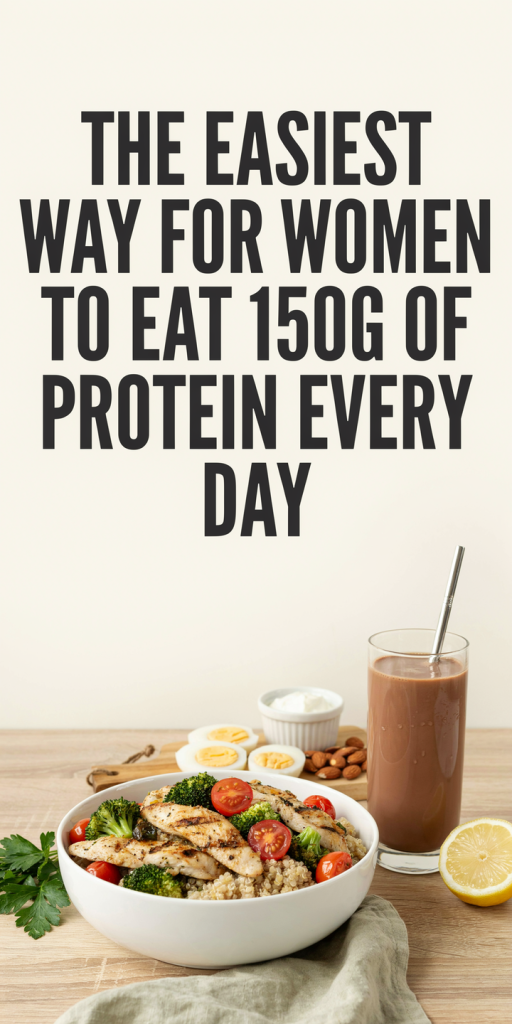
Recipe 5 — Chicken & Quinoa Power Bowl (approx. 46 g protein)
Ingredients:
– 6 oz cooked chicken breast (approx. 40 g protein)
– 1/2 cup cooked quinoa (about 4 g protein)
– 1 cup mixed greens
– 1/2 cup roasted sweet potato cubes
– 1/4 avocado
– 2 tbsp hummus or Greek yogurt dressing
– Lemon juice, salt, pepper
Instructions:
1. Assemble cooked quinoa and mixed greens in a bowl.
2. Top with sliced chicken, roasted sweet potato, and avocado.
3. Dollop hummus or drizzle Greek yogurt dressing, squeeze lemon, and season.
4. Toss gently and eat.
Notes: Use rotisserie chicken for speed. Swap quinoa for farro or brown rice — protein varies.
Recipe 6 — Tuna Salad Wrap (approx. 20 g protein)
Ingredients:
– 1 can (5 oz) tuna in water, drained (approx. 20–25 g protein)
– 2 tbsp plain Greek yogurt or 1 tbsp light mayo
– 1 tbsp diced red onion or celery
– Salt, pepper, lemon juice
– 1 large whole-wheat wrap or low-carb tortilla
– Lettuce leaves and tomato slices
Instructions:
1. Mix drained tuna with Greek yogurt, onion, lemon juice, salt, and pepper.
2. Lay out the wrap, place lettuce and tomato, and spoon tuna mixture.
3. Roll tightly and slice in half.
4. Serve with raw veggies or a small side salad.
Notes: Use 6 oz canned tuna for more protein. A scoop of cottage cheese or an extra boiled egg on the side can boost protein.
Recipe 7 — Turkey & Bean Chili (makes 4 servings) (approx. 18–25 g protein per 1.5-cup serving depending on meat ratio)
Ingredients:
– 1 lb (450 g) lean ground turkey (about 90 g protein total for whole batch)
– 1 can (15 oz) black beans, drained and rinsed
– 1 can (15 oz) diced tomatoes
– 1 small onion, diced
– 2 cloves garlic, minced
– 1 tbsp chili powder
– 1 tsp cumin
– 1 cup low-sodium chicken or vegetable broth
– Salt and pepper to taste
– Olive oil
Instructions:
1. Heat a tablespoon of oil in a large pot over medium heat. Sauté onion until translucent.
2. Add garlic and cook 30 seconds.
3. Add ground turkey and cook until browned, breaking it up with a spoon.
4. Stir in chili powder, cumin, diced tomatoes, black beans, and broth.
5. Bring to a simmer, reduce heat, and cook 20–30 minutes until thickened.
6. Season to taste and serve with optional Greek yogurt or shredded cheese.
Notes: Portion sizes affect protein per serving — this recipe yields 3–4 servings. Add extra beans or serve with Greek yogurt to boost protein.
Recipe 8 — Cottage Cheese & Fruit Snack Bowl (approx. 20–24 g protein)
Ingredients:
– 1 cup low-fat cottage cheese (≈ 25 g protein)
– 1/2 cup pineapple chunks or sliced peaches
– 1 tbsp chia seeds or hemp hearts
– Cinnamon (optional)
Instructions:
1. Spoon cottage cheese into a bowl.
2. Top with fruit and sprinkle chia seeds or hemp hearts.
3. Add a dash of cinnamon and enjoy.
Notes: Cottage cheese is one of the easiest high-protein snack options.
Recipe 9 — Protein Pancakes (2 servings) (approx. 30 g protein per serving)
Ingredients:
– 1 cup rolled oats (blended into flour) or oat flour
– 1 scoop protein powder (20–25 g protein per scoop)
– 2 eggs
– 1/2 cup cottage cheese or Greek yogurt
– 1/4 cup milk (cow or soy)
– 1 tsp baking powder
– Cooking spray or coconut oil
Instructions:
1. Blend oats into a flour if using whole oats. Combine oat flour, protein powder, and baking powder.
2. In another bowl, whisk eggs, cottage cheese/Greek yogurt, and milk until smooth.
3. Mix wet and dry ingredients until batter forms.
4. Heat a nonstick skillet over medium and grease lightly.
5. Pour batter into pancakes; cook 2–3 minutes per side until golden.
6. Serve with berries or a small drizzle of maple syrup.
Notes: Adjust protein powder amount to reach desired protein per serving.
Recipe 10 — Quick Chickpea & Tuna Salad (approx. 30 g protein)
Ingredients:
– 1 can (5–6 oz) tuna in water, drained (≈ 20–25 g protein)
– 1/2 cup canned chickpeas, drained and rinsed (≈ 6 g protein)
– 1 tbsp olive oil
– 1 tbsp lemon juice
– 1/4 cup chopped cucumber, cherry tomatoes, parsley
– Salt and pepper
Instructions:
1. Combine tuna and chickpeas in a bowl.
2. Add olive oil, lemon juice, chopped veg, and herbs.
3. Toss to combine and season to taste.
4. Serve over greens or with whole-grain crackers.
Notes: This salad is versatile and packs a double protein punch from tuna + chickpeas.
How to Combine These Recipes Into a Weekly Routine
- Rotate three breakfasts (smoothie, egg muffins, protein oatmeal) to avoid boredom.
- Batch-cook chicken and turkey chili on Sunday for quick lunches/dinners.
- Keep Greek yogurt and cottage cheese on hand for easy high-protein snacks.
- Use protein shakes pre/post-workout for convenience and quick recovery.
- Build bowls from cooked grains + a protein + veggies + healthy fat — simple and flexible.
Shopping & Batch-Cooking Checklist
- Proteins: chicken breasts, ground turkey, canned tuna/salmon, eggs, Greek yogurt, cottage cheese, protein powder
- Staples: quinoa, oats, beans, canned tomatoes
- Veggies/fruits: spinach, bell peppers, onions, berries, bananas
- Healthy fats: avocado, olive oil, nuts
- Extras: hummus, low-sodium broths, herbs, spices
Batch-cook ideas:
1. Roast 2–3 lbs of chicken breast with simple seasoning.
2. Cook a large pot of quinoa and a tray of roasted vegetables.
3. Make a double batch of egg muffins and turkey chili.
4. Portion single-serving cottage cheese and yogurt into containers for quick snacks.
Troubleshooting: Common Barriers & Solutions
- I get full too quickly: Spread protein across more meals and snacks of smaller volume (e.g., cottage cheese + fruit rather than a huge steak).
- Budget limits: Use canned tuna, eggs, legumes, and protein powder to maintain protein on a budget.
- Time constraints: Lean on rotisserie chicken, canned beans, and premade Greek yogurt. Smoothies and wraps take minutes.
- Digestive discomfort from protein shakes: Try lower-lactose options (pea, soy, rice) or smaller doses more frequently.
Quick Tips to Boost Protein Without Extra Cooking
- Add 1/2 scoop protein powder to oatmeal, yogurt, or pancake batter (+ ~10–12 g).
- Top salads with 3–4 oz canned tuna or 1/2 cup cottage cheese (+ ~15–20 g).
- Keep hard-boiled eggs handy (+ 6–7 g per egg).
- Swap regular milk for cow or soy milk in coffee, cereal, or smoothies for extra 6–8 g per cup.
Frequently Asked Questions (Short)
- Will 150 g of protein make me bulky? No. Protein supports muscle retention and lean mass; muscle gain requires progressive resistance training and often a calorie surplus.
- Is animal protein necessary? No. Plant proteins can meet the goal with careful pairing (e.g., legumes + grains) and possibly slightly higher totals to match amino acid profiles.
- Is protein powder safe daily? For most healthy adults, yes. Choose reputable brands and consider whole-food sources first.
Conclusion
Hitting 150 grams of protein every day doesn’t require perfect eating or joyless meals. It requires a plan: prioritize protein at each sitting, use dense protein foods and convenient options, and assemble meals and snacks that are tasty and quick. The recipes and meal ideas above make it easy to mix and match — smoothies, Greek yogurt parfaits, egg muffins, power bowls, tuna wraps, and chili are practical, satisfying, and protein-forward. Start by picking a couple of breakfasts and lunches from this list, batch-cook once or twice a week, and carry simple snacks like cottage cheese or tuna in your bag. Within a week you’ll discover that 150 g is not a mountain but a manageable, muscle-preserving habit that leaves you stronger, fuller, and more energetic.
Pick a day to try the sample plan, tailor the recipes to your taste, and use the strategies here to make protein a seamless part of your routine. You’ve got this — every protein-packed meal is a step toward better recovery, better results, and better health.