
The Best Way to Keep Salad Greens Fresh Longer
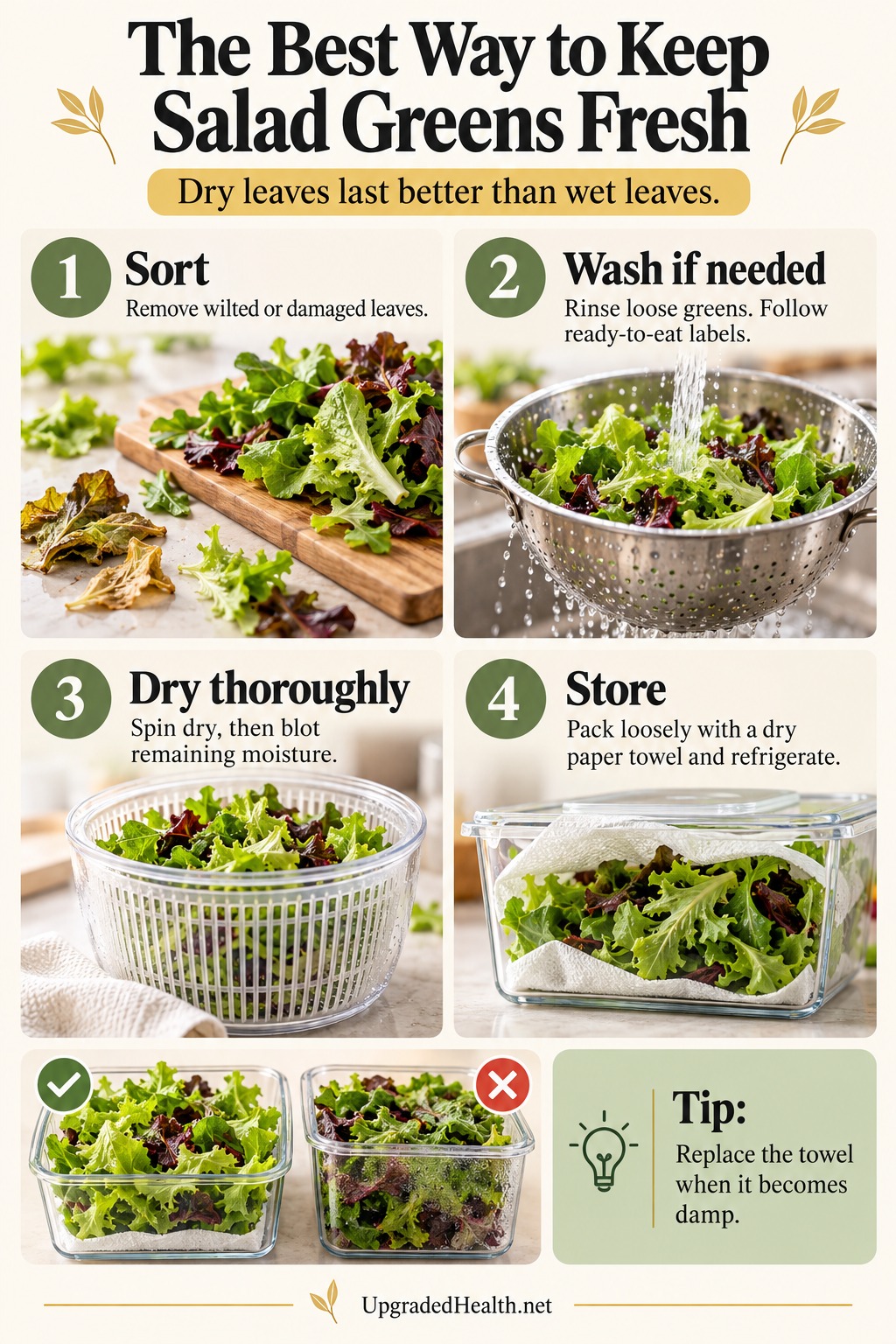
The most useful way to keep salad greens fresh is to remove damaged leaves, dry the good leaves thoroughly, and refrigerate them loosely packed with a dry paper towel. The towel absorbs stray moisture, while the container protects delicate leaves from being crushed. This works better than stuffing wet lettuce into a tightly packed bag.
Moisture is the main problem
Greens need some humidity to avoid wilting, but water sitting on their surfaces encourages deterioration. The aim is dry leaves in a protected environment—not leaves dried until leathery, and not a container dripping with condensation. A salad spinner makes the job easier.
Check the package first
Loose lettuce usually needs rinsing. Greens labeled washed or ready-to-eat should be handled according to the package instructions; unnecessary rewashing can introduce contamination from a sink or board. Always use clean hands, equipment, and containers, and keep greens away from raw poultry and meat.
1. Sort before storing
Remove yellow, crushed, or wilted leaves. Discard slimy or moldy greens rather than trying to hide them beneath fresh leaves. For whole heads, remove damaged outer leaves while leaving the sound head as intact as practical.
2. Wash loose greens gently
Separate leaves and rinse under cool running water, paying attention to folds where dirt collects. Do not use soap. If there is heavy grit, loosen it in a clean bowl of water, then rinse. Clean the bowl and sink before and after the task.
3. Dry more thoroughly than you think
Spin in batches so leaves have room to move. Pour out the collected water and spin again if needed. Spread on a clean towel and blot any obvious droplets. If you do not have a spinner, use towels patiently rather than putting wet leaves straight into storage.
4. Pack loosely
Line a clean container with a dry paper towel, add greens without pressing them down, and place another towel over the top if useful. Close the container and refrigerate. A roomy food bag also works; avoid crushing it beneath heavier groceries.
5. Check the towel
Replace it when damp. If condensation collects inside the container, open it briefly, blot excess water, and use a fresh towel. Remove deteriorating leaves as soon as you notice them. There is no single reliable number of days for every type of lettuce or every starting condition.
For meal-prep salads
Store dressing separately and add it just before eating. Keep wet tomatoes, warm cooked ingredients, and juicy fruit separate from greens until serving. If you pack chicken or grains, cool them safely before combining so they do not steam the lettuce.
Can wilted lettuce be revived?
Slightly wilted but otherwise sound leaves may crisp in a brief ice-water bath. Dry them thoroughly afterward and use soon. An ice bath does not rescue slime, mold, or spoiled greens.
Should I cut lettuce before storing?
Cut only what you need if appearance matters. Cut edges can discolor sooner, and chopped leaves have more exposed surface. Torn or cut greens are convenient for lunches, but should still be stored dry and handled gently.
What about spinach and arugula?
The same dry-and-protect approach helps, but tender leaves bruise easily. Avoid overfilling the spinner or crushing the bag, and follow the package’s date and storage guidance.


