30-Day Cholesterol-Lowering Meal Plan Your Doctor Will Love for a Healthier Heart
When it comes to heart health, managing cholesterol levels is crucial. I know firsthand how overwhelming it can feel to navigate dietary changes, especially when you’re trying to impress your doctor. That’s why I’ve crafted a 30-day cholesterol-lowering meal plan that’s not only effective but also delicious and satisfying.
Overview of Cholesterol and Its Impact
Cholesterol plays a crucial role in bodily functions, contributing to hormone production, vitamin D synthesis, and cell membrane integrity. There are two primary types: low-density lipoprotein (LDL) and high-density lipoprotein (HDL). LDL is often referred to as “bad” cholesterol due to its association with plaque buildup in arteries, while HDL is known as “good” cholesterol for its role in transporting cholesterol away from arteries.
High cholesterol levels can lead to atherosclerosis, a condition that narrows and hardens arteries, increasing the risk for heart attacks and strokes. Statistically, approximately 38% of adults in the United States have high cholesterol levels, a significant risk factor for cardiovascular diseases.
Diet significantly impacts cholesterol levels. Foods high in saturated fats, trans fats, and cholesterol can elevate LDL levels. In contrast, dietary fibers, healthy fats, and plant sterols can help lower LDL levels. Incorporating a variety of nutrient-rich foods, such as fruits, vegetables, whole grains, and lean proteins, supports healthier cholesterol management.
Regular physical activity enhances HDL levels while reducing LDL levels. Engaging in at least 150 minutes of moderate aerobic exercise weekly promotes heart health. Monitoring cholesterol levels through regular screenings aids in understanding individual risk and making informed lifestyle choices.
Understanding cholesterol’s effects encourages more informed decisions regarding diet and lifestyle choices. Adopting heart-healthy habits fosters not only lower cholesterol levels but also overall well-being.
Importance of a Cholesterol-Lowering Meal Plan
Managing cholesterol levels plays a crucial role in promoting heart health. A cholesterol-lowering meal plan not only benefits physical well-being but also encourages long-term health.
Benefits for Heart Health
Lowering cholesterol levels through diet significantly reduces the risk of cardiovascular diseases. Eating foods high in fiber, such as oats and legumes, can help lower low-density lipoprotein (LDL) cholesterol. Incorporating healthy fats from sources like avocados and nuts improves high-density lipoprotein (HDL) cholesterol. According to the American Heart Association, individuals who follow a heart-healthy eating plan can lower their cholesterol by 5% to 20%. A structured meal plan makes it easier to include these beneficial foods on a daily basis.
Long-Term Health Considerations
Adopting a cholesterol-lowering meal plan contributes to long-term health improvements. Consistently managing cholesterol levels lowers the likelihood of developing chronic conditions, including heart disease and diabetes. Studies indicate that maintaining healthy cholesterol levels can lead to a 30% reduction in heart attack risk over time. A balanced diet that focuses on whole grains, fruits, and vegetables helps in regulating cholesterol levels and promotes overall health. This sustainable approach encourages lifelong healthy eating habits, making it easier to maintain optimal cholesterol levels and enhance quality of life.
Creating Your 30-Day Meal Plan
Establishing a cholesterol-lowering meal plan requires understanding nutritional guidelines and knowing the key foods to include for optimal heart health. This plan combines nutritious choices that promote lower cholesterol and overall well-being.
Understanding Nutritional Guidelines
Nutritional guidelines serve as a roadmap for creating balanced meals. I focus on the following principles:
- Limit saturated fats: Aim for a daily intake of no more than 7% of total calories from saturated fats, which are found in fatty meats and full-fat dairy products.
- Avoid trans fats: Trans fats, commonly found in partially hydrogenated oils, raise LDL cholesterol levels and should be eliminated from my diet.
- Increase fiber intake: Soluble fiber, sourced from oats, beans, and fruits, can help lower cholesterol levels. I strive for at least 25 grams of fiber per day.
- Choose healthy fats: Incorporating sources of unsaturated fats, like olive oil, nuts, and avocados, supports heart health without raising cholesterol.
- Prioritize whole foods: Whole grains, fresh fruits, and vegetables provide essential nutrients, with a focus on variety to ensure a well-balanced diet.
Key Foods to Include
Selecting the right foods is essential for effective cholesterol management. I incorporate these key items into my meal plan:
- Oats: Rich in beta-glucans, oats lower LDL cholesterol levels significantly when consumed regularly.
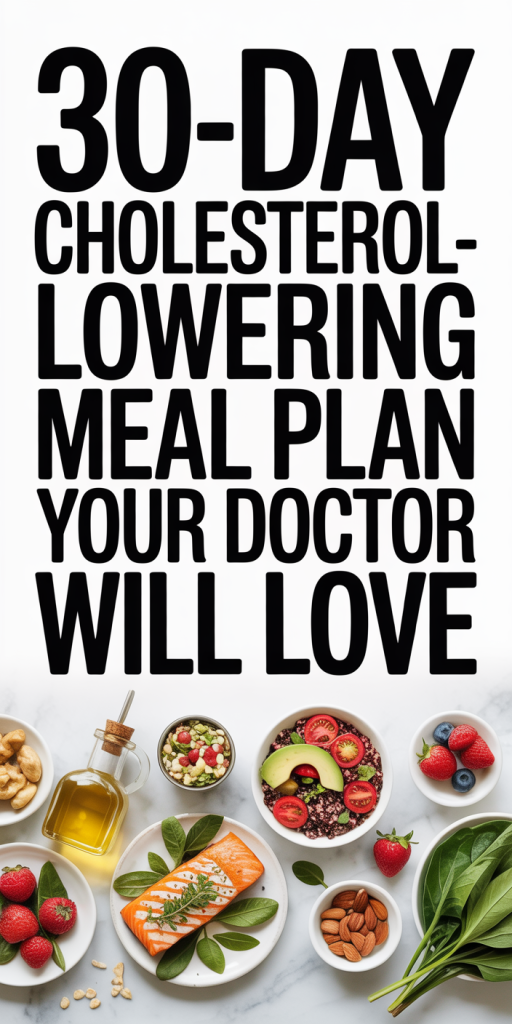
- Fatty fish: Salmon, mackerel, and sardines contain omega-3 fatty acids that improve heart health and lower triglycerides.
- Legumes: Beans and lentils offer fiber and protein, contributing to lower cholesterol and better satiety.
- Nuts: Almonds, walnuts, and pistachios provide healthy fats and plant sterols, which help block cholesterol absorption.
- Fruits: Apples, berries, and citrus fruits not only add vitamins but also contain pectin, which lowers cholesterol.
- Vegetables: Leafy greens, beets, and carrots are high in antioxidants and fiber, promoting heart health.
- Whole grains: Quinoa, barley, and brown rice serve as wholesome alternatives to refined grains, enhancing fiber intake.
Incorporating these foods into my 30-day meal plan ensures that I support my cholesterol-lowering goals while enjoying a varied and flavorful diet.
Weekly Meal Plan Breakdown
This weekly meal plan provides a structured approach to lower cholesterol while enjoying delicious meals. Each week focuses on different themes to keep the diet enjoyable and effective.
Week 1: Kickstart Your Journey
- Focus on incorporating high-fiber foods. Start each day with oatmeal topped with fresh fruits like berries or sliced bananas.
- Aim for heart-healthy fats. Include avocado in salads or as a spread instead of butter.
- Plan dinners around lean proteins. Grill skinless chicken or bake salmon; pair them with steamed broccoli or quinoa.
- Snack wisely. Choose nuts, seeds, or sliced veggies with hummus for nutrient-dense options.
Week 2: Exploring New Recipes
- Experiment with plant-based meals. Try lentil soup or veggie stir-fry for dinner, featuring a mix of colorful vegetables.
- Discover whole grain alternatives. Substitute white rice with brown rice or quinoa for added fiber and nutrients.
- Create flavor-packed dishes. Use herbs and spices for seasoning, like garlic, turmeric, and cumin, to enhance meals without added fats.
- Review recipes using fatty fish. Include salmon or mackerel a few times this week, rich in omega-3s that help lower LDL cholesterol.
Week 3: Staying on Track
- Stick to meal prepping. Set aside time each week to prepare snacks and meals; this helps maintain focus and avoid unhealthy choices.
- Monitor portion sizes. Use measuring cups or a food scale to ensure appropriate serving sizes, enhancing dietary discipline.
- Engage in mindful eating. Pay attention to hunger cues and enjoy each bite, which can improve satisfaction and prevent overeating.
- Keep dairy choices low-fat. Switch to low-fat yogurt or milk, both of which support calcium intake while being lower in saturated fat.
Week 4: Maintaining Success
- Revise favorite recipes. Reinvent previously loved dishes using cholesterol-lowering ingredients, maintaining enjoyment in meals.
- Evaluate progress. Check cholesterol levels through regular blood tests to track improvements and adjust dietary choices as necessary.
- Stay active. Incorporate physical activities such as walking, cycling, or group classes into weekly schedules to complement dietary changes.
- Strengthen support systems. Connect with friends, family, or support groups who share similar health goals for motivation and accountability.
Tips for Adhering to Your Meal Plan
Sticking to a meal plan requires dedication and smart strategies. Implementing effective methods can make your journey towards lower cholesterol smoother and more enjoyable.
Meal Prep Strategies
Utilizing meal prep effectively simplifies adhering to the meal plan. Start with batch cooking essential ingredients, like beans and vegetables, to save time during the week. Portion meals into containers for easy access and convenience. Labeling these containers with dates helps track freshness. Preparing snacks in advance ensures I’m never caught off guard during busy days. Planning weekly menus makes grocery shopping straightforward and prevents impulsive decisions. Taking the time to create a shopping list based on the meal plan curtails the temptation of purchasing unhealthy options.
Incorporating Healthy Snacks
Incorporating healthy snacks throughout the day supports maintaining energy levels and controlling hunger. Choosing options like fresh fruit, nuts, or yogurt ensures I’m fueled with nutrients. Preparing vegetable sticks with hummus or a homemade trail mix offers variety while meeting dietary goals. Selecting small servings helps manage portion sizes effectively. Keeping healthy snacks readily available reduces the chances of reaching for processed snacks. Consistently incorporating these strategies strengthens my commitment to the cholesterol-lowering meal plan.
Conclusion
Embracing a cholesterol-lowering meal plan can transform your health and well-being. I’ve found that with the right foods and strategies, managing cholesterol doesn’t have to feel like a chore. Instead, it can be an enjoyable journey toward better heart health.
Sticking to this 30-day plan not only helps lower cholesterol but also encourages lifelong habits that keep your heart happy. Remember to celebrate your progress and lean on your support system for motivation. With dedication and a positive mindset, you can achieve lasting results and enjoy delicious meals along the way. Here’s to a healthier you!