12 Skin Changes That Could Signal A Hidden Deficiency — What To Watch For
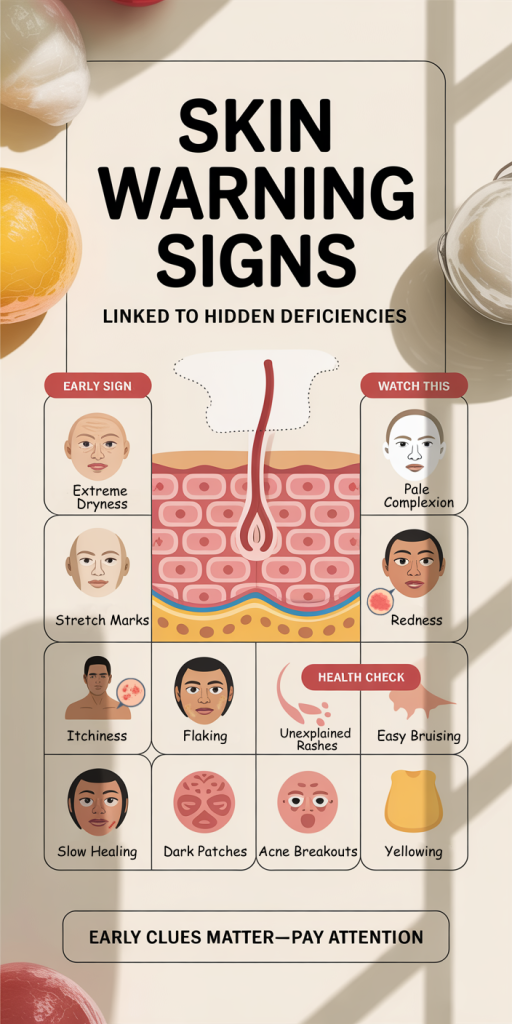
Our skin is the largest organ and one of the first places nutritional shortfalls can show up. In clinical practice and in community care, we frequently see distinctive patterns, from dry, scaly patches to unexplained bruising, that point us toward underlying deficiencies. Recognizing these signs early lets us correct nutrient gaps before they affect other organs or lead to chronic problems. In this guide we walk through 12 skin changes commonly linked to specific nutrient shortages in 2026, explain the likely underlying causes, and give practical, evidence-based dietary and testing suggestions. We’ll also flag when to escalate to a clinician. This isn’t meant to replace medical advice, but to give you a clear, usable roadmap so you and your clinician can investigate and act with confidence.
Why Skin Is A Window Into Nutrient Status
The skin reflects what’s happening inside because it’s metabolically active and relies on a steady supply of nutrients for renewal, immune defense, and barrier function. Keratinocytes, fibroblasts, melanocytes and immune cells in the dermis all require vitamins, minerals, essential fatty acids, and adequate protein to function. When supply falls short, structural changes (like a thinner epidermis), altered pigmentation, impaired barrier lipids, or slowed wound healing become visible.
Nutrient-dependent processes tied to visible skin changes include: collagen synthesis (vitamin C, proline/lysine), keratin production (protein, zinc), sebum and epidermal lipid formation (essential fatty acids, cholesterol), DNA methylation and cell turnover (B vitamins), and antioxidant protection (vitamin E, selenium). Because each nutrient has somewhat specific roles, distinct patterns often emerge, for example, corkscrew hairs with vitamin C deficiency, or seborrheic-like rashes with B-vitamin gaps.
Context matters: age, medications (like anticonvulsants, metformin), gastrointestinal disorders (celiac disease, Crohn’s), restrictive diets, and bariatric surgery all increase risk of deficiency. We should also consider socioeconomic factors, food access, and seasonal sun exposure that influence vitamin D and other nutrient levels. Observing skin clues can help prioritize targeted testing instead of broad, costly panels.
Dry, Scaly, Itchy Skin And Follicular Keratosis
Dry, rough skin and small keratotic bumps on the backs of arms or thighs, often called follicular keratosis (formerly “keratosis pilaris”), are common complaints. While genetics and atopy play roles, several nutrient gaps can make these symptoms worse or cause them to appear suddenly. Below we break down two primary nutrient contributors and what to watch for.
Pale Skin, Spoon Nails, And Hair Thinning — Iron And Protein
Pallor, brittle or spoon-shaped nails (koilonychia), and diffuse hair thinning frequently point us toward iron deficiency, sometimes compounded by inadequate protein intake. Iron is essential for rapidly dividing cells, including the hair matrix and the bone marrow that produces red blood cells. When hemoglobin falls, skin pallor and fatigue follow: the hair cycle shifts, and more hairs enter the telogen (shedding) phase.
Iron deficiency can arise from poor dietary intake, heavy menstrual losses, gastrointestinal bleeding, or conditions that impair absorption like celiac disease. Protein-calorie malnutrition or diets low in essential amino acids further impair keratin synthesis and hair strength. In practice we see hair become thin, dull, and sparse across the scalp, and nails that become brittle or concave.
What to check: a complete blood count (CBC) with mean corpuscular volume (MCV), ferritin (the most sensitive initial test for iron stores), transferrin saturation, and a dietary protein assessment. Ferritin under ~30 ng/mL commonly indicates iron deficiency in symptomatic adults, though interpretation varies with inflammation. Management prioritizes correcting the cause of loss, optimizing oral iron intake (heme iron from red meat is best absorbed) and pairing with vitamin C to boost absorption. If oral iron is not tolerated or absorption is impaired, intravenous iron may be indicated. For protein gaps, focus on complete proteins: eggs, dairy, legumes combined with grains, soy, and lean meats.
Easy Bruising, Petechiae, And Poor Wound Healing — Vitamin C, K, Zinc
When we see unexplained bruising, tiny pinpoint petechiae, or wounds that take an unusually long time to close, several nutrients are commonly implicated.
Vitamin C: Collagen formation depends on vitamin C–dependent enzymes (prolyl and lysyl hydroxylases). Without adequate ascorbic acid, collagen cross-linking is impaired, resulting in fragile capillaries, poor wound tensile strength, and characteristic perifollicular hemorrhages or corkscrew hairs in frank scurvy. Early signs include gum bleeding and easy bruising. At-risk groups include smokers (increased turnover), people with limited fresh fruit and vegetable intake, and those with alcohol use disorder.
Vitamin K: Necessary for gamma-carboxylation of clotting factors II, VII, IX, and X, vitamin K deficiency manifests primarily as bleeding and easy bruising. Causes include long-term broad-spectrum antibiotics that alter gut flora, cholestasis and fat-malabsorption, or warfarin therapy interactions. Distinguishing vitamin K deficiency from platelet problems requires coagulation testing (PT/INR) and platelet counts.
Zinc: Zinc is essential for cell proliferation and immune function in wound healing. Deficiency can lead to delayed re-epithelialization, chronic non-healing ulcers, and increased susceptibility to infection. Zinc deficiency is more common with restrictive diets, alcoholism, inflammatory bowel disease, and after bariatric surgery.
What to check: for bruising/petechiae evaluate platelet count and function, PT/INR, aPTT, fibrinogen, and specific nutrient tests (plasma vitamin C, vitamin K status via PIVKA-II or clinical context, and serum zinc). Management is cause-directed: vitamin C repletion (citrus fruits, berries, bell peppers: supplementation if severe), vitamin K restoration (dietary green leafy vegetables, and supervised supplementation if indicated), and zinc repletion where deficiency is confirmed. For wounds, topical wound care plus nutritional optimization speeds repair: adequate protein, vitamin A, vitamin C, zinc, and calories are all required for tissue rebuilding.
Hyperpigmentation, Glossitis, And Nail Darkening — Vitamin B12
Vitamin B12 deficiency is protean and can show up with dermatologic signs that are easy to miss. Hyperpigmentation of the skin (often on the knuckles, intertriginous areas, or generalized), mucosal changes like a smooth, beefy-red tongue (atrophic glossitis), and longitudinal darkening or hyperpigmented bands on nails have all been described. These signs may precede or occur alongside neurologic changes and anemia.
Mechanisms: B12 plays a role in DNA synthesis and methylation. Impaired DNA replication in rapidly dividing cells, such as epidermal keratinocytes and oral mucosa, leads to atrophy and pigmentary changes. Melanin distribution may shift in deficiency states, producing the hyperpigmented macules or generalized dusky complexion sometimes seen.
Who’s at risk: older adults with reduced gastric acid, people on long-term metformin, those using proton-pump inhibitors, strict vegans without supplementation, and individuals with pernicious anemia or malabsorptive disorders. The clinical picture can be subtle: neurological symptoms (paresthesias, gait instability) may be absent early on.
What to check: serum B12, methylmalonic acid (MMA), and homocysteine provide a clearer picture, elevated MMA is specific for functional B12 deficiency. Treatment includes high-dose oral B12 for many patients or intramuscular injections in cases of severe deficiency or neurologic involvement. Dermatologic changes often improve over weeks to months after repletion, but early treatment is important to prevent irreversible neurologic damage.
Photosensitivity, Cracked Lips, And Seborrheic-Like Dermatitis — Niacin, Riboflavin, Biotin
Photosensitivity, angular cheilitis (cracked corners of the mouth), and scalp or facial scaling that resembles seborrheic dermatitis can point toward deficiencies in several B vitamins: niacin (B3), riboflavin (B2), and biotin (B7). Each has distinct roles but overlapping dermatologic features.
Niacin (B3): Severe niacin deficiency causes pellagra, dermatitis in sun-exposed areas (photosensitive, well-demarcated), diarrhea, and dementia. Early pellagra presents as red, scaly patches on sun-exposed skin, often sharply bordered. Although pellagra is rare in high-income settings, it can occur with chronic alcoholism, carcinoid syndrome (tryptophan diversion), or in populations relying heavily on untreated maize.
Riboflavin (B2): Riboflavin deficiency produces cheilosis (fissures at the mouth corners), glossitis, seborrheic dermatitis–like eruptions, and ocular symptoms. Because riboflavin is integral to many redox reactions, deficiency often coexists with other B-vitamin gaps.
Biotin (B7): Biotin deficiency can cause dermatitis, especially around orifices, alopecia, and brittle nails. Risk increases with prolonged raw egg white ingestion (avidin binds biotin), prolonged parenteral nutrition without adequate supplementation, and certain anticonvulsants.
What to check: evaluate dietary patterns, alcohol use, and medication history. Tests can include plasma or urinary markers for some B vitamins (though interpretation can be tricky). Empiric supplementation with a B-complex is often reasonable when clinical suspicion is high, especially because B vitamins are water-soluble and safe at recommended doses. For photosensitivity, advise strict sun protection while addressing niacin deficiency: for cracked lips and seborrheic-like dermatitis, topical emollients and antifungal measures may be needed alongside nutritional correction.
When To See A Doctor, Useful Tests To Ask For, And Practical Dietary Fixes
Knowing when to escalate is critical. See a clinician promptly if you have rapidly spreading skin changes, non-healing wounds, new-onset easy bruising or bleeding, neurological symptoms (numbness, weakness, gait changes), or systemic signs like fever and weight loss. For cosmetic but stable changes, primary care or a registered dietitian can often start the initial evaluation.
Useful tests to request (tailored to the suspected deficiency):
- CBC with indices (look for microcytic or macrocytic anemia)
- Ferritin and transferrin saturation (iron evaluation)
- Serum vitamin B12, methylmalonic acid (MMA), and homocysteine
- Serum folate (or red blood cell folate) for context
- Serum 25-hydroxyvitamin D when bone or immune concerns exist
- Serum vitamin C if scurvy is suspected (or clinical diagnosis with response to therapy)
- Serum zinc and alkaline phosphatase (zinc functional marker) when delayed healing is present
- Vitamin A (retinol) in specialist settings when malabsorption or liver disease exists
- Coagulation studies and vitamin K assessment if bleeding is present
- Tests for malabsorption as indicated: celiac serology, fecal fat, pancreatic function tests, or imaging
Practical, evidence-based dietary fixes we commonly recommend:
- Iron: include heme sources (lean red meat, poultry) and pair with vitamin C (citrus, bell peppers) to enhance absorption. Limit tea/coffee at meals.
- Protein: aim for complete proteins daily, eggs, dairy, soy, legumes combined with whole grains, or lean meats. Target varies by age and health status but often 0.8–1.2 g/kg or higher in recovery phases.
- EFAs: include walnuts, flax, chia, oily fish, and use culinary oils that provide linoleic acid: consider a balanced omega-3 supplement if fish intake is low.
- B vitamins: eat a varied diet with fortified grains, dairy, eggs, leafy greens, legumes, and consider a B-complex if risk factors exist (metformin use, vegan diet).
- Vitamin C: include peppers, citrus, berries, tomatoes, and cruciferous vegetables daily.
- Zinc: oysters, red meat, pumpkin seeds, and fortified foods: if plant-based, combine with protein and soak/sprout grains/legumes to reduce phytate interference.
Supplementation: short-course, targeted supplementation can rapidly correct many deficiency signs. We favor testing when feasible to guide dosing, and we emphasize food-first strategies for long-term maintenance. Work with your clinician to account for pregnancy, medication interactions, and chronic disease.
Conclusion
Skin changes are often early, visible clues that something deeper is off, and in 2026 we have both better nutritional understanding and more tools for precise evaluation. When we spot patterns like dry, scaly skin: unexplained bruising: pigment changes: or cracked lips, it’s wise to map those signs to likely nutrient gaps and to investigate with targeted testing and dietary adjustments. Small, focused changes, adding a serving of oily fish a week, prioritizing citrus with iron-rich meals, or supplementing B12 for at-risk patients, can reverse skin manifestations and protect overall health. If you’re unsure, consult a clinician: many deficiencies are straightforward to diagnose and treat, and early correction often prevents progression to systemic disease.