
11 Early Body Changes That Could Mean Perimenopause Has Started — What To Watch For
Perimenopause is often described as a transition, but in reality it can feel like a series of surprises. Many of us expect irregular periods, and that’s true, but perimenopause commonly starts years before periods stop and shows up across the body in ways most people don’t immediately connect. In this text we’ll walk through the typical age range and risk factors, explain the hormonal shifts that drive symptoms, and list 11 specific body changes that commonly signal perimenopause. We’ll also cover when to see a clinician, what tests to expect, and practical steps, lifestyle, OTC, and prescription, that can help. Our goal is to give you clear, evidence-informed guidance so you can recognize changes early and take control of your health in 2026 and beyond.
Understanding Perimenopause: Who Gets It And When To Expect It
Perimenopause is the phase leading up to menopause, defined as the 12 months after a person’s final menstrual period. It’s a biological transition driven primarily by changes in ovarian function and hormone production, mainly estrogen and progesterone, but it’s far from identical for everyone.
Who gets perimenopause?
- Anyone with functioning ovaries who’s been menstruating can experience perimenopause. Most commonly we think of cisgender women in their 40s, but perimenopause can begin in the mid-30s for some and in the early 50s for others. Trans men and nonbinary people assigned female at birth may also go through perimenopause unless they’ve had oophorectomy or are taking hormone therapy that suppresses ovarian function.
When to expect it
- Average onset: In many populations, perimenopause begins in the early to mid-40s, but research shows a wide distribution: roughly 10% of people experience the transition before age 40 (called early perimenopause), while others begin it later. Factors that push onset earlier include smoking, chemotherapy or pelvic radiation, certain autoimmune diseases, and surgical removal of ovaries.
How long does it last?
- Perimenopause typically lasts about 4 to 8 years, but it can be as short as a few months or as long as a decade for some people. The timing is unpredictable because ovarian function declines unevenly: some menstrual cycles will still be ovulatory and hormonally “normal,” while others will be anovulatory with very different hormone levels.
Why this matters
- Recognizing perimenopause early helps us manage symptoms and address health risks, like bone density loss and cardiovascular changes, earlier. It also lets us make informed choices about contraception, fertility (if desired), and symptom relief. As we discuss the body changes below, remember that the pattern and severity of symptoms are personal: two people can experience the same symptom for very different lengths of time and intensity.
How Hormone Fluctuations Drive Physical And Emotional Changes
Perimenopause is less about steady decline and more about hormonal volatility. Understanding that helps explain why symptoms can feel erratic and surprising.
Key hormones involved
- Estrogen: Produced primarily by the ovaries, estrogen levels fluctuate widely during perimenopause. These swings rather than a steady fall are responsible for many classic symptoms like hot flashes and irregular bleeding.
- Progesterone: This hormone rises after ovulation and falls if pregnancy doesn’t occur. As ovulation becomes less regular in perimenopause, progesterone levels can dip, contributing to irregular cycles and heavier bleeding when endometrial buildup is not shed properly.
- Follicle-stimulating hormone (FSH) and luteinizing hormone (LH): The pituitary gland increases secretion of FSH and LH to stimulate the ovaries as they become less responsive. Elevated FSH is a laboratory marker often used to suggest advancing ovarian aging, though single measurements during perimenopause can be misleading due to fluctuation.
Mechanisms linking hormones and symptoms
- Thermoregulation: Estrogen influences the hypothalamic set point that regulates body temperature. When estrogen levels fall or fluctuate, the hypothalamus can trigger sudden heat-dissipation responses, hot flashes and night sweats.
- Vaginal and urinary tissues: Estrogen maintains thickness, moisture, and elasticity of vaginal and urethral tissue. Reduced estrogen causes thinning and dryness, leading to discomfort, increased infection risk, and urinary urgency or incontinence.
- Brain and mood: Estrogen affects serotonin, norepinephrine, and GABA pathways. Fluctuations can hence influence mood, sleep architecture, and cognitive symptoms like brain fog.
- Metabolic changes: Hormonal shifts interact with age-related metabolic changes, resulting in altered fat distribution, weight gain, and changes in cholesterol and insulin sensitivity.
Why symptoms vary day-to-day
- Because hormones vary not only month-to-month but sometimes within the same cycle, symptoms can appear intermittently, intensify, or remit seemingly without cause. This unpredictability can be stressful in itself and contribute to anxiety or mood disruption.
Clinical takeaway
- When we see patients reporting a constellation of menstrual irregularities, vasomotor symptoms, mood and sleep changes, and urogenital complaints, especially in their 40s, we consider perimenopause a likely explanation. But we also stay alert to other causes and use a combination of history, targeted testing, and clinical judgment to guide care.
11 Body Changes That May Signal Perimenopause
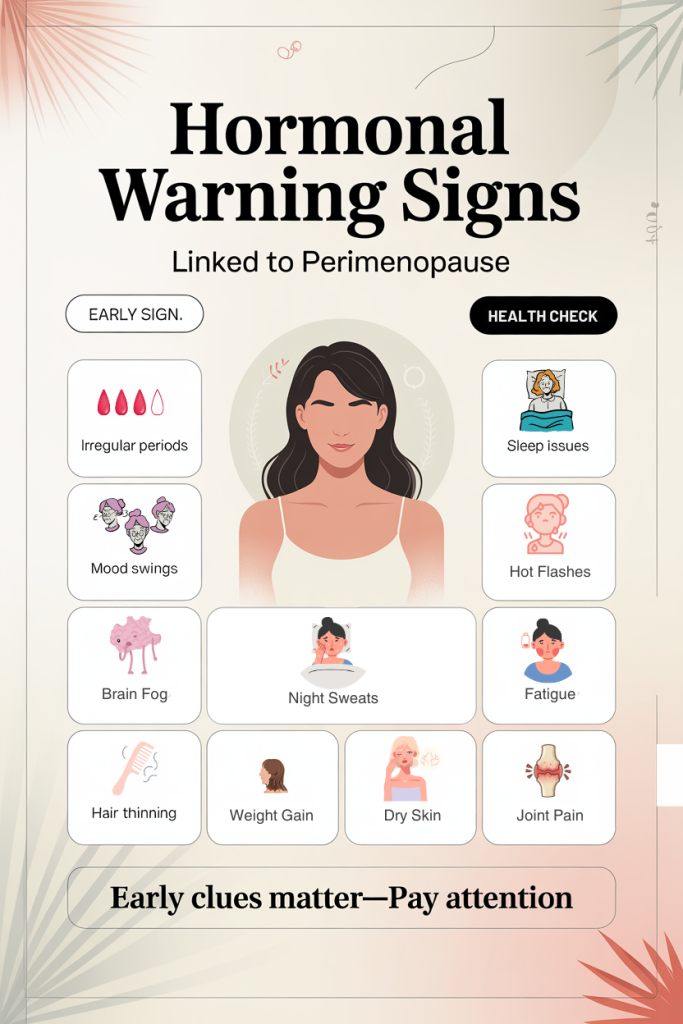
Below we describe 11 commonly reported changes. They’re grouped for clarity but often overlap in real life. Not everyone will have all of them, and symptom timing and severity will vary.
Menstrual And Reproductive Changes: Irregular Periods, Heavier Or Lighter Flow, Spotting
Irregular periods are often the first clue. Cycles may shorten or lengthen: a regularly predictable cycle can become erratic. We see three typical patterns:
- Shorter cycles (e.g., going from a 28-day cycle to 21–24 days) when ovulation occurs earlier or anovulatory bleeding causes unpredictability.
- Longer cycles or skipped periods when ovulation fails to occur.
- Heavy or prolonged bleeding: With irregular ovulation, the endometrium may build up and shed irregularly, producing heavier-than-usual flow or longer periods.
Spotting between periods can also occur. While these changes are often benign in perimenopause, we don’t ignore new, very heavy bleeding or bleeding after sex, those warrant evaluation.
Vasomotor, Sleep, And Mood Changes: Hot Flashes, Night Sweats, Insomnia, Mood Swings
Hot flashes and night sweats are classic vasomotor symptoms caused by hypothalamic sensitivity to estrogen fluctuation. We typically describe hot flashes as sudden warmth, flushing, and sweating that can last seconds to minutes. Night sweats disrupt sleep and amplify daytime fatigue.
Insomnia in perimenopause has multiple drivers: night sweats, anxiety, and hormonal effects on sleep architecture. Difficulty falling asleep, frequent awakenings, and early morning wakening are common.
Mood swings, increased irritability, anxiety, and, for some, depressive symptoms may surface or worsen. The risk of mood disturbance is higher for people with a prior history of depression or high baseline stress.
Physical, Metabolic, And Sexual Changes: Weight Gain, Vaginal Dryness, Reduced Libido, Urinary Symptoms
Weight gain and changes in fat distribution, more central abdominal fat, are frequently reported. These shifts result from a mix of hormonal changes, reduced resting metabolic rate with age, and lifestyle factors. Even when calorie intake is unchanged, we often see differences in body composition.
Vaginal dryness and painful intercourse (dyspareunia) come from declining estrogen that thins and reduces lubrication of vaginal tissue. This can lower sexual satisfaction and contribute to reduced libido, though desire is influenced by many factors including relationship dynamics, mental health, sleep, and medications.
Urinary symptoms, urgency, frequency, and stress incontinence, may emerge as pelvic tissues lose estrogen-related support.
Other body changes to note (briefly outlined)
- Headaches and migraines: Some people notice changes in headache patterns: migraine can improve or worsen depending on hormonal triggers.
- Skin and hair: Estrogen helps maintain skin thickness and hair growth: many report drier skin, thinning hair, or changes in hair texture.
- Cognitive changes: ‘Brain fog’, short-term memory lapses, difficulty concentrating, occurs for many during perimenopause and may relate to sleep and mood as well as direct hormonal effects.
Putting the pieces together
- When several of these changes occur together, especially in someone in the typical age range for perimenopause, perimenopause should be high on the differential. Yet we always consider other causes (thyroid disease, anemia, psychiatric conditions, medication side effects, or gynecologic pathology) and recommend appropriate evaluation when needed.
When To See Your Doctor: Red Flags Versus Normal Perimenopausal Symptoms
Perimenopause explains many symptoms, but certain signs need prompt medical attention. We encourage people not to dismiss alarming or new symptoms as “just perimenopause” without evaluation.
Red flags that require urgent or prompt assessment
- Very heavy bleeding: Soaking through a pad or tampon every hour for several hours, or bleeding that lasts longer than 7–10 days.
- Bleeding after sex: This can indicate cervical or endometrial pathology that needs evaluation.
- Severe pelvic pain: Constant, severe pain is not typical of perimenopause and may indicate ovarian cysts, endometriosis, pelvic inflammatory disease, or other conditions.
- Signs of anemia: Lightheadedness, severe fatigue, shortness of breath, or palpitations with heavy bleeding, these symptoms deserve rapid assessment.
- New or worsening chest pain, shortness of breath, or leg swelling: While not classic perimenopausal symptoms, these could signal cardiac or thrombotic events and need emergency care.
- Marked mood changes or suicidal ideation: If mood swings escalate to debilitating depression or self-harm thoughts, seek immediate help.
When routine evaluation is appropriate
- Mild to moderate hot flashes, irregular cycles, sleep disruption, and vaginal dryness often start in primary care or gynecology settings. We recommend scheduling a visit to discuss symptom patterns, impact on daily life, and treatment goals.
What to prepare before the visit
- Track your menstrual cycles and symptoms for 1–3 months: note length, flow, spotting, hot flashes, sleep quality, mood, and sexual symptoms. Symptom diaries help clinicians distinguish perimenopause from other causes.
- List medications and supplements: Some drugs (SSRIs, anticoagulants, hormonal contraceptives) affect symptoms and test interpretation.
- Be ready to discuss personal and family medical history: Cardiovascular disease, osteoporosis, breast cancer, and mood disorder histories influence treatment choices and screening decisions.
We want to reinforce: while perimenopause is common and often manageable, unexplained or severe changes deserve timely medical attention so we don’t miss treatable conditions.
Tests, Exams, And What Your Provider Will Assess
Diagnosis of perimenopause is primarily clinical, based on symptoms and menstrual history, but targeted testing rules out other causes and informs treatment.
What the exam typically includes
- Vital signs and focused physical exam: weight, blood pressure, breast and pelvic exam as indicated.
- Pelvic exam: if there’s irregular bleeding, pelvic pain, or postcoital bleeding, a speculum and bimanual exam allows visualization and assessment of the uterus and cervix.
Common labs and tests
- Pregnancy test: Always check in those of reproductive potential who have irregular bleeding.
- Complete blood count (CBC): To evaluate anemia if bleeding is heavy or fatigue is significant.
- Thyroid-stimulating hormone (TSH): Thyroid disorders can cause irregular periods, weight changes, mood symptoms, and fatigue, mimicking perimenopause.
- FSH and estradiol: Elevated FSH with low estradiol suggests ovarian aging, but because hormone levels fluctuate during perimenopause, single measurements have limitations. Providers may order these if diagnosis is uncertain or to help guide therapy.
- Pelvic ultrasound: Used when bleeding patterns are abnormal, to check for fibroids, polyps, or endometrial thickness.
- STI testing: Consider when new bleeding or pelvic pain is present and sexual history raises concern.
When to consider referral
- Gynecology referral: Persistent heavy bleeding, abnormal pelvic imaging, suspicion of endometrial pathology, or when procedural management (e.g., endometrial biopsy, hysteroscopy) may be needed.
- Mental health or sleep specialists: For severe mood disorders or refractory insomnia.
- Urogynecology or pelvic floor physical therapy: For bothersome urinary incontinence or pelvic floor dysfunction.
Shared decision-making
- We emphasize shared decision-making: test selection and interpretation depend on the individual’s symptoms, reproductive goals, comorbidities, and treatment preferences. A good clinician will balance necessary testing with the recognition that perimenopause is largely a clinical diagnosis.
Managing Symptoms: Lifestyle, Over-The-Counter Options, And Medical Treatments
Management of perimenopausal symptoms ranges from self-care and OTC measures to prescription medications and procedures. We recommend a stepwise, personalized approach that prioritizes the patient’s concerns and risk profile.
Lifestyle strategies (first-line for many symptoms)
- Sleep hygiene: Regular sleep schedule, limiting screens before bed, cooling the bedroom, and using breathable bedding can reduce night sweats’ impact.
- Diet and exercise: A balanced diet, attention to protein intake, strength training, and aerobic exercise help preserve muscle mass, prevent weight gain, and support bone and cardiovascular health.
- Stress reduction: Mindfulness, cognitive behavioral therapy (CBT), and relaxation techniques can reduce hot flash frequency and improve mood and sleep.
- Smoking cessation: Smoking is associated with earlier menopause and worsened vasomotor symptoms: quitting benefits overall health and perimenopausal timing.
Over-the-counter and nonprescription options
- Vaginal lubricants and moisturizers: Water-based lubricants for intercourse and regular use of moisturizers can relieve dryness and dyspareunia. Products with hyaluronic acid or plain glycerin-free formulas are often well tolerated.
- Nonhormonal OTC remedies: Some people try soy isoflavones, black cohosh, or other supplements, evidence is mixed and quality varies. We advise discussing supplements with a clinician, especially for those with estrogen-sensitive conditions.
- Sleep aids: Melatonin in low doses may help reset sleep, and short-term use of OTC antihistamines can help but aren’t ideal long-term due to side effects.
Prescription medical treatments
- Hormone therapy (HT): Systemic estrogen (with progesterone if uterus present) is the most effective treatment for vasomotor symptoms and can help with bone health. HT decisions depend on cardiovascular and breast cancer risks and are individualized about formulation, dose, and duration. Transdermal estrogen may be preferred for people at higher clot risk.
- Low-dose vaginal estrogen: Effective for genitourinary symptoms with minimal systemic absorption: useful when dryness or dyspareunia is the main issue.
- Nonhormonal prescription meds for hot flashes: SNRIs (e.g., venlafaxine), SSRIs, gabapentin, and clonidine may reduce hot flashes in people who can’t or prefer not to use hormones.
- Management of heavy bleeding: Combined hormonal contraceptives, progestin-only therapies (including intrauterine devices like the levonorgestrel IUD), or cyclic progestin can control heavy or irregular bleeding. In some cases, surgical options are considered.
- Treatments for mood and sleep: Antidepressants, CBT for insomnia, and sleep medicine referrals are options when lifestyle measures are insufficient.
Pelvic and urinary symptom therapies
- Pelvic floor physical therapy: Effective for stress urinary incontinence and pelvic floor dysfunction.
- Vaginal estrogen and/or local moisturizers: Improve urethral and vaginal tissue health and reduce UTI risk.
Monitoring and prevention
- Bone health: We assess fracture risk and consider DEXA scanning per guidelines, especially for those with early menopause or significant risk factors, and discuss calcium, vitamin D, and weight-bearing exercise.
- Cardiovascular risk: Perimenopause is a window to review lipid profiles, blood pressure, smoking status, and diabetes prevention. We use this time to optimize preventive care.
Shared decision-making and safety
- We weigh benefits and risks of each treatment option. For example, systemic hormone therapy remains the most effective for vasomotor symptoms, but personal and family history (breast cancer, thromboembolism, stroke) may influence choice.
- Treatment goals matter: Are we treating hot flashes to restore sleep, managing heavy bleeding to prevent anemia, or prioritizing sexual function? That informs our plan.
In practice, a combination of lifestyle changes, targeted local therapies (like vaginal estrogen), and systemic treatments when appropriate provides the most relief for many people.
Conclusion
Perimenopause is a multifaceted transition that often begins with subtle and sometimes surprising body changes. By knowing what to watch for, irregular periods, vasomotor symptoms, sleep and mood changes, vaginal and urinary changes, and shifts in weight and skin, we can recognize the pattern early and take action. Evaluation usually starts with a thorough history and directed testing, and management combines lifestyle measures, targeted OTC options, and medical therapies tailored to our individual risks and goals.
If you’re noticing several of the changes we’ve described, track your symptoms and talk with your clinician. Early recognition not only improves day-to-day quality of life but also opens opportunities for preventive health measures as we age. Perimenopause doesn’t have to be a mystery, together we can navigate it with clarity and a plan that fits our lives.

