
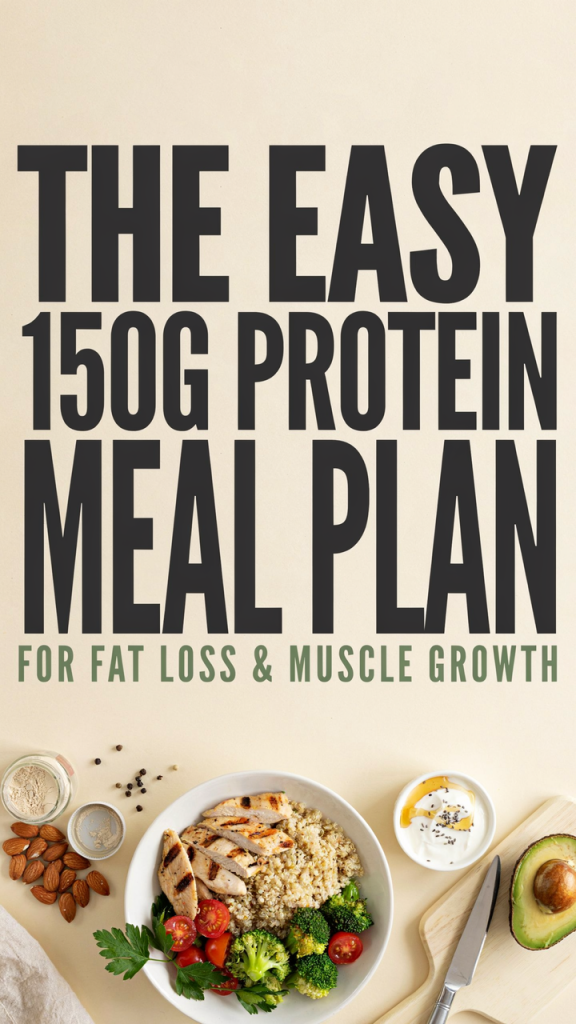
The Easy 150g Protein Meal Plan for Fat Loss and Muscle Growth
Introduction
If your goal is to lose fat while building or preserving muscle, hitting a high daily protein target is one of the most effective and evidence-backed strategies you can use. This article gives you a practical, easy-to-follow 150g protein meal plan that balances convenience, flavor, and nutrition. You’ll get a full sample day (with recipes, ingredient lists, and step-by-step instructions), a vegetarian alternative, meal-prep tips, and guidance on how to customize the plan for your calorie needs.
This plan is designed to be straightforward, flexible, and sustainable—perfect for busy people who train with resistance exercises and want measurable progress without living on bland food. Read on to learn not just what to eat, but why it works and how to make it fit your life.
Why 150g of Protein? (and Why It Works)
- Protein helps preserve and build lean muscle mass, especially when combined with resistance training.
- High-protein diets support fat loss by increasing satiety, promoting a higher thermic effect of food (more calories burned digesting protein), and helping retain muscle during calorie deficits.
- For many active men and women, 150g/day is a practical, science-supported target that delivers muscle-preserving benefits without extreme dieting. It’s roughly in the range of 1.6–2.2 g/kg for a 68–94 kg individual—ideal for muscle growth and retention.
- You don’t have to hit the number with giant steaks—strategically chosen protein-rich foods spread across the day make it easy and enjoyable.
How to Use This Plan
- This is an example “sample day” aimed at roughly 150g protein. Exact protein values are approximate—use the portion sizes listed or scale them to fit your exact target.
- Pair this meal plan with a sensible calorie goal. For fat loss, create a modest calorie deficit (~250–500 kcal below maintenance) while keeping protein high and resistance training consistent.
- If you train, consume protein (or a small protein-rich snack/shake) within 1–2 hours post-workout to support recovery.
- Swap ingredients based on preferences and allergies. I include vegetarian alternatives so you can choose what fits.
The Sample Day: Easy 150g Protein Meal Plan
Below is a complete, single-day plan that totals approximately 150g of protein. Each recipe includes ingredients (bulleted) and instructions (numbered). Protein estimates are listed per meal so you can track.
Sample Day Overview (approximate protein)
- Breakfast: Greek yogurt protein oat bowl — 40–45g
- Mid-morning snack: Cottage cheese + fruit — 24g
- Lunch: Grilled chicken & quinoa salad — 40–45g
- Post-workout shake: Chocolate whey smoothie — 24g
- Dinner: Salmon, broccoli, and sweet potato — 18–22g
- Total: ~150g protein (adjust portion sizes slightly to hit target exactly)
Breakfast — Greek Yogurt Protein Oat Bowl (Approx. 45g protein)
Ingredients
– 200 g plain nonfat Greek yogurt (approx. 20 g protein)
– 40 g rolled oats (approx. 5 g protein)
– 1 scoop (25 g) whey protein powder, vanilla or unflavored (approx. 24 g protein)
– 1/2 cup mixed berries (optional)
– 1 tablespoon chia seeds or crushed nuts (optional, for texture)
– Water or milk of choice to loosen (optional)
Instructions
1. In a bowl, mix the Greek yogurt and whey protein powder until smooth and fully combined.
2. Stir in the rolled oats and let sit 5–10 minutes to soften (or heat the oats in water for a warm version before adding).
3. Top with berries and chia seeds or nuts.
4. Adjust thickness with water or milk; enjoy cold or warm.
Notes
– If you prefer eggs for breakfast, swap the yogurt + whey for a 3–egg + 4 egg-white scramble and add a 1-scoop shake later. Adjust totals as needed.
Mid-Morning Snack — Cottage Cheese with Berries and Seeds (Approx. 24g protein)
Ingredients
– 200 g low-fat cottage cheese (approx. 24 g protein)
– 1/2 cup sliced strawberries or blueberries
– 1 teaspoon ground flaxseed or a sprinkle of cinnamon (optional)
Instructions
1. Spoon cottage cheese into a bowl.
2. Top with sliced berries and a sprinkle of flaxseed or cinnamon.
3. Stir and eat chilled.
Lunch — Grilled Chicken & Quinoa Salad (Approx. 40–45g protein)
Ingredients
– 150 g cooked grilled chicken breast (approx. 45 g protein)
– 1/2 cup cooked quinoa (about 90 g cooked; approx. 4 g protein)
– 2 cups mixed salad greens
– 1/2 cup chopped cucumber and cherry tomatoes
– 1 tablespoon olive oil + lemon juice or balsamic vinegar for dressing
– Salt, pepper, and herbs to taste
Instructions
1. Slice or cube the cooked chicken breast.
2. In a bowl, combine cooked quinoa, salad greens, cucumber, and tomatoes.
3. Add chicken on top and drizzle with olive oil and lemon juice or vinegar.
4. Toss gently and season with salt, pepper, and herbs.
5. Serve immediately or pack for lunch.
Post-Workout — Chocolate Whey Smoothie (Approx. 24 g protein)
Ingredients
– 1 scoop chocolate whey protein (approx. 24 g protein)
– 250–300 ml water or unsweetened almond milk
– 1 small banana or 1/2 cup frozen berries (optional)
– Ice (optional)
– 1 tablespoon peanut butter (optional, adds calories and flavor)
Instructions
1. Combine whey protein, liquid, banana or berries, and ice in a blender.
2. Blend until smooth.
3. Taste and add peanut butter if desired for flavor and extra calories.
4. Drink within an hour after your workout.
Dinner — Pan-Seared Salmon with Broccoli and Sweet Potato (Approx. 20–28g protein)
Ingredients
– 100–140 g cooked salmon fillet (approx. 23–32 g protein depending on size)
– 1 medium sweet potato, baked or roasted
– 1–2 cups steamed broccoli
– 1 teaspoon olive oil, salt, pepper, and lemon wedge
Instructions
1. Season salmon with salt and pepper.
2. Heat a nonstick skillet with a teaspoon of olive oil over medium-high heat.
3. Sear salmon 3–4 minutes per side (depending on thickness) until cooked through.
4. Bake or microwave the sweet potato until tender; slice.
5. Steam or sauté broccoli until bright green and tender-crisp.
6. Plate salmon with sweet potato and broccoli, squeeze lemon over the fish, and serve.
Evening Option (Optional) — Hard-Boiled Egg or Casein Snack (Approx. 6–12g protein)
Ingredients
– 1 large hard-boiled egg (approx. 6 g protein) OR
– 1/2 cup low-fat cottage cheese or 1/2 scoop casein shake (approx. 12 g protein)
Instructions
1. For a hard-boiled egg: place egg in boiling water for 9–11 minutes, cool, peel, and eat.
2. For cottage cheese: spoon into a small bowl and top with cinnamon or berries if desired.
3. For casein: mix with water or milk and drink slowly before bed to provide sustained amino acids overnight.
Vegetarian Alternative: 150g Protein (Plant-Forward) Sample Day
If you prefer vegetarian meals, you can also reach ~150g protein with thoughtful combinations of dairy, soy, and legumes. Below is an alternate day using tofu, lentils, Greek yogurt, and whey (whey can be replaced with plant protein powder if fully vegan).
Vegetarian Breakfast — Tofu & Egg-Style Scramble with Oats (Approx. 35–40g protein)
Ingredients
– 200 g firm tofu, crumbled (approx. 24 g protein)
– 150 g nonfat Greek yogurt on the side (approx. 15 g protein)
– Vegetables: spinach, bell pepper, onion
– 1/2 cup cooked oats or 40 g dry oats (approx. 5–6 g protein)
– Turmeric, salt, pepper for flavor
Instructions
1. Sauté onions and bell peppers until soft; add crumbled tofu and spinach.
2. Season with turmeric, salt, and pepper; cook 4–6 minutes until heated through.
3. Serve tofu scramble with a side of Greek yogurt and oats.
4. Stir oats into yogurt or eat separately.
Vegetarian Midday Snack — Protein Yogurt Bowl (Approx. 24g protein)
Ingredients
– 250 g high-protein Greek yogurt or Skyr (approx. 25 g protein)
– 1 tablespoon nut butter or seeds
– Fresh fruit or a small drizzle of honey (optional)
Instructions
1. Spoon yogurt into a bowl.
2. Top with nut butter or seeds and fruit.
3. Mix and enjoy.
Vegetarian Lunch — Lentil & Tofu Salad (Approx. 40–45g protein)
Ingredients
– 100 g cooked lentils (approx. 9 g protein)
– 200 g firm tofu, grilled or pan-fried (approx. 24 g protein)
– 1/2 cup cooked quinoa (approx. 4 g protein)
– Mixed greens, cucumber, cherry tomatoes, olive oil + lemon dressing
Instructions
1. Cook lentils and quinoa as per package instructions and let cool.
2. Press and grill or pan-fry tofu until golden.
3. Toss lentils, quinoa, tofu, and greens together; dress and serve.
Vegetarian Post-Workout — Plant or Whey Smoothie (Approx. 24 g protein)
Ingredients
– 1 scoop plant or whey protein (approx. 24 g)
– 300 ml almond milk or water
– 1 banana or berries
– Ice
Instructions
1. Blend everything until smooth.
2. Consume within 45–60 minutes post-workout.
Vegetarian Dinner — Tempeh Stir-Fry with Veggies and Brown Rice (Approx. 25–30g protein)
Ingredients
– 150 g tempeh, crumbled or cubed (approx. 30 g protein)
– 1 cup mixed stir-fry vegetables (bell peppers, broccoli, carrots)
– 1/2–1 cup cooked brown rice (approx. 3–5 g protein)
– 1 tablespoon low-sodium soy sauce, garlic, ginger
Instructions
1. Sauté tempeh in a nonstick pan until golden brown.
2. Add veggies and stir-fry until tender-crisp.
3. Stir in soy sauce, garlic, and ginger; serve over brown rice.
Meal Prep & Practical Tips
- Cook once, eat multiple times: Grill several chicken breasts or bake a tray of salmon and portion for 3–4 days. Make a large batch of quinoa or brown rice.
- Use convenient high-protein staples: Greek yogurt, cottage cheese, canned tuna/salmon, pre-cooked lentils, and protein powder are time-saving allies.
- Portion control: Use a kitchen scale for a week to learn portion sizes and their protein values. After a while you’ll eyeball them accurately.
- Spread protein evenly: Aim for 25–40 g per main meal and 15–25 g in snacks/shakes. This supports muscle protein synthesis multiple times per day.
- Keep shakes simple: A whey shake is a fast, lean way to add 20–25 g protein with minimal prep.
- Budget swaps: Canned tuna, eggs, and dried lentils provide excellent protein per dollar.
Customizing the Plan
- Need fewer calories? Keep protein targets high but reduce starchy carbs and fats. For example, reduce oats or sweet potato portions.
- Need more calories? Add healthy fats like avocado, nuts, olive oil, or increase carb portions around workouts.
- Vegan? Replace dairy/whey with soy, pea, and rice proteins and focus on combined sources (e.g., lentils + quinoa + tofu) to reach the target.
- Weight-based adjustments: If you weigh more or have higher training volume, you can scale protein to 1.6–2.2 g/kg body weight. For most people, 150g is a strong middle-ground target.
Common Questions
Is 150g protein too much?
Not for most active people who do resistance training. For sedentary individuals, it might exceed need. Protein in this range is generally safe for healthy adults; if you have kidney disease or other medical conditions, consult a healthcare provider.
Do I need protein powders?
No—whole foods are ideal, but powders are a convenient, calorie-efficient way to add 20–30 g of protein quickly (especially post-workout).
When should I eat protein?
Distribute protein throughout the day every 3–4 hours to maximize muscle protein synthesis. Prioritize a protein-rich meal or shake within 1–2 hours after workouts.
Can I build muscle and lose fat at the same time with this plan?
Yes—especially if you’re new to training or returning after a break. Keep a moderate calorie deficit, maintain high protein intake (like 150 g), and lift weights consistently.
Shopping List (Quick Reference)
- Greek yogurt (plain, nonfat)
- Cottage cheese
- Whey or plant protein powder
- Chicken breasts or salmon fillets
- Rolled oats
- Quinoa, brown rice
- Eggs and/or egg whites
- Tofu or tempeh (for vegetarian option)
- Lentils, canned tuna
- Fresh/frozen vegetables and fruit
- Olive oil, spices, lemon
Conclusion
Reaching 150g of protein per day doesn’t have to be complicated, boring, or time-consuming. With a few staples—Greek yogurt, lean meats or sustainable plant proteins, oats, and a protein powder—you can construct satisfying meals that support fat loss and muscle growth. The sample day above demonstrates how to spread protein across meals and snacks so it’s both practical and supportive of your training goals.
Start small: try the sample day for a week, adjust portion sizes to match your calorie needs, and track progress with strength and body composition—not just the scale. With consistent training, a moderate calorie approach, and a reliable protein strategy like this one, you’ll be setting yourself up for long-term results.
If you want a personalized version of this plan—adjusted to your calories, preferences, or training schedule—tell me your weight, daily activity level, and any dietary restrictions and I’ll draft a tailored meal plan.
