
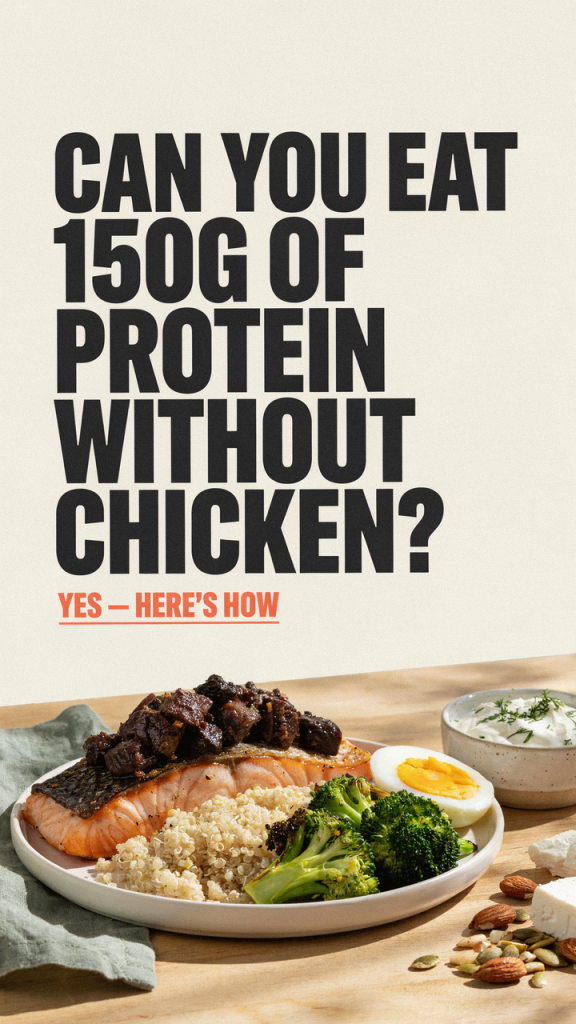
Can You Eat 150g of Protein Without Chicken? Yes—Here’s How
Eating 150 grams of protein a day might sound like a challenge—especially if you’re trying to avoid one of the most common protein staples: chicken. But the short answer is: absolutely. With a mix of eggs, dairy, beef, pork, fish, legumes, tofu/tempeh, protein powders, nuts and seeds, and smart meal planning, you can easily reach 150g of protein without touching a single chicken breast.
This guide will walk you through the why and how, give practical strategies, and provide multiple explicit recipes and meal ideas (with ingredient lists and step-by-step instructions) so you can hit 150g of protein in a way that fits your taste preferences and dietary choices—omnivore, pescatarian, vegetarian, or vegan.
Why 150g of protein?
Hitting 150g of protein daily is a common target for people who want to build or maintain muscle, recover well from workouts, or feel satiated while in a calorie deficit. For many active adults, 1.6–2.2 g/kg body weight is a range used to support muscle gain and retention—150g is realistic for a 68–94 kg (150–207 lb) person, depending on goals.
Protein supports:
– Muscle protein synthesis and recovery
– Appetite control and satiety
– Stable blood sugar (when paired with carbs/fat)
– Immune and metabolic functions
Now, let’s map out how to get there without chicken.
The strategy: distribution, variety, and high-protein staples
To hit 150g, spread protein across the day: breakfast, snacks, lunch, afternoon snack, and dinner. Combine high-protein single ingredients (eggs, Greek yogurt, whey, tuna, beef, tofu) with complementary sources (beans, quinoa, nuts) to improve amino acid completeness and overall intake.
Key staples to rely on:
– Eggs (whole and whites)
– Greek yogurt and cottage cheese
– Whey or plant protein powders
– Canned tuna, salmon, sardines
– Lean beef, pork, and lamb
– Fish and shellfish
– Tofu, tempeh, seitan
– Legumes (lentils, chickpeas, black beans)
– Nuts, seeds, and nut butters
Below are actionable meal ideas and full recipes. Each recipe lists ingredients and instructions so you can start cooking right away.
One-day sample meal plan (omnivore, no chicken) — totals at a glance
This sample plan aims for ~150–160g protein. Protein amounts are approximate.
- Breakfast: High-Protein Omelette with Cottage Cheese — 40g
- Mid-morning snack: Greek Yogurt Protein Bowl — 30g
- Lunch: Tuna, Quinoa & Edamame Bowl — 35g
- Afternoon snack: Protein Shake + Almonds — 20g
- Dinner: Salmon, Lentil Salad & Greens — 30g
Total: ~155g
Now detailed recipes and how to assemble them.
Breakfast: High-Protein Omelette with Cottage Cheese
Ingredients:
– 3 whole eggs
– 4 large egg whites (or 1/2 cup carton egg whites)
– 1/2 cup low-fat cottage cheese (120g)
– 1/2 cup chopped spinach
– 1/4 cup diced bell pepper
– 1 tbsp olive oil or cooking spray
– Salt and pepper to taste
– Optional: 1 tbsp chopped chives or parsley
Instructions:
1. Whisk the whole eggs and egg whites together with a pinch of salt and pepper.
2. Heat oil in a non-stick skillet over medium heat. Sauté bell pepper for 1–2 minutes, then add spinach and cook until wilted.
3. Pour the egg mixture over the vegetables and cook undisturbed until edges set (about 2–3 minutes).
4. Drop spoonfuls of cottage cheese on one half of the omelette, fold the other half over, and cook another 1–2 minutes until eggs are cooked through and cottage cheese is slightly warmed.
5. Slide onto a plate and top with chives or parsley.
Approximate protein: 40 g (3 eggs ≈ 18g, 4 egg whites ≈ 14g, 1/2 cup cottage cheese ≈ 8g)
Mid-morning Snack: Greek Yogurt Protein Bowl
Ingredients:
– 1.5 cups (340g) plain nonfat Greek yogurt
– 1 scoop (25–30g) whey or plant protein powder (vanilla or unflavored)
– 1 tbsp chia seeds
– 1/4 cup mixed berries
– Optional: cinnamon or a drizzle of honey
Instructions:
1. In a bowl, stir the protein powder into the Greek yogurt until smooth.
2. Fold in chia seeds and top with berries and optional honey or cinnamon.
3. Let sit 2 minutes for chia seeds to hydrate, or eat immediately.
Approximate protein: 30 g (Greek yogurt ≈ 25g; protein powder ≈ 20–25g — if you prefer an exact 30g total, reduce powder to 1/2 scoop or use a 15g protein powder; adjust based on products)
Lunch: Tuna, Quinoa & Edamame Bowl
Ingredients:
– 1 can (165g drained) tuna in water
– 3/4 cup cooked quinoa (cooked weight ~150g)
– 1/2 cup shelled edamame (cooked)
– 1 cup mixed greens
– 1/4 avocado, sliced
– 1 tbsp olive oil
– Juice of 1/2 lemon
– Salt, pepper, and a pinch of chili flakes
Instructions:
1. Cook quinoa according to package. Drain and set aside to cool slightly.
2. In a bowl, combine quinoa, edamame, mixed greens, and tuna (flaked).
3. Drizzle with olive oil and lemon juice, season with salt, pepper, and chili flakes.
4. Top with avocado and mix before eating.
Approximate protein: 35 g (tuna ≈ 30g, quinoa ≈ 6g, edamame ≈ 9g — portion sizes split slightly to make total ~35g)
Afternoon Snack: Chocolate Protein Shake + Almonds
Ingredients:
– 1 scoop chocolate whey or plant protein (25–30g protein)
– 1 cup unsweetened almond milk
– 1/2 banana
– 1 tbsp peanut butter (optional)
– 20g raw almonds (about 12–14 almonds)
Instructions:
1. Blend protein powder, almond milk, banana, and peanut butter until smooth.
2. Pour into a glass and enjoy with almonds on the side.
Approximate protein: 20–25 g (protein powder ≈ 25g; almonds ≈ 4–6g — adjust to target)
Dinner: Pan-Seared Salmon with Lentil Salad
Ingredients:
– 6 oz (170g) salmon fillet
– 1/2 cup cooked green or brown lentils
– 1 cup roasted vegetables (zucchini, bell pepper, onion)
– 1 cup mixed greens
– 1 tbsp olive oil
– 1 tsp Dijon mustard
– Lemon wedge, salt, and pepper
Instructions:
1. Season salmon with salt and pepper. Heat a non-stick skillet with a touch of oil over medium-high heat.
2. Place salmon skin-side down and cook 4–5 minutes, then flip and cook another 3–4 minutes until internal temperature reaches 125–130°F (medium) or cooked to your liking.
3. In a bowl, combine cooked lentils, roasted vegetables, mixed greens, olive oil, Dijon mustard, and lemon. Season to taste.
4. Serve salmon on top of the lentil salad and squeeze fresh lemon.
Approximate protein: 30–35 g (6 oz salmon ≈ 34g; lentils ≈ 9g — but combined portions adjusted to total ~30–35g)
Alternate one-day plan: Vegetarian (no meat, no fish) — ~150g protein
This is an achievable target with eggs, dairy, tofu/tempeh, legumes, and protein powder.
- Breakfast: Scrambled Eggs with Cottage Cheese & Whole Grain Toast — 35g
- Mid-morning: Greek Yogurt + Protein Powder Smoothie — 35g
- Lunch: Tofu & Tempeh Stir-Fry with Quinoa — 40g
- Snack: Cottage Cheese + Seeds + Fruit — 15g
- Dinner: Lentil & Seitan Bolognese with Spaghetti Squash — 25g
Total: ~150g
Provided below are the key recipes for the vegetarian day.
Vegetarian recipe: Tofu & Tempeh Stir-Fry with Quinoa
Ingredients:
– 6 oz (170g) extra-firm tofu, pressed and cubed
– 4 oz (115g) tempeh, cubed
– 1 cup cooked quinoa
– 1 cup broccoli florets
– 1/2 cup sliced carrots
– 2 tbsp soy sauce or tamari
– 1 tbsp sesame oil
– 1 tsp grated ginger and 1 garlic clove minced
– 1 tbsp sesame seeds
Instructions:
1. Heat half the sesame oil in a skillet. Add tofu and tempeh cubes and sear until golden brown on all sides; remove and set aside.
2. Add remaining oil to skillet and sauté garlic, ginger, broccoli, and carrots until tender-crisp.
3. Return tofu and tempeh to the pan, add soy sauce, and toss to coat and heat through.
4. Serve over cooked quinoa and sprinkle with sesame seeds.
Approximate protein: 40 g (tofu ≈ 20g for 6 oz, tempeh ≈ 20g for 4 oz, quinoa adds some extra)
Vegan option: High-Protein Day (150g) — overview
Vegan 150g days emphasize concentrated sources: seitan, tofu, tempeh, legumes, nuts, seeds, and high-quality plant protein powders. Example distribution:
- Breakfast: Tofu scramble with black beans and tempeh crumbles — 35g
- Snack: Plant protein shake with soy milk — 30g
- Lunch: Seitan and lentil salad bowl — 35g
- Snack: Roasted edamame + pumpkin seeds — 10g
- Dinner: Tempeh stir-fry + quinoa — 40g
Make sure to use fortified soy milk or high-protein powders (pea + rice blends, soy protein isolate) to reach targets.
Practical tips to consistently hit 150g without chicken
- Prioritize protein-dense foods: fish, red meat, eggs, dairy, tofu, tempeh, seitan, and protein powders are efficient.
- Use protein powders strategically: adding 1–2 shakes a day makes the math much easier.
- Plan portions: weigh servings at first to know what portion sizes equate to protein targets.
- Spread protein evenly: aim for 25–40g per main meal and 10–30g per snack; this supports muscle protein synthesis across the day.
- Combine plant proteins for completeness: e.g., lentils + quinoa or tofu + rice.
- Keep ready-to-eat options: canned tuna/salmon, Greek yogurt, cottage cheese, jerky, edamame, and pre-cooked lentils save time.
- Use higher-protein grains and legumes: quinoa, farro, bulgur, lentils, chickpeas.
- Don’t forget fats and carbs: they support performance and absorption—pair protein with vegetables, healthy fats, and some carbs for balanced meals.
Quick high-protein snack recipes (each with ingredients & instructions)
These simple snacks help top off protein totals.
1) Cottage Cheese Power Cup
Ingredients:
– 1 cup low-fat cottage cheese
– 1 tbsp chia seeds
– 1/4 cup diced pineapple or berries
Instructions:
1. Scoop cottage cheese into a bowl.
2. Stir in chia seeds and top with fruit.
Protein: ~28g
2) Savory Tuna Lettuce Wraps
Ingredients:
– 1 can tuna, drained
– 1 tbsp Greek yogurt or mayo
– 1 tsp Dijon mustard
– 3 large romaine or butter lettuce leaves
Instructions:
1. Mix tuna, Greek yogurt, and mustard.
2. Spoon into lettuce leaves and wrap.
Protein: ~30g
3) Roasted Edamame & Pumpkin Seeds Mix
Ingredients:
– 1/2 cup roasted edamame
– 2 tbsp pumpkin seeds
– Pinch of sea salt and smoked paprika
Instructions:
1. Mix edamame and pumpkin seeds, season to taste.
Protein: ~15–18g
How to track and adjust
- Use a food-tracking app once or twice to get accurate protein counts.
- If weight or activity level changes, adjust your target (e.g., to 1.6–2.2 g/kg body weight).
- If you struggle to eat enough, add an extra protein shake or a higher-protein snack like Greek yogurt or cottage cheese.
Common questions
Q: Will eating this much protein strain my kidneys?
A: For people with normal kidney function, higher protein intake is generally safe. If you have kidney disease or concerns, discuss with your doctor.
Q: Can I do this without supplements?
A: Yes—it’s possible without protein powder, but powders make hitting high totals easier and more convenient. Focus on whole-foods like eggs, dairy, fish, tofu, tempeh, and legumes.
Q: Is animal protein necessary?
A: No. With careful planning and concentrated plant proteins (seitan, tempeh, tofu, legumes, and protein powders) vegan and vegetarian diets can hit 150g. You will need larger volumes or more concentrated sources.
Sample grocery list (protein-focused, no chicken)
- Eggs and egg whites
- Greek yogurt and cottage cheese
- Whey or plant protein powder
- Canned tuna, salmon, sardines
- Salmon, lean beef, pork (if omnivore)
- Tofu, tempeh, seitan
- Lentils, chickpeas, black beans
- Quinoa, farro
- Edamame (frozen)
- Nuts and seeds, nut butters
- Almond or soy milk (unsweetened)
- Vegetables and fruits for balance
Conclusion
Yes—you can absolutely eat 150 grams of protein without chicken. By using a variety of protein-dense foods—eggs, dairy, fish, beef, pork, tofu/tempeh, legumes, and protein powders—you can build satisfying, nutritionally balanced days that hit your protein goal. Spread intake across meals, include targeted snacks, and use the recipes and sample meal plans above to simplify your meal prep and grocery shopping.
Whether you’re avoiding chicken by preference, ethics, or variety, these strategies and recipes provide a flexible, enjoyable roadmap to hit 150g daily. Start with one sample day, scale servings to your needs, and tweak flavors to keep things interesting—consistency is what makes results happen. You’ve got this.


