
The Easiest Way to Peel Hard-Boiled Eggs Without Losing Half the Egg
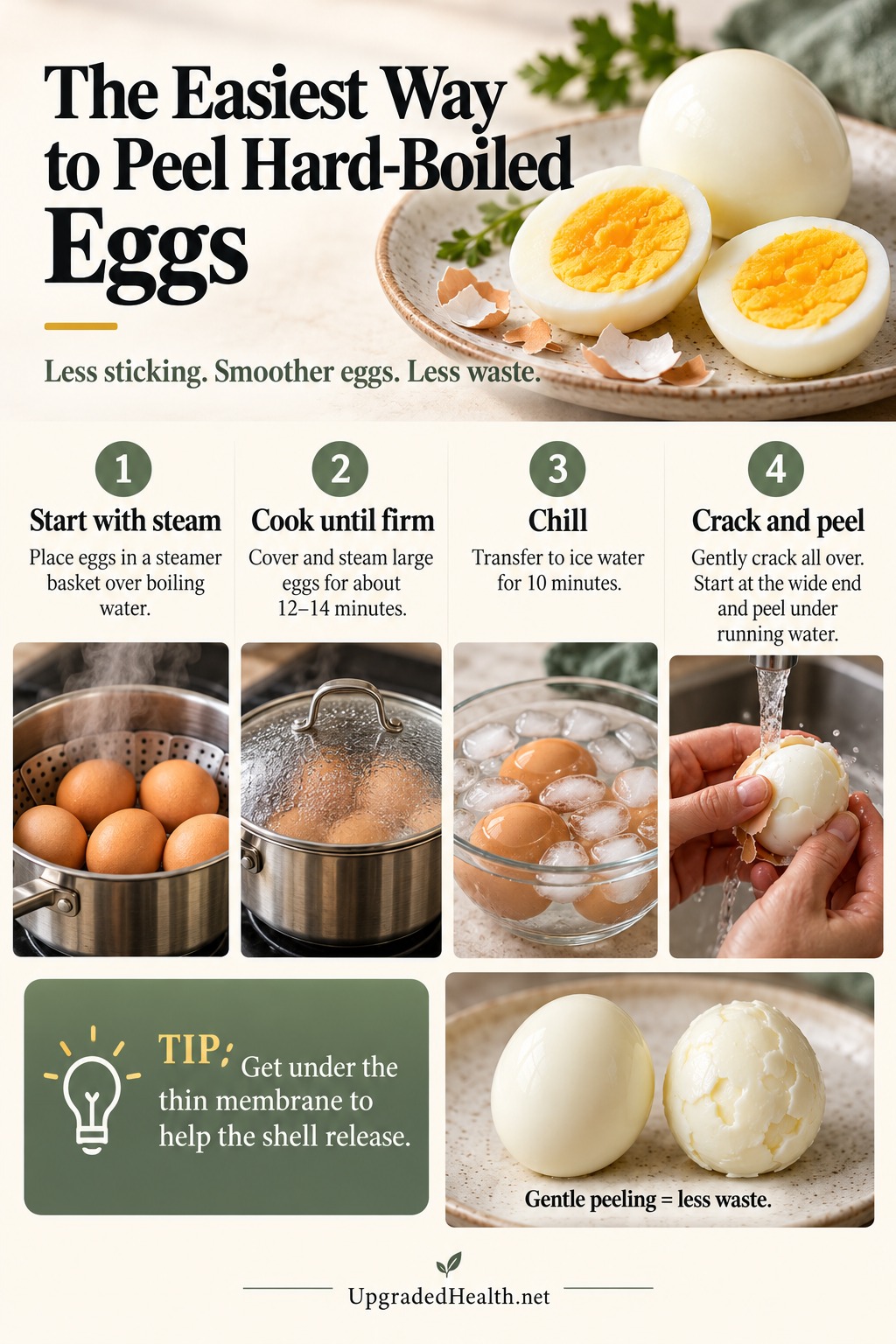
The easiest way to peel hard-boiled eggs begins before you crack the shell: start the eggs in hot steam, chill them thoroughly, then peel gently beneath the membrane. No method makes every egg flawless, but this routine is a useful place to start when shells keep taking chunks of white with them.
Why eggs stick to their shells
Between an egg’s shell and white is a thin membrane. If that membrane clings tightly to the cooked white, pulling on the shell can tear the egg. Very fresh eggs can be particularly stubborn. A hot start and a patient peeling technique generally help more than aggressively rolling, shaking, or squeezing the egg.
What you need
Gather 6 large eggs, a saucepan with a lid, a steamer basket, tongs, and a bowl of ice water. Add enough water to produce steady steam without touching the eggs in the basket. Use eggs with intact shells and keep them refrigerated until cooking.
1. Bring the water to a boil
Set the basket in the saucepan and bring the water to a boil first. Carefully place the eggs in a single layer in the basket, using tongs if needed. Cover promptly so steam surrounds the eggs. Do not pack so many eggs into the basket that the lid cannot close.
2. Steam until the yolks are firm
Steam large eggs for about 12–14 minutes. Egg size, starting temperature, altitude, and your equipment can change the result, so treat that range as a starting point. Test one egg after chilling and adjust the next batch if necessary. For hard-cooked eggs, both white and yolk should be firm.
3. Give them a proper ice bath
Transfer the eggs directly to ice water and leave them for about 10 minutes, adding ice if the water warms. A quick splash is less helpful than cooling the whole egg. The bath also stops continued cooking, which can leave yolks dry or surrounded by a gray-green ring.
4. Crack all over and begin at the wide end
Tap the cooled egg gently against the counter, then roll lightly to create small cracks. Start at the wide end, where an air pocket often gives you room to get underneath the membrane. Work slowly under a thin stream of cool water, or peel in a bowl of water. Lift shell and membrane together rather than digging into the white.
If the shell still sticks
Pause and look for the membrane. Removing only the hard shell often leaves that layer attached. Try loosening a different area instead of repeatedly pulling at the same spot. A spoon can help with a badly damaged egg, but it can also gouge the white; use it gently. Save uneven eggs for egg salad rather than discarding edible portions.
Storage and meal-prep ideas
Refrigerate hard-cooked eggs within 2 hours and use within 7 days, peeled or unpeeled. Keep peeled eggs covered in a clean container. Chop them into salad, slice onto toast, or make deviled eggs with the smoothest ones. Freezing whole hard-cooked eggs usually produces unpleasant whites.
Do vinegar or baking soda guarantee easy peeling?
No. You do not need either for this method. Keep the hot start, full cooling, and membrane technique consistent before experimenting with extra ingredients.
Can I peel the eggs while they are warm?
You can, but they are harder to handle safely. For this routine, cool them fully first. Avoid shaking eggs violently in a jar; it may break them into pieces instead of loosening the shell.
Sources
Serious Eats: tested egg cooking and peeling methods; USDA: hard-cooked egg storage.


