
The Best Way to Cook Asparagus
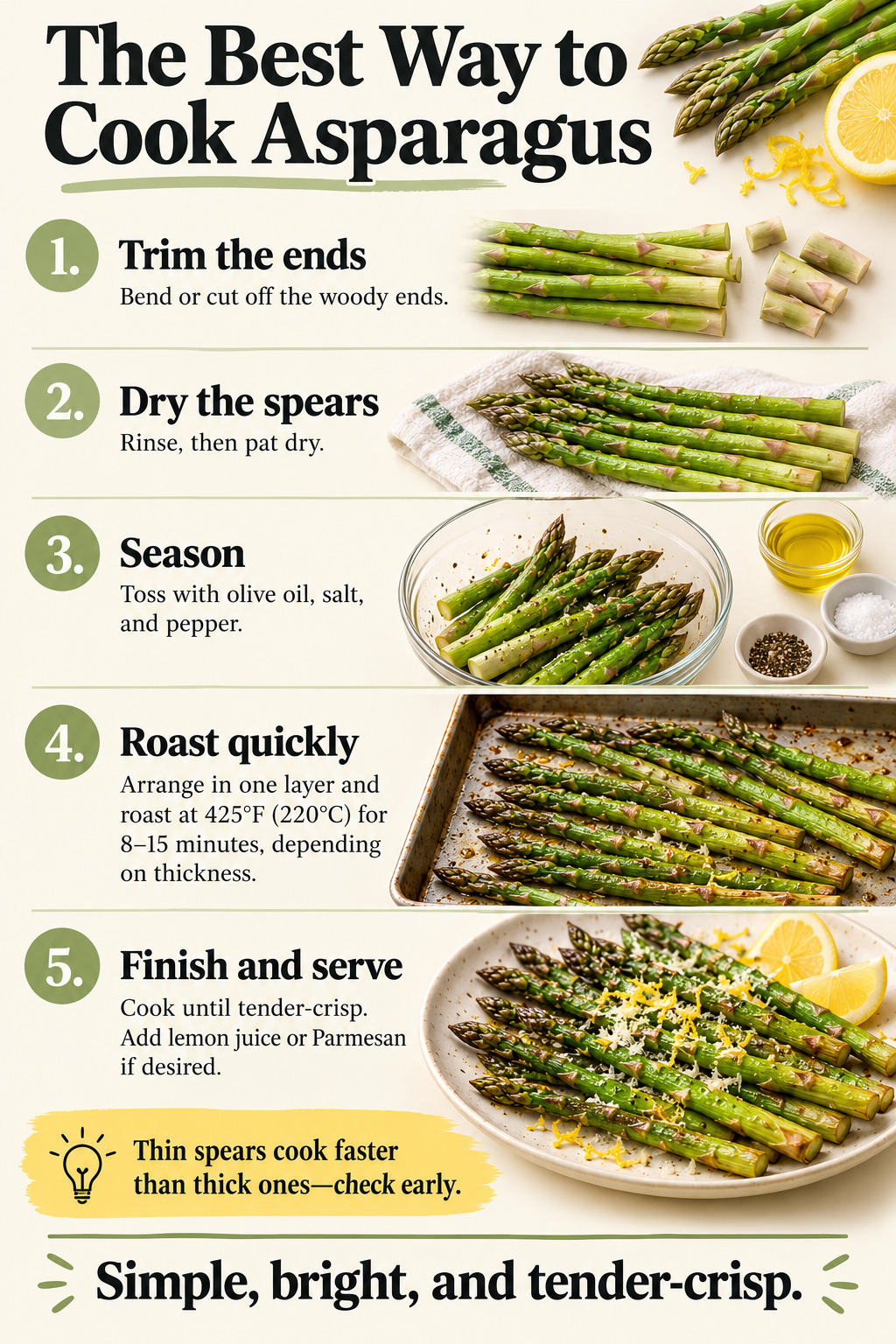
Asparagus needs little more than trimming, oil, and a short roast. The biggest variable is thickness: pencil-thin spears cook far faster than thick ones. Roast a similar-size bunch together, check early, and finish with lemon for a bright side dish that still has a little bite.
Why this method works
A brief roast concentrates the flavor while keeping the structure of the spears. Trimming removes the fibrous part that stays unpleasant even after cooking. Drying and a single layer help the vegetable roast rather than collect moisture in a pile.
Ingredients and equipment
The quantities below are a practical starting batch. Adjust seasoning to taste and keep the same preparation method when scaling.
- 1 pound fresh asparagus
- 1 tablespoon olive oil
- ¼–½ teaspoon fine salt, to taste
- ¼ teaspoon black pepper
- Optional: lemon juice, lemon zest, or grated Parmesan
Equipment: Knife, cutting board, clean towel, and rimmed sheet pan.
How to make it, step by step
1. Trim the ends
Cut away the woody lower ends or bend a few spears to judge where the tender portion begins. The amount varies with the bunch. For very thick spears, peel the tough lower stalk lightly if desired. Keep the tender tips intact.
2. Dry the spears
Rinse and pat dry. Spread on a clean towel so moisture does not remain trapped between the stems. Separate unusually thin spears from thick ones if you can; this makes it easier to remove each group at the right time.
3. Season
Toss with olive oil, salt, and pepper until lightly coated. Use enough oil to cover the surface without puddles. If adding lemon zest, save some for the finish so its aroma stays fresh.
4. Roast quickly
Preheat to 425°F (220°C), arrange in one layer, and roast for about 8–15 minutes depending on thickness. Check thin spears early. Use a fork or knife near the lower stalk to judge tenderness, and look for lightly browned areas rather than a fully collapsed spear.
5. Finish and serve
Remove when tender-crisp. Add lemon juice, Parmesan, or fresh herbs if desired. Serve promptly, because asparagus continues to soften while sitting hot. A small squeeze of lemon is enough to brighten the vegetable without soaking it.
Common mistakes and how to fix them
The asparagus is stringy
More of the woody base needed trimming, or thick stems needed peeling. Cut the tender cooked portions away from the tough ends before serving.
The spears are limp
They likely roasted too long for their thickness. Check several minutes earlier next time and remove thin pieces first.
The tips burn
Avoid mixing very thin and very thick spears on the same timing. Move delicate pieces away from the hottest section of the oven.
Flavor variations and substitutions
Finish with garlic butter, lemon zest, parsley, or a little Parmesan. Add minced garlic near the end rather than roasting it for the full time. For a dairy-free side, use olive oil and skip cheese.
What to serve with it
Pair with salmon, chicken breast, pork chops, or an egg breakfast. Chop leftovers into rice or pasta, or serve chilled with a light dressing. Keep additional sauces modest so the asparagus flavor comes through.
Storage and reheating
Divide leftovers into shallow containers and refrigerate promptly, within 2 hours of cooking (within 1 hour above 90°F). Keep the refrigerator at 40°F or below and use cooked leftovers within 3–4 days. Freeze portions if you need longer storage. Reheat leftovers to 165°F; heat briefly with gentle moisture or in the oven; the spears will soften more, so avoid reheating repeatedly.
Frequently asked questions
Can I cook thick and thin spears together?
You can, but remove the thin ones first. Sorting by thickness gives more consistent results.
Should I peel asparagus?
It is optional for thin spears. Peeling the lower part of thick stalks can remove fibrous skin.
Can I add lemon before roasting?
A little zest is fine. Add most juice after roasting so it does not add unnecessary surface moisture.
Kitchen reminder: Remove when tender-crisp.
Food-safety reference: USDA food handling, cooking, and leftover guidance.


