3-Ingredient High-Protein Strawberry Protein Sorbet
We’re always looking for desserts that feel indulgent but actually support our nutrition goals. This 3-Ingredient High-Protein Strawberry Protein Sorbet delivers on both: it’s bright, refreshing, and surprisingly creamy for something made without dairy or complicated stabilizers. Whether we want a post-workout treat, a lower-sugar dessert, or a simple way to get extra protein into a kid-friendly snack, this sorbet is fast, flexible, and reliably delicious. In the sections that follow we’ll walk through why this recipe works, how to choose the best ingredients, equipment and methods for ideal texture, nutrition breakdowns, troubleshooting tips, and a handful of variations to keep things interesting.
Why This Recipe Works: Simple, Healthy, Protein-Packed
This recipe hits a sweet spot: just three ingredients (strawberries, protein powder, and a liquid) yet it produces a sorbet with good mouthfeel and a meaningful protein boost. Here’s why it works, broken down into practical points we’ve tested.
- Flavor-forward primary ingredient: Strawberries bring acid, natural sweetness, and strong aroma. That overpowering fruit flavor lets us use minimal added sweeteners and masks some texture changes that protein powders can introduce.
- Protein for structure and nutrition: Protein powder isn’t just for macros, it also helps stabilize the frozen mixture. Depending on the type, it can contribute a creamier mouthfeel or slightly firmer texture, replacing some of the role fats/dairy would normally play.
- Minimal water content reduces iciness: By keeping the liquid component modest and choosing one with a bit of body (like Greek yogurt thinmed with milk, unsweetened almond milk, or even coconut water), we reduce large ice crystal formation and achieve a silkier finish.
- Cold start: Using frozen or very cold strawberries shortens the time the mix spends close to 32°F in the ice cream maker (or blender), which helps keep crystals small. Quick processing and a short initial freeze are our friends here.
We like this recipe because it’s adaptable: swapping protein types, fine-tuning sweetness, or adding a tiny splash of alcohol to reduce freezing point (more on that later) lets us dial texture and nutrition to taste without complicating the ingredient list. Most importantly, the result is a dessert we actually want to eat regularly, no guilt, just enjoyment.
Essential Ingredients And How To Choose Them
This sorbet uses three essential elements: the fruit (strawberries), a protein powder, and a liquid base. Choosing high-quality versions of each makes a big difference.
Why Only Three Ingredients
We intentionally restrict the recipe to three ingredients for clarity, convenience, and reliability. Fewer ingredients mean fewer variables that can break texture or flavor. It also keeps cost and prep time low. That said, the “three-ingredient” promise is flexible, small optional add-ins (like a teaspoon of honey or a pinch of salt) can be used sparingly without changing the category.
Best Strawberries To Use (Fresh Vs. Frozen)
- Fresh strawberries: Use ripe, fragrant berries when in season. They give the brightest flavor and the best aroma, but you’ll need to pre-freeze them for optimal texture. Hull and slice, then freeze on a single layer before processing.
- Frozen strawberries: Most of the year we prefer frozen strawberries for convenience and consistent texture. They eliminate the need for pre-freezing and help keep the blend cold while we process it. If strawberries are on sale, buy fresh, hull, and freeze them yourself for the best value.
Tip: If fresh strawberries are underripe or flavor-lacking, add a tablespoon of honey or maple syrup. A squeeze of lemon juice can boost brightness if strawberries taste flat.
Choosing A Protein Powder: Whey, Pea, Or Collagen
The protein choice affects flavor, texture, and nutrition. Here’s how to pick.
- Whey protein (concentrate/isolate): Best for creaminess and neutral flavor if you want a smoother mouthfeel. Whey dissolves easily and often gives the least grainy result. If dairy bothers you, choose whey isolate or skip it.
- Pea protein: A great plant-based option. Pea protein can be slightly earthy or chalky depending on the brand: pick a finely milled, flavored (vanilla) option to minimize aftertaste. Texture can be denser, so blend thoroughly and consider adding a touch more liquid.
- Collagen peptides: Flavor-neutral and dissolves well, but collagen won’t thicken or bind like whey or pea protein. Use collagen when you want protein without changing taste, but expect a softer, less structured sorbet.
Serving-size note: Most scoops of protein powder deliver 15–25 grams protein per serving. Check labels and adjust serving sizes if you need a specific protein target per serving.
Liquid Base Options And Their Effects On Texture
The liquid we use influences sweetness, mouthfeel, and freezing behavior.
- Unsweetened almond milk: Low-calorie and neutral: keeps sorbet lighter but can produce a slightly icier finish if used too sparingly.
- Dairy milk (2% or whole): Adds richness and creaminess, producing a softer scoop. Whole milk helps mimic the texture of a creamy frozen dessert.
- Coconut water: Refreshing and lower in fat, works well for a lighter, more thirst-quenching sorbet. Watch flavors: coconut water can be subtly sweet or mineral-forward.
- Greek yogurt (thinned with milk or water): If we thin plain Greek yogurt to a spoonable consistency with milk, we get a silkier texture and tang that plays nicely with strawberries. This technically increases ingredient count if the yogurt isn’t already on your three-ingredient list, but plain unsweetened yogurt can replace the liquid while still keeping things minimal.
Pro tip: A tiny splash of clear alcohol (vodka or a neutral liqueur) lowers the freezing point and results in a softer set. Use sparingly, about 1 tablespoon per quart, to avoid a boozy taste.
Equipment You’ll Need
One of the reasons this recipe is so approachable is that it doesn’t demand specialized equipment. Here’s what we recommend, from minimal to ideal.
- High-powered blender or food processor: Essential for getting a smooth purée and fully integrating protein powder. A stick blender can work if you have a sturdy cup, but a blender gives the best texture.
- Ice cream maker (optional): For the creamiest, scoopable sorbet straight out of the machine. If you don’t have one, you can use the freeze-and-stir method described later.
- Freezer-safe container with a lid: A shallow, wide container helps the mixture freeze evenly and reduces crystal formation.
- Fine-mesh sieve (optional): Useful if you want the absolute smoothest texture, press the blended mixture through the sieve to remove seeds and any fibrous bits.
We’ve made great batches with just a good blender and freezer. If you plan to make frozen desserts regularly, an inexpensive churn-style machine will upgrade texture but isn’t necessary.
Step-By-Step Recipe Instructions
Below is our go-to method. Quantities are flexible depending on how much sorbet we want, but the ratio of fruit:protein:liquid is key to texture and protein content.
Ingredients (baseline for ~4 servings):
- 4 cups frozen strawberries (about 1 lb fresh before freezing)
- 2 scoops (about 40–50 g) protein powder, adjust to your protein target
- 1/4 to 1/2 cup liquid (almond milk, dairy milk, or coconut water)
Preparing The Strawberries And Liquid Base
- If using fresh strawberries: Wash, hull, slice, and freeze them on a tray until solid (4–6 hours). Frozen strawberries reduce processing time and produce a better texture.
- Measure protein powder and have it ready. If using a flavored powder (vanilla or strawberry), factor that into sweetness expectations.
- Choose your liquid. Start with the smaller amount (1/4 cup) and only add more if blending is too thick or the powder won’t incorporate. We want a thick, spoonable purée, not a shake.
Blending To The Right Consistency
- Add the frozen strawberries to the blender first, then protein powder, then the liquid.
- Pulse slowly to begin, scraping down the sides as needed. If the blender stalls, add a tablespoon of liquid and let the blades clear.
- Blend until smooth and homogeneous. Aim for a texture like soft-serve ice cream, thick but scoopable. If it looks too grainy, blend a bit longer, but avoid overheating the mix.
- Taste and adjust: if it’s not sweet enough, add a teaspoon of honey or maple syrup. If flavor is muted, a squeeze of lemon brightens the strawberries.
Freezing Methods: Instant Freeze Vs. Soft-Set
- Ice cream maker (instant churn): Pour the blended mixture into the ice cream maker and churn according to the manufacturer’s directions, typically 15–25 minutes. Churning incorporates air and reduces crystal size: result will be soft-set and scoopable.
- Freeze-and-stir (no ice cream maker): Pour mixture into a shallow container and freeze for 30–45 minutes. Remove and vigorously stir or whisk to break up forming ice crystals, then repeat every 30–45 minutes for 2–3 cycles until set. This manual agitation mimics churning and gives a better texture than simply freezing solid.
- Firm set: For a scoopable, firmer sorbet, freeze for 2–4 hours after churning, then let sit at room temperature for 3–5 minutes before scooping.
We find that churning once (or stirring frequently if not churning) followed by a short firm-up time produces the best balance of creaminess and scoopability.
Serving Suggestions And Garnishes
We like serving this sorbet in simple, bright ways that showcase the strawberry flavor.
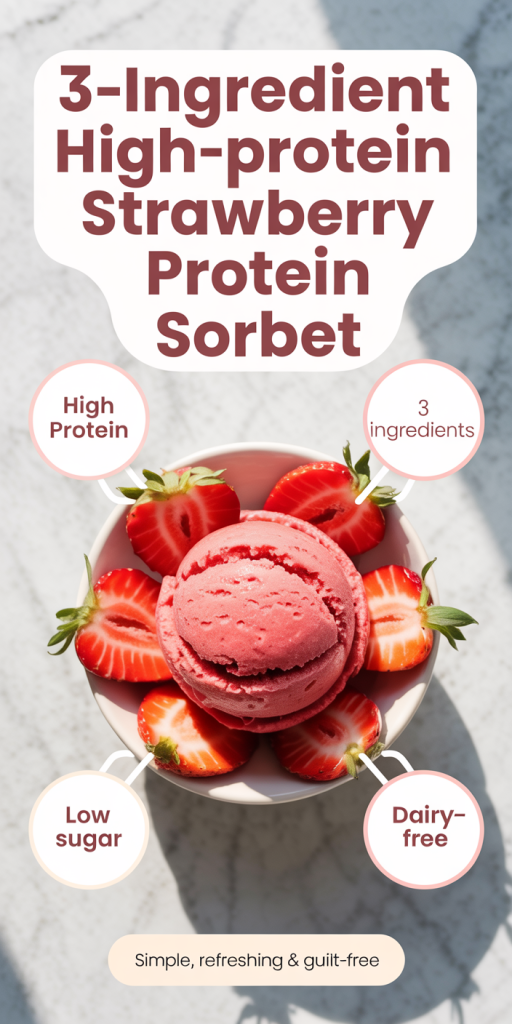
- Classic scoop: Serve in chilled bowls with a mint sprig and a few sliced fresh strawberries for contrast.
- Parfait-style: Layer sorbet with plain Greek yogurt and toasted granola for a quick breakfast or post-workout snack.
- Cocktail garnish: Top sorbet scoops with a splash of sparkling water or Prosecco for an adult float.
- Sandwiches: Spread between two thin almond flour cookies for a handheld treat.
Texture Enhancements And Sweetness Adjustments
- For extra creaminess: Fold in 1–2 tablespoons of full-fat coconut milk after blending, before freezing. This technically adds a fourth ingredient but substantially improves mouthfeel.
- To increase sweetness without refined sugar: Use a tablespoon of concentrated date syrup or a teaspoon of maple syrup. Add sparingly, because strawberries vary in sweetness, taste first.
- Salt: A tiny pinch of fine sea salt (1/8 teaspoon) amplifies sweetness and reduces any flatness from lower-sugar protein powders.
When serving, let the sorbet sit out a few minutes so it becomes easier to scoop, especially if you froze it solid. Short thawing brings out flavor and softens texture without melting into a soup.
High-Protein Variations And Flavor Swaps
One of the best features of this recipe is how easily it adapts. Below are variations that boost protein or change flavors while keeping our approach simple.
Mix-In Ideas That Keep It Three Ingredients (Or Close)
- Banana + vanilla whey: Replace half the strawberries with one frozen banana and use vanilla whey powder. Banana adds natural sweetness and creamy body, often reducing the need for extra liquid.
- Strawberry + frozen raspberries + pea protein: A mixed berry blend offers depth and color: pea protein supports vegan preferences.
- Strawberry + collagen + a splash of orange juice: Collagen keeps flavor neutral: a splash of OJ brightens the profile and pairs well with collagen’s neutral funk.
Each of these swaps still essentially leaves us with fruit, protein, and liquid, so we’re honoring the three-ingredient promise while varying taste.
Lower-Sugar, Higher-Protein Substitutions
- Use a low-sugar protein powder (or an isolate with minimal carbs) and unsweetened almond milk. Increase protein by adding an extra half-scoop if desired.
- Replace part of the strawberries with silken tofu (blended) and use a neutral-flavored protein powder, this raises protein without much sweetness change, though it technically adds an ingredient.
- Use berry concentrates or freeze-dried strawberry powder (small amounts) to intensify flavor without added sugar: then reduce fruit quantity to increase protein ratio.
We suggest experimenting with one variable at a time so we can tell how each change affects texture and flavor.
Nutrition Breakdown And Protein Content Per Serving
Nutrition depends on the brands and quantities used. Below we calculate an example baseline and explain how to estimate macros for other combinations.
Example baseline (approximate for 4 servings):
- 4 cups frozen strawberries (about 600 g): 240 kcal, 56 g carbs, 36 g sugar, 16 g fiber (note: strawberries are low-calorie: numbers vary by weight)
- 2 scoops whey protein (25 g protein per scoop: 2 x 30 g scoops ≈ 240 kcal): 240 kcal, 48–50 g protein, 6–8 g carbs depending on brand
- 1/2 cup unsweetened almond milk: 15–20 kcal, 1–2 g carbs
Total (approximate): 495 kcal for the batch
Per serving (1 of 4): ~125 kcal, ~12–13 g protein, ~14 g carbs (with ~9 g sugar)
These numbers are illustrative. If we increase to 3 scoops of protein, per-serving protein would rise to ~20 g.
How To Calculate Macros For Different Protein Powders
- Check the Nutrition Facts on your protein powder: note calories, protein grams, carbs, and sugar per scoop.
- Multiply those values by the number of scoops you’ll use.
- Add the nutrition values for your fruit and liquid (use a food scale and a nutrition app or label database for accuracy).
- Divide totals by the number of servings.
For example, if a scoop of pea protein provides 120 kcal and 20 g protein, two scoops add 240 kcal and 40 g protein to the batch. Swapping almond milk for dairy milk will add more calories and fat.
Calorie And Sugar Comparisons Based On Ingredient Choices
- Using whole milk instead of almond milk adds about 75–100 extra calories per 1/2 cup and increases fat content, making the sorbet richer but higher in calories.
- Sweetened protein powders can add 50–100 extra calories per scoop compared with unsweetened isolates: they also add sugar.
- Using honey or maple syrup adds roughly 20–60 calories per teaspoon depending on amount.
If low sugar is a priority, choose unsweetened protein powders and unsweetened almond milk, and rely on the fruit’s innate sweetness.
Storage, Shelf Life, And Reheating Tips
Knowing how to store the sorbet properly keeps texture and flavor intact.
- Short-term storage: Store sorbet in an airtight, freezer-safe container for up to 2 weeks for best texture. Beyond that, ice crystals and freezer burn become more likely.
- Long-term storage: You can keep it for up to a month, but expect more textural degradation. For best results, label the container with date and contents.
- Portioning: Freeze in shallow, single-serving containers to avoid repeatedly thawing the main batch.
Best Practices For Freezing And Preventing Ice Crystals
- Use an airtight container and press a piece of parchment directly on the surface before sealing to reduce air exposure.
- Store in the coldest part of the freezer (not the door), where temperature fluctuations are minimal.
- Don’t store next to strongly scented foods, strawberry sorbet can absorb odors.
Thawing And Refreezing Safely
- Thawing: When ready to serve, move the sorbet to the refrigerator for 10–20 minutes or let sit at room temperature for 3–5 minutes for easier scooping. Avoid leaving out long enough to melt.
- Refreezing: Refreezing partially thawed sorbet is safe from a food-safety standpoint but may worsen texture. If it softens but hasn’t fully melted, quickly reblend in a food processor and refreeze in a shallow container to restore smoother texture. Repeated freeze-thaw cycles accelerate ice crystal growth, so we try to only thaw once.
Troubleshooting Common Problems
Even simple recipes can have hiccups. Here are common issues and practical fixes.
Why The Sorbet Is Grainy Or Icy And How To Fix It
- Cause: Too much free water, not enough agitation during freezing, or a protein powder that doesn’t dissolve well.
- Fixes:
- Reduce the liquid by 1–2 tablespoons next time: blend longer to reduce graininess.
- Use churning or the freeze-and-stir method to minimize large ice crystals.
- Add a small amount of fat (1–2 tablespoons full-fat coconut milk) to improve mouthfeel.
- For a one-time rescue: transfer the frozen mixture to a high-powered blender or food processor and pulse until smoother, then refreeze briefly.
Protein Powder Clumping And Solutions
- Cause: Some powders clump when added directly to frozen fruit because they don’t hydrate evenly.
- Fixes:
- Mix protein powder with a tablespoon or two of liquid to make a slurry before adding to the frozen fruit. This ensures even dispersion.
- Add protein powder gradually while blending rather than dumping it in all at once.
- Use a sifted, finely milled protein powder for smoother integration.
If persistent clumping occurs with a particular brand, try a different powder, some are formulated to dissolve better in cold liquids.
We’ve found that small technique tweaks, slurry, gradual addition, and patient blending, solve most common texture problems.
Conclusion
This 3-Ingredient High-Protein Strawberry Protein Sorbet proves that simple can be brilliant. With just fruit, protein, and a small amount of liquid, we get a refreshing, protein-forward dessert that’s customizable for our preferences and nutrition goals. Key takeaways: choose ripe or well-frozen strawberries, pick a protein powder that matches your desired texture and diet, and use short freeze times or churning to avoid large ice crystals. Try the baseline recipe as written, then experiment with protein types, liquid choices, and small mix-ins until you find your perfect scoop. We’ll be reaching for this recipe whenever we want a fast, nutritious, and thoroughly satisfying frozen treat.