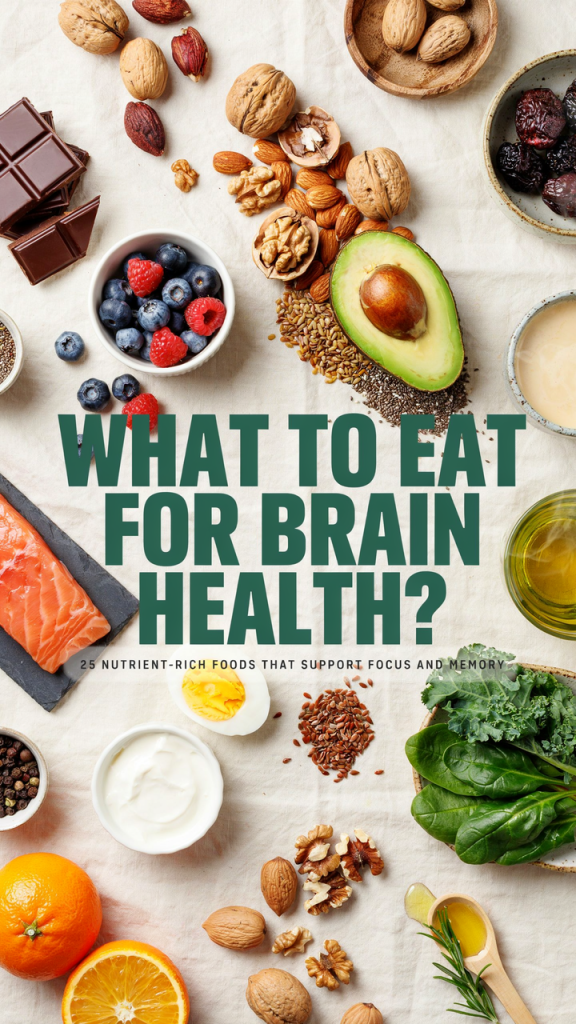
What Should I Eat for Brain Health? 25 Nutrient-Rich Foods That Support Focus and Memory
Maintaining sharp focus, steady attention, and a strong memory isn’t just about sleep, exercise, or willpower — what you eat plays a major role. The brain is a metabolic powerhouse that relies on specific nutrients to build and protect neurons, support neurotransmitter production, and reduce inflammation and oxidative stress. This guide highlights 25 nutrient-rich foods backed by science and practical meal ideas so you can start eating for better concentration and memory today.
In this article:
– You’ll find exactly 25 brain-boosting foods and what each contributes.
– Clear explanations of the key nutrients your brain needs.
– Six easy, delicious recipes and meal ideas that incorporate these foods (ingredients and step-by-step instructions included).
– Practical tips for building a brain-friendly eating pattern.
Read on to discover how small swaps at every meal can add up to big benefits for focus, memory, and long-term brain resilience.
Why food matters for brain health
Your brain needs energy (mostly glucose) and a steady supply of micronutrients and fatty acids to:
– Build and maintain cell membranes (omega-3s).
– Produce neurotransmitters like dopamine and acetylcholine (amino acids, B vitamins).
– Protect against oxidative damage (antioxidants such as vitamin C, E, and polyphenols).
– Reduce chronic inflammation (omega-3s, phytonutrients).
– Support blood flow and vascular health (nitrates, flavonoids).
Focusing on whole foods rich in these nutrients helps maintain mental clarity now and reduces risk factors for cognitive decline later in life.
25 Nutrient-Rich Foods That Support Focus and Memory
Below are exactly 25 foods, each followed by a short explanation of the key brain-supporting nutrients it supplies and practical ways to include it in your diet.
1. Fatty fish (salmon, mackerel, sardines)
Rich in EPA and DHA — long-chain omega-3 fatty acids that are critical for neuronal membranes, reducing inflammation, and supporting synaptic function. Aim for 2 servings per week.
2. Walnuts
High in alpha-linolenic acid (ALA), antioxidants, and vitamin E. Walnuts provide anti-inflammatory benefits and are a convenient brain-healthy snack.
3. Blueberries
Packed with flavonoids (anthocyanins) and antioxidants that improve neuronal signaling, memory performance, and reduce oxidative stress.
4. Leafy greens (spinach, kale, Swiss chard)
Loaded with folate, vitamin K, lutein, and beta-carotene. Folate and B vitamins are essential for neurotransmitter production and homocysteine regulation.
5. Eggs
Excellent source of choline (precursor for acetylcholine), B12, and high-quality protein. Choline supports memory and cognitive performance.
6. Avocado
Provides monounsaturated fats that support healthy blood flow and a steady supply of energy to the brain, plus vitamin K and folate.
7. Turmeric (curcumin)
Contains curcumin, a potent anti-inflammatory and antioxidant compound that may enhance memory and reduce brain inflammation.
8. Broccoli
High in sulforaphane, vitamin C, and glucosinolates — compounds with antioxidant and anti-inflammatory activity that support brain health.
9. Dark chocolate (70% cocoa or higher)
Rich in flavanols that enhance blood flow to the brain, improve cognition, and boost mood. Enjoy in moderation.
10. Pumpkin seeds
Concentrated source of magnesium, iron, zinc, and copper — minerals involved in neurotransmitter function, memory formation, and brain signaling.
11. Green tea
Contains caffeine for alertness and L-theanine for calm focus; together they improve attention and cognitive performance. Also rich in polyphenols.
12. Beans and lentils
Steady plant-based source of glucose (slow-release energy), B vitamins, iron, and fiber — all supportive of sustained mental energy.
13. Berries (strawberries, blackberries)
Like blueberries, they provide antioxidants and polyphenols that help reduce oxidative stress and improve memory and learning.
14. Olive oil (extra virgin)
High in monounsaturated fats and polyphenols; supports vascular health and reduces inflammation — both important for preserving cognitive function.
15. Beets
High in dietary nitrates that convert to nitric oxide, improving blood flow to the brain and supporting mental performance, especially during tasks requiring executive function.
16. Whole grains (oats, quinoa, brown rice)
Provide steady glucose and B vitamins to support energy and neurotransmitter production; whole grains help maintain stable blood sugar for better focus.
17. Yogurt (preferably Greek or probiotic-rich)
Provides protein, B12, and probiotics. Emerging research links gut health to cognitive function via the gut–brain axis.
18. Oranges and citrus fruits
High in vitamin C — an antioxidant that helps protect neurons from oxidative damage and supports neurotransmitter synthesis.
19. Tomatoes
Contain lycopene and other antioxidants that reduce oxidative stress and protect brain cells, particularly against age-related decline.
20. Almonds
High in vitamin E, healthy fats, and protein. Vitamin E helps combat oxidative damage to brain cells.
21. Pumpkin (and winter squash)
Rich in beta-carotene, vitamin C, fiber, and magnesium — nutrients that support brain function and overall metabolic health.
22. Flaxseeds and chia seeds
Provide plant-based omega-3 ALA, fiber, and antioxidants — useful for anti-inflammatory support and cardiovascular health that benefits the brain.
23. Lean poultry (chicken, turkey)
Great sources of B vitamins (especially B6 and niacin) and tryptophan — amino acids that help form neurotransmitters and support alertness and mood.
24. Kefir and fermented foods
Contain probiotics that may influence mood and cognitive function through the microbiome, plus they often supply B vitamins and bioactive compounds.
25. Seaweed
Aside from iodine (critical for thyroid hormones that influence cognition), seaweed provides antioxidants and trace minerals that support brain health.
Key nutrients and why they matter (H2)
Understanding which nutrients to prioritize makes it easier to plan meals that support memory and focus.
Omega-3 fatty acids (H3)
Found in fatty fish, walnuts, flaxseeds, chia. They are structural components of brain cell membranes and modulate inflammation and neurotransmission.
Antioxidants and polyphenols (H3)
Found in berries, dark chocolate, green tea, turmeric, and leafy greens. These protect neurons from oxidative stress and may improve synaptic plasticity.
B vitamins and choline (H3)
Found in eggs, leafy greens, legumes, whole grains, and lean meats. Essential for neurotransmitter production and methylation pathways important in memory.
Vitamins E and C (H3)
Vitamin E (nuts, seeds, olive oil) and vitamin C (citrus, broccoli) protect against oxidative damage and support overall brain resilience.
Minerals: magnesium, zinc, iron (H3)
Pumpkin seeds, legumes, whole grains, and meats supply minerals that play roles in neurochemical signaling and energy metabolism.
Nitrates and flavonoids (H3)
Beets, dark chocolate, and berries support cerebral blood flow, which is critical for cognitive performance.
How to build brain-boosting meals (H2)
Aim to combine protein, healthy fats, fiber-rich carbohydrates, and colorful produce at each meal. Here are six recipes and meal ideas that are easy to make and centered on the 25 foods above. Each recipe lists ingredients (bulleted) and step-by-step instructions (numbered).
Recipe 1: Blueberry-Oat Brain-Boosting Breakfast Bowl (H3)
Ingredients:
– 1/2 cup rolled oats
– 1 cup milk or plant-based milk
– 1/2 cup fresh or frozen blueberries
– 1 tbsp ground flaxseed or chia seeds
– 1 tbsp chopped walnuts
– 1 tsp honey or maple syrup (optional)
– Pinch of cinnamon
Instructions:
1. Cook oats with milk according to package directions (simmer 5–7 minutes) until creamy.
2. Stir in ground flaxseed or chia seeds and cinnamon.
3. Top with blueberries, chopped walnuts, and a drizzle of honey or maple syrup if using.
4. Serve warm for steady energy and antioxidant support.
Recipe 2: Smoked Salmon & Avocado Toast (H3)
Ingredients:
– 1 slice whole-grain bread, toasted
– 1/2 avocado, mashed
– 2–3 slices smoked salmon
– 1 tsp lemon juice
– Freshly ground black pepper
– Optional: sprinkle of pumpkin seeds or hemp seeds
Instructions:
1. Mash avocado with lemon juice and a pinch of salt.
2. Spread mashed avocado evenly on toasted whole-grain bread.
3. Layer smoked salmon on top and finish with black pepper and seeds for crunch.
4. Enjoy for omega-3s, choline, and healthy monounsaturated fats.
Recipe 3: Spinach, Mushroom & Feta Omelet (H3)
Ingredients:
– 2–3 large eggs
– 1 cup fresh spinach, chopped
– 1/2 cup sliced mushrooms
– 1–2 tbsp crumbled feta cheese
– 1 tsp olive oil
– Salt and pepper to taste
Instructions:
1. Heat olive oil in a non-stick skillet over medium heat and sauté mushrooms until soft (3–4 minutes).
2. Add spinach and cook until wilted (1–2 minutes).
3. Whisk eggs with salt and pepper, pour over vegetables, and tilt pan to spread evenly.
4. When eggs begin to set, sprinkle feta, fold the omelet, and cook another minute until done.
5. Slide onto a plate and serve warm — a choline- and B-vitamin–rich breakfast.
Recipe 4: Walnut & Dark Chocolate Snack Mix (H3)
Ingredients:
– 1 cup raw walnuts
– 1/2 cup almonds
– 1/3 cup dark chocolate chips or chopped 70%+ dark chocolate
– 1/4 cup dried blueberries or cranberries (unsweetened if possible)
– Pinch of sea salt and cinnamon (optional)
Instructions:
1. Combine walnuts, almonds, dark chocolate, and dried berries in a bowl.
2. Toss with a pinch of sea salt and cinnamon if desired.
3. Portion into small containers or snack bags for easy grab-and-go brain fuel.
4. Enjoy a small handful as an afternoon energy and antioxidant boost.
Recipe 5: Salmon, Beet & Walnut Salad (H3)
Ingredients:
– 4–6 oz cooked wild-caught salmon (grilled or baked)
– 2 cups mixed leafy greens (spinach, arugula, kale)
– 1 small cooked beet, sliced or cubed
– 1/4 cup chopped walnuts
– 1/4 avocado, sliced
– Dressing: 1 tbsp extra virgin olive oil, 1 tsp apple cider vinegar, salt and pepper
Instructions:
1. Arrange mixed greens on a plate and top with beets, avocado slices, and chopped walnuts.
2. Flake warm salmon over the salad.
3. Whisk dressing ingredients and drizzle evenly over the salad.
4. Toss gently and serve for a meal rich in omega-3s, nitrates, and antioxidants.
Recipe 6: Berry-Spinach Green Smoothie (H3)
Ingredients:
– 1 cup fresh spinach
– 1/2 cup mixed berries (blueberries, strawberries, blackberries)
– 1/2 banana
– 1 tbsp ground flaxseed or chia seeds
– 1 cup water or unsweetened almond milk
– Optional: 1 scoop plain yogurt or a small handful of oats for extra protein and creaminess
Instructions:
1. Add spinach and liquid to the blender and blend briefly to break down greens.
2. Add berries, banana, and flaxseed or chia seeds.
3. Blend until smooth; add yogurt or oats if using and blend again.
4. Pour into a glass and drink fresh for antioxidants, fiber, and omega-3 ALA.
Practical daily strategy for brain-boosting eating (H2)
- Breakfast: Combine whole grains, protein, and berries (e.g., oatmeal with blueberries and walnuts).
- Lunch: Make vegetables and leafy greens the main event with lean protein and olive oil (e.g., a salmon and beet salad).
- Snacks: Choose nuts, dark chocolate, or yogurt with fruit for steady energy and antioxidants.
- Dinner: Focus on fatty fish or plant-based omega-3 sources with a side of colorful vegetables.
- Fluids: Prioritize water and green tea; dehydration or excessive caffeine can impair focus.
- Variety: Rotate foods to cover different nutrients (e.g., switch walnuts for almonds, switch salmon for mackerel).
Foods to limit for better cognitive health (H2)
- Excess added sugars: Spikes in blood sugar can harm attention and learning over time.
- Highly processed foods: Often low in nutrients and high in trans fats and excess salt.
- Excessive alcohol: Interferes with memory formation and long-term brain health.
- Highly refined carbohydrates: Can lead to blood sugar swings that impair focus.
Tips for optimizing brain benefits (H2)
- Consistency matters: Regular intake of brain-supportive foods is more beneficial than occasional superfoods.
- Combine nutrients: Pairing vitamin C–rich foods with plant iron sources increases absorption; pair healthy fats with vegetables to enhance carotenoid absorption.
- Mindful portioning: Nuts and dark chocolate are nutritious but calorie-dense — portion control helps maintain weight and metabolic health.
- Supplements: If dietary intake is inadequate (e.g., low fish consumption, vegetarian/vegan lifestyles), consider talking with a clinician about omega-3, B12, or vitamin D supplementation.
- Lifestyle synergy: Diet works best alongside regular exercise, quality sleep, stress management, and mental stimulation.
Quick FAQ (H2)
- How long until I notice improvements? Some people notice better energy and focus within days (from better blood sugar control and hydration). Cognitive benefits from structural and inflammatory changes can take weeks to months.
- Can one food “boost” my brain instantly? No single food is a miracle, but some (e.g., caffeine + L-theanine in green tea) can transiently improve attention. Long-term brain health depends on overall dietary patterns.
- Is a Mediterranean-style diet good for the brain? Yes — it emphasizes fish, olive oil, vegetables, legumes, whole grains, nuts, and moderate fruit intake, all associated with better cognitive outcomes in research.
Conclusion
Eating for brain health isn’t complicated: prioritize whole foods that supply omega-3s, antioxidants, B vitamins, and minerals — and combine them into consistent, balanced meals. The 25 foods above give you a practical shopping list for breakfasts that sustain focus, lunches and dinners that nourish neurons, and snacks that protect against oxidative stress. Use the six recipes here as simple starting points, and adapt them to seasonal produce and your flavor preferences.
Small, sustainable changes — adding a serving of fatty fish twice a week, swapping refined grains for whole grains, choosing a handful of walnuts over a sugary snack, or starting your day with spinach and berries — can yield meaningful improvements in focus, mood, and memory over time. Be patient and consistent: your brain will thank you.
Eat well, move regularly, sleep enough, and keep your mind active — that’s the most effective strategy for long-term cognitive health.