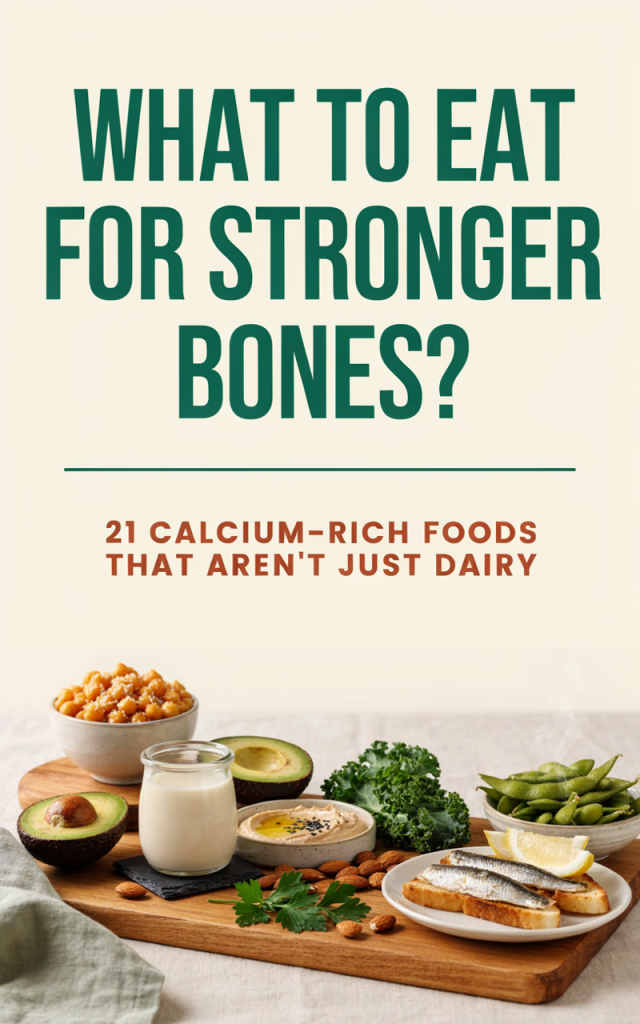
What Should I Eat for Stronger Bones? 21 Calcium-Rich Foods That Aren’t Just Dairy
Strong bones are the foundation of long-term mobility and independence. While dairy is often the poster child for calcium, many people avoid or limit dairy for lactose intolerance, dietary preferences, or health reasons — and that doesn’t mean you’re stuck with low calcium. This guide walks you through 21 non-dairy calcium-rich foods, explains how to maximize calcium absorption, and gives practical recipes and meal ideas so you can start building bone-healthy meals today.
Why calcium matters (and how it works)
Calcium is essential for bone formation and maintenance. About 99% of the body’s calcium is stored in bones and teeth, where it provides structure and strength. Adequate calcium intake throughout life helps:
- Build peak bone mass during adolescence and early adulthood
- Slow age-related bone loss
- Reduce the risk of fractures later in life
But calcium doesn’t work alone — vitamin D, magnesium, phosphorus, protein, and physical activity (especially weight-bearing exercise) are all part of a complete bone-health plan.
How much calcium do you need?
Recommended daily intakes vary by age and life stage. General guidelines:
- Adults 19–50 years: 1,000 mg/day
- Women 51+ and men 71+: 1,200 mg/day
- Teens 9–18: 1,300 mg/day
These are general targets — talk with your healthcare provider about personal needs, especially if you have medical conditions or take medications that affect bone health.
How to maximize calcium absorption
- Pair calcium-rich foods with vitamin D (sunlight, fatty fish, fortified foods, or supplements).
- Spread calcium intake through the day; absorption declines with very large single doses.
- Limit excessive sodium and caffeine, which can increase calcium excretion.
- Be aware of oxalates and phytates: foods like spinach and rhubarb are high in calcium but also contain oxalates that reduce absorption. Still valuable in a varied diet — just pair with lower-oxalate calcium sources.
- Include adequate protein and magnesium — both support bone health.
21 Calcium-Rich Foods That Aren’t Dairy
Below are 21 non-dairy foods high in calcium. For each, you’ll find an approximate calcium amount per typical serving and practical tips for including them in meals.
1. Tofu (calcium-set)
- Approximate calcium: 1/2 cup (about 126 g) of calcium-set tofu ≈ 200–350 mg (varies by coagulant)
- Notes: Choose calcium-set or “calcium sulfate” tofu. Use in stir-fries, scrambles, smoothies, or baked dishes.
2. Canned salmon (with bones)
- Approximate calcium: 3 oz (85 g) canned salmon with bones ≈ 180 mg
- Notes: Use in salads, salmon cakes, or mixed with whole grains. Bones are soft and edible when canned.
3. Sardines (with bones)
- Approximate calcium: 3 oz (85 g) canned sardines ≈ 300–350 mg
- Notes: A super-convenient calcium and omega-3 boost — excellent on toast, in salads, or chilled with lemon.
4. Kale (cooked)
- Approximate calcium: 1 cup cooked ≈ 90–100 mg
- Notes: Low in oxalates, so calcium is more bioavailable. Add to soups, casseroles, or sautés.
5. Collard greens (cooked)
- Approximate calcium: 1 cup cooked ≈ 250–300 mg
- Notes: One of the best leafy greens for calcium. Use as a side, in stews, or as wraps.
6. Bok choy (cooked)
- Approximate calcium: 1 cup cooked ≈ 150–160 mg
- Notes: Mild flavor, great in stir-fries and soups; pairs well with tofu or fish.
7. Broccoli
- Approximate calcium: 1 cup cooked ≈ 60–70 mg
- Notes: Also rich in vitamin K and fiber. Roast, steam, or toss into pasta and grain bowls.
8. Spinach (cooked)
- Approximate calcium: 1 cup cooked ≈ 240 mg (but high oxalate)
- Notes: Spinach contains oxalates that reduce calcium absorption — still nutritious and useful when combined with other calcium sources.
9. Almonds
- Approximate calcium: 1 oz (about 23 almonds) ≈ 75–80 mg
- Notes: Snack on them, blend into almond butter, or sprinkle sliced almonds on salads and oatmeal.
10. Chia seeds
- Approximate calcium: 1 oz (about 2 tablespoons) ≈ 170–180 mg
- Notes: Make chia pudding, add to smoothies, or sprinkle on yogurt/porridge.
11. Sesame seeds and tahini
- Approximate calcium: 1 tablespoon tahini ≈ 60–65 mg; 1 oz sesame seeds ≈ 270–300 mg
- Notes: Use tahini-based dressings, hummus variations, or sprinkle sesame seeds on veg and salads.
12. White beans (cannellini)
- Approximate calcium: 1 cup cooked ≈ 160 mg
- Notes: Use in soups, stews, purees, and salads.
13. Chickpeas
- Approximate calcium: 1 cup cooked ≈ 80–100 mg
- Notes: Roast for a snack, make hummus, or toss into grain bowls.
14. Edamame (soybeans)
- Approximate calcium: 1 cup shelled (cooked) ≈ 100 mg
- Notes: Great steamed as a snack, tossed into salads, or blended into dips.
15. Fortified plant milks (soy, almond, oat)
- Approximate calcium: Typically 300 mg per 8 oz (varies — check label)
- Notes: Choose fortified varieties to match dairy-calcium levels; use in cereals, smoothies, and cooking.
16. Fortified orange juice
- Approximate calcium: Typically 300 mg per 8 oz (check label)
- Notes: Convenient way to add calcium and vitamin C; best consumed with meals rather than alone in the morning for balanced glucose response.
17. Dried figs
- Approximate calcium: 1/2 cup dried figs ≈ 120–130 mg
- Notes: Sweet, portable calcium boost — add to oatmeal, salads, or eat as a snack.
18. Blackstrap molasses
- Approximate calcium: 1 tablespoon ≈ 100–120 mg (plus iron)
- Notes: Use in baking, smoothies, or stirred into oatmeal. Dense source — use sparingly.
19. Tempeh
- Approximate calcium: 1 cup (166 g) ≈ 100–170 mg (varies)
- Notes: Fermented soy product with bone-friendly nutrients — grill, sauté, or crumble into dishes.
20. Seaweed (wakame, kelp)
- Approximate calcium: 1/2 cup cooked wakame ≈ 60–150 mg (varies by type)
- Notes: Used in soups, salads, and as a seasoning. A unique source of calcium plus iodine.
21. Fortified breakfast cereals
- Approximate calcium: Varies widely; many provide 100–1,000 mg per serving (check label)
- Notes: Pair with fortified plant milk for a high-calcium breakfast; choose low-sugar options.
Practical tips: Build bone-healthy meals
- Breakfast: Fortified cereal or oats with fortified plant milk + chopped almonds and chia seeds.
- Lunch: Sardine salad on whole-grain toast with leafy greens (kale or collards) or a tofu and bok choy stir-fry.
- Snacks: Dried figs + almonds, edamame, tahini on whole-grain crackers.
- Dinner: Baked salmon or tempeh with sautéed collards and broccoli; finish with a sprinkle of sesame seeds.
Now, let’s turn these ideas into actionable recipes you can try. Each recipe below lists ingredients and numbered instructions so you can recreate them easily.
Recipes and meal ideas
1) Sardine & Kale Power Salad
A quick, nutrient-dense salad that combines calcium-rich sardines and kale with whole grains for a satisfying meal.
Ingredients:
– 1 can sardines (3–4 oz) in olive oil, drained
– 3 cups chopped kale, stems removed
– 1/2 cup cooked quinoa
– 1/4 cup sliced almonds
– 1/4 cup dried figs, chopped
– 1 tablespoon lemon juice
– 1 tablespoon olive oil
– Salt and pepper to taste
– Optional: 1 tablespoon sesame seeds
Instructions:
1. Massage the chopped kale with lemon juice and a pinch of salt for 1–2 minutes until tender.
2. Flake sardines into large pieces and set aside.
3. In a bowl, combine the massaged kale, cooked quinoa, almonds, and dried figs.
4. Drizzle olive oil, season with salt and pepper, and toss.
5. Top with flaked sardines and sesame seeds. Serve immediately.
2) Calcium-Rich Tofu Stir-Fry with Bok Choy and Broccoli
A simple, savory stir-fry using calcium-set tofu, bok choy, and broccoli — fast, filling, and high in bone-friendly nutrients.
Ingredients:
– 14 oz block calcium-set firm tofu, pressed and cubed
– 2 cups broccoli florets
– 2 cups sliced bok choy
– 1 red bell pepper, sliced
– 2 tablespoons soy sauce or tamari
– 1 tablespoon rice vinegar
– 1 tablespoon sesame oil (or olive oil)
– 1 teaspoon grated ginger
– 1 teaspoon minced garlic
– 1 tablespoon sesame seeds
– Optional: 1 teaspoon chili flakes
Instructions:
1. Heat oil in a large skillet or wok over medium-high heat. Add tofu cubes and cook until golden on all sides, about 6–8 minutes. Remove and set aside.
2. In the same pan, add a splash more oil if needed and stir-fry garlic and ginger for 30 seconds.
3. Add broccoli and bell pepper; cook 3–4 minutes until beginning to tenderize.
4. Add bok choy and cook 2–3 minutes until greens wilt.
5. Return tofu to the pan. Add soy sauce and rice vinegar, tossing to coat everything evenly.
6. Sprinkle sesame seeds and chili flakes (if using). Serve with brown rice or whole grains.
3) Chia-Almond Overnight Oats with Dried Figs
A grab-and-go breakfast that packs chia, almonds, and fortified plant milk for a high-calcium start.
Ingredients:
– 1/2 cup rolled oats
– 1 tablespoon chia seeds
– 1 tablespoon sliced almonds
– 1/2 cup chopped dried figs
– 1 cup fortified almond or soy milk
– 1 teaspoon honey or maple syrup (optional)
– Pinch of cinnamon
Instructions:
1. In a jar or bowl, combine oats, chia seeds, sliced almonds, dried figs, and cinnamon.
2. Pour in the fortified plant milk and sweetener (if using). Stir thoroughly.
3. Cover and refrigerate overnight (or at least 4 hours) to thicken.
4. Stir before serving. Top with extra almonds or figs if desired.
4) Creamy Tahini White Bean Dip (Bone-Boosting Spread)
Use as a dip or sandwich spread — tahini and white beans deliver a double dose of calcium.
Ingredients:
– 1 can (15 oz) cannellini or white beans, drained and rinsed
– 2 tablespoons tahini
– 1 clove garlic
– 2 tablespoons lemon juice
– 2 tablespoons olive oil
– 2–3 tablespoons water (to thin)
– Salt and pepper to taste
– Optional: 1/2 teaspoon smoked paprika, chopped parsley
Instructions:
1. In a food processor, combine white beans, tahini, garlic, lemon juice, and olive oil.
2. Blend until smooth, adding water 1 tablespoon at a time until you reach desired consistency.
3. Season with salt, pepper, and smoked paprika if using.
4. Transfer to a bowl, drizzle with a little olive oil and sprinkle chopped parsley. Serve with raw veggies, whole-grain crackers, or as a sandwich spread.
5) Tempeh & Broccoli Sheet-Pan Dinner
A hands-off meal that’s rich in calcium and protein — easy to scale for meal prep.
Ingredients:
– 8 oz tempeh, cubed
– 3 cups broccoli florets
– 2 tablespoons soy sauce or tamari
– 1 tablespoon maple syrup or honey
– 1 tablespoon sesame oil
– 1 tablespoon rice vinegar
– 1 teaspoon garlic powder
– 1 tablespoon sesame seeds
Instructions:
1. Preheat oven to 425°F (220°C). Line a baking sheet with parchment paper.
2. In a bowl, whisk together soy sauce, maple syrup, sesame oil, rice vinegar, and garlic powder.
3. Toss tempeh cubes and broccoli with the sauce, ensuring even coating.
4. Spread the mixture in a single layer on the baking sheet.
5. Roast for 20–25 minutes, tossing halfway, until tempeh is golden and broccoli is charred at edges.
6. Sprinkle sesame seeds before serving with quinoa or brown rice.
Combining foods strategically
To make daily calcium targets achievable and well-absorbed:
– Mix high-calcium sources: e.g., tofu + bok choy + sesame seeds in one meal.
– Use fortified plant milk in smoothies with chia seeds and almond butter.
– Add canned fish with bones to salads or sandwiches a few times per week.
– Snack on nuts and dried figs or enjoy tahini spreads on whole grain toast.
Supplements: when food isn’t enough
If you can’t meet calcium needs via diet alone, supplements may help. Avoid excessive calcium (>2,000–2,500 mg/day) and discuss with your healthcare provider. Pair calcium supplements with vitamin D if recommended.
Lifestyle factors that support bone strength
- Weight-bearing and resistance exercises (walking, running, lifting weights)
- Adequate protein intake
- Stop smoking and moderate alcohol consumption
- Maintain a healthy body weight
- Get safe sunlight exposure and/or vitamin D as needed
Quick daily meal blueprint for strong bones
- Breakfast: Fortified plant milk cereal + almonds + dried figs
- Mid-morning snack: Edamame or chia pudding
- Lunch: Sardine & kale salad or tofu stir-fry with bok choy
- Afternoon snack: Tahini white bean dip with raw veggies
- Dinner: Baked salmon/tempeh with collard greens and broccoli
- Dessert: Fruit with a drizzle of blackstrap molasses or a few figs
Conclusion
You don’t need dairy to build strong bones. A wide range of plant-based and animal-food options — from calcium-set tofu and leafy greens to canned sardines, chia seeds, and fortified products — can help you meet your calcium goals. Remember: calcium is one piece of the bone-health puzzle. Combine calcium-rich foods with vitamin D, magnesium, sufficient protein, and regular weight-bearing exercise for the best results.
Try one of the recipes above this week and experiment with swapping in different calcium-rich ingredients. Small, consistent changes add up — and your bones will thank you.
If you’d like meal plans tailored to vegetarian, vegan, or pescatarian diets (or guidance on supplements and vitamin D), tell me your preferences and I’ll create a 7-day plan that meets your goals.