What Happens When You Start Eating More Fiber: What To Expect, Fast Benefits, And How To Do It Right In 2026
When we decide to eat more fiber, it’s usually for a clear reason: better digestion, weight control, or long-term heart and metabolic health. But increasing fiber isn’t just a slow, distant benefit, our bodies respond quickly and in stages. Some changes happen within hours, others take weeks, and a few unfold over years. In this guide we’ll explain exactly how dietary fiber works, what short-term digestive changes to expect (and how to manage them), the evidence-based long-term benefits, and practical, realistic ways to add fiber to our daily meals without discomfort. This is a practical, science-backed roadmap for anyone who wants the benefits of fiber in 2026, whether you’re transitioning from a low-fiber diet or fine-tuning an already healthy eating pattern. Read on and we’ll walk through the timeline, common side effects, the different types of fiber, and simple swaps that make this change sustainable.
How Dietary Fiber Works In Your Body
Dietary fiber is the indigestible part of plant foods, the structural carbohydrates that resist digestion in the small intestine. When we eat fiber, it travels largely intact into the large intestine where it has two primary roles: bulking and fermentation. Soluble fibers (like oats, beans, and psyllium) absorb water, forming a gel-like substance that slows digestion and helps regulate blood sugar and cholesterol. Insoluble fibers (found in whole grains, nuts, and many vegetables) add bulk and speed the passage of stool, helping prevent constipation.
Beyond mechanical effects, fibers are fuel for our gut microbes. Fermentation of certain fibers by bacteria produces short-chain fatty acids (SCFAs), especially acetate, propionate, and butyrate, which feed colon cells, help regulate inflammation, and influence metabolism and appetite signals. Fiber also impacts satiety: by slowing gastric emptying and creating a sense of fullness, it helps us naturally reduce calorie intake without deliberate restriction.
In short, fiber acts physically (bulk and water retention), chemically (slowing absorption), and biologically (feeding gut microbes), a trio that explains why eating more fiber changes digestion, metabolism, and overall health.
Digestive Changes After You Increase Fiber Intake
When we raise our fiber intake, the digestive system goes through a predictable adjustment phase. Early changes are often mechanical: increased stool volume and faster transit if we’ve added insoluble fiber, or firmer, more formed stools with soluble fiber. Because fibers interact with water, hydration plays a major role in how we experience these changes, inadequate fluids can cause sluggish stools or discomfort.
At the same time, the fermentation process ramps up. Bacteria in the colon begin metabolizing new substrates, producing gases and SCFAs. That’s why many of us notice more gas or bloating during the first days to weeks after boosting fiber. The good news: as the microbiome adapts, diversifying and increasing populations that efficiently ferment the new fiber, symptoms commonly decrease and bowel habits stabilize.
We should watch for red flags: sudden severe abdominal pain, blood in stool, or prolonged inability to pass gas or stool. Those symptoms warrant medical evaluation. For most people, though, changes are temporary and manageable with gradual increases, attention to hydration, and sensible food choices.
Timeline: Hours, Days, And Weeks — What Progress Looks Like
Hours: In the first several hours after a high-fiber meal, soluble fiber can increase the viscosity of gastric contents, so we often feel mildly fuller and notice slower digestion. Insoluble fiber won’t affect immediate digestion as much, but if we’re prone to constipation, adding fiber can start softening stools within a day.
Days (1–7): During the first week, stool frequency and form usually change. Some people report more frequent bowel movements or looser stools if the increase is substantial. Gas and mild cramping are common as bacteria begin fermenting new substrates. We might feel more satiety and notice small reductions in appetite, which can be useful for weight control.
Weeks (2–8): Microbial adaptation becomes clearer in this window. Gas and bloating typically decline as the microbiome shifts toward species that better handle the fiber types we’re eating. SCFA production increases, which aids colon health and may subtly improve insulin sensitivity and lipid profiles. Expect bowel habits to normalize and for the fuller feeling to become the new baseline.
Months and beyond: The long-term benefits, lower LDL cholesterol, improved glycemic control, reduced colorectal cancer risk, and sustained weight management, develop over months to years. But many practical improvements (regular stools, decreased hunger, and more energy) are already noticeable within weeks when changes are made thoughtfully.
Fermentation, Gas, And Bloating: Why They Happen And How Long They Last
Fermentation is the gut microbiome’s version of recycling. When fermentable fibers reach the colon, bacteria break them down and release gases (hydrogen, methane, carbon dioxide) and SCFAs. Gas formation is normal, it’s a byproduct of beneficial microbial activity, but it can be uncomfortable.
How long symptoms last depends on the speed and magnitude of our dietary change. If we jump from a low-fiber to a very high-fiber diet overnight, symptoms can persist for two to four weeks as the microbial community reorganizes. If we increase fiber gradually, symptoms usually subside within several days to a week. The specific fiber type matters: highly fermentable oligosaccharides (e.g., in legumes, onion, garlic) produce more gas than less fermentable fibers like psyllium or cellulose.
Practical ways to reduce symptoms include increasing fiber slowly (5–7 grams every few days), spacing high-fiber foods across meals, drinking adequate water, and cooking or soaking beans to reduce oligosaccharide content. Probiotics can sometimes help, but evidence is mixed and strain-dependent. In most cases, gas and bloating diminish as our microbiome adapts and fiber becomes a comfortable part of our routine.
Long‑Term Health Benefits Backed By Research
A robust body of research links higher fiber intake with meaningful long-term health benefits. Large epidemiological studies consistently show that diets rich in whole grains, fruits, vegetables, and legumes, all fiber-heavy foods, correlate with lower all-cause mortality, fewer cardiovascular events, and reduced incidence of type 2 diabetes.
Randomized controlled trials (RCTs) and meta-analyses add mechanistic clarity. Soluble fibers like psyllium and beta-glucan lower LDL cholesterol by interfering with bile acid reabsorption. High-fiber diets improve glycemic control by blunting postprandial glucose spikes and enhancing insulin sensitivity over time. Fiber’s role in weight management is well-documented: increased satiety and lower energy density help reduce caloric intake without deliberate restriction.
Fiber also appears protective against colorectal cancer: while causation is complex, SCFAs, especially butyrate, support colonocyte health and can suppress inflammation and neoplastic transformation. Finally, communities with traditionally high-fiber diets show lower rates of diverticular disease and other chronic inflammatory conditions. In short, the long-term benefits of eating more fiber are broad, clinically significant, and supported by human data.
Types Of Fiber And Different Effects To Expect
Not all fibers are the same. Understanding types helps set expectations for effects and side effects.
Soluble, viscous fibers (psyllium, beta‑glucan from oats and barley, pectins in fruits): These form gels, slow gastric emptying, reduce post-meal glucose spikes, and lower LDL cholesterol. They’re less likely to cause severe bloating than highly fermentable fibers because they’re partially absorbed into gels and pass more predictably.
Soluble, fermentable fibers (inulin, fructooligosaccharides, FOS, and many oligosaccharides in onions, garlic, and legumes): These are prime fuel for gut bacteria and produce more gas during fermentation. They can promote beneficial microbes like Bifidobacteria but may trigger symptoms in sensitive people or those with IBS.
Insoluble fibers (cellulose, lignin, found in whole grains and many vegetables): These add bulk, speed transit, and help prevent constipation. They’re generally less fermentable and less gas-producing but can feel rough if we increase fiber without enough water.
Resistant starch (cooled rice, green bananas, some cooked-and-cooled potatoes): Acts like fermentable fiber, feeding microbes and increasing SCFA production with moderate gas effects. Each type brings distinct benefits, mixing them gives balanced effects and reduces unpleasant symptoms while maximizing health gains.
How Much To Add And The Safest Way To Increase Fiber
Current dietary guidelines recommend about 25 grams per day for adult women and 38 grams for adult men, though actual needs vary by age, caloric intake, and health goals. In 2026, most populations still fall short: average intakes hover around 15–17 grams daily in many Western countries. So, how do we move from low intake to recommended levels safely?
Start small and be consistent. A practical approach: increase total fiber by about 5 grams every 3–5 days, monitoring symptoms. That’s roughly one extra serving of fruit, a small bowl of oats, or a half-cup of cooked beans. We should prioritize whole-food sources rather than fiber supplements because they deliver vitamins, minerals, and polyphenols along with fiber.
Hydrate. Fiber pulls and holds water: without adequate fluids we risk harder stools and discomfort. Aim for at least 1.5–2 liters of water daily (more if active or in hot climates).
Diversify. Include soluble, insoluble, and resistant starch sources across meals to support microbiome diversity and limit severe gas.
If we need to move faster, for medical reasons like constipation, psyllium is a well-tolerated option because it’s partially gel-forming and gentle on the microbiome when introduced carefully. But for general health, whole-food strategies are ideal.
Common Side Effects And Practical Ways To Manage Them
The most common side effects when increasing fiber are gas, bloating, cramping, and temporary changes in stool frequency or consistency. These are usually signs the gut microbiome is adapting and can be managed without abandoning the change.
Tips to minimize discomfort:
- Increase gradually: Add 5 g of fiber every few days rather than making a huge jump. – Spread fiber intake across the day: Smaller doses at each meal are gentler than one fiber-heavy feast. – Prioritize hydration: Water helps fiber expand and move smoothly. – Cook and prepare fermentable foods: Soaking and thoroughly cooking legumes reduces oligosaccharides: canned beans can be rinsed to remove some fermentable compounds. – Choose lower-fermentation fibers initially: Psyllium and oat beta-glucan tend to be less gas-provoking than inulin or FOS. – Monitor and adjust: Keep a simple food-and-symptom log for a week to identify triggers. – Consider medical causes: If symptoms are severe, new, or accompanied by weight loss or blood in stool, seek medical evaluation.
With these steps, most of us can reach higher fiber targets with minimal disruption to daily life.
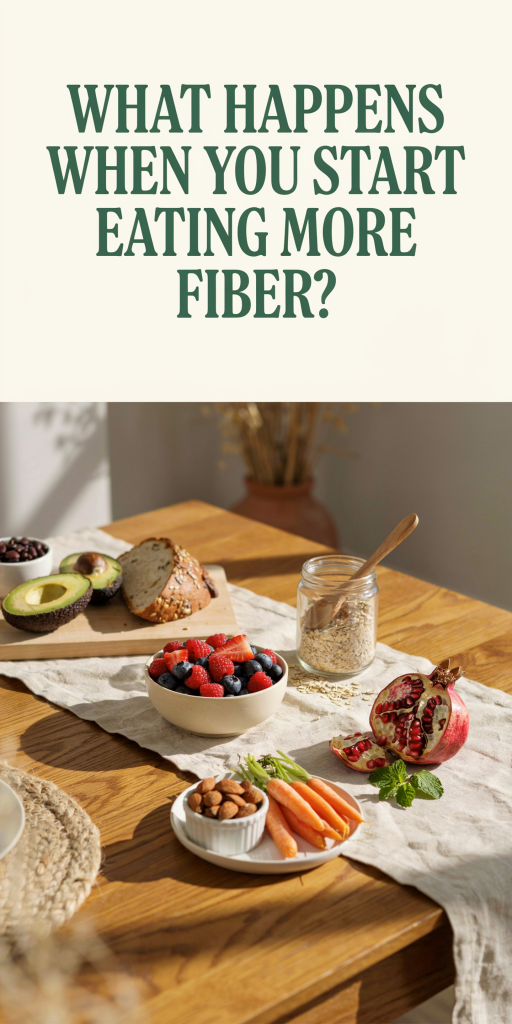
Practical Tips, Meal Ideas, And Fiber‑Rich Swaps To Make It Easy
Small swaps add up quickly. Here are practical, everyday strategies that increase fiber without making meals feel radical.
Breakfast
- Swap sugary cereal for a bowl of oats topped with a tablespoon of chia seeds and berries (about 6–10 g extra). – Add ground flaxseed to smoothies or yogurt (1–2 tbsp adds 3–4 g).
Lunch
- Choose a whole-grain bread or wrap: switch white rice for brown, farro, or barley. – Toss a cup of mixed greens plus half a cup of chickpeas into salads for a fiber boost.
Snacks
- Keep raw veggies and hummus, an apple with nut butter, or a handful of almonds on hand. – Air-popped popcorn is a great low-calorie, high-fiber snack (about 3–4 g per 3 cups).
Dinner
- Make half the plate vegetables and include a legume at least twice weekly (lentils, black beans). – Add a side of roasted Brussels sprouts or carrots, roasting concentrates flavor and makes veggies more appealing.
Cooking techniques and tools
- Soak and rinse beans: use a pressure cooker to reduce cooking time and gas-producing compounds. – Incorporate pulses into soups, sauces, and casseroles where they blend in texture.
Supplements and convenience options
- For a quick fix, psyllium husk can add 5–10 g with water. – Prebiotic supplements (inulin) can help feed beneficial microbes but may increase gas, use cautiously.
By gradually adopting a few of these swaps, we can boost daily fiber by 10–20 grams without a huge disruption to taste or routine.
Conclusion
When we start eating more fiber, the experience is both immediate and long-term. Early benefits include increased fullness and more regular bowel movements: short-term challenges often involve gas and bloating as the microbiome adapts. Over weeks and months, improved metabolic markers, lower cholesterol, better weight regulation, and colon health become measurable outcomes. The safest path is gradual increase, diverse fiber sources, and adequate hydration. Practical food swaps and simple meal tweaks make higher-fiber eating sustainable. If we pay attention to how our bodies respond, adjust pace accordingly, and prioritize whole foods, increasing fiber is one of the most effective, low-cost changes we can make for lasting health in 2026 and beyond.