
The Best Way to Make Creamy Polenta
The Best Way to Make Creamy Polenta is easier when you focus on a few details that actually change the result: even preparation, controlled heat, and a clear finishing cue. This practical method follows five straightforward steps and explains why each one matters, so you can get a more reliable result at home.
Why this method works
Adding polenta slowly while whisking prevents dry pockets. Gentle heat and frequent stirring hydrate the cornmeal evenly and create a creamy texture.
Ingredients and equipment
Use the following as a practical starting batch. Adjust seasoning to taste and scale the quantities to fit your pan without crowding.
- 1 cup coarse polenta
- 4 cups water or broth
- Salt
- 2 tablespoons butter
- ½ cup grated Parmesan, optional
Equipment: A sharp knife, cutting board, measuring tools, and the pan or baking sheet named in the directions.
How to make it, step by step
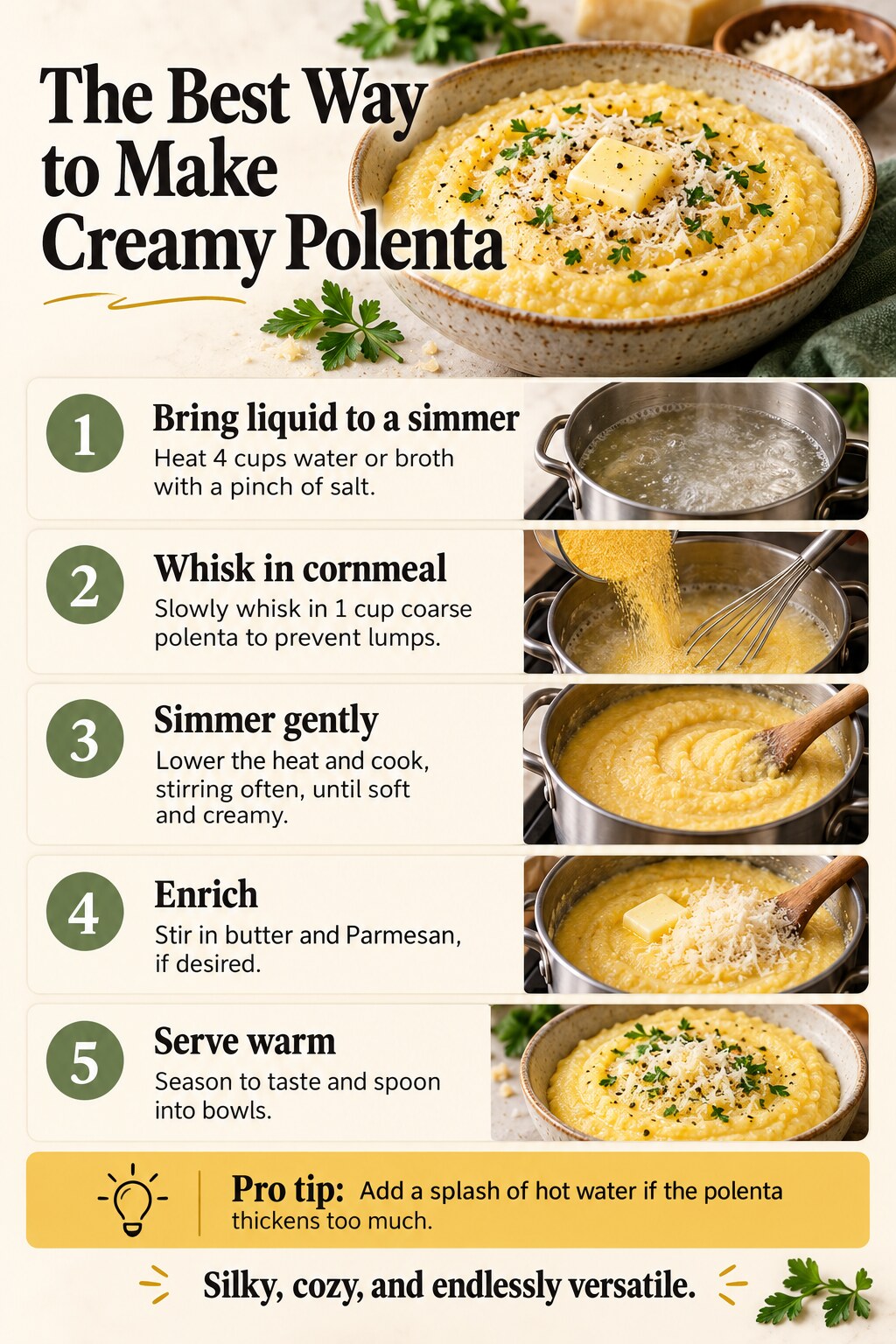
1. Bring liquid to a simmer
Heat 4 cups water or broth with a pinch of salt. Set out the equipment first so the food can move directly into the next stage.
2. Whisk in cornmeal
Slowly whisk in 1 cup coarse polenta to prevent lumps. Keep the pieces as consistent as possible; uniform size makes the timing easier to judge.
3. Simmer gently
Lower the heat and cook, stirring often, until soft and creamy. Coat and season evenly rather than leaving heavy patches on only one side.
4. Enrich
Stir in butter and Parmesan, if desired. Give the food room and watch the heat closely instead of relying only on the clock.
5. Serve warm
Season to taste and spoon into bowls. Use the visual cue in the directions, then confirm doneness with the stated temperature when one is provided.
Common mistakes and how to fix them
The polenta is lumpy
Add it in a slow stream while whisking continuously.
It becomes too thick
Stir in hot water or broth a little at a time.
Pro tip
Add a splash of hot water if the polenta thickens too much. This small detail is worth following because it protects the texture you worked to build in the earlier steps.
Flavor variations and substitutions
Use broth for a savory base, or stir in mascarpone, herbs, or roasted garlic at the end.
What to serve with it
This recipe pairs well with braised meat, roasted mushrooms, vegetables, or tomato sauce. Keep the rest of the plate simple when the main dish is rich, and add a bright or crisp side for contrast.
Storage and reheating
Cool leftovers promptly and refrigerate them in a shallow airtight container. Use cooked leftovers within 3–4 days, and reheat to 165°F (74°C). For fried or roasted foods, an oven or air fryer usually restores the surface better than a microwave. Seafood is best reheated gently so it does not become tough.
Frequently asked questions
Can I prepare any part ahead?
You can measure the seasonings and prepare cold toppings or sauces in advance. For the best texture, complete the final cooking stage close to serving time. Keep perishable ingredients refrigerated until needed.
How do I know when it is done?
Use the visual and temperature cues in step five rather than the clock alone. Thickness, starting temperature, cookware, and oven or burner behavior can all change the timing.
Can I double the recipe?
Yes, but use additional pans or cook in batches. Doubling the ingredients without increasing the cooking space often causes steaming, uneven browning, and longer cook times.
Final takeaway: Silky, cozy, and endlessly versatile.
Food-safety reference: USDA food handling, cooking, and leftover guidance. For seafood, see the FDA food-safety guidance.


