
The Best Way to Make Tender Pot Roast
Tender pot roast begins with a cut suited to braising, not the leanest beef in the case. Chuck roast becomes a comforting dinner when it cooks gently in a covered pot with broth, onion, and herbs. Give it enough time to become fork-tender and add vegetables with their cooking needs in mind.
Why this method works
Chuck contains tissue that benefits from prolonged gentle cooking. A tight lid slows evaporation while broth and aromatics create a flavorful cooking liquid. Tenderness is the quality endpoint, distinct from the minimum safe temperature for a whole beef roast.
Ingredients and equipment
The quantities below are a practical starting batch. Adjust seasoning to taste and keep the same preparation method when scaling.
- 3–4 pounds chuck roast
- 1 tablespoon olive oil
- 1½ teaspoons fine salt, or to taste
- ½ teaspoon black pepper
- 1 large onion, sliced
- 4 garlic cloves
- 2–3 cups beef broth, as needed for the pan
- 1 teaspoon dried thyme or a few fresh sprigs
- Optional: 4 carrots and 1 pound potatoes, cut into large pieces
Equipment: Heavy Dutch oven with lid, tongs, thermometer, and carving board.
How to make it, step by step
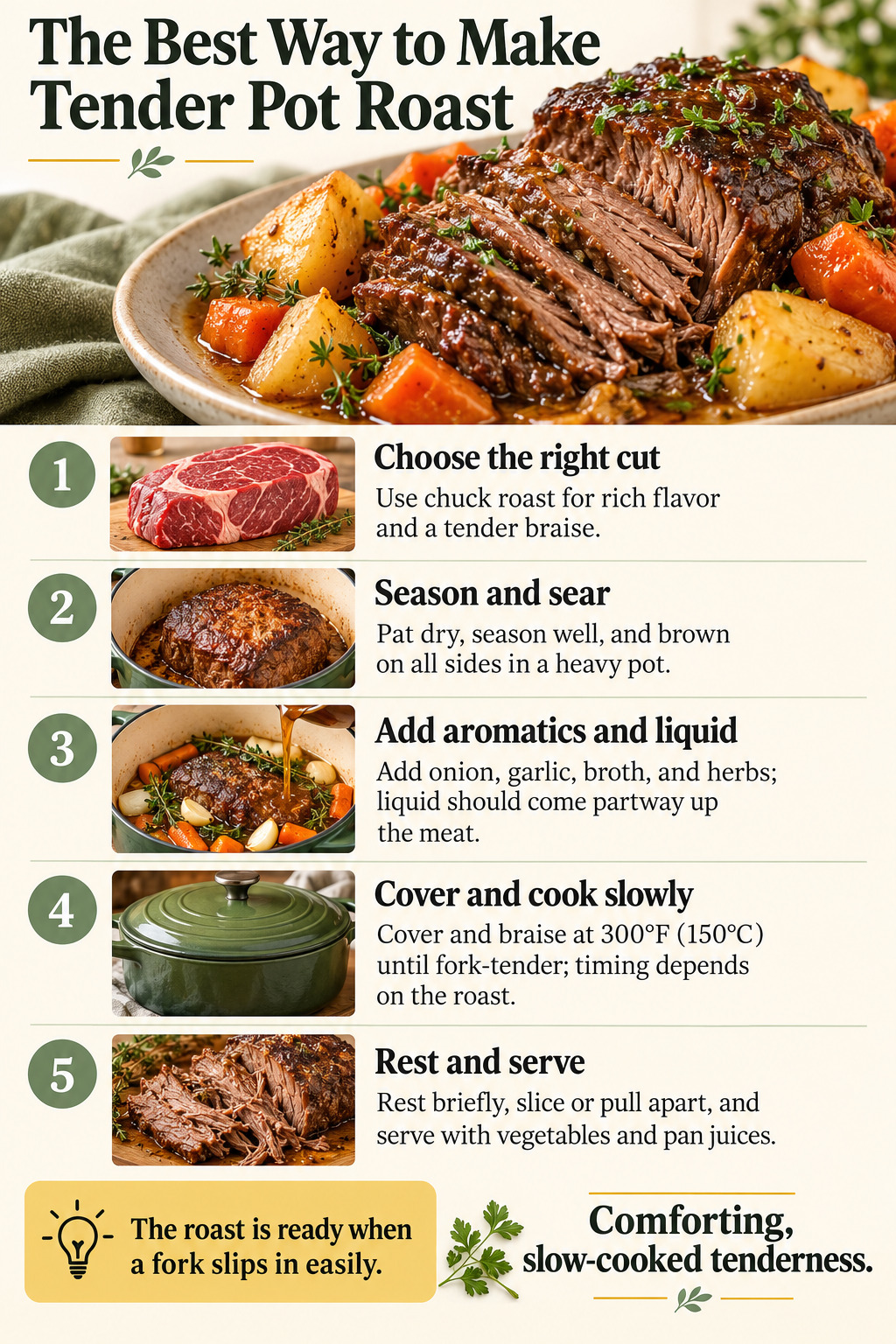
1. Choose the right cut
Use chuck roast for a rich, tender braise. Lean steak cuts are not direct substitutes. Choose a roast that fits the pot with room around it. Pat dry and keep it chilled until preparation, then clean any surfaces that touch the raw beef.
2. Season and sear
Season with salt and pepper. Heat oil in the Dutch oven and brown the roast on all sides, working patiently rather than moving it continuously. Remove briefly to a clean plate if needed while you add aromatics. Browning adds flavor; it does not cook the center.
3. Add aromatics and liquid
Add onion and garlic, then broth and herbs, scraping up browned bits that are not burnt. Return the roast and add enough liquid to come partway up the meat. You are braising, not boiling a fully submerged roast. Use less added salt if the broth is salty.
4. Cover and cook slowly
Cover tightly and braise at 300°F (150°C) until fork-tender. A roast this size often needs roughly 3–4 hours or more, but shape and cut vary. Whole beef should at least reach 145°F with a 3-minute rest; pot roast needs further cooking for tenderness. Check liquid occasionally and add vegetables during the later cooking stage so they do not fall apart.
5. Rest and serve
When a fork enters easily and the meat separates without force, remove and rest briefly. Slice across the grain or pull into pieces. Skim excess fat from the liquid and serve with vegetables and pan juices. Check potatoes and carrots separately for the texture you prefer.
Common mistakes and how to fix them
The roast is tough
It commonly needs more covered cooking time. Return it to the pot, check liquid, and continue gently until the fork test changes.
The vegetables fall apart
They went in too early or were cut too small. Add large pieces later or cook vegetables separately.
The juices are greasy
Skim the fat before serving or use a separator. You can also chill leftover juices and remove the hardened fat before reheating.
Flavor variations and substitutions
Add rosemary, bay leaf, or a small amount of tomato paste to the broth. Use a suitable gluten-free broth if needed. If thickening the juices, remove the meat first and use a cornstarch slurry, simmering until the texture is right.
What to serve with it
Serve with mashed potatoes, roasted vegetables, or green beans. Leftovers work in a sandwich or over rice. Keep some cooking juice with each stored portion so reheating is less likely to dry the meat.
Storage and reheating
Divide leftovers into shallow containers and refrigerate promptly, within 2 hours of cooking (within 1 hour above 90°F). Keep the refrigerator at 40°F or below and use cooked leftovers within 3–4 days. Freeze portions if you need longer storage. Reheat leftovers to 165°F; heat pieces covered in saved cooking liquid, checking that the center reaches the reheating target.
Frequently asked questions
Can I use a slow cooker?
Yes, with a fully thawed roast and appliance-specific directions for size and liquid. Timing differs, but fork tenderness still matters.
Should the liquid cover the beef?
Not for this braise. Partway up the meat is enough when the pot is tightly covered and monitored.
Can I slice it right away?
A brief rest makes handling easier. Slice across the grain, or pull apart if the roast has become very tender.
Kitchen reminder: When a fork enters easily and the meat separates without force, remove and rest briefly.
Food-safety reference: USDA food handling, cooking, and leftover guidance.

