10 Warning Signs Your Skin May Be Showing About Inflammation — What To Watch For In 2026
Inflammation is one of those quiet saboteurs: it can start internally and show up on our skin long before we realize something’s off. In 2026, with better testing and clearer research, we’re more aware that the skin often mirrors systemic inflammation, from diet and stress to autoimmune activity and environmental exposures. In this text we’ll walk through 10 warning signs your skin may be giving you about inflammation, explain why each sign matters, and offer practical guidance on monitoring symptoms and when to seek care. We’ll use plain language, evidence-informed reasoning, and actionable tips so you can recognize patterns early and talk to your clinician with confidence.
How Inflammation Shows Up On The Skin: A Quick Overview
Inflammation is the body’s response to injury, infection, or internal imbalance. When it becomes chronic rather than short-lived, the inflammatory cascade, cytokines, immune-cell activation, and oxidative stress, can alter skin structure and function. We’re often taught to think of inflammation as redness and swelling, but its dermatologic manifestations are broader: changes in barrier function, pigment shifts, delayed wound healing, and even nerve sensitization that causes itching or burning.
Why the skin? It’s our largest organ and a frontline immune tissue. Keratinocytes, resident immune cells, and microbiome shifts all interact with systemic signals. For example, elevated pro-inflammatory cytokines (like IL-6 and TNF-alpha) are linked to more severe acne and psoriasis flares. Metabolic inflammation from obesity or insulin resistance can increase sebum production and change skin microbiota, while oxidative stress accelerates visible aging and fragility.
Practically, we should treat skin clues as potential early warnings. A single isolated rash can be transient, but persistent or recurring changes, especially when paired with fatigue, joint pain, or digestive symptoms, deserve closer attention. Through the next sections we’ll unpack specific signs, explain likely mechanisms, and suggest what to monitor and discuss with your provider.
Persistent Redness That Doesn’t Fade With Time Or Topicals
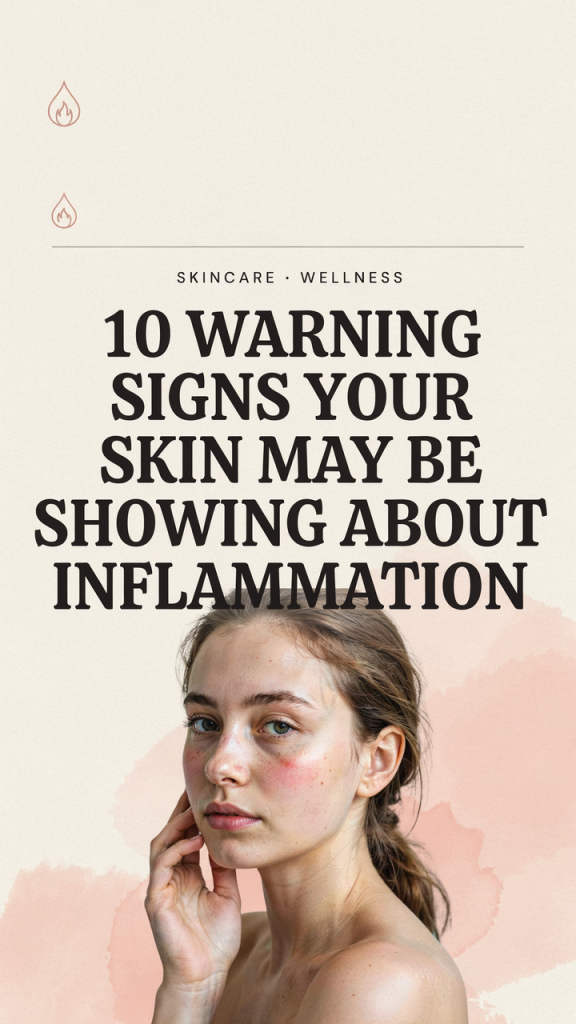
Persistent facial or localized redness that resists calming creams often signals ongoing inflammation rather than a short-term irritation. If we notice persistent erythema, especially across the cheeks, nose, or forehead, that doesn’t improve with gentle cleansers, barrier repair moisturizers, or short courses of OTC hydrocortisone, we should think beyond topical causes.
Several mechanisms can produce stubborn redness. Chronic vascular dilation and increased blood flow (as in rosacea) can be driven by neurogenic inflammation. Inflammatory dermatoses, such as eczema or lupus, produce sustained immune activation. Environmental factors like pollution and UV exposure add oxidative stress that perpetuates redness. Hormonal fluctuations and spicy foods can exacerbate an already inflamed vasculature.
What to track: duration (weeks vs. months), triggers (heat, alcohol, sun), associated symptoms (burning, flaking), and response to products. Avoid aggressive exfoliation, that often worsens inflammation. When redness is long-standing or spreading, we recommend booking an evaluation: dermatologists can differentiate rosacea, seborrheic dermatitis, photosensitivity, and autoimmune rashes and may use prescription anti-inflammatories or laser therapy when appropriate.
Recurrent Breakouts Or Acne That Flare Without Typical Triggers
Breakouts aren’t always about clogged pores or makeup. When acne is recurrent, widespread, or flares even though conventional measures (oil control, salicylic acid, benzoyl peroxide), chronic inflammation may be the underlying driver. We’re seeing more evidence that systemic inflammation, driven by gut dysbiosis, hormonal imbalances, or metabolic syndrome, amplifies follicular inflammation and alters sebum composition.
Clues that inflammation is involved: lesions are painful and nodular, scarring occurs easily, and topical treatments produce limited improvement. We should also look for associated systemic signs like irregular cycles, persistent fatigue, or frequent GI complaints. Diet can be a contributor: high-glycemic diets and excessive dairy have been linked to inflammatory acne in some people, while anti-inflammatory patterns (Mediterranean-style diets) correlate with clearer skin.
Management approach: rather than repeatedly layering harsher topicals, we recommend a combined strategy, consult a clinician for possible oral anti-inflammatories (like certain antibiotics with anti-inflammatory properties or hormonal therapy), evaluate for insulin resistance or polycystic ovary syndrome if relevant, and consider a short trial of dietary adjustments. Addressing downstream inflammation often improves the acne pattern more sustainably than topical-only fixes.
Dry, Flaky Patches Or Scaling That Resist Moisturizers
When moisturizers stop working and dry patches persist or spread, impaired barrier function and cutaneous inflammation are often at play. The skin barrier, primarily the stratum corneum and lipid matrix, relies on healthy lipids and regulated inflammatory signaling. Chronic low-grade inflammation disrupts lipid synthesis, increases transepidermal water loss, and can lead to scaling conditions like asteatotic dermatitis or paradoxically inflamed atopic-like patches in adults.
We should pay attention to texture and pattern. Fine, powdery scaling on lower legs in older adults is often asteatotic but can be exacerbated by systemic dehydration or medications. Thick, adherent scales with itch and excoriation suggest atopic dermatitis or psoriasis: the latter often has well-demarcated plaques with silvery scale. Seasonal changes can reveal underlying inflammatory tendencies, winter dryness unmasks barrier weakness, while heat can provoke sweat-related inflammation.
Interventions: Use gentle, lipid-rich emollients (ceramide-containing formulations) and reduce irritants (fragrance, harsh surfactants). Short courses of topical corticosteroids or calcineurin inhibitors can calm inflammation and help restore barrier function. If patches don’t respond or are widespread, we should test for underlying causes such as hypothyroidism, nutritional deficiencies, or systemic inflammatory disease.
Chronic Itchiness, Burning, Or Stinging Sensations
Itch, burning, and stinging are subjective but powerful symptoms that often correlate with cutaneous inflammation and nervous system sensitization. When these sensations are chronic and not clearly attributable to insect bites or contact allergens, they can indicate ongoing immune activation, barrier dysfunction, or neuropathic processes linked to inflammation.
Pruritus (itch) may arise from cytokine-mediated activation of sensory nerve fibers: in conditions like atopic dermatitis, IL-31 is implicated in intense itch. Burning and stinging on seemingly normal skin can reflect neurogenic inflammation, nerves releasing neuropeptides that promote vasodilation and immune cell recruitment. Some systemic inflammatory states (thyroid disease, chronic kidney disease) produce generalized itch without overt rash.
What we can do: Keep a symptom diary noting timing, severity, provoking factors, and whether sensations worsen at night. Gentle skin care, cool compresses, and OTC emollients help short-term. For persistent symptoms, topical or systemic anti-inflammatories, neuromodulators, or antihistamines prescribed by a clinician may be required. It’s important to rule out systemic causes with basic labs if the itch is generalized or unexplained.
Dark Circles, Puffiness, Or Under-Eye Discoloration Linked To Systemic Inflammation
Under-eye changes are often dismissed as simply ‘tired,’ but persistent dark circles, puffiness, or periorbital discoloration can point to inflammatory and vascular processes. Darkening under the eyes may be due to hyperpigmentation from chronic rubbing, vascular congestion, or thinning skin that reveals underlying vasculature, all of which can be worsened by inflammation.
Systemic inflammation affects microvascular integrity and lymphatic drainage. Allergic inflammation, for instance, leads to chronic rubbing and histamine-mediated vasodilation, creating more visible pigmentation and puffiness. Sleep loss and cortisol dysregulation interact with inflammatory pathways, increasing fluid retention and under-eye edema. Also, inflammatory conditions like sinusitis or autoimmune disease can contribute to persistent periorbital changes.
Practical steps: Avoid chronic rubbing, use cool compresses to reduce vascular pooling, and address allergies if present. Topical brighteners or retinoids can help pigmentation over time, but if under-eye changes are new, asymmetric, or accompanied by other inflammatory signs, we should involve our clinician to evaluate for systemic contributors and suggest targeted therapies.
Unexplained Bruising, Slow Healing, Or Thin-Looking Skin
Skin that bruises easily, heals slowly, or looks thin and translucent often reflects chronic inflammatory damage or systemic factors that weaken skin integrity. Chronic inflammation accelerates collagen breakdown through increased matrix metalloproteinase activity and oxidative stress, producing fragility. Certain systemic inflammatory or autoimmune diseases, and some medications like long-term corticosteroids, cause thinning and delayed wound healing.
We should note context: elderly skin thins with age, but sudden-onset fragility or bruising in younger adults is a red flag. Recurrent small bruises without clear trauma, ulcers that linger even though basic care, or wounds that reopen suggest impaired repair mechanisms. Nutritional deficits (vitamin C, protein), coagulation disorders, and endocrine dysfunction also influence healing.
Actionable steps: Protect fragile areas, avoid unnecessary anticoagulant supplements without clinician guidance, and optimize protein and micronutrient intake. If we see persistent poor wound closure, large unexplained bruises, or progressive thinning, we should get evaluated, clinicians may check inflammatory markers, coagulation studies, or review medications that could impair skin strength. Early intervention can prevent complications and reveal treatable underlying inflammation.
When To See A Dermatologist Or Your Primary Care Provider
Knowing when to seek professional evaluation helps us avoid delays that can worsen outcomes. We recommend seeing a clinician if any of the following apply:
- Symptoms persist beyond a few weeks even though gentle self-care and OTC measures.
- Lesions are spreading, painful, bleeding, or producing systemic signs (fever, joint pain, fatigue).
- There’s rapid change, new bruising, sudden thinning, or a rash that follows sun exposure or medication use.
- Recurrent or severe acne, chronic redness, or unrelenting itch interferes with sleep or daily functioning.
Primary care providers can evaluate for systemic inflammatory drivers, order baseline labs (CBC, metabolic panel, inflammatory markers, thyroid tests), and coordinate referrals. Dermatologists bring focused expertise in skin biopsy, specialized topical and systemic therapies, and procedural options (e.g., lasers for persistent redness or atrophic scarring). When we consult, it helps to prepare a concise symptom history: onset, triggers, prior treatments and responses, and any systemic symptoms.
Teledermatology can be a useful first step for triage, but in-person evaluation is often needed for biopsies or when visual clues are subtle. Don’t hesitate to advocate for specialized care if initial treatments fail, inflammation left unchecked can lead to scarring, pigment change, or persistent discomfort.
Conclusion: How To Monitor, Reduce, And Talk About Skin Inflammation With Your Clinician
Skin clues about inflammation deserve respectful curiosity: they’re signals, not vanity issues. We recommend keeping a symptom log (photos, dates, triggers), simplifying to a gentle routine that supports the barrier, and prioritizing sleep, anti-inflammatory nutrition, stress management, and allergy control. When symptoms persist or escalate, bring your organized history to a clinician, include recent medications, family history of autoimmune conditions, and lifestyle patterns that might matter.
Many inflammatory skin issues respond to a combined approach: topical barrier repair, targeted anti-inflammatory treatments, and addressing systemic drivers (metabolic health, gut status, hormonal balance). Advances in 2026 mean more personalized options, from biologic therapies for severe inflammatory disease to microbiome-informed strategies, but early recognition and collaboration with providers remain our best tools. If your skin is signaling inflammation, take it seriously, track it, and advocate for care that treats both the skin and the whole person.