
10 Skin Signals That Might Mean You Have Insulin Resistance (What To Watch For In 2026)
Insulin resistance is a metabolic condition that often develops quietly for years before blood tests or symptoms force us to pay attention. One place it frequently announces itself first is on the skin. Because skin changes are visible and sometimes reversible, recognizing them early gives us an important head start: we can pursue testing, adjust lifestyle factors, and work with clinicians to prevent progression to type 2 diabetes or cardiovascular complications. In this text we walk through ten skin signs linked to insulin resistance in 2026, what they look like, why they happen, and when to see a healthcare provider. We’ll blend current clinical reasoning with practical tips so you can spot meaningful changes, understand the underlying biology in plain language, and take confident next steps.
What Is Insulin Resistance And How It Affects Your Skin
Insulin resistance occurs when cells in muscle, fat, and liver stop responding effectively to insulin, the hormone that escorts glucose from the bloodstream into cells. The pancreas compensates by producing more insulin, a state called hyperinsulinemia, and over time that compensation falters, blood sugar rises, and metabolic disease can develop. But before glucose trips over diagnostic thresholds, elevated insulin itself has biological effects that show up on the skin.
High insulin levels stimulate growth pathways and androgen production, change local blood flow, and can alter immune responses and collagen turnover. For skin, that means increased pigmentation in certain areas, proliferation of small benign growths, oilier skin and acne flares, and a higher risk of infections and delayed wound healing. Lipid disorders linked to insulin resistance can produce specific bumps, and hormonal shifts may cause excess hair growth in patterns more typical of androgen excess.
Importantly, skin changes are clues, not conclusive proof. Many dermatologic findings have multiple causes. Still, when several of these signs cluster, especially alongside weight gain, fatigue, or a family history of diabetes, they raise our suspicion for insulin resistance and justify targeted testing like fasting insulin, HOMA-IR estimates, or an oral glucose tolerance test (OGTT).
Acanthosis Nigricans: Dark, Velvety Patches
Acanthosis nigricans (AN) is one of the most recognizable skin markers linked to insulin resistance. It shows up as velvety, brown-to-black patches in body folds, typically the back of the neck, armpits, groin, and under the breasts. The texture can feel thicker or slightly raised compared with surrounding skin. In many people AN develops gradually and is painless, which sometimes delays recognition.
Why does AN occur? Elevated insulin binds to insulin-like growth factor (IGF) receptors in the skin, prompting epidermal and dermal keratinocyte and fibroblast proliferation. The result is increased pigmentation and rough, velvety skin. AN is more common in people with obesity, polycystic ovary syndrome (PCOS), or a family history of insulin resistance, but it can also signal rare internal malignancies in older adults, a reason we evaluate sudden, widespread onset carefully.
When we see AN, we consider it a red flag: it’s not diagnostic by itself but strongly suggests underlying metabolic dysfunction. We usually recommend metabolic screening and a discussion about weight management, diet changes to reduce refined carbohydrates, and referral to primary care for further evaluation.
Skin Tags: Small Flesh-Colored Growths In Folds
Skin tags, small, soft, flesh-colored growths that hang from thin stalks, are extremely common and generally benign. They most often occur in skin folds: the neck, armpits, groin, and under the breasts. While skin tags are frequently considered a cosmetic nuisance, research consistently links higher skin tag counts with insulin resistance, metabolic syndrome, and higher BMI.
Mechanistically, we think hyperinsulinemia promotes local growth-factor signaling that encourages the proliferation of fibrovascular tissue, creating the tiny pedunculated lesions we call skin tags. They’re especially likely to appear or increase in number during periods of weight gain or hormonal shifts.
Removal is optional: tags can be clipped, frozen (cryotherapy), or cauterized by a dermatologist for comfort or cosmetic reasons. But we emphasize that skin tags are a clue rather than a cause. If a patient presents with multiple new skin tags, particularly alongside other signs like acanthosis nigricans, central adiposity, or irregular periods, we recommend metabolic screening and lifestyle interventions aimed at improving insulin sensitivity.
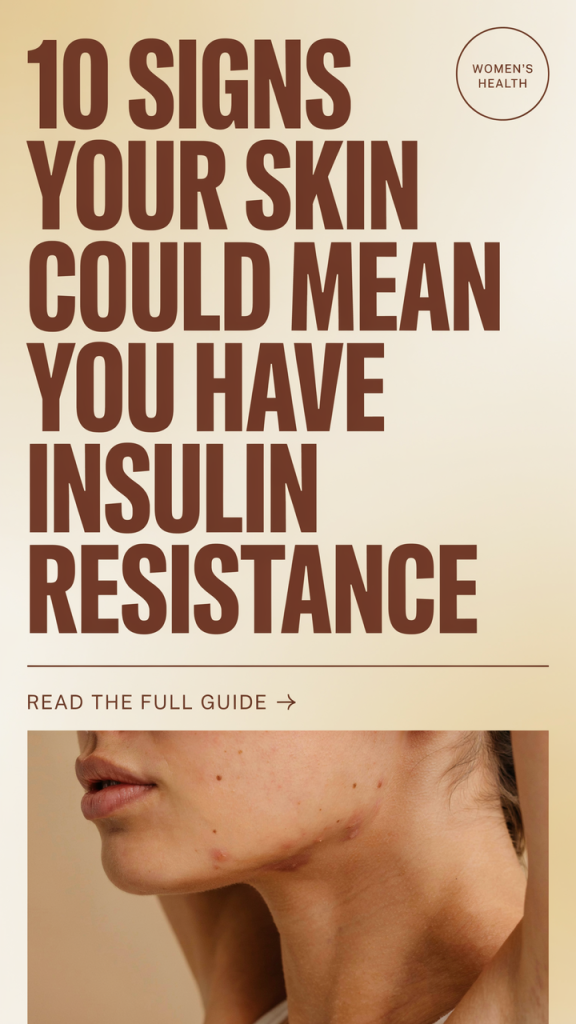
Persistent Acne And Excessively Oily Skin
Acne and oily skin are common at various life stages, but when breakouts persist into adulthood or suddenly worsen, insulin resistance should be part of the differential diagnosis. Elevated insulin elevates circulating androgens and IGF-1 activity, both of which drive sebaceous gland activity and keratinocyte proliferation, the key ingredients for clogged pores and inflammatory acne.
We often see this pattern in people with PCOS or metabolic syndrome: persistent inflammatory lesions on the lower face, jawline, and upper neck, accompanied by skin that looks and feels oilier than usual. Diet plays a role too: high glycemic-load foods and dairy have been associated with increased acne severity, possibly via insulin/IGF signaling.
Treatment is twofold. Topical and systemic dermatologic therapies remain important for controlling inflammation and preventing scarring. But addressing the underlying insulin resistance (through weight loss, reduced refined carbs, regular exercise, and, when appropriate, medications like metformin under medical supervision) can reduce androgen-mediated sebum production and lead to more durable improvement.
Hirsutism Or Unexplained Excess Hair Growth
Hirsutism, excess coarse, dark hair in a typically male-distributed pattern (chin, upper lip, chest, back), is often linked to elevated androgens. Insulin resistance can indirectly drive androgen excess by increasing ovarian and adrenal androgen production and decreasing sex-hormone binding globulin (SHBG), which raises free active testosterone.
When we see new or worsening hirsutism, particularly in women of reproductive age, we think about PCOS and metabolic contributors. The hair changes may be accompanied by irregular periods, acne, or central weight gain. Not everyone with insulin resistance develops hirsutism, but the coexistence of these symptoms strengthens the case for metabolic testing.
Management combines symptom control and treating root causes. Hair removal options (laser, electrolysis, topical eflornithine) can help with appearance, while hormonal treatments, lifestyle changes, and sometimes insulin-sensitizing medications reduce androgen production over time. We recommend coordinated care between dermatology, endocrinology, and primary care when hormonal imbalance is suspected.
Slow Wound Healing And Recurrent Skin Infections
Insulin resistance and the hyperglycemia that can follow create an environment that impairs wound healing and increases susceptibility to infections. Even modest elevations in blood sugar interfere with neutrophil function, reduce collagen synthesis, and compromise microvascular blood flow, all essential processes in tissue repair.
Clinically, we see longer healing times for cuts and abrasions, more frequent folliculitis or boils, and a higher likelihood of fungal infections like candidiasis in skin folds. Recurrent bacterial infections, especially in lower extremities, are also more common as metabolic disease progresses.
If we notice slow wound healing or frequent skin infections, we look beyond topical fixes. Optimizing glycemic control, improving circulation through exercise and smoking cessation, and addressing nutrition (adequate protein, vitamin C, zinc) matter. For ongoing infections, culture-directed antibiotics or antifungals are appropriate, alongside investigating underlying glucose metabolism to reduce recurrence risk.
Itchy, Dry, Or Patchy Skin That Won’t Clear
Chronic dry, itchy, or patchy skin, especially when it resists standard moisturizers and topical steroids, can be another subtle sign of metabolic imbalance. While xerosis and eczema are multi-factorial, insulin resistance can contribute by altering skin barrier function, decreasing skin hydration, and modifying local immune responses.
We often notice generalized itchiness or persistent dermatitis in people who also have central adiposity, fatigue, or sleep disturbances. The barrier dysfunction may be worsened by diet, altered lipid metabolism, or microinflammation tied to insulin resistance. Also, small-fiber neuropathy associated with metabolic disease can cause sensations of itching or burning even when the skin looks only mildly changed.
Addressing the skin alone usually brings limited relief. We recommend a combined strategy: gentle, fragrance-free emollients, attention to bathing habits (short lukewarm showers, pat-dry), topical barrier repair agents (ceramides), and evaluation for underlying metabolic issues. If symptoms persist even though skin-directed care, we escalate to systemic evaluation and consider referrals to dermatology and endocrinology.
Eruptive Xanthomas And Yellowish Bumps From High Lipids
Eruptive xanthomas are small, yellowish papules that can appear suddenly, often on the buttocks, shoulders, or extensor surfaces. They signal very high triglyceride levels and deranged lipid metabolism, conditions commonly associated with insulin resistance. When triglycerides spike (for example, above 1000 mg/dL), we can see these lesions alongside pancreatitis risk, making them clinically significant beyond skin appearance.
Pathophysiology involves deposition of lipid-filled histiocytes (foam cells) in the dermis. They may be itchy or painless and often appear in clusters. Because eruptive xanthomas are a visible marker of severe dyslipidemia, their recognition triggers urgent metabolic evaluation and treatment.
Management focuses on correcting the lipid disorder: dietary fat and sugar reduction, strict glycemic control, triglyceride-lowering medications (fibrates, omega-3 fatty acids) as indicated, and treating any secondary causes like alcohol use or certain medications. The skin lesions typically improve with normalization of lipid levels, which is gratifying for patients and a reminder that skin findings can reflect significant internal disease.
When To See A Doctor: Tests, Diagnosis, And Next Steps
Spotting one or two of these skin signs doesn’t prove insulin resistance, but their presence, especially in combination, should prompt evaluation. When we suspect insulin resistance, recommended initial tests include fasting glucose, fasting insulin (for HOMA-IR calculation), hemoglobin A1c, and a lipid panel. In cases where fasting tests are borderline but suspicion remains high, an oral glucose tolerance test (OGTT) can reveal impaired glucose handling earlier.
We also assess for related conditions: reproductive hormone panels for suspected PCOS, thyroid function tests when appropriate, and targeted infectious workups if recurrent skin infections are present. Physical exam findings like central obesity, acanthosis nigricans, and hypertension increase pretest probability and guide urgency.
Management begins with lifestyle modification: structured weight loss (5–10% of body weight often improves insulin sensitivity), reduced intake of refined carbohydrates and sugar, increased fiber, and regular aerobic plus resistance exercise. For many people, these changes are enough to reverse early insulin resistance. When lifestyle measures fall short or when comorbidities exist, clinicians may prescribe metformin, GLP-1 receptor agonists, or other agents based on individual risk and guidelines. We recommend coordinated care, primary care, endocrinology, and dermatology, to address both skin manifestations and metabolic health.
Conclusion
Skin can be an early warning system for insulin resistance, a set of visible cues that give us time to act. When we recognize findings like acanthosis nigricans, multiple skin tags, persistent adult acne, hirsutism, poor wound healing, or eruptive xanthomas, we should expand our thinking beyond dermatology to metabolic health. Early testing and lifestyle changes can reverse or halt progression and improve both skin and long-term outcomes.
If you or someone you care for has several of these signs, document changes with photos, note any related symptoms (weight changes, irregular periods, fatigue), and schedule a medical evaluation. Timely attention can change the trajectory: the earlier we intervene, the better our chances of restoring balance and protecting cardiovascular and metabolic health.


