A 7-Day Hormone-Balancing Meal Plan for Women Over 40: Easy Meals to Reduce Hot Flashes, Boost Energy, and Support Metabolism
Turning 40 often brings changes we didn’t expect: sleep shifts, stubborn weight around the middle, unpredictable energy, and yes, hot flashes. These symptoms remind us that hormones are shifting, and what we eat can make a measurable difference. We’ve designed a practical, evidence-informed 7-day hormone-balancing meal plan specifically for women over 40 to help reduce hot flashes, stabilize blood sugar, support thyroid and adrenal function, and keep metabolism humming.
This guide isn’t about restrictive diets or expensive supplements. Instead, we focus on real-food strategies, key nutrients, smart swaps, and easy recipes, that fit busy lives. We’ll explain why nutrition matters after 40, the foods to prioritize (and limit), how to personalize portions and timing, and then walk through a full 7-day plan with an example day of recipes and prep tips. Let’s get into food that works with your hormones, not against them.
Why Hormone‑Balancing Nutrition Matters After 40
Hormone production and sensitivity shift as we age. Around midlife, estrogen, progesterone, testosterone, and sometimes thyroid hormones change in patterns that affect sleep, mood, body composition, and metabolic rate. Nutrition can’t stop aging, but it’s one of the most powerful levers we have to reduce symptoms and preserve metabolic health.
First, food affects blood sugar and insulin. Spikes and crashes in glucose prompt higher insulin release: chronically elevated insulin promotes fat storage, especially visceral fat, and disrupts other hormones. Choosing foods that produce steady blood sugar helps moderate insulin and protects energy levels.
Second, certain nutrients directly influence hormone synthesis and clearance. For example, omega‑3s support anti‑inflammatory pathways and may ease hot flashes: zinc and selenium are crucial for thyroid hormone production: magnesium and vitamin D modulate cortisol and estrogen metabolism. We’ll highlight these nutrients in the next section and show how to include them naturally.
Third, gut health matters. The gut microbiome participates in estrogen recirculation, the so-called estrobolome, and affects how long estrogens linger in circulation. Fiber, fermented foods, and diverse plant foods support a balanced microbiome and healthy estrogen metabolism.
Finally, timing and macronutrient balance shape how hormones respond throughout the day. A breakfast with protein and fiber reduces mid-morning cortisol and hunger: balanced meals with protein, healthy fats, and low‑glycemic carbs stabilize blood sugar and support thyroid and adrenal function. When we prioritize nutrient-dense meals and consistent patterns, we see fewer hot flashes, better mood, and steadier energy, outcomes that matter for quality of life after 40.
Key Nutrients And Foods To Prioritize (And Foods To Limit)
Here’s a concise list of what to prioritize and what to limit, with why each choice matters.
Prioritize
- Protein at every meal: Aim for 20–30 g per main meal. Protein supports muscle mass, maintains metabolic rate, and stabilizes blood sugar. Good sources: fatty fish, chicken, eggs, legumes, Greek yogurt, tofu.
- Omega‑3 fatty acids: EPA/DHA reduce inflammation and may lessen vasomotor symptoms. Fatty fish (salmon, mackerel), chia, flax, and walnuts are excellent.
- Fiber and prebiotic foods: Soluble fiber helps blood sugar control and feeds a healthy microbiome, oats, legumes, apples, Brussels sprouts, onions, garlic.
- Crucial micronutrients: Magnesium (leafy greens, pumpkin seeds, almonds), vitamin D (fatty fish, fortified dairy, sun exposure, supplements as needed), zinc (shellfish, beef, lentils), and selenium (Brazil nuts, fish). These support thyroid function, mood, and hormone detox.
- Phytoestrogen-rich plants in moderation: Soy (fermented forms like tempeh), flaxseed, and legumes contain plant compounds that may help balance estrogenic activity for some women.
- Healthy fats: Monounsaturated and polyunsaturated fats (olive oil, avocado, nuts) aid satiety and hormone synthesis.
Limit or avoid
- Refined carbohydrates and added sugars: These drive insulin spikes and may worsen hot flashes and weight gain.
- Excess alcohol: Can disrupt sleep and estrogen balance: limit to 1 drink or fewer, and avoid close to bedtime.
- Highly processed seed oils in excess: Inflammatory when consumed in large amounts: favor olive oil and moderate amounts of other cooking oils.
- Caffeine in excess: Caffeine can trigger hot flashes and disrupt sleep for some, monitor your response and limit afternoon/evening intake.
Practical pairing tips
- Combine protein + fiber + healthy fat at meals to blunt glucose response and reduce cravings.
- Add a portion of cruciferous vegetables (broccoli, cauliflower, Brussels sprouts) several times a week to assist estrogen metabolism.
- Snack choices should be protein-forward (Greek yogurt with flax, hummus with veggie sticks, a small handful of nuts) rather than sugary treats.
These priorities form the backbone of the 7‑day plan. We focus on whole foods, nutrient density, and simple combinations that support hormones without requiring complicated cooking.
How To Use This 7‑Day Meal Plan — Portions, Timing, Swaps, Grocery And Prep Tips
This plan is a blueprint, not a strict diet. We designed portions and timing to stabilize blood sugar, support metabolism, and reduce vasomotor symptoms. Here’s how to make it yours.
Portions
- Protein: Aim for ~20–30 g protein at breakfast and lunch, 25–35 g at dinner if you’re generally active. For reference: 3–4 oz cooked fish or chicken ≈ 20–25 g protein: 1 cup Greek yogurt ≈ 17–20 g.
- Vegetables: Fill at least half your plate with non-starchy vegetables at lunch and dinner.
- Carbohydrates: Prefer low‑glycemic sources (sweet potato, quinoa, oats). Keep starchy carbs moderate, adjust up or down based on activity and weight goals.
- Healthy fat: Include 1–2 servings per day (1 tbsp olive oil, 1/4 avocado, a small handful of nuts).
Meal timing
- Eat breakfast within 60–90 minutes of waking if you tolerate it: choose protein-rich options to curb morning cortisol.
- Aim for 3 balanced meals and 1–2 nutrient-forward snacks as needed. Regular timing helps cortisol and insulin rhythms.
- Avoid large late-night meals: if you need a snack before bed, pick protein with minimal carbs (cottage cheese, Greek yogurt, or a few nuts).
Swaps and substitutions
- Vegetarian swap: Replace fish/chicken with tempeh, tofu, seitan, or larger portions of legumes plus extra nuts/seeds for calories and omega‑3 precursors.
- Dairy-free: Use unsweetened plant yogurts fortified with calcium and vitamin D: choose almond or oat milk where recipes call for milk.
- Gluten-free: Swap oats for certified gluten-free oats and use brown rice/quinoa instead of wheat-based grains.
Grocery and batch prep tips
- Weekend batch: Roast a tray of mixed vegetables, bake a sheet of salmon or chicken, and cook a big pot of quinoa or beans. Portion into containers for quick assembly.
- Make-ahead breakfast: Overnight oats with chia and protein powder, or egg muffin tins (eggs + spinach + peppers) stored for 4–5 days.
- Keep chopped salad greens and washed fruit visible to make healthy choices easy.
- Pantry essentials: canned beans, canned salmon, extra-virgin olive oil, mixed nuts, seeds (chia, flax), low-sodium broths, spices (turmeric, cumin), and apple cider vinegar.
Monitoring and personalization
- Track symptoms: Note hot flashes, sleep, mood, and energy daily to spot patterns. If caffeine or a specific food increases symptoms, modify accordingly.
- Weight and activity: If you’re losing weight unintentionally or feel low energy, increase portion sizes and add an extra snack with protein and healthy fat.
- Supplements: We prefer food-first, but consider vitamin D if levels are low, and magnesium in the evening to help sleep. Discuss personalized dosing with your clinician.
Use these practical rules to adapt the 7‑day plan to your taste and schedule. The recipes are intentionally swap-friendly so you’ll stay consistent without feeling deprived.
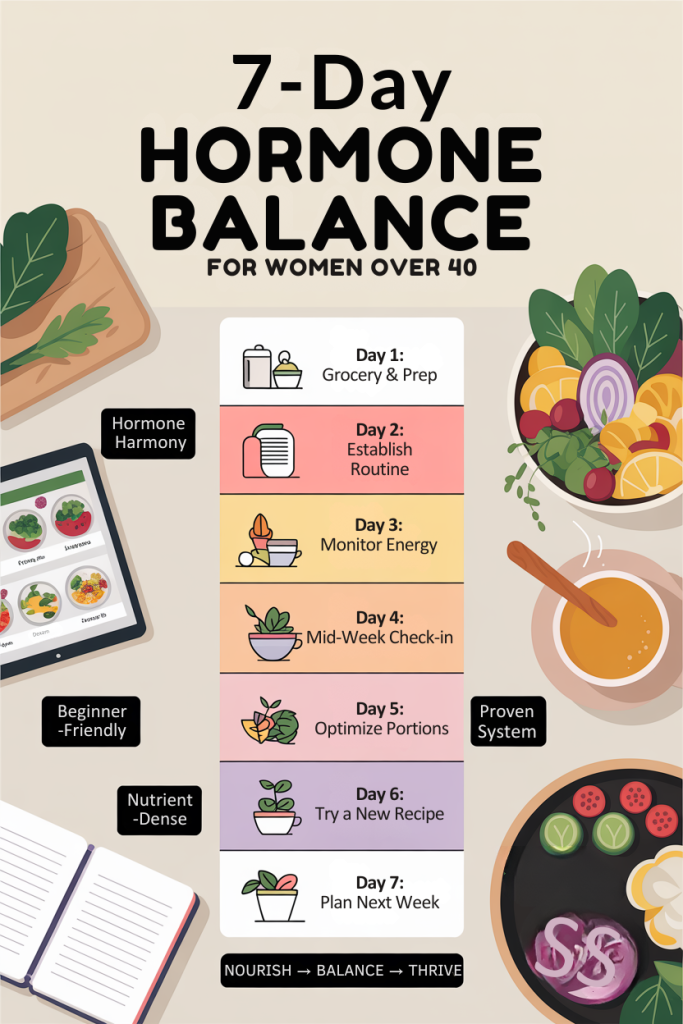
7‑Day Meal Plan Overview: Daily Breakfast, Lunch, Dinner, And Snack Summaries (Days 1–7)
Below are daily summaries, breakfast, lunch, dinner, and one or two snacks, designed to stabilize blood sugar, deliver hormone-supportive nutrients, and be realistic for busy schedules.
Day 1
- Breakfast: Greek yogurt with ground flaxseed, mixed berries, and a sprinkle of walnuts.
- Snack: Apple slices with almond butter.
- Lunch: Salmon salad (mixed greens, roasted beets, quinoa, avocado, lemon-olive oil dressing).
- Snack: Carrot sticks + hummus.
- Dinner: Baked cod with roasted Brussels sprouts and sweet potato wedges.
Day 2
- Breakfast: Overnight oats (rolled oats, chia, protein powder, cinnamon) topped with sliced kiwi.
- Snack: Hard-boiled egg + cucumber slices.
- Lunch: Lentil and vegetable soup with a side salad.
- Snack: Small handful of mixed nuts.
- Dinner: Stir-fry with tofu, broccoli, bell pepper, and brown rice: finish with sesame and scallions.
Day 3
- Breakfast: Vegetable omelet (spinach, tomato, mushrooms) with a slice of sprouted-grain toast.
- Snack: Greek yogurt with a few pumpkin seeds.
- Lunch: Turkey and avocado lettuce wraps with tomato, shredded carrots, and mustard.
- Snack: Pear.
- Dinner: Grilled salmon, quinoa pilaf with herbs, and steamed asparagus.
Day 4
- Breakfast: Smoothie (unsweetened almond milk, spinach, frozen berries, pea protein, ground flax).
- Snack: Edamame pods lightly salted.
- Lunch: Chickpea salad with cucumber, tomato, red onion, parsley, olive oil, and lemon.
- Snack: Cottage cheese with sliced peaches (fresh or frozen, thawed).
- Dinner: Chicken thighs braised with tomatoes, olives, and roasted cauliflower.
Day 5
- Breakfast: Steel-cut oats topped with walnuts, cinnamon, and a spoonful of plain kefir.
- Snack: Celery sticks with tahini.
- Lunch: Sardine salad over mixed greens with tomatoes and a small baked sweet potato.
- Snack: A few squares of dark chocolate (70%+) and almonds.
- Dinner: Turkey chili with black beans, bell pepper, and a side of sautéed greens.
Day 6
- Breakfast: Savory yogurt bowl with chopped cucumber, dill, smoked salmon, and a drizzle of olive oil.
- Snack: Sliced orange + a handful of sunflower seeds.
- Lunch: Quinoa and roasted vegetable bowl with tahini‑lemon dressing and a scoop of hummus.
- Snack: Roasted chickpeas.
- Dinner: Baked trout with lemon, wild rice, and steamed green beans.
Day 7
- Breakfast: Scrambled eggs with sautéed kale and mushrooms: half an avocado.
- Snack: A small smoothie with kefir, spinach, and frozen mango.
- Lunch: Grilled chicken Caesar-style salad with a yogurt-based dressing and whole-grain croutons.
- Snack: Pear and a small handful of walnuts.
- Dinner: Vegetarian curry with lentils, cauliflower, and spinach served over brown basmati rice.
General notes for the week
- Hydration: Aim for consistent water intake: add slices of lemon or cucumber for flavor. Hydration supports digestion and can help manage hot flashes.
- Spice and flavor: Use turmeric, ginger, garlic, and black pepper frequently, these add antioxidant support and help make meals satisfying without extra salt or sugar.
- Treats: Enjoy a moderate treat once or twice a week (a small glass of wine or a dessert) only if it doesn’t worsen symptoms. Our approach is sustainable and flexible rather than punitive.
Example Day: Full Recipes, Meal Timing, And Prep Instructions
We’ll walk through Day 3 as a practical example, including exact recipes, meal timing suggestions, and quick prep notes so you can replicate it any week.
Timing overview
- Breakfast: 7:30 AM
- Morning snack: 10:30 AM
- Lunch: 1:00 PM
- Afternoon snack: 3:30–4:00 PM
- Dinner: 7:00 PM
Breakfast, Vegetable Omelet with Sprouted- Grain Toast (serves 1)
Ingredients
- 2 large eggs (or 1 egg + 1/4 cup egg whites)
- 1 cup baby spinach, chopped
- 1/4 cup diced tomato
- 1/4 cup sliced mushrooms
- 1 tsp olive oil
- Salt and pepper to taste
- 1 slice sprouted-grain toast
Method
- Heat olive oil in a nonstick skillet over medium heat. Sauté mushrooms and tomato 2–3 minutes until softened.
- Add spinach and cook until wilted. Pour beaten eggs over vegetables and season.
- Cook until set, fold, and slide onto plate. Serve with toast.
Why it works: Eggs provide high-quality protein and choline (important for liver-based hormone processing). Vegetables add fiber and micronutrients: the toast supplies slow-digesting carbs to stabilize glucose.
Morning snack, Greek Yogurt with Pumpkin Seeds
- 3/4 cup plain Greek yogurt + 1 tbsp pumpkin seeds. Quick, protein-forward, and magnesium-rich.
Lunch, Turkey & Avocado Lettuce Wraps (serves 1)
Ingredients
- 3–4 oz sliced turkey breast (preferably low-sodium)
- 1/2 avocado, sliced
- 2–3 large lettuce leaves (butter or romaine)
- 1/4 cup shredded carrots
- 1–2 tsp Dijon mustard or yogurt-based dressing
Assembly
- Lay turkey slices on lettuce leaves, add avocado and carrots, and drizzle mustard.
- Roll or fold and enjoy.
Why it works: Lean protein plus healthy fat from avocado keeps blood sugar steady and supports satiety.
Afternoon snack, Pear
- A whole pear provides fiber and a gentle carbohydrate boost without a sugar crash.
Dinner, Grilled Salmon, Quinoa Pilaf, and Steamed Asparagus (serves 1–2)
Ingredients
- 5–6 oz salmon fillet
- 1/2 cup cooked quinoa
- 1 cup asparagus, trimmed
- 1 tbsp olive oil
- Lemon, salt, pepper, chopped parsley
Method
- Preheat grill or skillet. Season salmon with salt, pepper, and a squeeze of lemon. Grill 3–4 minutes per side depending on thickness.
- Cook quinoa according to package (or use leftover). Sauté cooked quinoa briefly with olive oil and chopped parsley.
- Steam asparagus 3–4 minutes until bright green and tender. Serve salmon over quinoa with asparagus on the side.
Why it works: Salmon delivers omega‑3s and vitamin D: quinoa supplies fiber and a complete amino acid profile. The meal balances protein, healthy fat, and low‑glycemic carbs to support overnight hormone regulation.
Prep tips for the day and week
- Weekend: Cook a batch of quinoa and roast extra vegetables. Portion cooked proteins (salmon, chicken, turkey) into sealed containers.
- Quick swaps: Use canned salmon or smoked salmon if fresh isn’t available. Swap quinoa for farro or brown rice as preferred.
- Storage: Hard-boiled eggs and washed salad greens last well for 3–5 days refrigerated: store dressings separately to keep salads crisp.
This example shows how simple ingredients, minimal cooking time, and intentional timing add up to a hormone-supportive day that’s easy to repeat.
Conclusion
We designed this 7‑day hormone‑balancing meal plan to be practical, flexible, and rooted in nutrition science that supports women over 40. By prioritizing protein, omega‑3s, fiber, and micronutrients, while limiting refined carbs, excess alcohol, and inflammatory processed foods, you can reduce hot flashes, improve energy rhythms, and protect metabolic health.
Start with one week, notice which meals and swaps work best, and adapt the plan to your taste and schedule. Small, consistent changes add up: better sleep, fewer flare-ups, and a steadier mood are often just a few meals away. If you have specific health conditions (thyroid disease, diabetes, or are on hormone therapy), consult your clinician to tailor this plan. We’re rooting for you, let’s make food a powerful ally through midlife and beyond.