How To Make Protein Carrot Cake (Gluten-Free)
Carrot cake has long been a beloved dessert, renowned for its moist texture and rich flavors. But, traditional recipes often rely on gluten-containing ingredients that may not suit everyone, especially those on a gluten-free diet. In this text, we’ll explore how to create a delicious protein-packed carrot cake that caters to gluten-free dietary needs without sacrificing taste. Whether you’re looking to impress at a gathering or treat yourself after a long day, this cake is as nutritious as it is satisfying.
Understanding Gluten-Free Ingredients
When venturing into gluten-free baking, understanding the types of ingredients we can work with is crucial. Here are some staples we’ll use in our protein carrot cake:
- Gluten-Free Flour: Options like almond flour, coconut flour, or a commercial gluten-free flour blend are excellent choices. They provide the right texture and moisture without the gluten.
- Protein Powder: We can incorporate protein powder for an extra nutritional boost. Look for a type that meshes well with baked goods, such as whey protein isolate or plant-based options.
- Eggs: Eggs not only act as a binder but also add moisture and richness to our cake. For those who prefer vegan options, flax eggs can be used as a substitute.
- Natural Sweeteners: Instead of refined sugars, consider using honey, maple syrup, or coconut sugar to provide natural sweetness without the gluten.
- Baking Powder: Ensure that our baking powder is labeled gluten-free, as some brands may contain gluten as a filler.
By understanding these ingredients, we can bake a delicious, gluten-free carrot cake that meets our dietary needs without compromising on flavor.
Nutritional Benefits Of Protein Carrot Cake
Our protein carrot cake isn’t just a treat: it comes packed with several nutritional benefits:
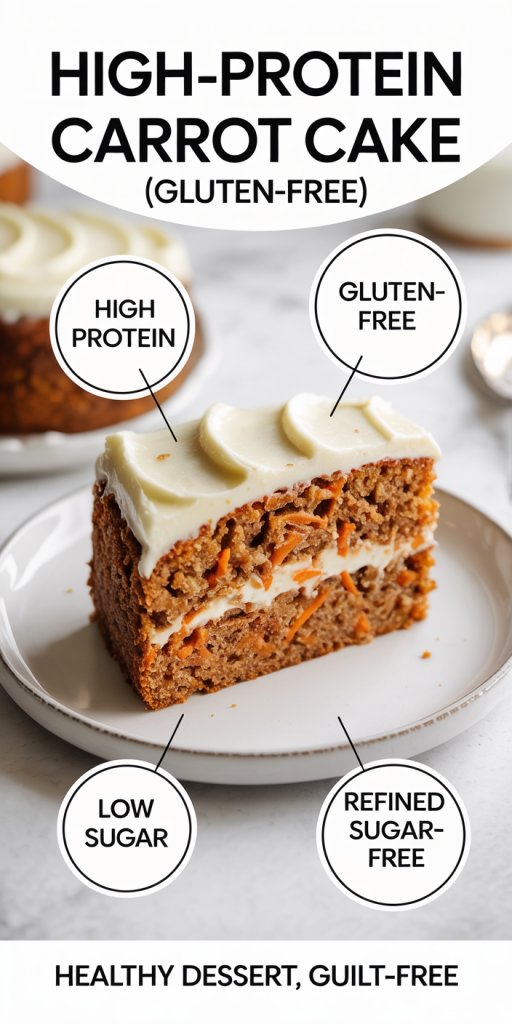
- High in Protein: With the inclusion of protein powder and eggs, this cake can provide a substantial protein hit, making it a great post-workout snack or breakfast option.
- Rich in Vitamins and Minerals: Carrots are loaded with vitamins A, K, and several B vitamins, which contribute to our overall health. They also provide antioxidants that support our immune system.
- Healthy Fats: If we use almond flour or add nuts, we benefit from healthy fats that are good for our hearts. These fats also help in absorbing fat-soluble vitamins from the carrots.
- Low Glycemic Index: When using natural sweeteners, the glycemic index of our cake can be lower than traditional cakes, making it a better option for blood sugar control.
This cake can serve as a nutritious indulgence without the guilt that often accompanies dessert.
Step-By-Step Recipe For Gluten-Free Protein Carrot Cake
Ingredients
- 2 cups gluten-free flour (e.g., almond flour or a gluten-free blend)
- 1 cup protein powder (vanilla or unflavored)
- 1 tsp baking powder
- 1 tsp baking soda
- 1 tsp ground cinnamon
- 1/2 tsp ground nutmeg
- 1/4 tsp salt
- 3 large eggs (or 3 flax eggs)
- 1/2 cup honey or maple syrup
- 1/2 cup unsweetened applesauce
- 2 cups grated carrots (about 4 medium-sized carrots)
- 1/2 cup crushed pineapple, drained (optional)
- 1/2 cup chopped walnuts (optional)
Instructions
- Preheat the Oven: Preheat our oven to 350°F (175°C) and grease two 9-inch round cake pans.
- Mix Dry Ingredients: In a large bowl, whisk together the gluten-free flour, protein powder, baking powder, baking soda, cinnamon, nutmeg, and salt.
- Combine Wet Ingredients: In another bowl, beat the eggs (or flax eggs) and then mix in the honey (or maple syrup), applesauce, and grated carrots until well combined.
- Combine Mixtures: Gradually fold the dry ingredients into the wet mixture, ensuring no lumps remain. If desired, add in crushed pineapple and walnuts.
- Bake: Pour the batter evenly into the prepared pans and bake for 25-30 minutes, or until a toothpick inserted into the center comes out clean.
- Cool: Allow to cool in the pans for about 10 minutes before transferring to wire racks to cool completely.
Frosting (optional)
For a simple frosting, we can mix 1 cup of Greek yogurt with a splash of vanilla extract and a few tablespoons of honey until creamy. Spread this on our cooled cake for added protein.
Tips For Baking A Perfect Carrot Cake
Baking a delightful carrot cake takes a bit of finesse. Here are some tips to ensure our cake turns out perfectly:
- Don’t Overmix: Once we combine the wet and dry ingredients, mix just until combined to avoid a dense cake.
- Grate Fresh Carrots: Freshly grated carrots retain more moisture than pre-packaged options, helping our cake stay moist.
- Test for Doneness: Since ovens vary, check the cake a few minutes before the recommended baking time to avoid overbaking.
- Room Temperature Ingredients: Let our eggs and any dairy sit at room temperature for better blending, resulting in a lighter texture.
- Use Parchment Paper: Lining our cake pans with parchment paper can help prevent sticking, ensuring a smooth release post-baking.
Storing And Serving Suggestions
To enjoy our protein carrot cake to the fullest:
- Storing: Keep the cooled cake stored in an airtight container at room temperature for up to 3 days or refrigerate for up to a week. For longer storage, consider freezing individual slices. Just wrap them tightly in plastic wrap and place them in a freezer-safe bag.
- Serving: Serve the cake plain for a quick snack or dress it up with yogurt frosting or additional nuts on top for a more elaborate dessert presentation. We can also pair it with fresh fruit, like berries or a scoop of yogurt, to enhance the meal’s nutrition and flavor profile.
Variations And Customizations
Our protein carrot cake is versatile. Here are some variations and customizations we can try:
- Add-ins: Consider incorporating shredded coconut, raisins, or even dark chocolate chips for a unique twist.
- Nut-Free Option: Substitute the nuts with sunflower seeds to make it allergen-friendly if we have nut allergies.
- Spice It Up: Feel free to experiment with other spices such as ginger or cloves to create a different flavor profile.
- Frosting Alternatives: For a low-calorie option, we can use mashed avocado mixed with cocoa powder or a healthy cream cheese alternative for frosting.
Each variation can give our carrot cake a unique flair, keeping our taste buds interested with every bite.
Conclusion
Baking a gluten-free protein carrot cake is not only simple but also a rewarding try that combines health and indulgence. By selecting the right ingredients and following our step-by-step guide, we can create a delightful treat that everyone will love, regardless of their dietary preferences. The benefits of this cake extend beyond deliciousness, bringing with it a wealth of nutrition that can fit seamlessly into our lifestyle. So, let’s get baking and enjoy this nutritious delicacy together.