Transform Your Health: 21-Day Heart-Healthy Meal Plan That Lowers Blood Pressure
When it comes to heart health, what we eat plays a crucial role. I’ve often found that simple dietary changes can make a significant difference, especially for those looking to lower their blood pressure. That’s why I’ve put together a 21-day heart-healthy meal plan designed to not only nourish your body but also promote a healthier heart.
Overview of the 21-Day Heart-Healthy Meal Plan
The 21-day heart-healthy meal plan offers structured meals focusing on nutrient-rich foods. This plan supports heart health and effectively lowers blood pressure. Each day features a balanced intake of fruits, vegetables, whole grains, lean proteins, and healthy fats.
Meal Plan Structure
- Weekly Themes: Each week concentrates on a specific aspect of heart health, ensuring a variety of nutrients.
- Portion Control: Meals emphasize appropriate serving sizes to maintain a healthy caloric intake.
- Diverse Recipes: The plan includes various recipes to keep meals interesting and satisfying.
Nutritional Focus
- Fruits and Vegetables: Consuming at least five servings daily provides essential vitamins and minerals.
- Whole Grains: Incorporating whole grains like quinoa and brown rice offers fiber, which aids in lowering cholesterol.
- Lean Proteins: Including sources like chicken, fish, and legumes supports muscle health without excessive saturated fat.
- Healthy Fats: Utilizing olive oil, avocados, and nuts contributes to heart health while promoting satiety.
Lifestyle Integration
- Simple Swaps: The plan encourages replacing processed foods with whole, unprocessed options for better health outcomes.
- Meal Prep: Preparing meals in advance streamlines busy schedules and supports adherence to the plan.
- Mindful Eating: Practicing mindful eating fosters awareness of hunger cues and promotes satisfaction with meals.
The 21-day heart-healthy meal plan presents a manageable approach to improving cardiovascular health while making enjoyable meal choices. This diet provides ample guidance to make lasting changes that positively impact blood pressure and overall well-being.
Benefits of Lowering Blood Pressure
Lowering blood pressure improves heart health and enhances overall well-being. A heart-healthy meal plan provides a structured approach to achieving this goal.
Importance of Diet in Blood Pressure Management
Diet plays a crucial role in managing blood pressure. Consuming nutrient-rich foods helps reduce hypertension. I focus on incorporating foods high in potassium, magnesium, and fiber, such as leafy greens, bananas, and whole grains. These foods counteract sodium’s effects, promoting vasodilation and improved blood flow. Studies published by the American Heart Association show that adhering to a heart-healthy diet can lower blood pressure levels significantly over time.
Long-Term Health Advantages
Maintaining low blood pressure provides numerous long-term health benefits. I benefit from reduced risk of cardiovascular diseases, including heart attacks and strokes. Consistently low blood pressure supports kidney function and promotes healthy brain activity. Research indicates that individuals with controlled blood pressure levels experience fewer complications related to chronic conditions such as diabetes. By focusing on a heart-healthy meal plan, I not only enhance my cardiovascular health but also improve my quality of life and longevity.
Meal Planning Essentials
Meal planning plays a vital role in maintaining heart health, especially when focusing on lowering blood pressure. It’s essential to understand the key nutrients that contribute to this goal and identify the right foods for the meal plan.
Key Nutrients for Heart Health
- Potassium: Balances sodium’s effects on blood pressure, helping to relax blood vessel walls. Aim for 3,500–4,700 mg daily through sources like bananas, sweet potatoes, and spinach.
- Magnesium: Supports blood pressure regulation and muscle function. Adults require about 310–420 mg per day, available in almonds, black beans, and whole grains.
- Fiber: Aids digestion and helps manage blood cholesterol levels. Aim for 25–30 grams daily from foods like oats, lentils, and fruits.
- Omega-3 Fatty Acids: Contribute to heart health by reducing inflammation. Incorporate fatty fish like salmon, walnuts, and flaxseeds into your meals.
- Antioxidants: Protect against oxidative stress and inflammation. Consume berries, dark chocolate, and colorful vegetables for a rich source.
Foods to Include and Avoid
Foods to Include:
- Fruits and Vegetables: Strive for at least five servings daily, focusing on leafy greens, berries, and citrus fruits.
- Whole Grains: Choose brown rice, quinoa, and whole wheat bread over refined grains for increased fiber.
- Lean Proteins: Opt for skinless poultry, fish, legumes, and low-fat dairy products, ensuring less saturated fat.
- Healthy Fats: Use olive oil, avocados, and nuts to replace saturated and trans fats, promoting heart health.
- Processed Foods: Steer clear of packaged snacks, ready-made meals, and high-sodium items that can elevate blood pressure.
- Sugary Beverages: Limit sodas, sweetened juices, and energy drinks high in added sugar.
- High-Sodium Foods: Avoid canned soups, deli meats, and fast food that contribute to sodium overload.
- Saturated and Trans Fats: Reduce consumption of fatty cuts of meat, butter, and fried foods, which can impact cholesterol levels.
Weekly Meal Breakdown
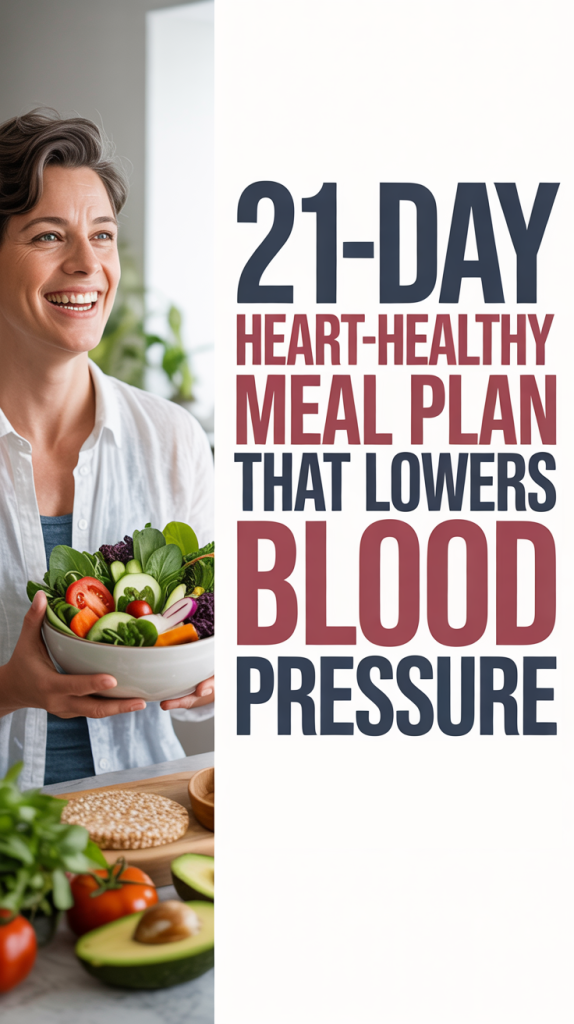
This 21-day heart-healthy meal plan focuses on enhancing diets by progressively incorporating nutrient-rich foods aimed at lowering blood pressure. Each week builds on the previous one, reinforcing healthy habits and delicious meals.
Week 1: Foundations of a Heart-Healthy Diet
In the first week, I center meals around whole, unprocessed foods that lay the groundwork for heart health. Daily meals include:
- Breakfast: Oatmeal topped with fresh berries and a handful of walnuts.
- Lunch: Spinach salad with chickpeas, tomatoes, and vinaigrette.
- Dinner: Grilled chicken with quinoa and steamed broccoli.
- Snacks: Sliced apples with almond butter and carrot sticks.
These meals provide essential nutrients like fiber and healthy fats. I ensure daily intake of at least five servings of fruits and vegetables, focusing on potassium-rich options like bananas and leafy greens.
Week 2: Incorporating Variety and Flavor
During the second week, I introduce a diverse array of flavors and ingredients. I rotate proteins and experiment with herbs and spices to enhance taste without added sodium. Meals include:
- Breakfast: Greek yogurt parfait with mixed fruit and chia seeds.
- Lunch: Whole grain wrap filled with turkey, avocado, and bell peppers.
- Dinner: Baked salmon seasoned with dill, served with roasted sweet potatoes and asparagus.
- Snacks: Mixed nuts and berry smoothies.
Incorporating legumes such as lentils and black beans boosts fiber intake while adding variety to my week. I maintain focus on whole grains and healthy fats to support satiety and blood pressure management.
Week 3: Staying on Track and Making Adjustments
In the final week, I evaluate my preferences and make necessary adjustments to keep meals enjoyable and satisfying. I encourage flexibility and creativity in meal prep, with meals like:
- Breakfast: Smoothie bowl with spinach, banana, and almond milk, topped with seeds.
- Lunch: Quinoa salad mixed with cucumbers, feta cheese, and olives.
- Dinner: Stir-fried tofu with mixed vegetables and brown rice.
- Snacks: Celery sticks with hummus and air-popped popcorn.
Adjustments can include swapping similar ingredients based on availability and personal taste. I keep portion sizes consistent while remaining mindful of hunger cues, focusing on nutrient density to support overall heart health and manage blood pressure effectively.
Tips for Sustaining the Meal Plan
Sustaining a heart-healthy meal plan requires commitment and practical strategies. Following these tips can enhance adherence and promote lasting changes in dietary habits.
Meal Prep and Planning Strategies
- Plan meals weekly: Set aside time each week to outline meals, focusing on nutrient-rich ingredients. Use this plan to create a grocery list to ensure efficient shopping.
- Prepare in batches: Cook larger portions of meals to save time during busy weekdays. Store portions in airtight containers for easy access.
- Use simple recipes: Select recipes with minimal ingredients and straightforward steps. This approach encourages consistency and reduces meal preparation stress.
- Stock up on essentials: Keep a well-stocked pantry with whole grains, legumes, canned vegetables, and spices. This makes it easy to whip up healthy meals without last-minute shopping.
- Incorporate variety: Rotate proteins, vegetables, and grains to maintain interest and excitement in meals. Explore seasonal produce to add freshness and flavor.
Mindful Eating Practices
- Eat slowly: Take time to savor each bite. This practice allows for deeper appreciation of flavors and helps prevent overeating.
- Listen to hunger cues: Tune in to your body’s signals. Eat when hungry and stop when satisfied to promote better digestion and portion control.
- Limit distractions: Avoid eating while watching TV or scrolling through your phone. Focusing solely on the meal enhances awareness and aids in recognizing fullness.
- Practice gratitude: Take a moment to express gratitude for the food. This act can deepen your connection with the meal and improve overall satisfaction.
- Engage in mindful grocery shopping: Stick to a list while shopping to avoid impulse buys. Choose fresh, whole foods to maximize nutrition and minimize processed items.
Conclusion
Embracing a heart-healthy meal plan can truly transform your well-being. By following this 21-day guide, I’m confident you’ll not only enjoy delicious meals but also see improvements in your blood pressure and overall heart health.
The journey to better health is all about making sustainable choices that fit your lifestyle. With the right ingredients and mindful eating practices, you can create lasting habits that benefit both your heart and your taste buds.
Take the first step today and start incorporating these heart-healthy meals into your routine. Your heart will thank you for it!