
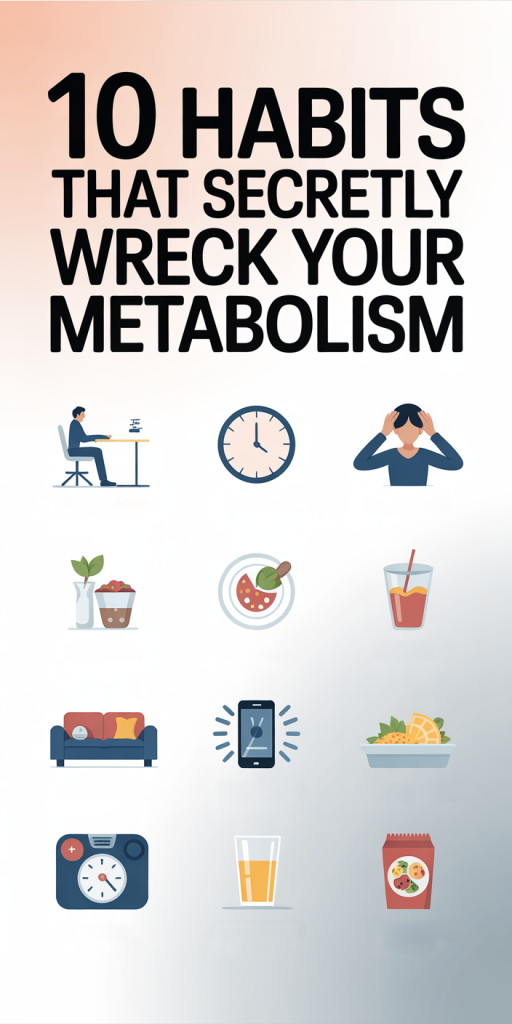
10 Habits That Secretly Wreck Your Metabolism — What To Stop Doing Now (2026)
Our metabolism isn’t a fixed curse or blessing, it’s a dynamic system shaped by daily habits. Yet many of the things we do without thinking quietly erode metabolic health: poor sleep, nonstop stress, skipping meals, aggressive dieting, and even too much sitting. In this text we’ll walk through the most common, stealthy habits that wreck your metabolism and explain why they matter. More importantly, we’ll give practical, evidence-based adjustments you can start making this week. Whether you’re trying to lose weight, gain strength, or simply feel more energetic, understanding these metabolic saboteurs is the first step to fixing them. Read on to identify which behaviors are dragging your metabolism down, and how to stop doing them now.
Habit 1: Chronic Sleep Deprivation And Poor Sleep Quality
We often treat sleep like an optional luxury instead of a metabolic necessity. Chronic sleep deprivation and fragmented sleep alter hormones that regulate appetite, glucose handling, and energy expenditure. When we repeatedly get fewer than 7 hours or suffer poor sleep quality, levels of ghrelin (the hunger hormone) rise and leptin (the satiety hormone) falls, a recipe for overeating. At the same time, sleep loss impairs insulin sensitivity, increasing the likelihood that calories are stored as fat rather than burned as fuel.
Practical fixes we recommend: prioritize a consistent sleep window (same bedtime and wake time within 30–60 minutes), wind down for 30–60 minutes without screens, and optimize the sleep environment: cool, dark, and quiet. If racing thoughts keep you awake, try a brief journaling routine or a 10-minute guided breathing practice. For night-shift workers or people with unavoidable sleep disruption, controlled naps (20–30 minutes) and timed light exposure can mitigate metabolic harm. Finally, don’t ignore persistent sleep problems, obstructive sleep apnea and other disorders directly hurt metabolic health and often require medical evaluation.
Habit 2: Constant Stress And Persistently Elevated Cortisol
Stress is normal: chronic stress is not. When cortisol remains elevated day after day we see increases in central fat accumulation, impaired glucose control, and a lowered resting metabolic rate for some people. Cortisol promotes gluconeogenesis and can drive cravings for calorie-dense, sugary foods, two pathways that undermine weight and metabolic flexibility.
We find the most effective approach is to combine short daily stress-reduction practices with structural lifestyle changes. Brief practices like 10 minutes of breathwork, progressive muscle relaxation, or a short walk outside can blunt cortisol spikes. At the structural level, improving time management, setting boundaries around work, and building social support reduce chronic activation. Resistance training and adequate protein intake also buffer cortisol’s effects by preserving muscle mass. When stress feels overwhelming or chronic even though self-care, seeking a therapist or coach is a valid, useful step, mental health care is metabolic care.
Habit 3: Skipping Meals And Chronically Under‑Eating
Skipping meals or chronically under‑eating may sound like a shortcut to weight loss, but over time these practices slow metabolism. Our bodies respond to prolonged calorie deficits by reducing resting energy expenditure, lowering thyroid activity, and increasing hunger signals. In other words, the initial weight loss can be followed by a metabolic slowdown that makes further progress harder and increases rebound risk.
We see better long-term results when calorie reduction is moderate and paired with preserved protein and resistance training. Instead of skipping meals, aim for balanced meals spaced through the day that include lean protein, healthy fats, fiber, and vegetables. If intermittent fasting suits you, make sure the feeding window contains adequate protein and total calories for your goals. For anyone struggling with persistent under‑eating even though feeling hungry or fatigued, consulting a dietitian can help create a sustainable plan that protects metabolic rate.
Habit 4: Cutting Calories Too Aggressively And Yo‑Yo Dieting
Aggressive calorie cuts and repeated cycles of rapid weight loss followed by regain (yo‑yo dieting) are major metabolic red flags. Severe restriction signals the body to conserve energy: thyroid hormones downregulate, non-essential activity declines, and appetite-regulating hormones shift to promote regain. Each cycle of weight loss and regain can lower resting metabolic rate and make future weight loss tougher.
We recommend a more moderate, patient approach. Target a sustainable calorie deficit (roughly 10–20% below maintenance for many people) and focus on compositional change, preserving or increasing lean mass through resistance training and adequate protein. Incorporate planned maintenance phases or reverse dieting to stabilize metabolism after weight loss. If rapid weight change is driven by unrealistic expectations or extreme programs, shifting to evidence-based, gradual strategies will protect long-term metabolic health and adherence.
Habit 5: Avoiding Strength Training And Losing Muscle Mass
Muscle is metabolically active tissue: more lean mass raises resting energy expenditure and improves insulin sensitivity. Avoiding strength training or allowing muscle loss as we age quietly reduces metabolic capacity. Sarcopenia (age‑related muscle loss) begins in our 30s and accelerates if we’re sedentary or under‑eating protein.
We advise making resistance training a non‑negotiable part of routine exercise, two to four sessions per week focused on progressive overload yields real metabolic benefits. Prioritize compound movements (squats, deadlifts, presses, rows) and ensure total daily protein is in the range that supports your goals: commonly 1.2–2.0 g/kg of body weight for most active adults. Even bodyweight and resistance-band programs work if starting from zero. The combination of strength work plus adequate calories and protein protects metabolism in the long run, supports functional fitness, and improves body composition.
Habit 6: Too Much Sitting And Low Daily Non‑Exercise Movement
Formal exercise is important, but most of our daily calorie burn comes from non‑exercise activity thermogenesis (NEAT): walking between meetings, household chores, fidgeting. Too much sitting, even in people who train regularly, reduces daily energy expenditure and can blunt metabolic flexibility. Long sedentary periods are linked to worse insulin sensitivity and an increased risk of metabolic disease independent of structured workouts.
We recommend increasing incidental movement throughout the day: aim for frequent breaks every 30–60 minutes to stand, walk for five minutes, or do light mobility work. Small changes add up, take the stairs, park farther away, stand during phone calls, or invest in a sit‑stand desk. Tracking steps with a wearable and aiming for incremental goals (for example, +1,000 steps per week) helps maintain momentum. These adjustments raise daily energy expenditure without requiring extra gym time and protect metabolic health over decades.
Habit 7: Overdoing Cardio Without Proper Fuel Or Recovery
Cardio has many benefits, but over-reliance on high-volume aerobic training without adequate fuel or recovery can backfire metabolically. Chronic, high‑intensity cardio sessions performed in a caloric deficit or with insufficient sleep raise cortisol, increase muscle breakdown, and can impair thyroid function. That combination risks losing lean mass and lowering resting metabolic rate.
We suggest balancing aerobic work with strength training and purposeful recovery. If you prefer lots of cardio, ensure you’re meeting protein needs, fueling harder sessions appropriately (pre- and post-workout nutrition), and scheduling rest days. Integrating lower-intensity movement (walking, light cycling) and structured recovery (sleep, nutrition, mobility) preserves muscle and supports metabolic health. For performance-oriented people, periodizing training, alternating high-volume and recovery phases, prevents chronic metabolic strain while maintaining cardiovascular gains.
Habit 8: High Added Sugar, Ultra‑Processed Foods, And Constant Snacking
Diet quality matters beyond calories. Diets high in added sugar and ultra‑processed foods promote rapid glucose spikes, dysregulated appetite, and low satiety, all of which make it easy to overconsume and stress metabolic pathways. Constant grazing on sugary or processed snacks trains our taste preferences toward hyper‑palatable foods and undermines stable blood sugar, which can contribute to insulin resistance over time.
We encourage prioritizing whole, minimally processed foods: vegetables, fruits, whole grains, legumes, lean proteins, nuts, seeds, and healthy fats. When cravings strike, choose satisfying combinations (protein + fiber + fat) to blunt glucose excursions and increase satiety. Planning meals and snacks removes decision fatigue and reduces reliance on vending‑machine options. If you love sweets, scheduling small, deliberate treats within a balanced eating plan keeps you sustainable without derailing metabolic goals. Remember that improving diet quality often yields bigger metabolic returns than obsessing over small calorie differences.
Habit 9: Regular Alcohol Use And Late‑Night Eating Patterns
Alcohol and late-night eating are an underappreciated metabolic double-whammy. Regular alcohol consumption supplies empty calories, disrupts sleep architecture, and can increase appetite and poor food choices later in the evening. Late-night eating, especially when those meals are calorie-dense or carb-heavy, coincides with reduced insulin sensitivity at night, favoring fat storage.
We suggest being mindful rather than eliminating all social pleasures. Limit alcohol intake to moderate levels (or reduce frequency), choose lower-calorie mixers, and plan a satisfying evening meal so you’re less likely to snack later. If you often find yourself hungry at night, examine whether daytime protein and fiber are sufficient and whether stressors or alcohol are driving the pattern. For shift workers or people with atypical schedules, aligning larger meals with active periods and prioritizing sleep hygiene helps manage the timing effect on metabolism.
Conclusion
Metabolism is shaped less by mystery and more by daily choices, the small, repeated behaviors that either support or undermine hormonal balance, muscle mass, and energy expenditure. Rather than chasing quick fixes, we recommend identifying one or two habits from this list that apply to you and committing to specific, manageable changes for four weeks. Track progress with simple metrics (sleep hours, strength gains, step counts, or how you feel) and adjust from there. Over time these steady changes compound, protecting metabolic resilience and making sustainable results far more likely than any dramatic, short‑term intervention.

