
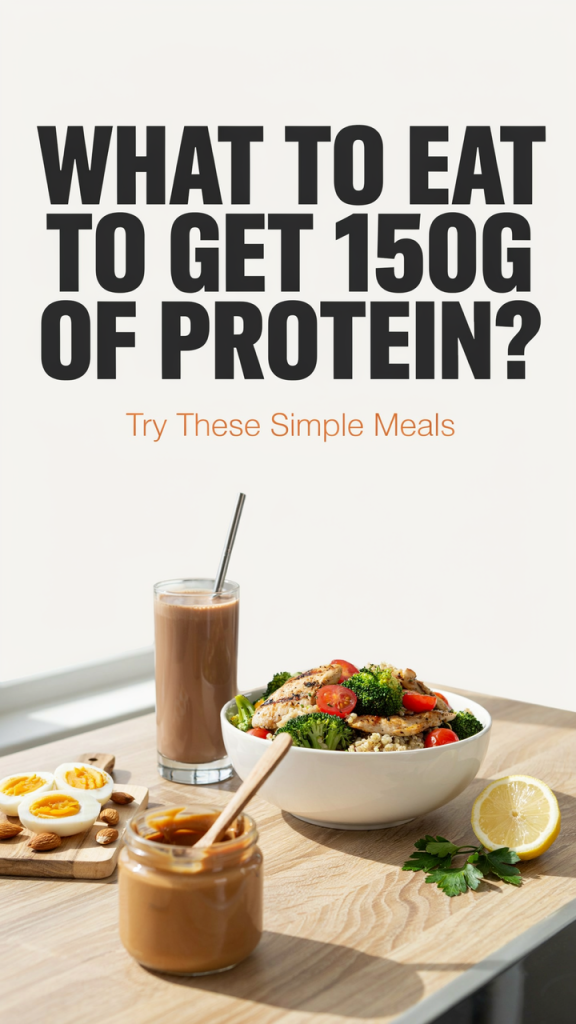
What Should I Eat to Get 150g of Protein? Try These Simple Meals
Getting to 150 grams of protein in a day may sound intimidating, but with a few simple meals and smart portion choices you can hit that target without feeling like you’re eating nothing but chicken and protein shakes. This guide explains why 150 g might be a useful target, how to break it down through the day, and gives easy, delicious recipes (with ingredient lists and step-by-step instructions) you can use to reach — or tailor to — that number.
Whether you’re building muscle, recovering from injury, or just trying to keep hunger under control, these meals are practical, tasty, and designed to stack together to reach roughly 150 g of protein. Protein amounts below are approximate — use a food scale and your product labels for exact tracking.
Why aim for 150 grams of protein?
- Supports muscle repair and growth, especially if you lift weights or do intense training.
- Helps with satiety and maintaining lean mass during weight loss.
- Useful for older adults to combat age-related muscle loss (sarcopenia).
- Many people find higher-protein days improve energy, focus, and appetite control.
150 g is a mid-to-high target for active men and women depending on body weight and goals. For most people it’s roughly 1.6–2.2 g/kg (0.7–1.0 g/lb) if you’re aiming for muscle gain or aggressive maintenance.
How to structure 150 g across the day
A simple approach is to spread protein across 4–6 eating occasions:
- Breakfast: 25–40 g
- Mid-morning snack: 15–25 g
- Lunch: 35–50 g
- Afternoon snack: 15–25 g
- Dinner: 30–40 g
Below are simple, flavorful meals and snacks you can mix and match. Each recipe lists approximate protein per serving so you can build a day that hits ~150 g.
Simple meals and high-protein ideas (recipes included)
1) Protein-Packed Veggie Omelette (Breakfast) — ~36 g protein
Ingredients
– 3 large eggs
– 3 large egg whites
– 1/4 cup (28 g) shredded cheddar or mozzarella cheese
– 1 cup mixed chopped vegetables (spinach, bell pepper, mushroom)
– 1 tsp olive oil or cooking spray
– Salt and pepper, to taste
Instructions
1. Whisk the eggs and egg whites together with a pinch of salt and pepper.
2. Heat oil in a nonstick skillet over medium heat. Sauté vegetables until softened (2–3 minutes).
3. Pour egg mixture over vegetables, cook until edges set, then sprinkle cheese.
4. Fold omelette and finish cooking until eggs are fully set and cheese is melted.
5. Slide onto a plate and serve.
Approximate protein: 3 eggs (18 g) + 3 egg whites (11 g) + cheese (7 g) = ~36 g.
Notes: Swap cheese for cottage cheese or add a side of Greek yogurt if you want extra protein.
2) Greek Yogurt + Berry Parfait with Granola — ~28 g protein
Ingredients
– 1 cup (245 g) plain nonfat Greek yogurt
– 1 scoop (25 g) whey or plant protein powder (vanilla)
– 1/2 cup mixed berries (fresh or frozen)
– 2 tbsp low-sugar granola or 1 tbsp chopped nuts
Instructions
1. Stir the protein powder into the Greek yogurt until smooth.
2. Layer yogurt in a bowl or jar with berries and granola/nuts.
3. Serve chilled.
Approximate protein: Greek yogurt (22 g) + protein powder (20–25 g) — if using one scoop, total ~42–47 g. If you prefer lower, skip the protein powder for ~22 g total. Adjust to target.
Notes: Use a plant-based scoop if vegan; choose low-sugar granola for less added calories.
3) High-Protein Oat Pancakes (Easy) — ~30 g protein (2 servings)
Ingredients
– 1/2 cup (45 g) oats (blended into flour) or oat flour
– 1 scoop (25 g) protein powder
– 2 large eggs
– 1/2 cup milk or milk alternative
– 1 tsp baking powder
– 1/2 tsp cinnamon
– Cooking spray or butter
Instructions
1. Blend oats into a flour if using whole oats. Combine oat flour, protein powder, and baking powder in a bowl.
2. Whisk in eggs and milk until batter forms. Stir in cinnamon.
3. Heat a skillet over medium heat and coat with cooking spray. Pour 1/4 cup batter for each pancake.
4. Cook until bubbles form, flip, and brown the other side (1–2 minutes each side).
5. Stack and serve with fruit or nut butter.
Approximate protein: protein powder (20–25 g) + 2 eggs (12 g) + oats and milk (~3 g) = ~35–40 g total for the batch; per serving ~17–20 g. Adjust serving size to meet your needs.
4) Grilled Chicken & Quinoa Power Bowl — ~45 g protein
Ingredients
– 6 oz (170 g) cooked chicken breast, sliced
– 1 cup cooked quinoa
– 1 cup steamed broccoli
– 1/4 avocado, sliced (optional)
– 1–2 tbsp olive oil and lemon dressing (or vinaigrette)
– Salt, pepper, and fresh herbs
Instructions
1. Season chicken and grill or pan-sear until cooked through. Rest and slice.
2. Cook quinoa per package directions; steam broccoli.
3. Build bowl with quinoa, broccoli, sliced chicken, and avocado.
4. Drizzle dressing, season, and serve.
Approximate protein: chicken (6 oz) ~40 g + quinoa 1 cup ~8 g = ~48 g total (depending on chicken portion).
Notes: Swap to turkey breast or canned tuna for variety. Add beans for extra fiber and protein.
5) Tuna & White Bean Salad Sandwich — ~32 g protein
Ingredients
– 1 (5 oz / 140 g) can tuna in water, drained
– 1/2 cup canned white beans (rinsed)
– 1 tbsp light mayonnaise or plain Greek yogurt
– 1 tsp Dijon mustard
– Salt, pepper, chopped celery or red onion
– 2 slices whole-grain bread or 1 large wrap
– Lettuce and tomato optional
Instructions
1. Flake tuna into a bowl and add rinsed white beans.
2. Stir in mayo or yogurt, mustard, and chopped vegetables. Season to taste.
3. Assemble sandwich on bread or in a wrap with lettuce and tomato.
4. Serve with raw veggies or a side salad.
Approximate protein: tuna can (~30–35 g) + white beans (~6 g) + bread (~4–6 g) = ~40–47 g. Adjust to a single-slice open sandwich to control calories.
6) Cottage Cheese & Fruit Protein Snack — ~28 g protein
Ingredients
– 1 cup (226 g) low-fat cottage cheese
– 1/2 cup pineapple chunks or berries
– 1 tbsp chopped almonds or walnuts
– Optional drizzle of honey or cinnamon
Instructions
1. Spoon cottage cheese into a bowl.
2. Top with fruit and nuts.
3. Stir together and enjoy chilled.
Approximate protein: cottage cheese (28 g) + nuts (~2–3 g) = ~30 g.
Notes: Cottage cheese is versatile — add sliced cucumber and herbs for a savory option.
7) Salmon, Lentils & Greens Dinner — ~40 g protein
Ingredients
– 6 oz (170 g) salmon fillet
– 1 cup cooked lentils
– 2 cups mixed greens or sautéed spinach
– 1 tbsp olive oil
– Lemon, garlic, salt, pepper
Instructions
1. Season salmon and bake or pan-sear at medium-high heat until flaky (about 4–6 minutes per side depending on thickness).
2. Warm lentils and season with lemon, garlic, salt, and pepper.
3. Sauté greens briefly in olive oil until wilted.
4. Plate salmon on lentils and greens and serve.
Approximate protein: salmon (6 oz) ~34 g + lentils 1 cup ~18 g = ~52 g — reduce portions to meet target (for example 4 oz salmon + 3/4 cup lentils to get closer to 40 g).
8) Beef & Broccoli Stir-Fry — ~38 g protein
Ingredients
– 5 oz (140 g) lean beef strips (sirloin)
– 2 cups broccoli florets
– 1/2 cup sliced bell pepper and onion
– 1 tbsp soy sauce or tamari
– 1 tsp sesame oil, garlic, and ginger
– 1 tsp cornstarch (optional for sauce)
– 1 tsp neutral oil for cooking
Instructions
1. Toss beef with a splash of soy sauce and cornstarch (optional). Heat oil in a wok or skillet over high heat.
2. Stir-fry beef quickly until browned; remove.
3. Add broccoli and vegetables; stir-fry until crisp-tender.
4. Return beef to pan, add soy, garlic, and ginger; toss and heat through.
5. Serve with cauliflower rice or 1/2 cup cooked rice if desired.
Approximate protein: beef (5 oz) ~35 g + broccoli ~3 g = ~38 g.
9) Green Protein Smoothie (Quick) — ~30 g protein
Ingredients
– 1 scoop protein powder (20–25 g protein)
– 1 cup unsweetened almond milk or milk of choice
– 1/2 banana
– 1 cup spinach or kale
– 1 tbsp peanut or almond butter
– Ice as needed
Instructions
1. Add all ingredients to a blender.
2. Blend until smooth and creamy.
3. Pour and enjoy immediately.
Approximate protein: protein powder (20–25) + nut butter (4) + milk (1–8 depending) = ~30 g.
Notes: Use Greek yogurt as base to boost protein if desired.
Sample daily plans that reach ~150 g protein
Below are two concrete sample days using the recipes above. Totals are approximate.
Sample Day A — Omnivore (approx. 150 g)
– Breakfast: Protein-Packed Veggie Omelette — 36 g
– Mid-morning snack: Cottage Cheese & Fruit — 28 g (total 64 g)
– Lunch: Grilled Chicken & Quinoa Power Bowl (4 oz chicken) — ~34 g (total 98 g)
– Afternoon snack: Greek Yogurt + Berry Parfait (no extra scoop) — 22 g (total 120 g)
– Dinner: Salmon, Lentils & Greens (4 oz salmon + 3/4 cup lentils) — ~30 g (total ~150 g)
Sample Day B — Lean & Simple (approx. 150 g)
– Breakfast: High-Protein Oat Pancakes + 1 egg — ~25 g
– Mid-morning: Green Protein Smoothie — ~30 g (total 55 g)
– Lunch: Tuna & White Bean Salad Sandwich (single) — ~35 g (total 90 g)
– Afternoon: Cottage Cheese & Fruit — ~28 g (total 118 g)
– Dinner: Beef & Broccoli Stir-Fry (4 oz beef) — ~32 g (total ~150 g)
Adjust portion sizes (inch up/down chicken or fish, add a scoop of protein powder, or include a cup of Greek yogurt) to fine-tune totals.
Tips to consistently hit 150 g without feeling restricted
- Prioritize 20–40 g of protein at each main meal. That avoids huge mid-day deficits.
- Use protein powder strategically (smoothies, pancakes, stirred into yogurt) — it’s a convenient “top-up.”
- Keep portable high-protein snacks handy: Greek yogurt cups, cottage cheese, ready-boiled eggs, beef jerky (watch sodium), or a small can of tuna.
- Bulk cook lean proteins (chicken, turkey, cooked lentils) so you can toss portions into bowls and salads.
- Track with an app or food scale for 1–2 weeks to learn how much protein is in your typical portions.
- Don’t fear plant proteins — lentils, tofu, tempeh, seitan, and higher-protein grains (quinoa) add up when eaten in consistent portions.
Protein timing and practical notes
- Total daily protein matters most for most goals. Spreading intake helps with muscle protein synthesis.
- If you’re training, having a protein-containing meal or snack (20–30 g) within 1–2 hours of workouts can support recovery.
- Hydrate and eat enough carbohydrates and fats — protein works best in the context of balanced meals.
Conclusion
Hitting 150 grams of protein in a day is absolutely achievable without bland food or excessive shakes. Use a few high-protein meals like the omelette, chicken & quinoa bowl, tuna sandwich, and cottage cheese snack above — and top up with protein smoothies or a scoop when needed. The recipes here are flexible: swap proteins, reduce or increase portions, and pair according to your energy and calorie needs.
Start with one sample day, weigh or eyeball portions for a few days, and tweak until the pattern fits your schedule and taste. With these simple meals and a little planning, you’ll meet your 150 g protein goal while enjoying varied, satisfying food that supports your health and performance. Keep experimenting — and enjoy the progress.


