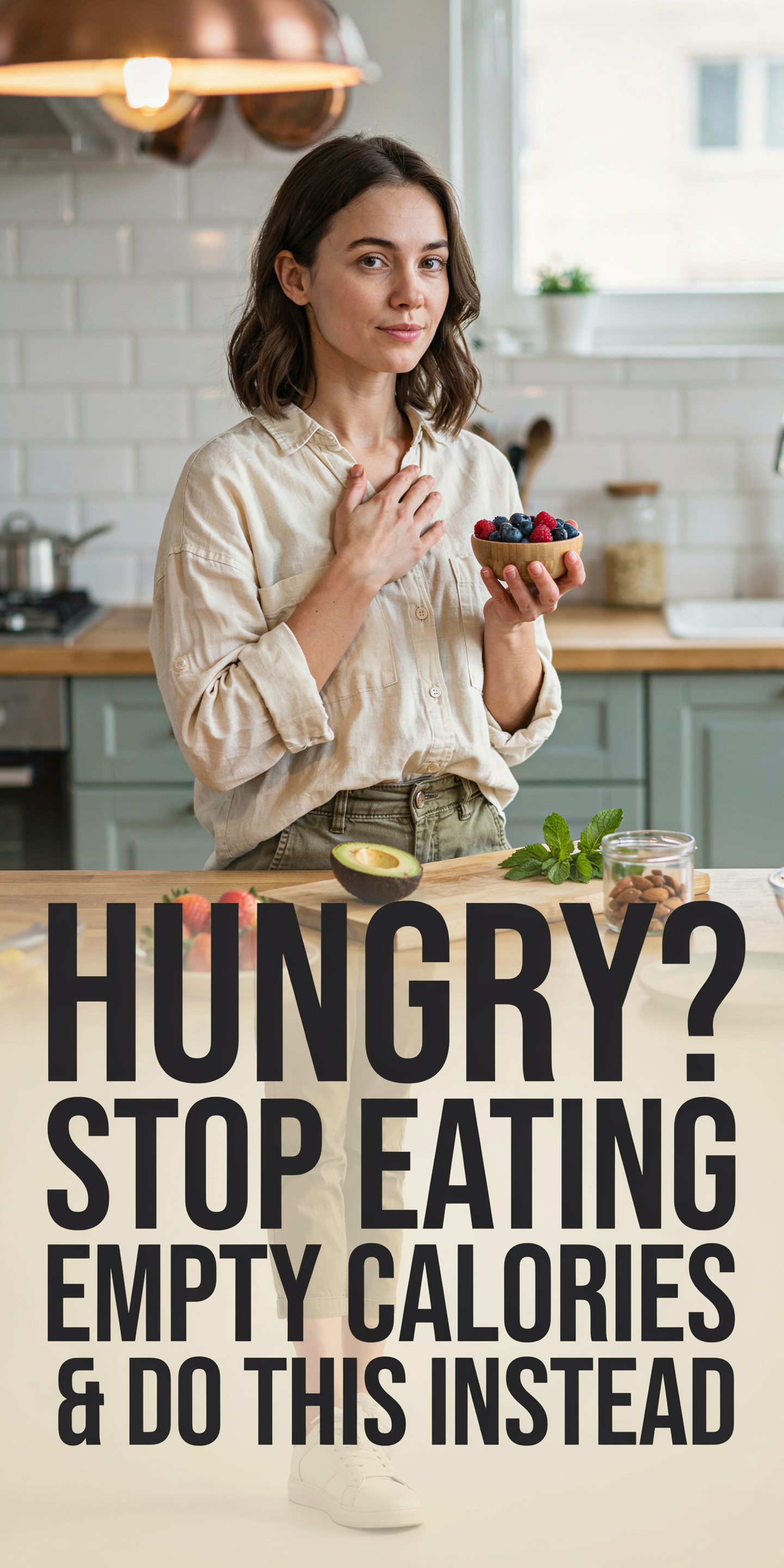
What Should I Eat If I’m Always Hungry? Stop Eating Empty Calories and Do This Instead
Feeling hungry all the time is frustrating. You eat, you snack, you drink calories — and yet your stomach is still rumbling. If you’re tired of empty calories that leave you unsatisfied and sabotaging your goals, this guide will help you understand why hunger persists and what to eat instead to feel full, energized, and satisfied. This article is practical, science-backed, and packed with recipes and meal ideas you can start using today.
Why am I always hungry? The basics of hunger and satiety
Hunger is more than just an empty stomach. It’s a complex mix of hormones, blood sugar, stomach volume, nutrients, habits, sleep, and emotions.
- Hormones: Ghrelin (the “hunger hormone”) increases appetite. Leptin and peptide YY signal fullness.
- Blood sugar: Rapid spikes and crashes from refined carbs create recurring hunger.
- Stomach stretch: Volume matters — more bulk (with low-calorie density foods) leads to more immediate fullness.
- Nutrient signals: Protein, fiber, and healthy fats send stronger satiety signals than simple carbs.
- Sleep and stress: Poor sleep and chronic stress increase cravings and ghrelin.
- Habits and cues: Patterns like snacking while watching TV or skipping breakfast create conditioned hunger.
Knowing these drivers helps you choose foods and habits that reduce constant hunger.
What are empty calories — and why they make you hungrier
Empty calories are foods or drinks that provide energy (calories) but little to no nutrients that promote satiety, such as:
- Sugary drinks (sodas, many juices)
- Refined baked goods (pastries, white bread)
- Candy, sweetened cereals
- Alcoholic drinks with mixers
Why they fail to satisfy:
– Lack of protein, fiber, and fat — the three macronutrients that slow digestion and signal fullness.
– Rapid rise and fall of blood sugar — leading to rebound hunger.
– Liquid calories bypass the stomach stretch signal — beverages often don’t register as filling.
Stop relying on these. Instead, choose foods that combine volume, protein, fiber, and healthy fats.
Principles to stop eating empty calories and stay full
Use these principles as your roadmap:
- Prioritize protein at each meal and snack.
- Add plenty of fiber-rich vegetables, fruits, and whole grains.
- Include healthy fats in moderation — they slow digestion and increase satisfaction.
- Favor low-energy-density foods (lots of water and fiber, fewer calories by volume).
- Opt for minimally processed foods to keep blood sugar stable.
- Hydrate, sleep well, and manage stress to control hunger hormones.
- Time meals and snacks sensibly — aim for balanced meals every 3–4 hours if needed.
- Use mindful eating to distinguish real hunger from boredom or emotions.
Hunger-busting foods to eat instead of empty calories (SEO-friendly list)
These foods help you feel satisfied longer. Incorporate many of them in meals and snacks.
- Eggs — high-quality protein and versatile.
- Greek yogurt — concentrated protein and probiotics.
- Cottage cheese — high-protein, low-carb option.
- Lean poultry and fish — satiating protein sources.
- Lentils and beans — plant protein + fiber.
- Quinoa and steel-cut oats — whole grains that digest slowly.
- Nuts and seeds — healthy fats and some protein (watch portions).
- Avocado — fiber and monounsaturated fat.
- Vegetables (broccoli, Brussels sprouts, leafy greens) — volume and fiber.
- Berries — fiber-rich fruit with lower sugar.
- Sweet potato — complex carbs with fiber and micronutrients.
- Tofu and tempeh — plant proteins for vegetarian diets.
- Hummus — chickpeas + healthy fat (olive oil).
- Popcorn (air-popped) — whole-grain volume snack.
- Water and unsweetened tea — stay hydrated, reduce false hunger.
Actionable strategies: what to swap, and how to build a filling plate
Swap these common empty-calorie choices for better alternatives:
- Soda -> Sparkling water with citrus and a pinch of salt
- White bread -> Whole-grain bread or sprouted grain bread
- Sugary snacks -> Greek yogurt + berries or an apple with nut butter
- Pastry -> Oat-based muffin with nuts and fruit (homemade)
- Chips -> Roasted chickpeas or air-popped popcorn
Build a satisfying plate:
– Fill half your plate with non-starchy vegetables.
– One-quarter with a quality protein.
– One-quarter with a whole grain or starchy vegetable.
– Add a small serving of healthy fat (olive oil, avocado, nuts).
Now, to make this practical, here are meal and snack ideas you can make today. Each is presented with ingredients (bulleted) and step-by-step instructions (numbered).
Meal and snack ideas (recipes) — quick, filling, and easy
- Greek Yogurt Protein Bowl
- Ingredients:
- 1 cup plain Greek yogurt (2% or full-fat)
- 1/2 cup mixed berries (fresh or frozen)
- 2 tbsp chopped nuts (almonds or walnuts)
- 1 tbsp chia seeds or ground flaxseed
- 1 tsp honey or maple syrup (optional)
- Instructions:
- Spoon Greek yogurt into a bowl.
- Top with berries and chopped nuts.
- Sprinkle chia seeds and drizzle honey if using.
- Stir and enjoy immediately.
- Hearty Lentil and Vegetable Soup
- Ingredients:
- 1 cup dried brown or green lentils, rinsed
- 1 tbsp olive oil
- 1 onion, diced
- 2 carrots, diced
- 2 celery stalks, diced
- 3 garlic cloves, minced
- 1 can (14 oz) diced tomatoes
- 6 cups low-sodium vegetable or chicken broth
- 2 cups chopped kale or spinach
- 1 tsp ground cumin, 1 tsp smoked paprika, salt and pepper to taste
- Instructions:
- Heat olive oil in a large pot over medium heat. Add onion, carrot, and celery; cook until softened (5–7 minutes).
- Add garlic and spices; cook 1 minute until fragrant.
- Add lentils, tomatoes, and broth. Bring to a boil, then reduce heat and simmer 25–30 minutes until lentils are tender.
- Stir in kale/spinach and cook 2–3 minutes until wilted. Adjust seasoning and serve.
- Chickpea and Avocado Salad (Protein + Fiber Snack)
- Ingredients:
- 1 can (15 oz) chickpeas, drained and rinsed
- 1 ripe avocado, diced
- 1/2 red onion, finely chopped
- Juice of 1 lemon
- 1 tbsp olive oil
- 2 tbsp chopped parsley or cilantro
- Salt and pepper to taste
- Instructions:
- Combine chickpeas, avocado, and red onion in a bowl.
- Drizzle lemon juice and olive oil over ingredients.
- Toss gently, add parsley, and season with salt and pepper.
- Serve on whole-grain toast or over mixed greens.
- Overnight Oats with Protein
- Ingredients:
- 1/2 cup rolled oats
- 1/2 cup milk or plant-based milk
- 1/2 cup plain Greek yogurt
- 1 scoop (about 20 g) protein powder (optional)
- 1 tbsp chia seeds
- 1/2 banana, sliced
- 1 tbsp nut butter
- Instructions:
- In a jar, combine oats, milk, yogurt, protein powder, and chia seeds.
- Stir well, then top with banana slices and nut butter.
- Cover and refrigerate overnight. Stir and eat cold or heat briefly.
- Salmon, Quinoa, and Roasted Veggie Bowl
- Ingredients:
- 4 oz cooked salmon (baked or pan-seared)
- 1/2 cup cooked quinoa
- 1 cup roasted vegetables (broccoli, bell peppers, zucchini)
- 1 tbsp olive oil
- Lemon wedge, salt and pepper
- Instructions:
- Roast vegetables tossed with olive oil, salt, and pepper at 425°F (220°C) for 20–25 minutes.
- Cook quinoa according to package directions.
- Cook salmon seasoned with salt and pepper until done (about 10–12 minutes in oven at 375°F or pan-seared 4–5 minutes per side).
- Assemble bowl with quinoa, roasted veggies, and salmon. Squeeze lemon over the top.
- Tofu Stir-Fry with Vegetables
- Ingredients:
- 8 oz extra-firm tofu, pressed and cubed
- 1 tbsp sesame or olive oil
- 2 cups mixed vegetables (snap peas, bell pepper, broccoli)
- 2 tbsp low-sodium soy sauce or tamari
- 1 tbsp rice vinegar, 1 tsp honey or maple syrup
- 1 clove garlic, minced, and 1 tsp grated ginger
- Instructions:
- Heat oil in a large skillet or wok. Add tofu and cook until golden on all sides; remove and set aside.
- Add vegetables to the pan and stir-fry 4–6 minutes until crisp-tender.
- Stir in garlic and ginger for 30 seconds, then add soy sauce, rice vinegar, and honey.
- Return tofu to the pan, toss to coat, and serve over brown rice or quinoa.
- Egg and Veggie Scramble (High-Protein Breakfast)
- Ingredients:
- 2–3 eggs (or egg whites)
- 1/2 cup chopped spinach
- 1/4 cup diced tomato
- 1/4 avocado, sliced
- 1 tsp olive oil or butter
- Salt and pepper to taste
- Instructions:
- Heat oil in a nonstick skillet over medium heat. Add spinach and tomato; cook 1–2 minutes.
- Whisk eggs with a pinch of salt and pepper, pour into skillet.
- Gently scramble until cooked through.
- Plate and top with avocado slices.
- Tuna and White Bean Salad
- Ingredients:
- 1 can tuna in water, drained
- 1/2 cup canned white beans (cannellini), drained and rinsed
- 1 tbsp olive oil
- Juice of 1/2 lemon
- 1 tbsp chopped capers (optional)
- 2 cups mixed greens
- Instructions:
- Combine tuna and white beans in a bowl.
- Add olive oil, lemon juice, and capers; mix gently.
- Serve over mixed greens or with whole-grain crackers.
- Cottage Cheese + Fruit Bowl
- Ingredients:
- 1 cup cottage cheese (2% or full-fat)
- 1/2 cup sliced peaches or pineapple
- 1 tbsp chopped nuts or seeds
- 1 tsp honey (optional)
- Instructions:
- Spoon cottage cheese into a bowl.
- Top with fruit and nuts.
- Drizzle with honey if desired and enjoy.
- Black Bean & Sweet Potato Wrap
- Ingredients:
- 1 small sweet potato, peeled and cubed
- 1/2 cup cooked black beans
- 1 whole-grain tortilla
- 1/4 cup shredded lettuce
- 2 tbsp salsa and 1 tbsp Greek yogurt (or sour cream)
- 1 tsp olive oil, salt and pepper
- Instructions:
- Toss sweet potato cubes with olive oil, salt, and pepper; roast at 400°F (200°C) for 20–25 minutes until tender.
- Warm the tortilla, then layer with sweet potato, black beans, lettuce, salsa, and Greek yogurt.
- Wrap and serve.
- Healthy Trail Mix (For On-the-Go Hunger)
- Ingredients:
- 1/2 cup unsalted almonds
- 1/4 cup pumpkin seeds
- 1/4 cup dried unsweetened cranberries
- 2 tbsp dark chocolate chips (optional)
- Instructions:
- Combine all ingredients in a small container.
- Portion into 1/4-cup servings to control calories.
- Grab a portion when you need a satisfying snack.
- Green Smoothie with Protein
- Ingredients:
- 1 cup unsweetened almond milk or milk of choice
- 1 scoop protein powder (about 20 g protein)
- 1 cup spinach or kale
- 1/2 banana or 1/2 cup frozen mango
- 1 tbsp almond butter or ground chia seeds
- Instructions:
- Add all ingredients to a blender.
- Blend until smooth and creamy.
- Pour into a glass and drink right away.
(Each of these ideas is designed to combine protein + fiber + healthy fats or volume from vegetables — the three pillars of lasting fullness.)
Sample day: A hunger-proof meal plan
- Breakfast: Egg and veggie scramble + whole-grain toast
- Mid-morning snack: Greek yogurt protein bowl
- Lunch: Salmon quinoa bowl with roasted vegetables
- Afternoon snack: Cottage cheese + fruit OR trail mix (portion-controlled)
- Dinner: Lentil and vegetable soup + side salad with olive oil vinaigrette
- Evening (if needed): Small apple with 1 tbsp nut butter
This plan emphasizes protein, fiber, and healthy fats spaced throughout the day to avoid long gaps that trigger overeating.
Tips for eating out and beating cravings
- Read menus for protein and vegetable-based options (grilled vs. breaded/fried).
- Ask for sauces/dressings on the side to reduce hidden calories and excess sugar.
- Choose vegetable-forward starters (salads, broth-based soups) to add volume before the main dish.
- Swap fries for a side salad or steamed vegetables.
- For sweets, share dessert or choose fruit-based options with a protein source (yogurt parfait).
- Keep a portion-control mindset: savor a small portion rather than grazing on empty calories.
Lifestyle habits that reduce constant hunger
- Sleep: Aim for 7–9 hours. Sleep loss raises ghrelin and lowers leptin.
- Hydration: Drink water throughout the day — thirst can masquerade as hunger.
- Stress management: Practice deep breathing, short walks, or mindfulness to prevent stress-eating.
- Regular meals: Balanced meals every 3–4 hours stabilize blood sugar and reduce impulsive snacking.
- Strength training: Build/maintain muscle to increase resting metabolic rate and improve appetite regulation.
When to see a professional
If you’re eating balanced meals and still extremely hungry, consider consulting:
– A registered dietitian for a personalized plan.
– A medical provider to rule out medical causes (hyperthyroidism, diabetes, medication side effects).
– A mental health professional if emotional eating or disordered eating patterns are present.
Conclusion
Being constantly hungry is more than a willpower problem — it’s often a sign that your diet and habits are delivering empty calories that fail to satisfy. By focusing on protein, fiber, healthy fats, and low-energy-density foods, and by adopting simple lifestyle changes (sleep, stress, hydration), you can stop chasing calories and start feeling fuller, longer. Use the recipes and meal ideas in this article to replace empty calories with satisfying meals and snacks. Start small: swap one empty-calorie snack for a protein- and fiber-rich option this week, and notice the difference in your hunger and energy. You can do this — and your body will thank you.