
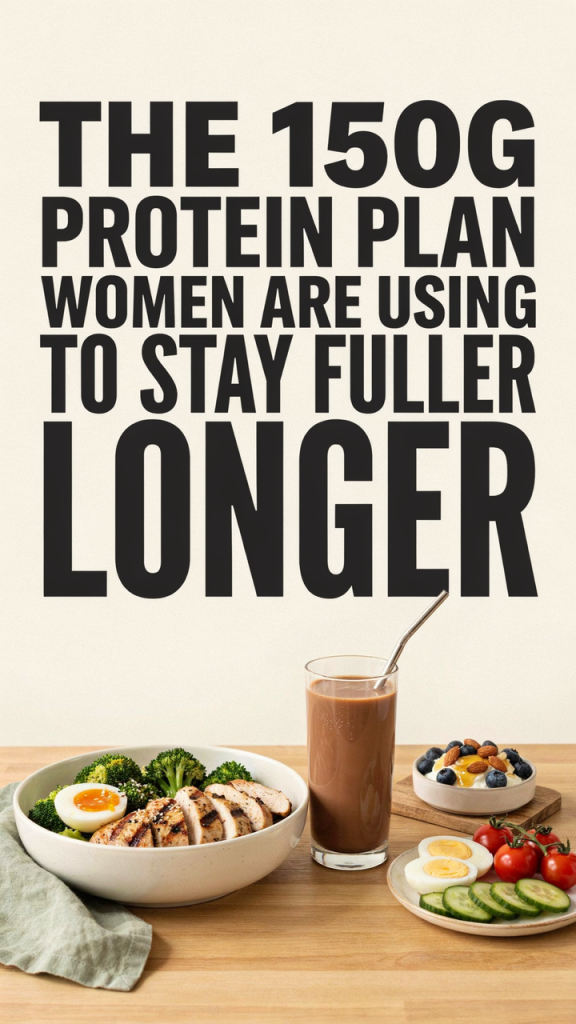
The 150g Protein Plan Women Are Using to Stay Fuller Longer
Eating for fullness isn’t about extreme restriction — it’s about smart, satisfying meals that keep hunger at bay and energy steady. For many women, aiming for roughly 150 grams of protein per day has become a practical strategy to increase satiety, preserve lean mass, support workouts, and reduce snacking driven by blood-sugar dips. This comprehensive guide explains why the 150g protein approach works, how to distribute that protein across the day, and gives fully practical meal ideas and recipes so you can follow a day (or week) that adds up cleanly and deliciously.
In this article you’ll find:
– Why higher protein increases fullness and how 150g fits into women’s needs
– Practical rules for hitting 150g without overcomplicating meals
– A sample 1-day meal plan with recipes (each includes ingredients and step-by-step instructions)
– Swap ideas, snack options, and grocery tips
– Safety, customization, and common FAQs
Whether you’re trying to lose fat, build/maintain muscle, or simply stop grazing throughout the day, the 150g protein plan gives you structure — and tasty choices — to stay fuller, longer.
Why 150 grams of protein?
Protein and satiety
Protein is the most filling macronutrient. Meals higher in protein:
– Slow gastric emptying and increase feelings of fullness
– Stimulate hormones that promote satiety (GLP-1, PYY)
– Help stabilize blood sugar when paired with fiber and healthy fats
Why 150g?
150g daily is not a magic number for every woman, but it’s a practical target for many active women, strength trainees, or those with higher lean body mass. To contextualize:
– For a 140 lb (64 kg) woman, 150g equals ~2.3 g/kg — higher than general RDA but useful when preserving muscle during weight loss or supporting heavy training.
– If you’re sedentary, 150g may be above your needs; if you lift regularly, it’s reasonable and beneficial.
Benefits beyond fullness
– Supports muscle repair and growth
– Preserves resting metabolic rate during caloric deficit
– Reduces cravings and late-night snacking
– Can improve body composition when paired with resistance training
How to structure your day: distribution and timing
Aim for even distribution
Instead of one giant protein meal, spread it across 4–6 eating opportunities. Goal ranges:
– Breakfast: 25–40g
– Mid-morning snack: 10–20g
– Lunch: 30–45g
– Afternoon snack: 10–20g
– Dinner: 30–40g
– Evening snack (optional): 5–15g
Combine protein with fiber and fat
Protein + fiber + healthy fats = stable blood sugar and longer-lasting fullness. Always include vegetables, whole grains, nuts, seeds, or avocado with meals where possible.
Protein quality matters
Prioritize complete proteins (meat, dairy, eggs, soy, whey) and combine plant proteins (beans + rice, hummus + whole grain pita) to make balanced amino acid profiles.
Sample day: the 150g Protein Plan (approximate protein totals)
Below is a practical, flavorful sample day that totals about 150g of protein. Each meal includes ingredients and instructions so you can recreate it easily.
Breakfast — Smoked Salmon & Egg White Omelette (≈35g protein)
Ingredients:
– 3 egg whites and 1 whole egg
– 3 oz (85 g) smoked salmon, sliced
– 1 cup baby spinach
– 1 tsp olive oil or cooking spray
– Salt and pepper to taste
– Fresh dill or chives, optional
– 1 small whole-grain toast (optional, adds ~4g protein)
Instructions:
1. Whisk the egg whites and whole egg together with a pinch of salt and pepper.
2. Heat a non-stick skillet over medium heat and add olive oil or cooking spray.
3. Sauté spinach until wilted (about 1–2 minutes).
4. Pour the egg mixture into the skillet and let set for 1–2 minutes.
5. Add smoked salmon slices on one half, fold the omelette, and cook another 30–60 seconds until eggs are set.
6. Slide onto a plate, garnish with dill or chives, and serve with whole-grain toast if desired.
Mid-Morning Snack — Greek Yogurt & Berry Parfait (≈15g protein)
Ingredients:
– 3/4 cup plain nonfat Greek yogurt (or plant + added protein if preferred)
– 1/3 cup mixed berries (fresh or frozen)
– 1 tbsp ground flaxseed or chia seeds
– Optional: 1 tsp honey or a few drops of vanilla
Instructions:
1. Spoon Greek yogurt into a bowl or portable container.
2. Top with berries and sprinkle ground flaxseed/chia seeds.
3. Stir gently and enjoy.
Lunch — Grilled Chicken & Quinoa Power Bowl (≈40g protein)
Ingredients:
– 5–6 oz (140–170 g) grilled chicken breast, sliced
– 1/2 cup cooked quinoa
– 2 cups mixed salad greens
– 1/4 cup cherry tomatoes, halved
– 1/4 cup cucumber, diced
– 1/4 avocado, sliced
– Dressing: 1 tbsp olive oil + 1 tbsp lemon juice + salt/pepper
Instructions:
1. Cook or grill chicken breast seasoned with salt/pepper until internal temperature reaches 165°F (74°C). Slice into strips.
2. Assemble salad greens, quinoa, tomatoes, cucumber, and avocado in a bowl.
3. Top with sliced chicken.
4. Whisk dressing ingredients and drizzle over the bowl. Toss and serve.
Afternoon Snack — Cottage Cheese & Almonds (≈15g protein)
Ingredients:
– 1/2 cup low-fat cottage cheese
– 8–10 raw almonds, roughly chopped
– Optional: cinnamon or a few slices of apple
Instructions:
1. Spoon cottage cheese into a bowl.
2. Top with chopped almonds and cinnamon or apple slices if using.
3. Mix and enjoy.
Dinner — Baked Salmon, Lentils & Roasted Veggies (≈35g protein)
Ingredients:
– 4 oz (115 g) salmon fillet
– 3/4 cup cooked lentils
– 1 cup broccoli florets
– 1 small sweet potato, cubed
– 1 tbsp olive oil
– Salt, pepper, and paprika or herbs to taste
– Lemon wedge for serving
Instructions:
1. Preheat oven to 400°F (205°C). Toss broccoli and sweet potato cubes with 1/2 tbsp olive oil, salt, and pepper, and spread on a baking sheet.
2. Bake vegetables for 20 minutes, flipping halfway.
3. Season salmon with salt, pepper, and paprika or herbs. Place salmon on the baking sheet (or separate sheet) and bake for 10–12 minutes until cooked through.
4. Warm lentils on the stovetop or microwave.
5. Serve salmon over a bed of lentils with roasted veggies and a squeeze of lemon.
Evening Snack — Casein or High-Protein Pudding (≈10g protein)
Ingredients:
– 1/2 scoop casein protein powder (or 1/2 cup Greek yogurt)
– 1/3 cup unsweetened almond milk (or milk of choice)
– 1 tbsp chia seeds
– Optional: cocoa powder or cinnamon for flavor
Instructions:
1. In a small bowl, whisk casein powder into almond milk until smooth (or use Greek yogurt).
2. Stir in chia seeds and optional flavorings.
3. Refrigerate for 10–15 minutes or longer until pudding-like. Stir and enjoy.
Total approximate protein for the day: 150g (individual proteins are approximate and will vary based on serving sizes and brands).
Meal swap ideas and quick high-protein snacks
Protein swaps (easy sub-ins)
– Swap chicken for turkey breast or firm tofu (similar protein per serving).
– Swap salmon for sardines, tuna, or tempeh.
– Replace cottage cheese with skyr or high-protein yogurt.
– Use whey/casein protein powders for quick protein boosts when needed.
Quick snacks to add protein without fuss
– 1 hard-boiled egg (6g)
– 1 string cheese (6–8g)
– 1 small can of tuna (20–25g)
– 1 scoop whey protein in water (20–25g)
– 1 cup edamame (17g)
– 1/2 cup hummus with raw veg (6–8g)
– 1 cup low-fat milk (8g)
(These can be added to adjust daily totals depending on hunger and activity.)
Grocery list for the plan (core items)
Pantry & fridge essentials
– Chicken breasts, salmon fillets, or other lean proteins
– Eggs and egg whites (or carton)
– Plain Greek yogurt and cottage cheese
– Whey and/or casein protein powder
– Quinoa, lentils, chickpeas
– Whole-grain bread or wraps
– Mixed salad greens, broccoli, spinach, sweet potatoes
– Berries, apples, avocados
– Nuts (almonds, walnuts) and seeds (chia, flax)
– Olive oil, lemon, basic herbs & spices
Buy fresh proteins and plan 2–3 cooking sessions per week to batch-cook chicken, lentils, and quinoa to streamline meal prep.
Tailoring the plan: calories, weight goals, and activity
Adjusting total protein
– If 150g feels high: aim for at least 0.8–1.2 g/lb of body weight (1.6–2.6 g/kg) as a range — pick a target you can sustain.
– If you’re gaining unwanted weight, reduce overall calories by trimming carbs/fats while keeping protein high to protect lean mass.
– If you’re not seeing energy or recovery improvements, increase carbs around workouts while keeping daily protein.
For active women and strength trainers
– 150g supports heavy lifting and recovery for many women. Pair with resistance training 2–5× weekly to convert that protein into muscle-preserving gains.
For weight loss
– High-protein meals reduce hunger and preserve muscle. Pay attention to total calories and portion sizes. Eating a high-protein diet is not a green light to overeat calorie-dense fats or carbs.
Safety, myths, and evidence
Kidney health and protein myths
– For healthy individuals, high protein diets (including 150g/day) are generally safe. Long-standing data shows no adverse kidney effects in people with normal renal function.
– If you have pre-existing kidney disease or other chronic conditions, consult your healthcare provider before adopting a high-protein plan.
Will too much protein turn to fat?
– Eating excess calories from any macronutrient can cause fat gain. Protein is also thermogenic and satiating, making excess calorie intake less likely — but still possible. Balance overall calories to your goals.
Meal prep tips to make 150g sustainable
Batch-cook proteins
Grill several chicken breasts, bake a tray of salmon, or cook a pot of lentils to portion into containers for the week.
Keep portable protein options handy
Hard-boiled eggs, single-serve Greek yogurts, canned tuna, and protein shakes are practical for busy days.
Use protein powders strategically
Whey or casein can bridge gaps quickly. Casein at night can help with overnight muscle repair and satiety.
Frequently Asked Questions
Q: Is 150g too much for women?
A: It depends on body size and activity. Active women and those strength training often benefit from higher protein. If you have underlying health issues, check with a clinician.
Q: Will I feel bloated on this plan?
A: If you’re increasing protein and fiber simultaneously, you might notice temporary bloating. Increase fiber gradually and drink plenty of water.
Q: Can I get 150g from plant-based foods?
A: Yes — but it requires careful planning and larger portions. Include high-protein plants: tempeh, seitan, edamame, lentils, beans, quinoa, hemp seeds, peas, and consider pea/protein blends.
Sample 3-day rotation (brief)
Day 1 (featured day)
– Breakfast: Smoked salmon & egg white omelette
– Snack: Greek yogurt parfait
– Lunch: Grilled chicken & quinoa bowl
– Snack: Cottage cheese & almonds
– Dinner: Baked salmon, lentils, roasted veggies
– Evening: Casein pudding
Day 2 (variation)
– Breakfast: Greek yogurt + protein granola + berries (35g)
– Snack: Edamame + apple (15g)
– Lunch: Turkey breast wrap with hummus + salad (40g)
– Snack: Protein shake (15g)
– Dinner: Beef stir-fry with broccoli + brown rice (35g)
– Evening: 1 string cheese (10g)
Day 3 (plant-forward)
– Breakfast: Tofu scramble + tempeh bacon (35g)
– Snack: Smoothie (pea protein + spinach + banana) (15g)
– Lunch: Lentil & quinoa bowl with roasted chickpeas (40g)
– Snack: Hummus + edamame (15g)
– Dinner: Seared tofu + edamame + soba noodles (35g)
– Evening: Greek-style plant yogurt (10g)
Adjust portions to reach ~150g.
Conclusion
A 150g protein plan isn’t about rigid rules — it’s about building consistently filling, nutrient-dense meals that support your energy, workouts, and appetite control. By spreading protein across the day, pairing it with fiber and healthy fats, and using simple, repeatable recipes (like the ones above), you can stay fuller longer and protect lean mass during weight loss or training.
Start by trying the sample day, tweak portion sizes to your appetite and activity level, and use the swap lists to keep things interesting. If you have medical concerns or kidney disease, check with your healthcare provider before changing your protein intake. Otherwise, embrace the plan confidently: better satiety, fewer cravings, and more strength — one protein-packed meal at a time.


