Oatmeal Bowls With 20–30 Grams of Protein
Introduction
Oatmeal is comfort food, pantry-staple, and one of the easiest ways to build a better breakfast. But traditional bowls — oats, a splash of milk, a bit of fruit — can fall short on protein, leaving you hungry before lunch. If your goal is sustained energy, improved recovery after workouts, or simply staying satisfied longer, aiming for 20–30 grams of protein per oatmeal bowl is a smart, achievable strategy.
In this post you’ll find science-backed reasons to boost protein, practical tips for hitting that 20–30 g target, and 10 tested, delicious oatmeal bowl recipes that each deliver roughly 20–30 grams of protein per serving. Each recipe includes a clear ingredients list and step-by-step instructions so you can start making high-protein oatmeal bowls today. Whether you’re vegetarian, vegan, training for performance, or just want a more filling breakfast, there’s a bowl here for you.
Why aim for 20–30 grams of protein per meal?
- Supports muscle maintenance and growth. Research shows that 20–30 g of high-quality protein per meal stimulates muscle protein synthesis in most adults.
- Enhances satiety. Protein is the most satiating macronutrient; higher protein breakfasts often reduce mid-morning snacking.
- Helps manage blood sugar. Combining protein with carbs slows glucose absorption and reduces glycemic spikes.
- Fits flexible dietary goals. For many people, 20–30 g per meal fits into daily protein targets (e.g., 1.2–2.0 g/kg/day for active adults).
How to hit 20–30 grams of protein in an oatmeal bowl
To reach 20–30 grams, combine a base of oats (about 1/2 cup dry) with one or two concentrated protein sources:
– Dairy: Greek yogurt, skyr, cottage cheese, quark, milk
– Protein powders: whey, casein, plant-based blends
– Plant proteins: silken tofu, soy milk, hemp hearts, nut butters, chia seeds, legumes
– Eggs or egg whites (stir-in or cooked oats)
A useful formula: 1/2 cup dry oats ≈ 5–6 g protein. Then add a protein-rich topping or mix-in that provides 15–25 g to reach the 20–30 g window.
Below are 10 complete oatmeal bowl recipes. Each lists ingredients, step-by-step instructions, and an approximate protein total per serving. Protein numbers are approximate — use nutrition labels for precise tracking.
High-Protein Oatmeal Bowl Recipes (each ~20–30 g protein)
1) Greek Yogurt Oatmeal Bowl — Creamy & Simple
Approximate protein: 26–28 g
Ingredients
– 1/2 cup (40–50 g) rolled oats
– 1 cup low-fat or skim milk (or unsweetened soy milk) — about 1 cup
– 1/2 cup (120–150 g) plain nonfat Greek yogurt
– 1/2 banana, sliced (optional)
– 1 tsp honey or maple (optional)
– Pinch of cinnamon
Instructions
1. Combine oats and milk in a small pot and cook over medium heat, stirring, until creamy (about 5 minutes). Or microwave 1 1/2–2 minutes, stirring once.
2. Remove from heat and stir in Greek yogurt until smooth and creamy.
3. Top with banana slices, a drizzle of honey, and a sprinkle of cinnamon.
4. Serve warm immediately.
Why it works: Greek yogurt adds a concentrated 14–17 g of protein while milk and oats contribute the rest.
2) Whey-Boosted Banana Oats — Quick Power Bowl
Approximate protein: 27–29 g
Ingredients
– 1/2 cup rolled oats
– 1/2 cup milk (dairy or soy)
– 1/2 cup water
– 1 scoop (about 20–24 g protein) whey protein powder (vanilla or unflavored)
– 1 small banana, mashed or sliced
– 1 tsp cinnamon
Instructions
1. Cook oats with milk and water until thick (stovetop or microwave).
2. Remove from heat and let cool slightly (to avoid denaturing flavor). Stir in whey protein until fully incorporated.
3. Mix in banana and cinnamon.
4. Serve warm with extra banana on top if desired.
Why it works: A single scoop of whey usually delivers the bulk of the protein, while oats and milk fill out the total.
3) Cottage Cheese Savory Oat Bowl — Hearty & Unexpected
Approximate protein: 24–26 g
Ingredients
– 1/2 cup rolled oats
– 1/2 cup cottage cheese (4% or low-fat)
– 1 tbsp hemp hearts
– 1/4 avocado, sliced
– Pinch of salt and black pepper
– Lemon zest or a squeeze of lemon (optional)
Instructions
1. Cook oats in water (or a splash of milk) until creamy. Season lightly with salt.
2. Stir in cottage cheese until evenly mixed and warm.
3. Top with hemp hearts, avocado slices, black pepper, and a squeeze of lemon if using.
4. Serve with a fork — this bowl is savory rather than sweet.
Why it works: Cottage cheese is a concentrated dairy protein; paired with hemp hearts it provides a complete protein profile and healthy fats.
4) Peanut Butter & Chia Protein Oats — Nutty and Filling
Approximate protein: 21–23 g
Ingredients
– 1/2 cup rolled oats
– 1/2 cup milk (dairy or soy)
– 2 tbsp natural peanut butter
– 2 tbsp chia seeds
– 1 tsp maple syrup or minced dates (optional)
Instructions
1. Combine oats and milk and cook until creamy.
2. Stir in peanut butter and chia seeds while warm so peanut butter loosens and chia starts to gel.
3. Sweeten lightly if desired and top with extra chopped nuts or a few banana slices.
4. Serve warm.
Why it works: Peanut butter and chia contribute concentrated protein and healthy fats, keeping the bowl within the 20–30 g range.
5) Tofu Silken & Hemp Oat Bowl — Vegan Protein Boost
Approximate protein: 24–27 g
Ingredients
– 1/2 cup rolled oats
– 150 g silken tofu (about 2/3 cup)
– 1/2 cup unsweetened soy milk
– 2 tbsp hemp hearts
– 1 tbsp maple syrup and 1 tsp vanilla (optional)
– Berries for topping (optional)
Instructions
1. Blend silken tofu with soy milk and vanilla until smooth (optional step for ultra-creamy texture).
2. Cook oats in a small pot with a splash of water until nearly done, then stir in blended tofu mixture.
3. Cook 1–2 more minutes until warmed through and creamy.
4. Stir in hemp hearts and top with berries and a drizzle of maple syrup if desired.
Why it works: Silken tofu and hemp hearts add a plant-based protein punch while keeping the bowl creamy and vegan-friendly.
6) Egg White Oats — Savory-Sweet Protein Oats
Approximate protein: 22–24 g
Ingredients
– 1/2 cup rolled oats
– 1 cup water or milk
– 4 large egg whites (liquid egg whites or separated from whole eggs)
– 1 tbsp peanut butter or almond butter
– Pinch of salt and cinnamon
Instructions
1. Bring water (or milk) to a simmer and stir in oats.
2. When oats are about half-cooked, slowly pour in egg whites while stirring constantly (this creates a custardy texture and cooks the egg whites).
3. Continue stirring until fully set and creamy, about 1–2 minutes.
4. Remove from heat and swirl in nut butter and cinnamon; serve warm.
Why it works: Egg whites are a lean, high-quality protein that blend seamlessly into cooked oats for a fluffy, protein-packed bowl.
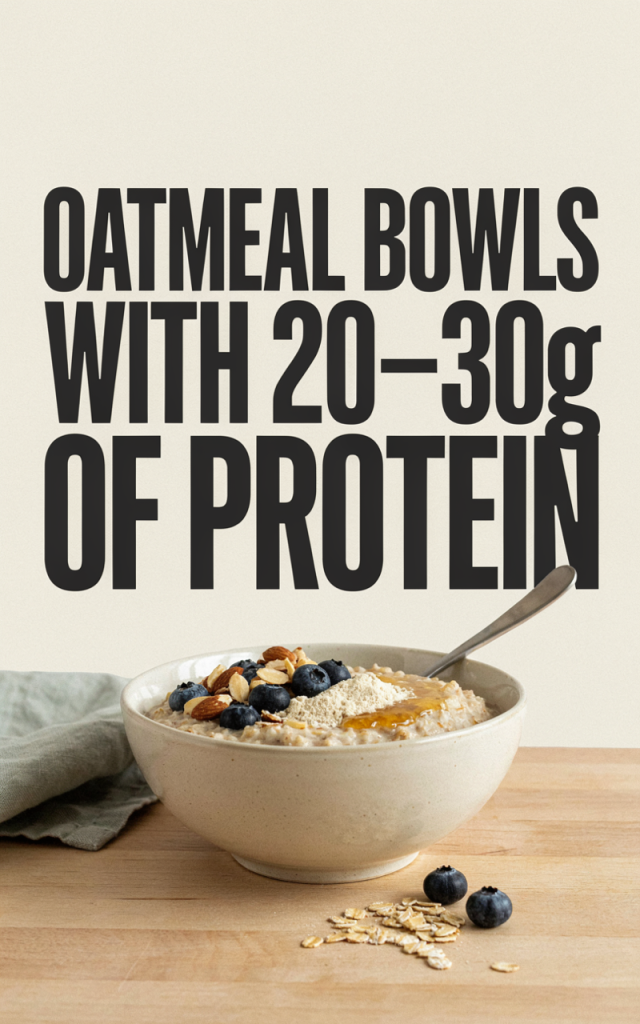
7) Skyr & Almond Oat Bowl — Nordic Muscle Breakfast
Approximate protein: 28–30 g
Ingredients
– 1/2 cup rolled oats
– 1/2 cup water
– 1 cup skyr or high-protein Icelandic yogurt (about 200 g)
– 1 tbsp almond butter
– 1 tbsp sliced almonds (optional)
– Berries or citrus zest for brightness
Instructions
1. Cook oats in water until creamy; cool slightly.
2. Stir in skyr until the texture is smooth and thick (you can also layer skyr on top instead).
3. Swirl almond butter through the bowl and sprinkle with sliced almonds and berries.
4. Serve chilled or at room temperature.
Why it works: Skyr typically has a very high protein content (similar to Greek yogurt), making it easy to reach ~30 g combined with oats and nuts.
8) Chocolate Hemp Banana Oats — Vegan & Satisfying
Approximate protein: 22–24 g
Ingredients
– 1/2 cup rolled oats
– 1 cup unsweetened soy milk
– 3 tbsp hemp hearts
– 1 tbsp unsweetened cocoa powder
– 1 small banana, mashed
– 1 tbsp almond or peanut butter (optional)
Instructions
1. Heat soy milk and cocoa powder until warm and slightly frothy.
2. Add oats and cook until thick.
3. Stir in mashed banana, hemp hearts, and nut butter if using.
4. Serve topped with banana slices and a sprinkle of extra hemp if desired.
Why it works: Hemp hearts plus soy milk supply plant-based protein; cocoa and banana make it feel indulgent without overshooting the protein target.
9) Quark & Berry Oat Bowl — Tangy & Protein-Dense
Approximate protein: 23–25 g
Ingredients
– 1/2 cup rolled oats
– 1/2 cup quark (or thick cottage cheese/quark alternative)
– 1/2 cup milk or water for cooking
– 1 tbsp chia seeds
– 1/2 cup mixed berries
– 1 tsp lemon zest (optional)
Instructions
1. Cook oats in milk or water until creamy, then let cool briefly.
2. Stir in quark until evenly mixed.
3. Fold in chia seeds and top with berries and lemon zest.
4. Serve chilled or at room temperature.
Why it works: Quark is high in protein and blends into oats for a mousse-like texture that keeps the bowl satisfying.
10) Overnight Yogurt & Almond Oats — Make-Ahead Protein
Approximate protein: 21–24 g
Ingredients
– 1/2 cup rolled oats
– 1/2 cup plain Greek yogurt
– 1/2 cup milk (or unsweetened almond/soy milk)
– 2 tbsp sliced almonds
– 1 tsp honey or maple (optional)
– 1/4 cup diced fruit (optional)
Instructions
1. Combine oats, yogurt, and milk in a jar or bowl and stir until evenly mixed.
2. Top with almonds and fruit if using. Seal and refrigerate overnight (6–8 hours).
3. In the morning, stir and add a splash more milk if needed. Sweeten to taste and enjoy cold.
Why it works: The combo of Greek yogurt and milk provides concentrated protein with minimal morning prep.
Tips to customize and fine-tune protein (and calories)
- Swap dairy for plant milk: Soy milk gives more protein than almond or oat milk.
- Adjust protein powder: A half-scoop of whey (or plant powder) can nudge a bowl into the 20–30 g zone without affecting texture.
- Use concentrated options: Skyr, Greek yogurt, quark, and cottage cheese are efficient ways to increase protein with minimal volume.
- Add seeds and nuts strategically: Hemp hearts, chia, and nut butters provide protein plus healthy fats — useful if you want calorie density as well.
- For athletes: add an extra 10–20 g protein after workouts if needed.
- For weight loss: use low-fat dairy and control nut/seed portions; protein helps satiety but fats add calories quickly.
Meal prep and storage
- Overnight oats last 3–4 days in the fridge. Stir before serving; add fresh toppings on day of eating.
- Cooked oat bowls with dairy mixed in (Greek yogurt, cottage cheese) are best eaten within 24–48 hours for texture and freshness.
- If using egg whites in oats, store in the fridge for up to 24 hours and reheat gently to avoid rubbery texture.
- Freeze leftover cooked oats in portions (without fresh fruit) for up to 1 month; thaw in fridge overnight and reheat.
Common questions (FAQ)
Q: Will adding protein powder make the oatmeal taste chalky?
A: It can, depending on the powder. Use a flavor that complements the bowl (vanilla or chocolate), mix in after cooling slightly, or blend with yogurt/milk first for smoother integration.
Q: Can I mix and match ingredients across recipes?
A: Absolutely. The recipes are modular; combine tofu with whey (if you’re not vegan), or switch skyr for cottage cheese. Just keep an eye on total protein if you’re tracking.
Q: Are these bowls suitable for weight loss?
A: Yes. Protein increases satiety, and these bowls can be portion-controlled for weight loss. Choose low-fat dairy and watch nut/seed quantities to control calorie intake.
Q: How precise are the protein estimates?
A: Estimates are approximate using common serving sizes. For clinical precision, use the nutrition label of your ingredients and a food tracker.
Conclusion
Oatmeal doesn’t have to be low-protein or boring. With simple swaps and smart add-ins — Greek yogurt, cottage cheese, tofu, protein powder, hemp hearts, egg whites — you can craft a filling, balanced oatmeal bowl that provides 20–30 grams of protein and fits your taste and dietary preferences. Try one of the 10 recipes above, experiment with flavors, and use the customization tips to make a go-to bowl that powers your morning, supports your training, and keeps you satisfied until your next meal.
Start with your favorite base, pick a reliable protein source, and fine-tune the texture and flavors. With a little prep and creativity, high-protein oatmeal bowls can become your day’s best habit.