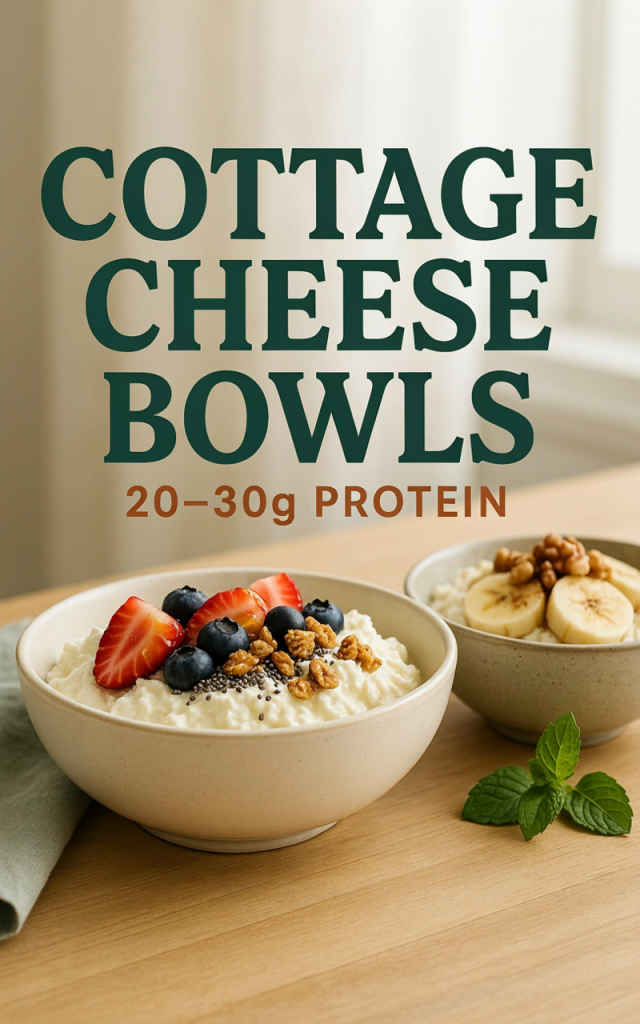
Cottage Cheese Bowls With 20–30 Grams of Protein
Cottage cheese is one of the most underrated high-protein foods in a healthy eating toolbox. It’s creamy, versatile, affordable, and — best of all — naturally packed with casein protein that digests slowly and helps keep you full between meals. If you want simple, satisfying bowls that deliver a targeted 20–30 grams of protein (perfect for snacks, breakfasts, post-workout refuels, or light lunches), cottage cheese bowls are an excellent option.
In this post you’ll find:
– Why cottage cheese is a great protein base
– How to hit 20–30 grams of protein per bowl (portion math and tips)
– 10 recipe ideas — each one explicitly listed and designed to fall between 20–30 grams of protein per serving
– Practical variations, meal-prep advice, and answers to common questions
Read on for practical, flavor-forward cottage cheese bowls you can make in minutes.
Why cottage cheese makes such a great protein base (H2)
- High protein density: A typical 1-cup serving (about 226 g) of 2% cottage cheese supplies roughly 25–28 grams of protein — enough on its own to meet the 20–30 g target for many bowls.
- Slow-digesting casein: The dominant protein in cottage cheese is casein, which forms a gel in the stomach and provides a slower, steadier amino-acid release than whey — great for satiety.
- Mild, adaptable flavor: Cottage cheese pairs equally well with sweet toppings (fruit, honey, nuts) and savory add-ins (smoked fish, herbs, veggies).
- Nutrients beyond protein: It’s also a source of calcium, B vitamins, and phosphorus.
How to plan bowls that deliver 20–30 grams of protein (H2)
A few simple rules:
– Base math: Use cottage cheese as the anchor. 1 cup ≈ 27 g protein; 3/4 cup ≈ 20 g; 1/2 cup ≈ 13–14 g. Adjust quantity to make room for extra add-in proteins.
– Add lean proteins in measured amounts: Small amounts of tuna, smoked salmon, turkey, or seeds add protein without huge volume.
– Use concentrated protein boosters sparingly: Nut butters, hemp seeds, pumpkin seeds, or a small scoop of protein powder will push totals quickly.
– Keep the total protein per bowl between 20 and 30 g. I provide approximate protein totals for each recipe below.
Quick tips to control protein totals (H2)
- Want the lower end (~20 g)? Use 3/4 cup cottage cheese and avoid additional concentrated protein add-ins.
- Want the higher end (~28–30 g)? Use a full cup of cottage cheese and/or add a modest protein booster like 1 tbsp hemp seeds or 1 hard-boiled egg.
- If using protein powder, measure a half or full scoop and factor its protein into the total.
- Use a kitchen scale for accuracy when you’re counting macros.
Recipes included (H2)
Below are the 10 recipe ideas covered in full detail. Each is crafted to land within 20–30 grams of protein per serving (approximate protein listed with each recipe). Every recipe includes an ingredients list (bulleted) and step-by-step instructions (numbered).
Recipe list (explicit):
1. Berry + Pumpkin Seed Cottage Cheese Bowl (approx. 25 g protein)
2. Savory Smoked Salmon & Cucumber Cottage Cheese Bowl (approx. 24 g protein)
3. Peanut Butter Banana Cottage Cheese Bowl (approx. 24 g protein)
4. Mediterranean Turkey & Olive Cottage Cheese Bowl (approx. 23–24 g protein)
5. Tuna & Avocado Cottage Cheese Bowl (approx. 26 g protein)
6. Chocolate Cherry Protein Cottage Cheese Bowl (approx. 27 g protein)
7. Southwestern Black Bean Cottage Cheese Bowl (approx. 23–24 g protein)
8. Tropical Pineapple & Almond Butter Cottage Cheese Bowl (approx. 23–24 g protein)
9. Egg & Herb Savory Cottage Cheese Bowl (approx. 25–27 g protein)
10. Green Power Hemp & Spinach Cottage Cheese Bowl (approx. 26 g protein)
1) Berry + Pumpkin Seed Cottage Cheese Bowl (approx. 25 g protein) (H3)
Ingredients:
– 3/4 cup cottage cheese (≈ 20 g protein)
– 1/2 cup mixed berries (strawberries, blueberries, raspberries)
– 2 tablespoons pumpkin seeds (pepitas) (≈ 5 g protein)
– 1 teaspoon honey or maple syrup (optional)
– Pinch of cinnamon (optional)
Instructions:
1. Spoon the cottage cheese into a bowl.
2. Scatter the mixed berries evenly over the cottage cheese.
3. Sprinkle the pumpkin seeds on top and dust with cinnamon if using.
4. Drizzle honey or maple syrup if you want a touch of sweetness.
5. Stir a little as you eat, or enjoy in layers. Serve immediately.
Notes: This bowl balances fresh fruit and crunchy seeds for texture and antioxidants.
2) Savory Smoked Salmon & Cucumber Cottage Cheese Bowl (approx. 24 g protein) (H3)
Ingredients:
– 1/2 cup cottage cheese (≈ 13.5 g protein)
– 2 oz smoked salmon, flaked (≈ 11 g protein)
– 1/2 small cucumber, sliced
– 1 tablespoon capers
– Fresh dill, chopped
– Freshly ground black pepper
– Lemon wedge
Instructions:
1. Place the 1/2 cup cottage cheese in the center of your bowl.
2. Arrange the cucumber slices around or on top of the cottage cheese.
3. Flake the smoked salmon over the cottage cheese.
4. Scatter capers and chopped dill, then finish with a squeeze of lemon and black pepper.
5. Mix lightly or eat by spoonfuls for a savory, satisfying bowl.
Notes: Keeps well in a sealed container for a few hours — add dill at service for fresh flavor.
3) Peanut Butter Banana Cottage Cheese Bowl (approx. 24 g protein) (H3)
Ingredients:
– 3/4 cup cottage cheese (≈ 20 g protein)
– 1 small banana, sliced
– 1 tablespoon natural peanut butter (≈ 4 g protein)
– 1 teaspoon cacao nibs or dark chocolate shavings (optional)
Instructions:
1. Place the cottage cheese in a bowl and top with banana slices.
2. Dollop the peanut butter on top or swirl it into the cottage cheese.
3. Sprinkle cacao nibs or chocolate if you want a richer taste.
4. Mix to combine textures and flavors before digging in.
Notes: Swap peanut butter for almond butter; adjust peanut butter to control fat and calories.
4) Mediterranean Turkey & Olive Cottage Cheese Bowl (approx. 23–24 g protein) (H3)
Ingredients:
– 1/2 cup cottage cheese (≈ 13.5 g protein)
– 2 oz sliced lean turkey breast (≈ 10 g protein)
– 6–8 halved cherry tomatoes
– 6 kalamata olives, halved
– 1 tablespoon chopped fresh parsley
– 1 teaspoon olive oil
– Freshly ground black pepper
Instructions:
1. Put the cottage cheese into your bowl.
2. Layer sliced turkey breasts over the cottage cheese.
3. Add cherry tomatoes and halved kalamata olives.
4. Drizzle with olive oil and sprinkle parsley and pepper.
5. Toss gently or enjoy layered — perfect for a savory, Mediterranean-inspired meal.
Notes: Choose a low-sodium turkey if you’re watching salt.
5) Tuna & Avocado Cottage Cheese Bowl (approx. 26 g protein) (H3)
Ingredients:
– 1/2 cup cottage cheese (≈ 13.5 g protein)
– 2 oz canned tuna in water, drained (≈ 13 g protein)
– 1/4 medium avocado, diced
– 1 tablespoon finely chopped red onion
– 1 teaspoon lemon juice
– Salt and pepper to taste
Instructions:
1. Spoon cottage cheese into a bowl.
2. Flake the drained tuna and place on top of the cottage cheese.
3. Add diced avocado and sprinkle with red onion.
4. Squeeze lemon juice over the bowl and season with salt and pepper.
5. Gently mix and serve. Eat with whole-grain crackers or on its own.
Notes: Canned tuna is an excellent protein-concentrated add-in while keeping bowls light.
6) Chocolate Cherry Protein Cottage Cheese Bowl (approx. 27 g protein) (H3)
Ingredients:
– 3/4 cup cottage cheese (≈ 20 g protein)
– 1/2 cup frozen or fresh cherries, pitted
– 2 tablespoons hemp seeds (≈ 7 g protein)
– 1 teaspoon unsweetened cocoa powder (optional)
– Drizzle of maple syrup or stevia to taste
Instructions:
1. Add cottage cheese to a bowl and top with cherries.
2. Sprinkle hemp seeds evenly and dust with cocoa powder for chocolate notes.
3. Drizzle with a little maple syrup if desired.
4. Stir to combine or keep layered for a pretty presentation.
Notes: Hemp seeds add a pleasant nuttiness plus plant-based protein and omega-3s.
7) Southwestern Black Bean Cottage Cheese Bowl (approx. 23–24 g protein) (H3)
Ingredients:
– 1/2 cup cottage cheese (≈ 13.5 g protein)
– 1/2 cup black beans (drained and rinsed) (≈ 7.5 g protein)
– 2 tablespoons corn (fresh or thawed frozen)
– 1 tablespoon chopped cilantro
– 1 tablespoon salsa
– Sprinkle of chili powder or smoked paprika
Instructions:
1. Place cottage cheese in a bowl.
2. Spoon black beans and corn on top.
3. Add salsa and sprinkle cilantro and chili powder.
4. Mix gently. Serve with a lime wedge if desired.
Notes: This bowl is fiber-forward and packs plant protein with a Southwestern flavor profile.
8) Tropical Pineapple & Almond Butter Cottage Cheese Bowl (approx. 23–24 g protein) (H3)
Ingredients:
– 3/4 cup cottage cheese (≈ 20 g protein)
– 1/3 cup fresh pineapple chunks
– 1 tablespoon almond butter (≈ 3.5 g protein)
– 1 tablespoon flaked coconut (optional)
– Lime zest (optional)
Instructions:
1. Spoon cottage cheese into a bowl and top with pineapple.
2. Warm the almond butter slightly if you prefer drizzle consistency, then drizzle over the pineapple.
3. Sprinkle coconut flakes and a little lime zest for brightness.
4. Stir lightly and enjoy.
Notes: For a tropical twist with slightly more protein, add a tablespoon of hemp seeds (+3–4 g).
9) Egg & Herb Savory Cottage Cheese Bowl (approx. 25–27 g protein) (H3)
Ingredients:
– 1/2 cup cottage cheese (≈ 13.5 g protein)
– 1 hard-boiled egg, chopped (≈ 6 g protein)
– 1 oz thinly sliced turkey or chicken breast (≈ 5 g protein)
– 1 tablespoon chopped chives or scallions
– Freshly ground black pepper
– Optional: pinch of smoked paprika
Instructions:
1. Add cottage cheese to a bowl.
2. Chop the hard-boiled egg and scatter on top.
3. Layer on the sliced turkey or chicken.
4. Sprinkle chives, top with pepper and smoked paprika if using.
5. Mix and eat as a full-flavored savory breakfast or light lunch.
Notes: This bowl is highly customizable — replace turkey with smoked salmon for a different flavor (adjust protein math).
10) Green Power Hemp & Spinach Cottage Cheese Bowl (approx. 26 g protein) (H3)
Ingredients:
– 3/4 cup cottage cheese (≈ 20 g protein)
– 2 tablespoons hemp seeds (≈ 7 g protein)
– 1/2 cup baby spinach, chopped
– 1 tablespoon lemon juice
– Salt and pepper to taste
Instructions:
1. Combine cottage cheese and chopped spinach in a bowl.
2. Add hemp seeds and drizzle lemon juice over the mixture.
3. Season with salt and pepper and give it a good stir so spinach wilts slightly into the dairy.
4. Serve as a nutrient-dense savory bowl or with rye crisps.
Notes: This bowl is packed with plant-based fats, minerals, and extra protein from hemp.
Variations and swaps to control calories, fat, and protein (H2)
- Lower-calorie: Use low-fat cottage cheese and reduce nut/seed toppings.
- Higher-satiety: Keep full-fat or 2% cottage cheese and add healthy fat (nuts, avocado).
- Vegetarian boost: Add hemp seeds, pumpkin seeds, Greek yogurt, or a small scoop of plant protein powder.
- Gluten-free: All bowls are naturally gluten-free—watch store-bought add-ins (salsa, deli turkey) for hidden gluten.
- Dairy-free alternative: Not applicable — if you need dairy-free, use a high-protein soy or pea-based yogurt (but note protein profile differs).
Meal prep and storage tips (H2)
- Assemble bowls the morning you plan to eat them for best texture. If prepping ahead, store wet ingredients separately (e.g., add avocado, nuts, or crunchy seeds at service).
- Pre-portion cottage cheese into single-serving containers (3/4 cup or 1/2 cup) to make assembly fast.
- Cooked proteins like turkey slices or canned tuna store well in airtight containers for 3–4 days in the fridge.
- For travel: Use an insulated lunch box with a cold pack to keep cottage cheese at safe temps.
Frequently asked questions (H2)
Q: How strict are the protein estimates?
A: The protein numbers in each recipe are approximate, based on common nutrition values (1 cup cottage cheese ≈ 25–28 g protein). Exact values vary by brand and cottage cheese fat level. Use a nutrition label or kitchen scale for precise tracking.
Q: What kind of cottage cheese should I buy?
A: Choose the percentage (0%, 2%, 4%) based on your calorie and fat goals. For creamier texture, go 2% or 4%. Check sodium levels if you’re salt-sensitive (some brands are low-sodium).
Q: Can I use Greek yogurt instead?
A: Yes, plain Greek yogurt has a similar protein punch; substitute gram-for-gram, but note flavor and texture differences.
Q: Are seeds a good protein source?
A: Yes — hemp, pumpkin, and chia seeds add concentrated protein plus healthy fats and micronutrients.
Final tips and serving suggestions (H2)
- Balance your bowl with texture: creamy cottage cheese + crunchy seeds/nuts + fresh fruit/veggies = satisfying bite.
- Use bright acids (lemon, lime, vinegar) for savory bowls — they bring out cottage cheese’s flavor.
- If you want exact macros, keep a log using the brand’s nutrition info and a food scale.
- Treat these bowls as templates — once you know the math, swap ingredients while keeping protein goals in mind.
Conclusion (H2)
Cottage cheese bowls are a fast, flexible, and delicious way to get a targeted 20–30 grams of protein in one sitting. Whether you prefer sweet or savory, there’s a bowl here to match your cravings and nutritional goals — from berry-and-pumpkin seed breakfasts to savory smoked-salmon or tuna-packed lunches. Use the portion guidelines and recipe templates above to create balanced, satisfying meals in minutes. Start by trying one new bowl this week; once you find your favorites, you’ll have a go-to collection of high-protein, nutrient-rich meals that support energy, recovery, and fullness throughout the day.
Get creative, keep the protein math in mind, and enjoy the creamy simplicity of cottage cheese bowls — fueling your day without fuss.