The Lymph Drainage Routine For A Flatter Stomach: A Gentle Guide To Reduce Bloating And Improve Tone
Bloating and a soft midsection are two of the most common complaints we hear, and often the first areas people try to fix with diets, supplements, or endless core workouts. What many overlook is the role of the lymphatic system in fluid balance, digestion, and the appearance of the belly. Lymph drainage is a gentle, accessible practice that supports drainage of excess interstitial fluid, reduces superficial puffiness, and can complement our nutrition and movement efforts for a visibly flatter stomach. In this guide we’ll explain what lymphatic drainage is, who should approach it with caution, how to prepare safely, and give you a precise 10‑minute routine you can use daily. The moves are simple, evidence‑informed, and designed to be gentle enough for most people while still producing noticeable results when done consistently.
What Lymphatic Drainage Is And How It Reduces Belly Bloat
The lymphatic system is a low‑pressure, valved network of vessels and nodes that collects excess fluid, proteins, fats, and cellular debris from tissues and returns them to the bloodstream. Unlike the circulatory system, it doesn’t have a central pump: instead, lymph moves through gentle pressure gradients created by breathing, skeletal muscle contractions, and small intrinsic contractions of the lymph vessels themselves. When lymph flow slows, due to sedentary behavior, inflammation, or tight clothing, fluid can accumulate in the interstitial spaces, producing the puffiness and bloated sensation we often notice around the abdomen.
Lymphatic drainage, or manual lymphatic drainage (MLD), uses light, rhythmic strokes to stimulate superficial lymphatic vessels and direct fluid toward the major lymph node basins (neck, axillae, and groin). The technique is different from deep tissue massage: it should be gentle, non‑painful, and focused on the direction of lymph flow. When we apply targeted sequences across the torso and abdomen, we encourage movement of trapped fluid and support intestinal motility indirectly by reducing tissue tension around the digestive organs.
The result is twofold: first, a reduction in superficial fluid and the visual impression of a flatter midsection: second, improved comfort, less tightness and a softer abdomen. It’s important to be realistic: lymph drainage won’t replace fat loss from caloric deficit or change visceral fat deep around the organs. Instead, it addresses the transient component of belly fullness, the kind that responds quickly when we remove excess interstitial fluid and promote better digestive flow. Done consistently and paired with hydration, movement, and breathing work, lymph drainage can shorten the timeline to visible improvements and make our midsection feel lighter.
Who Should Do This Routine — And Who Should Modify Or Avoid It
This routine is designed for generally healthy adults who want a gentle, daily practice to reduce bloating and support tissue tone. We recommend it for people who notice periodic abdominal puffiness after meals, long travel, or sedentary days: for those who have a bloated sensation related to fluid retention rather than pain: and for active people who want a short recovery tool to include before or after workouts.
But, there are important contraindications and situations where modification is necessary. We should not perform MLD when any of the following apply unless cleared by a healthcare provider:
- Acute infection (fever, cellulitis, urinary tract infection). Encouraging lymph flow during active infection can theoretically spread pathogens.\
- Known or suspected blood clots (deep vein thrombosis) or recent pulmonary embolism.\
- Active cancer without permission from the treating oncology team, lymphatic manipulation can be controversial in this context.\
- Congestive heart failure in unstable or decompensated states, increasing fluid return to circulation can stress the heart.\
- Significant abdominal surgery within the last 6–12 weeks unless cleared by the surgeon.\
- Severe kidney or liver disease affecting fluid handling.
Pregnancy: We can use a modified, gentle approach during pregnancy but should avoid deep abdominal pressure. Focus on neck, supraclavicular, diaphragmatic, and lateral trunk strokes, and consult an obstetric provider if there’s any concern. For people with lymphedema of the trunk or limbs, specialized MLD from a certified therapist is preferable. If we have chronic conditions or complex medical histories, we’ll check with our healthcare team before starting. When in doubt, err on the side of gentle, observe how our body responds, and pause if anything feels off.
Preparation And Safety Checklist Before You Start
A short checklist keeps the routine safe and effective. Before we begin, we want to set up the right environment and attend to a few simple safety points.
Environment and positioning:
- Find a warm, quiet place where you can lie on your back comfortably for 10–15 minutes. A yoga mat or a firm bed works well.\
- Use a small pillow under the knees to relax the lower back.\
- Wear loose clothing or perform the routine with light oil or lotion so our hands glide smoothly.
Hydration and timing:
- Drink a glass of water 10–15 minutes before starting. Lymphatic flow improves when we’re well hydrated.\
- Avoid heavy meals right before the routine. Light snacks are fine: ideally, wait 30–60 minutes after a full meal.\
- Perform the routine daily at a consistent time, morning to reduce overnight fluid shifts or evening to settle after a long day. Either is fine as long as we’re consistent.
Tools and hand care:
- Use a light, unscented oil (grapeseed, jojoba) or a lotion that allows smooth, continuous strokes. Avoid heavy creams that drag.\
- Keep nails short and hands warm to prevent discomfort.\
- Our touch should be light, about the pressure you’d use to move the top layer of skin without compressing deeper tissue. If someone else is doing the routine for us, they should be trained in the gentle pressure cues.
Safety cues to monitor:
- The strokes should never cause pain. If we feel pain, numbness, or significant discomfort, we’ll stop and reassess.\
- Mild pulling or a pleasant release is okay: sharp or radiating pain is not.\
- If we notice sudden swelling, redness, warmth, or fever after the routine, we’ll stop and contact a clinician.
Pre‑routine breathing warm‑up:
- Take five slow diaphragmatic breaths to encourage central lymph flow, inhale through the nose for 4 seconds, hold 1–2 seconds, exhale slowly for 6–8 seconds. This primes the thoracic duct and central nodes and improves the effectiveness of the subsequent strokes.
With the basics ready and safety checks complete, we’ll move into the 10‑minute routine. The structure follows an order: clear central drainage first, then move fluid from the abdomen toward those drainage points, working from central to peripheral and finishing with a light sweep and hydration cue.
The 10‑Minute Lymph Drainage Routine For A Flatter Stomach
This routine takes about 10 minutes and is broken into five focused steps. We recommend practicing it daily for at least two weeks to notice consistent changes in bloating and abdominal softness. The sequence emphasizes gentle, rhythmic pressure directed toward the nearest lymphatic node basins and integrates breathing to maximize central drainage. Keep strokes slow (about 2–3 seconds per stroke) and repetitive, 8–12 repetitions per stroke area unless otherwise noted.
Before starting each step, remind ourselves to breathe diaphragmatically and maintain a light, skin‑level touch. If we lose the rhythm, pause, re‑center with a breath, and continue. Below are detailed, practical cues for each step along with common mistakes to avoid.
Step 1: Stimulate Central Drainage With Neck And Supraclavicular Strokes
Why start here: The thoracic duct and right lymphatic duct drain into the venous system at the base of the neck, near the clavicles. Clearing these central outflow points first creates a receptive pathway for fluid we’ll move from the abdomen.
Execution:
- Position: Lie on our back with knees bent and feet flat. Relax shoulders and neck.\
- Hand placement: Use both hands, palms cupped slightly. Place fingertips at the supraclavicular area (just above and lateral to the clavicle).\
- Motion: Using very light pressure, sweep from lateral to medial across the supraclavicular fossa toward the sternocleidomastoid insertion, each stroke should last about 2–3 seconds. Repeat 8–12 times on each side.\
- Front neck sweep: Place hands at the base of the neck (above the collarbones) and use gentle downward strokes toward the clavicular notch, again 8–12 times.
Tips and cautions:
- Keep pressure gentle: the goal is skin movement and stimulation of superficial lymphatics, not muscle compression.\
- If we have neck pain or cervical spine issues, limit range and focus on very small, superficial strokes or skip this step until checked by a clinician.\
- We should feel a calming, rhythmic quality: if we feel lightheaded, pause and breathe slowly until comfortable.
Step 2: Combine Diaphragmatic Breathing With Gentle Abdominal Sweeps
Why this helps: The diaphragm acts as a powerful driver of lymphatic return in the thoracic cavity. Coordinating gentle abdominal sweeps with diaphragmatic breathing amplifies pressure changes and moves fluid toward central channels.
Execution:
- Position: Lie supine with one hand on the lower ribs and the other over the lower abdomen.\
- Breathing pattern: Inhale slowly through the nose, allowing the abdomen to rise under our hand (4 seconds). Pause briefly, then exhale slowly through pursed lips (6–8 seconds), feeling the abdomen fall. Repeat five times.\
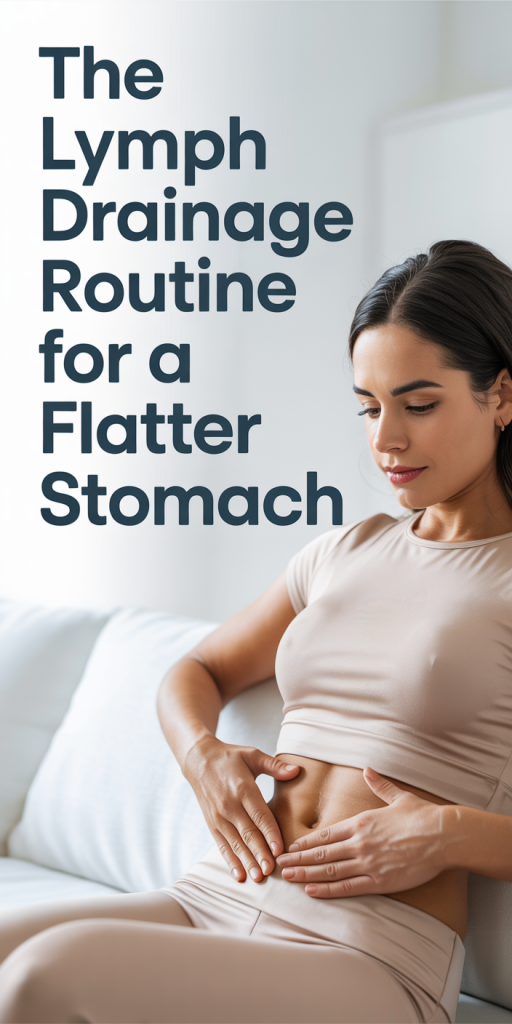
- Abdominal sweeps: On exhale, use flat palms to make light upward sweeps from the pubic bone toward the ribcage, following the natural slope of the abdomen. Use both hands stacked or side by side, keeping pressure light. Perform 8–12 sweeping strokes.\
- Coordination: The sweep should coincide with the exhalation: inhale to allow the abdomen to soften, exhale and gently sweep toward the upper abdomen and ribs.
Tips and cautions:
- Avoid deep, forced abdominal compression. The sweep should be skin movement only.\
- If we experience reflux or recent abdominal surgery discomfort, use smaller sweeps and consult a provider.\
- This step is particularly effective after meals when the diaphragm has been engaged during digestion and helps ease that immediate postprandial fullness.
Step 3: Clockwise Abdominal Massage To Encourage Intestinal And Lymph Flow
Why clockwise: The large intestine follows a general clockwise path across the abdomen. Gentle clockwise massage supports intestinal motility, helps move gas and contents through the colon, and coordinates with superficial lymphatic drainage patterns.
Execution:
- Hand shape: Use relaxed fingertips or the flat of the palm. Keep pressure superficial, think “skin glide” not deep kneading.\
- Path: Start in the right lower quadrant (near the ileocecal region), move up the right flank toward the ribcage, across the upper abdomen from right to left, then down the left flank toward the left lower quadrant, a full clockwise circuit.\
- Tempo: Make each sweep about 2–3 seconds, applying 8–12 complete clockwise circles. We can do smaller or larger circles depending on abdominal size, but maintain a consistent rhythm.\
- Combine with breathing: Inhale as we prepare the circle, exhale and complete the sweep, this enhances lymph and digestive motion.
Tips and cautions:
- If we have known bowel obstructions, severe IBS flare, or unexplained abdominal pain, we’ll skip this massage and seek medical attention.\
- For people with scar tissue (cesarean, laparoscopy), use extra light-touch over scars and consider scar‑mobilization techniques from a therapist if needed.\
- This step helps reduce trapped gas and can create a noticeable sensation of release within a few repetitions. It’s a practical bridge between lymphatic flow and digestive comfort.
Step 4: Lateral Flank And Hip Drainage To Move Fluid Toward Major Nodes
Why we do lateral work: Fluid in the lower abdomen and pelvic area often drains toward the inguinal (groin) nodes and lateral trunk pathways. Working the flanks and hip crease helps redirect fluid from the central belly toward these receptive basins.
Execution:
- Position: Keep lying on our back with knees bent. Expose the lateral flank area from the lower ribs down to the iliac crest (hip bone).\
- Flank strokes: Place the palms over the lower rib margin on each side and perform long, gentle downward strokes from the ribs toward the hip crease. Each stroke should last 2–3 seconds: repeat 8–12 times per side.\
- Hip crease drainage: With fingertips, make light, sweeping strokes along the inguinal crease, moving fluid medially toward the groin nodes. Repeat 8–12 times.\
- Lateral thigh sweep (optional): If comfortable, we can include light strokes from the lateral thigh up toward the groin to assist drainage from the pelvic region.
Tips and cautions:
- Avoid deep pressure over the lower abdomen: keep focus on superficial layers.\
- If we have inguinal hernias or recent groin surgery, avoid direct pressure and consult a clinician before including hip crease work.\
- These strokes are excellent for people who carry postpartum swelling or who notice increased fullness after long periods of standing or sitting.
Step 5: Final Effleurage, Hydration Cue, And Simple Follow‑Up Moves
Why finish here: A closing sweep (effleurage) moves any residual superficial fluid toward the central nodes we cleared at the start and signals the body to maintain the flow. Pairing the finish with a hydration cue supports renal clearance of mobilized fluid.
Execution:
- Effleurage sweep: Use both hands stacked or side by side and perform light, long strokes from the center of the abdomen (around the navel) outward toward the flanks, then upward toward the ribs and neck. Make 6–8 slow, continuous sweeps, always moving lymph toward the node basins we opened earlier.\
- Neck recheck: Repeat the supraclavicular gentle strokes from Step 1 for 4–6 repetitions to ensure central pathways remain clear.\
- Hydration cue: Drink 8–12 ounces (250–350 mL) of water within 15–30 minutes after the routine to support kidney clearance of shifted fluid. A squeeze of lemon or a pinch of salt is optional to aid electrolyte balance if we’ve been sweating or exercising.\
- Follow‑up moves: If we want a short mobility add‑on, roll to the side and perform 6 cat–cow breaths (spinal flexion and extension) or do a 2‑minute walk to engage the muscle pump and consolidate the drainage.
Tips and cautions:
- Keep finish strokes light: the goal is directional guidance, not pressure.\
- If we notice increased urination after the routine, that’s expected, it indicates mobilized fluid is being processed. If we feel dizzy or overly drained, reduce frequency and consult a provider.\
- Consistency matters: short daily sessions are more effective than occasional long treatments.
Conclusion
Lymphatic drainage is a gentle, practical tool we can add to our daily routine to reduce transient belly bloat, improve abdominal comfort, and complement nutrition and exercise efforts. The 10‑minute sequence above prioritizes central clearance, coordinated breathing, and directional strokes that move fluid toward the major node basins. When practiced consistently, and with appropriate modifications for health conditions, many people notice reduced puffiness and a softer abdomen within days to weeks.
We should treat lymph drainage as one piece of a larger strategy: good hydration, balanced sodium intake, regular movement, and attention to gut health all amplify the benefits. If we’re unsure about whether this routine is right for our specific health situation, we’ll consult a healthcare professional or a certified lymphedema/MLD therapist. With gentle hands, mindful breathing, and daily repetition, we can help our bodies look and feel lighter, and that slim, flatter feeling often arrives sooner than we expect.