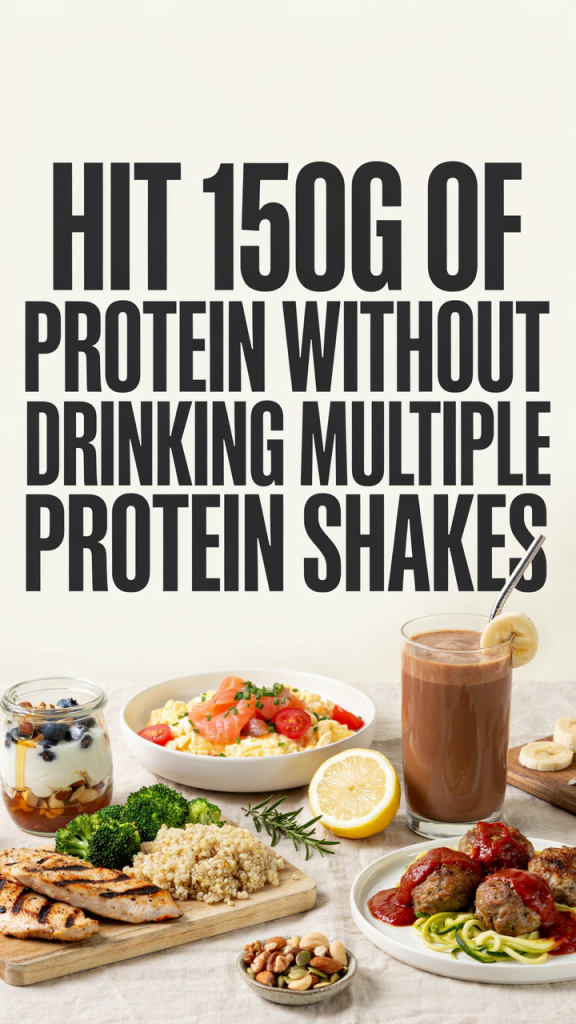
How to Hit 150g of Protein Without Drinking Multiple Protein Shakes
Introduction
Many people aiming for 150 grams of protein per day default to “drink more shakes.” While protein powders are convenient and useful, you don’t need to lean on multiple shakes to reach your target. With smart meal composition, protein-dense whole foods, and a little planning, you can hit — and sustain — 150 g of protein using satisfying meals and snacks that are better for fullness, variety, and long-term adherence.
This guide is for lifters, busy professionals, and anyone who wants dependable strategies to reach 150 g/day without turning into a human blender. You’ll find clear principles, a sample day with exact protein math, practical swaps, and seven easy recipes and snack ideas that make high-protein eating enjoyable and realistic.
Why hitting 150 g of protein matters
- Muscle maintenance and growth: Adequate protein supports muscle repair and growth, especially if you lift weights or train frequently.
- Satiety and appetite control: Protein is the most satisfying macronutrient calorie for calorie, helping with weight management.
- Metabolic and health benefits: Higher-protein diets can help preserve resting energy expenditure during calorie loss and support immune function.
- Aging and recovery: Older adults and athletes benefit from higher absolute protein intakes to prevent muscle loss and improve recovery.
How to think about 150 g relative to you
150 g is a useful target for many active adults — for example, a 75–100 kg person aiming for ~1.6–2.0 g/kg. If you’re lighter/heavier or have different goals, scale accordingly. The practical takeaway is this: aim to evenly distribute protein across meals (3–5 servings a day) and choose high-protein foods for each eating occasion.
Protein math basics
- Eggs (large): ~6 g each
- Cooked chicken breast (3 oz / 85 g): ~26 g
- Cooked salmon (4 oz / 113 g): ~23–25 g
- Nonfat Greek yogurt (1 cup): ~20 g
- Cottage cheese (1 cup, low-fat): ~25 g
- Cooked lentils (1/2 cup): ~9 g
- Cooked quinoa (1/2 cup): ~4 g
- Tofu (100 g): ~8–12 g depending on type
Principles to hit 150 g without multiple shakes
- Spread protein evenly across meals
- Aim for ~25–40 g per main meal and 10–20 g per snack. This prevents over-relying on single heavy sources.
- Favor whole-food, high-protein ingredients
- Eggs, Greek yogurt, cottage cheese, lean meats, fish, legumes, tofu, tempeh, seitan, edamame, dairy, and high-protein grains (e.g., quinoa) are your go-tos.
- Use small protein boosts
- Add cottage cheese, Greek yogurt, canned tuna, edamame, or a sprinkle of seeds/nuts to salads, soups, and bowls.
- Combine protein sources strategically
- Plant proteins can be paired (grains + legumes) to improve amino acid balance; you don’t need perfect combining at every meal, but mixing helps.
- Meal prep and portion control
- Cook larger portions of a high-protein base (chicken, turkey, lentils) so adding 4–6 oz per meal becomes trivial.
High-protein foods to keep stocked (with approximate protein per common serving)
- Chicken breast, cooked (4 oz / 113 g): 26–30 g
- Salmon, cooked (5 oz / 142 g): 28–34 g
- Lean turkey breast (4 oz): ~24–26 g
- Ground beef, 90% lean (4 oz): ~22–24 g
- Canned tuna (1 can / 165 g drained): ~40 g (varies by can size)
- Eggs (1 large): 6 g
- Nonfat Greek yogurt (1 cup): ~20 g
- Cottage cheese, low-fat (1 cup): ~25 g
- Lentils, cooked (1/2 cup): ~9 g
- Quinoa, cooked (1/2 cup): ~4 g
- Tofu, firm (100 g): ~8–12 g
- Tempeh (100 g): ~19 g
- Edamame, shelled (1/2 cup): ~9 g
- Seitan (100 g): ~25 g
- Almonds (1/4 cup): ~8 g
- Peanut butter (2 tbsp): ~8 g
- Whey/casein/powder (1 scoop): ~20–25 g — optional for convenience
Sample day: How to reach ~150 g without multiple shakes
Below is a complete daily plan using whole foods. Each recipe/meal is listed with an ingredients list and step-by-step instructions so you can put it together quickly. Protein totals are approximate and rounded.
Total protein for the day: ~151 g
Breakfast — Savory Cottage-Cheese Omelette (approx. 26 g protein)
Ingredients
– 3 large eggs
– 1/4 cup low-fat cottage cheese
– 1/2 cup fresh spinach, chopped
– 1/4 cup diced mushrooms
– 1 tbsp olive oil or butter
– Salt and pepper to taste
– Optional: 1 tbsp crumbled feta
Instructions
1. Crack the eggs into a bowl, add cottage cheese, whisk until combined and slightly frothy; season with salt and pepper.
2. Heat the oil or butter in a nonstick skillet over medium heat; sauté mushrooms until tender (about 3–4 minutes).
3. Add spinach and cook until wilted (about 1 minute).
4. Pour the egg mixture over the vegetables and cook gently, lifting edges to let uncooked egg flow underneath.
5. When mostly set, fold the omelette in half and slide onto a plate; sprinkle feta if using.
6. Serve immediately.
Mid-morning snack — Greek Yogurt Parfait (approx. 22 g protein)
Ingredients
– 3/4 cup nonfat Greek yogurt
– 1 tbsp almond butter
– 1 tbsp chia or hemp seeds
– 1/2 cup mixed berries
– 1 tbsp crushed nuts or granola (optional)
Instructions
1. Spoon Greek yogurt into a bowl or jar.
2. Stir in almond butter until slightly swirled through.
3. Top with chia/hemp seeds and berries.
4. Add crushed nuts or granola for crunch if desired.
5. Enjoy immediately or take it on the go.
Lunch — Turkey & Quinoa Power Bowl (approx. 30 g protein)
Ingredients
– 4 oz (about 115 g) cooked turkey breast, diced or shredded
– 1/2 cup cooked quinoa
– 1 cup mixed salad greens or baby spinach
– 1/2 cup cherry tomatoes, halved
– 1/4 cup cucumber, diced
– 1 tbsp olive oil
– 1 tbsp lemon juice or balsamic vinegar
– Salt, pepper, and herbs to taste
Instructions
1. If the turkey and quinoa are not cooked, cook quinoa per package directions and heat or cook turkey as preferred.
2. Place greens in a bowl and add quinoa, turkey, tomatoes, and cucumber.
3. Drizzle olive oil and lemon juice; season with salt, pepper, and herbs.
4. Toss everything to combine and serve.
Afternoon snack — Cottage Cheese + Pineapple (approx. 25 g protein)
Ingredients
– 1 cup low-fat cottage cheese
– 1/2 cup pineapple chunks (fresh or canned in juice, drained)
– 1 tbsp chopped walnuts or almonds (optional)
– Dash of cinnamon (optional)
Instructions
1. Spoon cottage cheese into a bowl.
2. Top with pineapple chunks and nuts.
3. Sprinkle with cinnamon if desired.
4. Mix and enjoy.
Dinner — Pan-Seared Salmon with Lentils and Greens (approx. 39 g protein)
Ingredients
– 5 oz (about 140 g) salmon fillet
– 1/2 cup cooked lentils
– 2 cups mixed steamed greens (kale, Swiss chard, or spinach)
– 1 tbsp olive oil
– 1 clove garlic, minced
– Lemon wedge, salt, and pepper
Instructions
1. Heat 1/2 tbsp olive oil in a skillet over medium-high heat.
2. Season salmon with salt and pepper. Place salmon skin-side down in the hot skillet and cook 4–5 minutes, then flip and cook another 3–4 minutes until cooked through; squeeze lemon over top.
3. In a separate pan, heat the remaining olive oil and sauté garlic briefly. Add lentils and greens; cook until greens are wilted and heated through. Season to taste.
4. Plate salmon over lentils and greens; serve.
Evening mini-snack — Shelled Edamame (approx. 9 g protein)
Ingredients
– 1/2 cup shelled edamame (steamed)
– Pinch of sea salt
– Optional squeeze of lemon
Instructions
1. Steam edamame according to package directions (about 3–4 minutes).
2. Sprinkle with salt and lemon if desired.
3. Eat warm or chilled.
Protein totals (approximate)
– Breakfast omelette: 26 g
– Greek yogurt parfait: 22 g
– Turkey & quinoa bowl: 30 g
– Cottage cheese snack: 25 g
– Salmon dinner: 39 g
– Edamame snack: 9 g
Total: ~151 g
Additional high-protein meal and snack ideas (each presented as a recipe)
To meet different preferences and keep variety, below are more ready-to-use meal ideas. Each includes ingredients and step-by-step instructions.
Recipe — Tuna & Chickpea Salad (quick lunch) (approx. 35–40 g protein with a standard can of tuna)
Ingredients
– 1 can (5–6 oz drained) tuna in water, drained
– 1/2 cup cooked chickpeas (or canned, rinsed)
– 1/4 cup diced red onion
– 1/2 cup chopped cucumber
– 1 tbsp olive oil
– 1 tbsp lemon juice
– Salt, pepper, and parsley to taste
Instructions
1. Place tuna and chickpeas in a bowl and break tuna into flakes.
2. Add diced onion and cucumber.
3. Drizzle olive oil and lemon juice; season with salt, pepper, and parsley.
4. Toss gently and serve over greens, in a wrap, or with high-protein crackers.
Recipe — Tofu & Edamame Stir-Fry (vegetarian dinner) (approx. 30–35 g protein)
Ingredients
– 200 g firm tofu, cubed (~14–18 g protein)
– 1/2 cup shelled edamame (~9 g)
– 1 cup broccoli florets
– 1/2 bell pepper, sliced
– 1 tbsp soy sauce or tamari
– 1 tsp sesame oil
– 1 clove garlic, minced
– 1 tsp grated ginger
– 1 tsp oil for cooking
– Optional: 1/2 cup cooked brown rice or cauliflower rice
Instructions
1. Heat oil in a large pan or wok over medium-high heat.
2. Add tofu cubes and fry until golden on all sides; remove and set aside.
3. In the same pan, stir-fry broccoli and bell pepper for 3–4 minutes, then add garlic and ginger.
4. Add edamame and tofu back to the pan, pour soy sauce and sesame oil, and toss to coat.
5. Serve over rice or cauliflower rice if desired.
Recipe — High-Protein Overnight Oats (grab-and-go breakfast) (approx. 25 g protein)
Ingredients
– 1/2 cup rolled oats
– 3/4 cup unsweetened soy milk (or milk of choice)
– 1/2 cup nonfat Greek yogurt
– 1 tbsp chia seeds
– 1 tbsp peanut butter
– 1/2 cup berries or sliced banana
Instructions
1. Combine oats, milk, Greek yogurt, chia seeds, and peanut butter in a jar or container.
2. Stir thoroughly and top with fruit.
3. Refrigerate overnight. Stir and eat cold or warmed in the morning.
Practical swaps and protein-boosting add-ins
- Swap cereal for Greek yogurt or cottage cheese to double protein.
- Add an egg or two to fried rice, stir-fries, and soups.
- Keep canned tuna, salmon, and sardines on hand—fast and high-protein.
- Include a dairy or soy-based snack before or after workouts for recovery.
- Add seeds or nuts (hemp, chia, almonds) to smoothies, oats, or salads for 3–8 g extra protein.
Meal prep strategies to simplify hitting the target
- Batch-cook lean proteins (chicken, turkey, salmon) and legumes (lentils, chickpeas) on Sundays.
- Pre-portion cottage cheese, Greek yogurt, and boiled eggs for snacks.
- Pack pre-made power bowls or salads in containers for quick lunches.
- Use durable options like canned fish and frozen edamame for reliable protein staples.
Troubleshooting common challenges
- If you’re not hungry enough for big meals: increase protein density rather than volume (e.g., add an extra egg, use cottage cheese, or increase lean meat portion).
- If you’re vegetarian/vegan: emphasize tempeh, seitan, tofu, legumes, edamame, and whole-food protein powders (pea, soy).
- Time constraints: keep grab-and-go options like Greek yogurt, cottage cheese, canned tuna, or hard-boiled eggs available.
- Budget constraints: dried lentils, canned fish, eggs, and dairy are cost-effective protein sources.
Final tips — balance, consistency, and enjoyment
- Aim for variety to ensure a full spectrum of amino acids and micronutrients.
- Prioritize whole-food protein sources; use a single daily shake only as convenience, not the main strategy.
- Track your intake briefly for a week to see patterns and adjust meal sizes.
- Make protein meals that you enjoy — consistency beats perfection.
Conclusion
Hitting 150 g of protein a day without relying on multiple protein shakes is entirely doable with smart food choices, distribution, and a few easy recipes. Focus on whole-food proteins — eggs, dairy, lean meats, fish, legumes, soy, and high-protein grains — and spread intake across meals and snacks. Use these recipes and meal ideas as a template: batch-cook the protein, plan simple add-ins, and keep high-protein snacks handy. With a little planning and variety, you’ll meet your protein goals in a way that’s sustainable, satisfying, and enjoyable. Go ahead and pick one recipe to try this week — small, consistent steps get you to 150 g without a single extra shake.