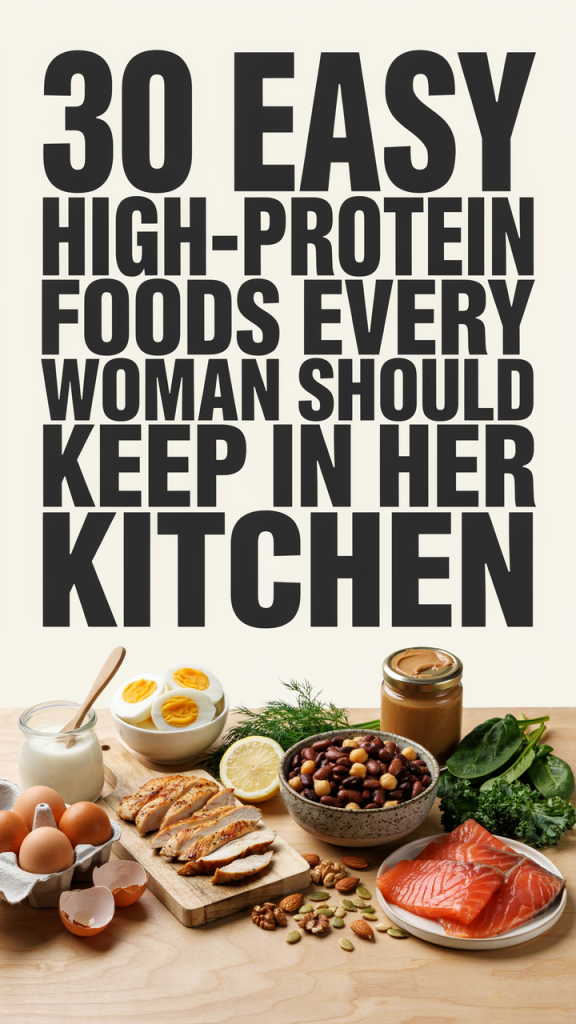
30 Easy High-Protein Foods Every Woman Should Keep in Her Kitchen
Protein is one of the most important nutrients for women at every stage of life. It supports muscle and bone health, helps maintain energy and satiety, aids recovery after workouts, and plays a vital role in hormone production and immune function. Whether you’re balancing a busy career, raising kids, or trying to get stronger and healthier, keeping a variety of easy, protein-rich foods in your kitchen makes it simple to build nourishing meals and snacks.
This article lists 30 easy, versatile high-protein foods every woman should consider stocking. For many of the items you’ll also find quick serving ideas or simple recipes you can make in minutes. Use this as a practical shopping guide and meal-inspiration resource so healthy, protein-rich eating feels effortless and enjoyable.
Why protein matters for women
Protein delivers the amino acids your body needs to build and repair tissue. For women, adequate protein helps:
– Preserve lean muscle mass during weight loss or aging
– Support bone health and reduce fracture risk
– Keep you feeling full longer, which helps with appetite control
– Support healthy hair, skin, and nails
– Optimize recovery after exercise
Protein needs vary, but building meals around protein makes it easier to meet your daily target.
How much protein do you need?
General guidelines:
– Sedentary adult women: about 0.8 grams per kilogram of body weight (~46–56 g/day for many women)
– Active women or those strength-training: 1.2–2.0 g/kg body weight (can be 75–120 g/day depending on goals)
– For weight loss or muscle gain, aim for the higher end of the range
Think in terms of 20–30 grams of protein per main meal and 10–20 grams for snacks to distribute intake evenly across the day.
30 Easy High-Protein Foods
Below are 30 accessible, kitchen-friendly protein sources. Each entry includes quick uses and approximate protein per common serving. Where useful, you’ll find simple recipes with ingredients and step-by-step instructions.
1. Eggs — ~6 g protein per large egg
Versatile, inexpensive, and quick to prepare. Hard-boiled eggs, omelets, or scrambled with veggies make fast, balanced meals.
Recipe: Spinach & Feta Scrambled Eggs
- Ingredients:
- 2 large eggs
- A handful fresh spinach
- 1 tbsp crumbled feta
- Salt and pepper
- 1 tsp olive oil or butter
- Instructions:
- Whisk eggs with a pinch of salt and pepper.
- Heat oil in a nonstick pan over medium heat; add spinach until wilted.
- Pour eggs into pan and gently scramble until mostly set.
- Sprinkle feta, fold, and serve.
2. Greek Yogurt — ~15–20 g protein per cup (plain, nonfat)
Thicker and higher in protein than regular yogurt. Great for breakfasts, smoothies, and dips.
Recipe: Berry Greek Yogurt Parfait
- Ingredients:
- 1 cup plain Greek yogurt
- 1/2 cup mixed berries
- 2 tbsp granola or nuts
- 1 tsp honey (optional)
- Instructions:
- Layer half the yogurt in a bowl or jar.
- Add berries and half the granola.
- Repeat layers and drizzle honey if using.
3. Chicken Breast (cooked) — ~25–30 g per 3 oz
Lean, adaptable, and an excellent base for salads, wraps, or bowls.
Quick use: Grill a batch on Sunday for weekday lunches.
4. Canned Tuna — ~20–25 g per 3 oz (drained)
Shelf-stable and perfect for salads, sandwiches, or quick pasta dishes.
Recipe: Simple Tuna Salad Jar
- Ingredients:
- 1 can tuna (in water), drained
- 1 tbsp plain yogurt or mayo
- 1 tbsp diced red onion
- 1 tbsp chopped celery
- Lemon juice, salt, pepper
- Instructions:
- Mix tuna with yogurt or mayo, onion, and celery.
- Season with lemon juice, salt, and pepper to taste.
- Serve over greens, in a wrap, or with whole-grain crackers.
5. Salmon (cooked) — ~22 g per 3 oz
Rich in protein and omega-3s. Baked, grilled, or pan-seared, salmon is quick and nutrient-dense.
Quick tip: Bake a fillet at 400°F for 12–15 minutes with lemon and herbs.
6. Lean Ground Turkey — ~22 g per 3 oz cooked
A versatile substitute for beef; use in tacos, meatballs, or quick skillet dinners.
7. Cottage Cheese — ~12–14 g per 1/2 cup
Creamy and high in casein protein, which digests slowly — great before bed or as a snack.
Recipe: Cottage Cheese & Fruit Bowl
- Ingredients:
- 1/2 cup cottage cheese
- 1/2 cup sliced peaches or pineapple
- 1 tbsp chopped nuts
- Cinnamon (optional)
- Instructions:
- Spoon cottage cheese into a bowl.
- Top with fruit and nuts.
- Sprinkle cinnamon if desired and enjoy.
8. Tofu — ~8–10 g per 3 oz (firm)
Plant-based and very adaptable — stir-fries, scrambles, and bakes soak up flavors.
9. Tempeh — ~15–20 g per 3 oz
Fermented soy with a nutty flavor and firm texture. Grill, slice for sandwiches, or crumble into bowls.
10. Lentils (cooked) — ~17–18 g per cup
An affordable plant protein high in fiber. Use in soups, salads, or grain bowls.
Recipe: Quick Lentil Soup (2 servings)
- Ingredients:
- 1 cup cooked lentils (or 3/4 cup dried lentils rinsed)
- 1 small carrot, diced
- 1/2 onion, chopped
- 2 cups low-sodium vegetable broth
- 1 tsp olive oil, salt, pepper, 1/2 tsp cumin
- Instructions:
- Sauté onion and carrot in olive oil until softened.
- Add lentils, broth, and cumin; bring to a simmer.
- Cook 10–15 minutes (longer if using dried lentils) until flavors meld.
- Season and serve warm.
11. Black Beans — ~14–15 g per cup cooked
Good for tacos, salads, and burrito bowls — rich in fiber and plant protein.
12. Chickpeas (Garbanzo Beans) — ~14–15 g per cup cooked
Make hummus, roast for snacks, or toss into salads.
Recipe: Simple Roasted Chickpeas
- Ingredients:
- 1 can chickpeas, drained and rinsed
- 1 tbsp olive oil
- 1/2 tsp paprika, salt
- Instructions:
- Preheat oven to 400°F and pat chickpeas dry.
- Toss with oil and spices on a baking sheet.
- Roast 20–30 minutes until crispy, shaking halfway through.
13. Quinoa (cooked) — ~8 g per cup
A complete plant-based protein and excellent rice alternative for bowls and salads.
14. Edamame (soybeans) — ~17 g per cup (shelled)
Fantastic steamed as a snack, tossed into salads, or blended into dips.
15. Almonds — ~6 g per ounce (about 23 almonds)
Portable and nutrient-dense. Use as an on-the-go snack or sliced on yogurt.
16. Peanut Butter — ~8 g per 2 tbsp
A tasty protein boost for toast, smoothies, or fruit. Choose natural varieties with minimal added sugar and salt.
17. Hemp Seeds — ~10 g per 3 tbsp
Tiny but mighty — add to smoothies, yogurt, or salads for protein and healthy fats.
18. Chia Seeds — ~4–5 g per 2 tbsp
High in fiber and a decent source of protein; great for puddings and smoothie-thickening.
19. Pumpkin Seeds — ~8–9 g per ounce
Crunchy, mineral-rich, and a satisfying snack or salad topper.
20. Whey or Plant Protein Powder — ~15–25 g per scoop
Convenient for smoothies, oats, or baking to boost protein quickly.
Recipe: Green Protein Smoothie
- Ingredients:
- 1 scoop vanilla protein powder
- 1 cup spinach
- 1/2 banana
- 1 cup unsweetened almond milk (or dairy milk)
- Ice if desired
- Instructions:
- Combine all ingredients in a blender.
- Blend until smooth and creamy.
- Adjust thickness with more liquid or ice and serve.
21. Shrimp — ~20 g per 3 oz cooked
Quick-cooking seafood that works in salads, stir-fries, and pastas.
22. Sardines — ~20–25 g per can (varies)
Canned and shelf-stable — an excellent source of protein and omega-3s. Add to toast or salads.
23. Pork Tenderloin — ~22 g per 3 oz cooked
Lean and flavorful — roast or grill for hearty dinners.
24. Seitan — ~21 g per 3 oz (varies)
A wheat-based vegetarian protein with a meat-like texture (not suitable for gluten-free diets). Pan-fry or use in stir-fries.
25. Skyr — ~15–20 g per cup
An Icelandic cultured dairy similar to Greek yogurt — thick and high in protein.
26. Beef (lean cuts) — ~22–26 g per 3 oz cooked
An excellent source of complete protein, B vitamins, and iron. Choose lean cuts and enjoy in moderation.
27. Peas (green) — ~8 g per cup cooked
Often overlooked, peas add plant protein to soups, stews, and sides.
28. Mozzarella (part-skim) — ~7–8 g per ounce
Great melted on toast, in salads, or as a quick protein snack with fruit or crackers.
29. Protein-Rich Whole Grains (teff, farro, buckwheat) — ~6–10 g per cooked cup (varies)
Swapping in higher-protein grains boosts your meal’s protein content while adding fiber and nutrients.
30. Greek-Style Cottage Cheese (higher-protein versions) — ~15–20 g per cup
If you’re looking for an even higher-protein dairy option, some brands offer thicker, Greek-style cottage cheese that’s great for savory bowls or desserts.
How to build protein-focused meals quickly
- Aim for a palm-sized portion (20–30 g) of protein at main meals.
- Combine protein with fiber-rich carbs (whole grains, veggies) and healthy fats for balance.
- Batch-cook staples like baked chicken, boiled eggs, or roasted chickpeas for easy assembly.
- Keep canned and frozen options on hand (tuna, salmon, edamame, lentils) for quick meals.
Smart snack ideas using the list
- Greek yogurt + hemp seeds + berries (20+ g)
- Cottage cheese with fruit and nuts (15–20 g)
- Apple with 2 tbsp peanut butter (8–10 g)
- Edamame with a sprinkle of chili powder (15–17 g)
- Handful of almonds + a small piece of cheese (10–15 g)
Meal-prep ideas and combos
- Grain bowl: quinoa + roasted veggies + grilled chicken + a drizzle of tahini.
- Salad: mixed greens + chickpeas + avocado + feta + a hard-boiled egg.
- Wrap: whole-grain tortilla + turkey + hummus + spinach + sliced peppers.
- Breakfast jar: oats soaked in milk + scoop of protein powder + chia seeds + berries.
Storing and buying tips
- Buy frozen fish and vegetables to reduce waste and keep protein options handy.
- Rotate canned proteins (tuna, salmon) and dried legumes for budget-friendly variety.
- Check labels for added sugars or sodium in flavored yogurts and processed proteins.
- If you’re plant-based, mix complementary proteins throughout the day (grains + legumes, seeds + nuts) to ensure a range of amino acids.
Special considerations
- If you have kidney disease or other medical conditions, consult your healthcare provider about protein targets.
- For vegetarians and vegans, focus on combining multiple plant proteins to meet needs and consider fortified foods or a B12 supplement if necessary.
- Older women may benefit from higher protein intake to preserve muscle mass — discuss specific targets with your clinician.
Final tips for lifelong habits
- Keep a few high-protein “go-to” foods you love in the kitchen so reaching for them becomes automatic.
- Experiment with simple seasonings and sauces to keep repeat meals exciting.
- Prioritize protein at breakfast — it helps with energy and appetite control throughout the day.
- Think variety: rotate animal and plant proteins to maximize nutrients and keep meals interesting.
Conclusion
Filling your kitchen with a mix of these 30 easy, high-protein foods makes it simple to create satisfying, nourishing meals that support strength, energy, and long-term health. You don’t need to be perfect — small swaps (Greek yogurt for cereal, chicken for rice, or a scoop of protein powder in a smoothie) add up. Start by choosing a handful of favorites from this list, stock them each week, and build simple recipes around them. With a few protein-rich staples on hand, you’ll save time, reduce stress, and feel empowered to nourish your body every day. Keep experimenting, enjoy the process, and celebrate the small wins — your future self will thank you.