
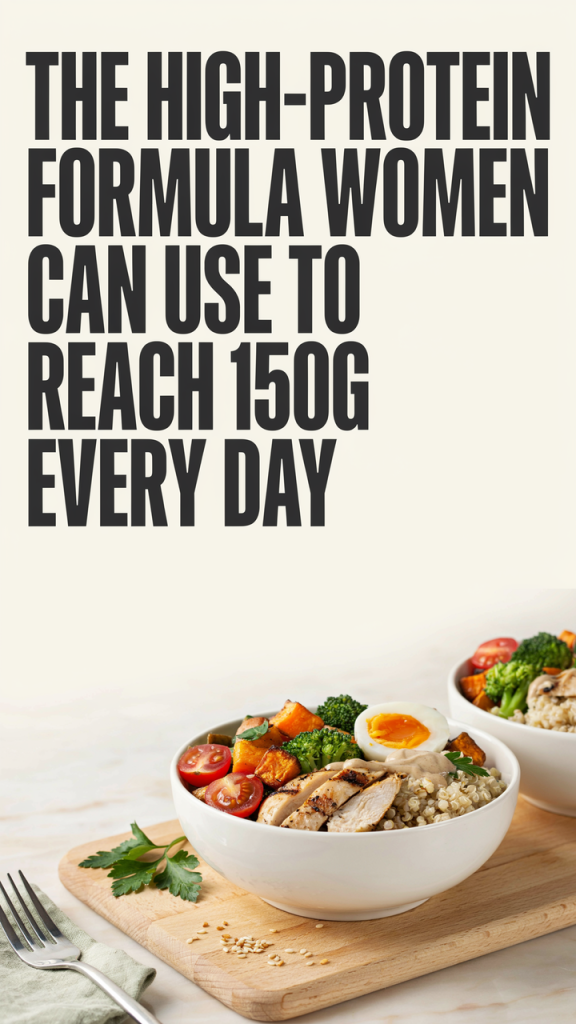
The High-Protein Formula Women Can Use to Reach 150g Every Day
Many women aim to increase protein intake for better body composition, stronger bones, improved recovery from workouts, or simply to feel fuller and more energetic. Hitting 150 grams of protein a day can feel intimidating at first—but with an easy-to-follow formula, smart food choices, and a few tasty recipes, it becomes realistic, sustainable, and even enjoyable. This guide gives you the how, the why, and the what: a clear formula for distributing protein across the day, meal and snack ideas, recipes you can make right away, and practical tips to help you reach 150 g without stress.
Why 150 grams? Is that right for you?
150 grams of protein per day is above the typical Recommended Dietary Allowance (RDA) for most women, which is about 0.8 g/kg. However, many women pursuing strength training, body recomposition, recovery from injury, or older adults concerned with preserving muscle mass benefit from higher intake—usually in the range of 1.2–2.2 g/kg or more depending on activity level and goals. For a woman weighing 68 kg (150 lb), 1.8–2.2 g/kg equates roughly to 120–150 g/day. So 150 g is a practical target for active women aiming for muscle growth, improved recovery, and higher satiety.
Before making major changes to your diet, consult your healthcare provider—especially if you have kidney disease, are pregnant, breastfeeding, or have other medical concerns.
The High-Protein Formula: How to Get to 150g (The Math)
The simplest way to reach 150 g is to distribute protein evenly across 4–6 feedings. The key formula:
- Aim for 25–40 g protein per main meal (breakfast, lunch, dinner).
- Add 15–30 g from 1–3 snacks or shakes during the day.
- Use concentrated sources (lean meats, fish, eggs, dairy, protein powders) to avoid overeating volume.
Sample distribution:
– Breakfast: 30 g
– Morning snack: 20 g
– Lunch: 40 g
– Afternoon snack: 20 g
– Dinner: 40 g
= 150 g
You can also do 3 meals x 40–50 g = 120–150 g plus a shake or snack with 20–30 g. Choose what fits your appetite and schedule.
Protein portions to memorize (quick-reference)
Familiarize yourself with these common servings and their approximate protein content:
– 3 oz (85 g) chicken breast: 25–27 g
– 4 oz (115 g) salmon: 25 g
– 3 oz lean beef: 22–24 g
– 1 cup cooked lentils: 18 g
– 1 large egg: 6–7 g
– 1 cup Greek yogurt (nonfat): 17–20 g
– 1 scoop whey isolate (around 25–30 g): 20–30 g
– 1/2 cup cottage cheese: 12–14 g
– 2 tbsp peanut butter: 7–8 g
– 1 cup cooked quinoa: 8 g
– 1 cup edamame (shelled): 17 g
Use these building blocks to construct meals that hit your per-meal target.
Meal timing and distribution (what works best)
- Spread protein through the day: muscle protein synthesis responds better to multiple protein-containing meals rather than a single huge meal.
- Per-meal target: Aim for 25–40 g protein every 3–4 hours. This supports recovery and keeps appetite steady.
- Pre/post-workout: A protein-rich snack (20–30 g) within 1–2 hours of training helps recovery.
- Before bed: Consider a casein-rich snack (e.g., cottage cheese, Greek yogurt, or a slow-release protein) of 15–30 g to reduce overnight muscle breakdown in those training intensely.
Daily blueprint you can use (practical templates)
Template A — 5-meal day (easy to follow)
– Breakfast: 30 g protein
– Snack: 20 g protein
– Lunch: 40 g protein
– Snack: 20 g protein
– Dinner: 40 g protein
Template B — 3 meals + shake
– Breakfast: 40 g
– Lunch: 50 g
– Post-workout shake: 20–30 g
– Dinner: 30–40 g
Adjust portion sizes and protein sources to meet taste, budget, and schedule.
High-protein recipes and meal ideas
Below are simple, high-protein recipes and ideas you can use to reach 150 g. Each recipe includes ingredients and step-by-step instructions. Protein amounts per serving are approximate and based on typical ingredient sizes.
1) Berry Protein Smoothie (approx. 30 g protein)
Ingredients:
– 1 scoop whey or plant protein powder (20–25 g protein)
– 1 cup unsweetened almond milk (or milk of choice)
– 1/2 cup Greek yogurt (approx. 10 g)
– 1/2 cup frozen mixed berries
– 1 tbsp chia seeds or 1/2 banana for texture
Instructions:
1. Add protein powder, milk, Greek yogurt, berries, and chia (or banana) to a blender.
2. Blend until smooth and creamy.
3. Taste and adjust sweetness with a little honey or stevia if desired.
4. Pour into a glass and drink within an hour for best texture and post-workout use.
2) Egg White Omelet with Turkey & Spinach (approx. 35 g protein)
Ingredients:
– 6 egg whites + 1 whole egg (about 20 g protein)
– 3 oz (85 g) sliced turkey breast or turkey sausage (15 g protein)
– 1 cup fresh spinach
– 1/4 cup diced onions and peppers
– 1 tsp olive oil or cooking spray
– Salt and pepper to taste
Instructions:
1. Heat oil in a nonstick pan over medium heat; sauté onions and peppers until soft.
2. Add turkey to warm through.
3. Pour in egg whites and whole egg, reduce heat to medium-low.
4. Add spinach on top; season with salt and pepper.
5. Cook until eggs set, fold omelet and slide onto a plate.
3) Greek Yogurt Parfait with Nuts & Seeds (approx. 25 g protein)
Ingredients:
– 1 1/2 cups plain Greek yogurt (20–25 g protein depending on brand)
– 2 tbsp sliced almonds or walnuts (4–6 g protein)
– 1 tbsp hemp seeds or chia seeds (3–4 g protein)
– 1/2 cup mixed berries
– 1 tsp honey or cinnamon (optional)
Instructions:
1. Spoon Greek yogurt into a bowl or jar.
2. Top with berries, nuts, and seeds.
3. Drizzle honey or sprinkle cinnamon if desired.
4. Stir and eat; great for breakfast or a snack.
4) Chicken Quinoa Bowl with Veggies (approx. 40 g protein)
Ingredients:
– 5 oz (140 g) cooked chicken breast (about 40 g protein if lean)
– 1 cup cooked quinoa (8 g protein)
– 1 cup mixed roasted vegetables (broccoli, bell pepper, zucchini)
– 1 tbsp olive oil
– 1 tbsp lemon juice, salt, pepper, and herbs
Instructions:
1. Cook quinoa according to package instructions.
2. Roast vegetables with olive oil, salt, and pepper at 425°F (220°C) for 15–20 minutes.
3. Slice cooked chicken breast.
4. Combine quinoa, roasted veggies, and chicken in a bowl; drizzle lemon and sprinkle herbs.
5. Mix and serve warm or cold.
5) Salmon & Lentil Salad (approx. 40 g protein)
Ingredients:
– 4 oz (115 g) cooked salmon fillet (25 g protein)
– 1/2–1 cup cooked lentils (9–18 g protein depending on amount)
– 2 cups mixed greens
– 1/4 cup cherry tomatoes, cucumber slices
– 1 tbsp olive oil + 1 tbsp balsamic vinegar
– Salt, pepper, fresh parsley
Instructions:
1. Cook lentils until tender; drain.
2. Flake the cooked salmon into chunks.
3. Toss mixed greens with tomatoes and cucumber.
4. Add lentils and salmon on top.
5. Drizzle oil and vinegar, season with salt, pepper, and parsley.
6) Cottage Cheese Snack Jar (approx. 25 g protein)
Ingredients:
– 1 cup low-fat cottage cheese (24–28 g protein)
– 1/4 cup pineapple chunks or sliced cucumber
– 2 tbsp chopped nuts or seeds (optional)
– Sprinkle cinnamon or black pepper for savory option
Instructions:
1. Spoon cottage cheese into a jar or bowl.
2. Top with fruit for sweet or cucumber and pepper for savory.
3. Add nuts or seeds for extra crunch and protein.
4. Eat chilled as a snack or mini-meal.
7) Protein Pancakes (approx. 30–35 g protein for the batch)
Ingredients:
– 1 scoop whey or plant protein powder (20–25 g)
– 1/2 cup oats (5–6 g)
– 2 egg whites + 1 whole egg (about 13–15 g)
– 1/2 banana (optional)
– 1/4 tsp baking powder, cinnamon, and cooking spray
Instructions:
1. Blend oats, protein powder, eggs, banana, and baking powder until batter forms.
2. Heat a nonstick pan with cooking spray over medium heat.
3. Pour batter to form pancakes; cook 2–3 minutes per side until golden.
4. Stack, top with Greek yogurt, berries, or nut butter.
Quick high-protein snack ideas (fast wins)
- Greek yogurt (1 cup) + a handful of nuts
- Cottage cheese + fruit or cucumber
- Protein shake (20–30 g protein)
- Hard-boiled eggs (2 eggs = ~12–14 g)
- Beef jerky or turkey jerky (1 oz = ~9–11 g)
- Edamame (1 cup = ~17 g)
- Tuna pouch (3 oz = 20 g) on rice cakes
- Smoked salmon (3 oz = ~15–18 g) on whole-grain toast
- Hummus + grilled chicken strips
- Protein bar (choose one with minimal added sugar, 15–25 g protein)
- Roasted chickpeas (1 cup = ~15 g)
- Peanut butter + apple slices (2 tbsp = 7–8 g; pair with Greek yogurt for more)
Mix and match snacks during the day to hit your per-meal protein targets.
Supplements and concentrated protein sources
- Whey isolate: fast-digesting, high bioavailability, great post-workout (20–30 g per scoop).
- Casein: slow-digesting, helpful at night (20–30 g).
- Plant protein blends: pea + rice combinations can approach a full amino acid profile (20–30 g).
- Collagen peptides: support joint and skin health but low in tryptophan; pair with complete proteins (10–15 g).
- Protein bars: convenient but read labels for added sugar and protein content.
Supplements can fill gaps but prioritize whole foods for micronutrients and satiety.
Practical tips for hitting 150 g consistently
- Plan your protein at breakfast: if you skip protein in the morning, it’s harder to catch up later.
- Batch-cook protein: roast chicken, bake salmon, or make a big pot of lentils for the week.
- Use protein powders to boost smoothies, oatmeal, and yogurt without added volume.
- Keep portable proteins on hand: jerky, tuna pouches, single-serve Greek yogurt, or pre-portioned cottage cheese.
- Pair protein with fiber and healthy fats to avoid blood sugar spikes and increase fullness.
- Track for awareness: use an app or a simple notebook for a week to see where your current intake sits and adjust.
- Hydrate more: higher protein diets require adequate water for metabolism and kidney load.
- Increase gradually: raise protein intake over weeks to let appetite and digestion adapt.
Is 150 g safe? What about kidneys and bone health?
For healthy individuals, high-protein diets up to 2–2.5 g/kg are generally safe. Concerns about kidney damage come mainly from those with pre-existing kidney disease. If you have reduced kidney function, consult your doctor before increasing protein intake. High-protein diets do not harm bone health when calcium intake is adequate; in fact, protein can support bone strength when paired with calcium and resistance exercise.
Sample full day (150 g) — menu with protein counts
- Breakfast: Egg white omelet with turkey & spinach — 35 g
- Morning Snack: Greek yogurt parfait (1 cup + seeds) — 25 g
- Lunch: Chicken quinoa bowl (5 oz chicken + 1 cup quinoa) — 40 g
- Afternoon Snack: Cottage cheese snack jar — 25 g
- Dinner: Salmon & lentil salad — 25 g
Total: 150 g
Swap meals and snacks from the recipes above based on preferences; use the protein portion chart to adjust.
Shopping list to support a 150 g protein day-to-day
- Chicken breasts, turkey breast, lean beef
- Salmon, canned tuna, or other fish
- Eggs and egg whites (liquid egg whites)
- Greek yogurt (plain), cottage cheese
- Whey or plant protein powder
- Lentils, chickpeas, quinoa
- Nuts, seeds, nut butter
- Edamame, tofu
- Vegetables for bowls and salads
- Berries, bananas, apples for snacks and smoothies
Buy in bulk where possible and freeze cooked proteins in portions.
Common mistakes and how to avoid them
- Mistake: Relying only on protein bars/shakes. Solution: Make whole-food proteins the foundation; use powders to supplement.
- Mistake: Eating too much processed protein with added sugars and sodium. Solution: Read labels—choose minimally processed options.
- Mistake: Not adjusting calories or fat for goals. Solution: If weight loss is the goal, keep an eye on overall calories; high protein helps, but calories still matter.
- Mistake: Going too fast. Solution: Increase protein gradually, prioritize hydration, and ensure fiber intake to support digestion.
Final checklist: daily protein success plan
- Plan your day: pick a template and map meals/snacks.
- Start with a protein-rich breakfast.
- Use concentrated sources (meat, dairy, powders) to hit per-meal targets.
- Keep portable protein handy for snacks and workouts.
- Batch cook and portion to remove friction.
- Track for at least one week to ensure consistency.
Conclusion: Make 150 g your new normal—one practical step at a time
Hitting 150 grams of protein a day as a woman is completely achievable and can deliver real benefits for strength, recovery, appetite control, and body composition. Use the high-protein formula—distribute protein across meals, rely on dense protein sources, use supplements strategically, and choose recipes you enjoy. Start small: add one high-protein breakfast, pack a protein-rich snack, and swap a carb-heavy lunch for a protein-focused bowl. Over time these small changes become habits, and 150 g moves from a goal into a sustainable lifestyle. Be consistent, listen to your body, stay hydrated, and consult a healthcare professional if you have medical concerns. You’ve got this—fuel your goals with protein and make progress every day.

