
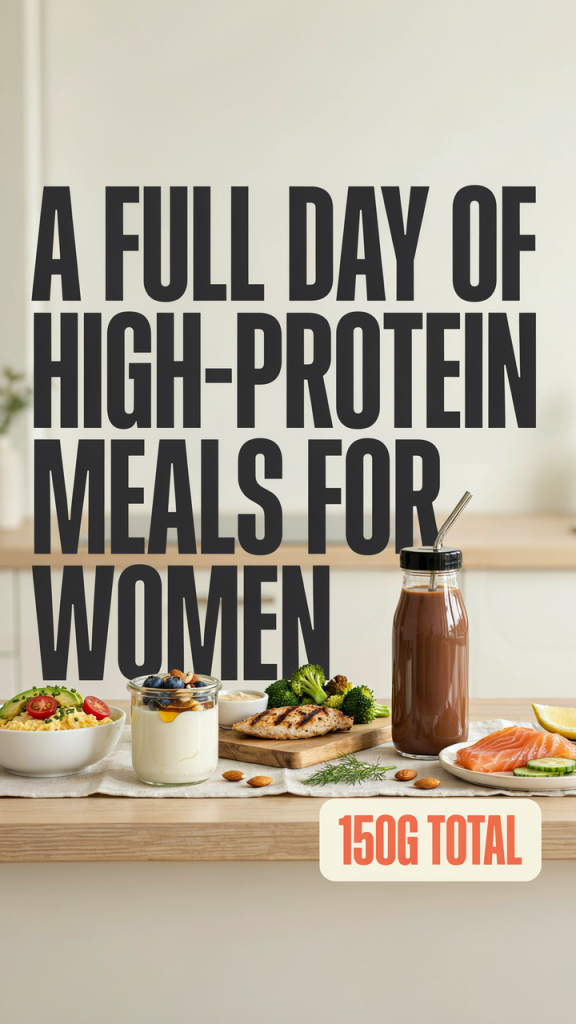
A Full Day of High-Protein Meals for Women (150g Total)
High-protein days are a powerful tool for women who want to build or maintain lean muscle, support recovery, improve satiety, stabilize blood sugar, and feel energized from morning to night. This guide gives you a full day of meals that add up to 150 grams of protein — balanced, practical, and delicious. Each recipe includes ingredients and step-by-step instructions, plus the protein math so you can see exactly how the totals add up.
Whether you’re strength training, aiming to lose weight while preserving muscle, or simply trying to increase daily protein intake without relying on a single supplement, this plan is flexible and user-friendly. Read on for breakfast, two snacks, lunch, and dinner — all with clear protein counts and swap suggestions.
Table of contents
– Why 150 grams of protein?
– How this plan is structured
– Breakfast: Protein Greek Yogurt & Whey Smoothie Bowl (41 g)
– Mid-morning snack: Hard-Boiled Egg + String Cheese (12 g)
– Lunch: Chicken, Quinoa & Chickpea Salad (41 g)
– Afternoon snack: Cottage Cheese + Seeds (12 g)
– Dinner: Pan-Seared Salmon (6 oz) — Simple & Flavorful (44 g)
– Meal prep tips, swaps, and FAQs
– Conclusion
Why 150 grams of protein?
150 g of protein is a higher-than-average target for many women, but appropriate for:
– Active women who resistance-train and want to maximize muscle protein synthesis.
– Women in calorie-restricted phases who want to preserve lean mass.
– Those who prefer higher protein for improved satiety and blood sugar control.
This plan distributes protein throughout the day to optimize absorption and provide steady energy, rather than concentrating most protein in a single meal.
How this plan is structured
- Total protein for the day: 150 g
- Meals: Breakfast, 2 snacks, Lunch, Dinner
- Each recipe below lists ingredients and numbered instructions (as requested), plus protein per ingredient and the meal total.
- Swap ideas and prep tips follow the recipes to make this plan practical for busy days.
Breakfast: Protein Greek Yogurt & Whey Smoothie Bowl (41 g)
A creamy, satisfying smoothie bowl that doubles as breakfast protein power. The combination of Greek yogurt and whey gives a quick hit of high-quality protein plus probiotics and texture.
Ingredients
– 1 scoop whey protein powder — 24 g protein
– 3/4 cup plain nonfat Greek yogurt (≈170 g) — 17 g protein
– 1/2 cup mixed berries (fresh or frozen) — ~0 g protein
– 1/4 cup water or unsweetened almond milk (adjust to desired thickness)
– Optional toppings: 1 tbsp chopped nuts or seeds, a few extra berries (minimal added protein)
Instructions
1. Add the whey powder, Greek yogurt, berries, and liquid to a blender.
2. Blend until smooth and creamy. Adjust thickness with more liquid if needed.
3. Pour into a bowl and add optional toppings for crunch and flavor.
4. Enjoy immediately for a creamy, protein-dense breakfast.
Protein math for breakfast
– Whey protein powder: 24 g
– 3/4 cup plain nonfat Greek yogurt: 17 g
– Breakfast total: 41 g protein
Why this works
– Fast to prepare, portable if needed, and packs high-quality whey (fast-absorbing) and Greek yogurt (slower-digesting), which together help sustain amino acid delivery.
Mid-morning snack: Hard-Boiled Egg + String Cheese (12 g)
Simple, portable, and quick — this snack balances convenience with protein density.
Ingredients
– 1 large hard-boiled egg — 6 g protein
– 1 low-moisture part-skim mozzarella string cheese — 6 g protein
Instructions
1. If not already prepared, hard-boil the egg: place the egg in a pot, cover with water, bring to a boil, then remove from heat, cover, and let sit 9–12 minutes; transfer to an ice bath before peeling.
2. Peel the egg and pair with the string cheese for a quick snack.
3. Eat at your desk or on the go.
Protein math for snack
– Hard-boiled egg: 6 g
– String cheese: 6 g
– Snack total: 12 g protein
Why this works
– No prep required if you batch-cook eggs. The combo provides both quick and sustained amino acids and a hit of healthy fats from the cheese.
Lunch: Chicken, Quinoa & Chickpea Salad (41 g)
A hearty salad that’s meal-prep friendly and keeps protein high without being heavy.
Ingredients
– 4.5 oz (cooked weight) grilled chicken breast — ~30 g protein
– 1/2 cup cooked quinoa — ~4 g protein
– 1/2 cup canned chickpeas, rinsed and drained — ~7 g protein
– 2 cups mixed salad greens — 0 g protein (negligible)
– 1/4 cup cucumber and cherry tomatoes, halved — 0 g protein
– Dressing: 1 tbsp olive oil + 1 tbsp lemon juice + salt & pepper (optional)
Instructions
1. If not using pre-cooked chicken, grill or pan-sear the chicken breast until internal temperature reaches 165°F (74°C), then rest and slice.
2. Assemble the greens, quinoa, chickpeas, cucumber, and tomatoes in a bowl.
3. Top with sliced chicken.
4. Whisk olive oil, lemon juice, salt, and pepper, then drizzle over the salad.
5. Toss and eat, or pack for lunch to take with you.
Protein math for lunch
– 4.5 oz cooked chicken breast: ~30 g
– 1/2 cup cooked quinoa: ~4 g
– 1/2 cup chickpeas: ~7 g
– Lunch total: 41 g protein
Why this works
– Lean chicken provides a concentrated source of complete protein, while quinoa and chickpeas add plant-based protein plus fiber and minerals for balance.
Afternoon snack: Cottage Cheese + Chia & Hemp Seeds (12 g)
Cottage cheese is a protein superstar — creamy, versatile, and perfect as a snack to bridge lunch and dinner.
Ingredients
– 1/4 cup low-fat cottage cheese — ~7 g protein
– 1 tbsp chia seeds — ~2 g protein
– 1 tbsp hemp seeds — ~3 g protein
– Optional: a few cucumber slices or a sprinkle of cinnamon for flavor
Instructions
1. Spoon cottage cheese into a small bowl or container.
2. Top with chia seeds and hemp seeds.
3. Stir or eat as-is. Enjoy with cucumber slices or apple if you want a crunchy pairing.
Protein math for snack
– 1/4 cup low-fat cottage cheese: ~7 g
– 1 tbsp chia seeds: ~2 g
– 1 tbsp hemp seeds: ~3 g
– Snack total: 12 g protein
Why this works
– A mix of dairy and seeds provides a full amino acid spectrum plus healthy fats and fiber. This snack is especially good if you want something low-calorie but high in protein.
Dinner: Pan-Seared Salmon (6 oz) — Simple & Flavorful (44 g)
Salmon brings protein, omega-3 fats, and a savory finish for the day. Keep sides simple and protein-rich for a satisfying evening meal.
Ingredients
– 6 oz salmon fillet, skin-on or skinless — ~44 g protein
– 1–2 tsp olive oil or avocado oil (for searing)
– Salt and pepper, to taste
– Optional: 1 tbsp lemon juice, fresh herbs (dill, parsley), and a side of steamed nonstarchy veggies (broccoli, asparagus)
Instructions
1. Pat the salmon dry and season with salt and pepper.
2. Heat a skillet over medium-high heat and add the oil.
3. When the oil is hot, place salmon skin-side down (if skin-on). Sear for 4–5 minutes without moving to get a crisp crust.
4. Flip and cook for another 3–4 minutes, or until the internal temperature reaches about 125–130°F for medium (cook longer if you prefer well-done).
5. Remove from heat, squeeze lemon juice and sprinkle herbs if desired, and serve with steamed veggies or a side salad.
Protein math for dinner
– 6 oz cooked salmon: ~44 g protein
– Dinner total: 44 g protein
Why this works
– Fatty fish like salmon supply abundant high-quality protein plus anti-inflammatory omega-3 fatty acids. This meal is an excellent nightly anchor for muscle recovery.
Daily protein summary
– Breakfast: 41 g
– Mid-morning snack: 12 g
– Lunch: 41 g
– Afternoon snack: 12 g
– Dinner: 44 g
– Grand total: 150 g protein
Meal prep tips and swap options
Make it easy
– Batch-cook proteins: Grill or bake several chicken breasts and hard-boil eggs at the start of the week.
– Portion into containers: Prepare salad bases and grains separately, add proteins day-of to keep textures fresh.
– Keep convenience proteins on hand: canned tuna, cooked rotisserie chicken, or pre-portioned Greek yogurt and cottage cheese cups.
Easy swaps (protein-forward)
– Replace salmon with 6 oz cooked tuna steak or 6 oz lean steak — keep protein similar.
– Swap whey protein scoop for plant-based protein powder; note plant scoops often contain ~20 g protein — adjust quantities to hit targets.
– Substitute grilled chicken with 5 oz boneless turkey breast (similar protein).
– For a vegetarian day:
– Breakfast: Greek yogurt + pea-protein powder (adjust to 24 g protein per scoop).
– Lunch: Replace chicken with 1 cup cooked lentils (~18 g) + 1 cup tempeh (~30 g) split across meals.
– Snacks: add edamame (1 cup shelled = ~17 g).
Snack swap ideas (approx. protein)
– 1 small tuna pouch (3 oz) — ~20 g
– 1 protein bar — typically 15–20 g (choose low-sugar options)
– 1/2 cup edamame shelled — ~9 g
Hydration and fiber
– Drink water throughout the day. High-protein diets require adequate fluids to support digestion and kidney function.
– Add a variety of vegetables and a moderate amount of whole grains or legumes to ensure you get fiber, vitamins, and minerals.
Adjusting calories without reducing protein
– If you need fewer calories but still want 150 g protein, favor leaner protein cuts (chicken breast, white fish), reduce added oils, and choose lower-fat dairy.
Special considerations
– If you have kidney disease or other medical conditions, check with your healthcare professional before dramatically increasing protein.
– Pregnant or breastfeeding women should consult their provider for personalized protein targets.
Frequently asked questions
Q: Is 150 g of protein too much for women?
A: It depends on body size, activity level, and goals. For many active women or those aiming to preserve or build muscle, 150 g is reasonable. For smaller, less active women, the target may be higher than necessary. Use body weight and activity as guides and consult a professional if unsure.
Q: Can I hit 150 g without using protein powder?
A: Yes — it requires more whole-food portions (chicken, fish, dairy, beans, tofu, tempeh, eggs), but it’s doable. Protein powder is a convenient tool, not a requirement.
Q: Will I gain weight if I eat this much protein?
A: Protein itself is not fattening; weight changes depend on total calories relative to your energy needs. High-protein diets often support lean mass retention and can help with appetite control.
Conclusion
This full-day plan shows you how to reach 150 grams of protein through balanced, tasty meals: a protein-packed smoothie bowl for breakfast, a simple mid-morning snack, a satisfying chicken-quinoa-chickpea salad for lunch, a creamy cottage cheese seed snack, and a hearty salmon dinner. Each recipe includes ingredient lists and numbered steps so you can cook with confidence.
If 150 g fits your goals, use this day as a template: swap proteins, scale portion sizes by appetite and activity, and batch-cook to make high-protein eating effortless. Small changes — like adding Greek yogurt, choosing lean meats, and including seeds — add up quickly toward that protein target. Stay consistent, hydrate, and adjust based on results and how you feel. You’ve got this.

