Best Breakfasts For Stable Blood Sugar And High Protein: A Practical 7-Day Plan (2026)
Breakfast sets the metabolic tone for the day: it influences hunger, energy, muscle maintenance, and, critically, blood sugar stability. For people managing diabetes or anyone who wants steady energy and better body composition, the right breakfast combines ample protein with low-glycemic carbohydrates, fiber, and healthy fats. In this guide we’ll explain why breakfast composition matters, which nutrients to prioritize, and give concrete, science-backed food choices. Then we’ll finish with a practical 7-day breakfast plan with macronutrient targets and sensible swaps so you can carry out this right away. Our goal is simple: help you eat mornings that keep blood glucose steady while delivering enough protein to support muscle and satiety.
Why The Right Breakfast Matters For Blood Sugar, Energy, And Muscle
What we eat first thing influences how our body responds for hours. After an overnight fast, breakfast causes the biggest early-day insulin and glucose changes: choosing high-glycemic, low-protein breakfasts (think sugary cereal or pastries) produces rapid spikes and crashes that leave us hungry and craving carbs later. Those glucose swings also stress beta-cell function over time, relevant for anyone at risk of type 2 diabetes.
Conversely, breakfasts focused on protein, fiber, and low-glycemic carbs blunt post-meal glucose rises, reduce appetite, and support lean mass. Protein stimulates insulin moderately while increasing glucagon and amino acid availability, this combination helps shuttle nutrients into muscle without excessive glucose excursions. Meanwhile, fiber and healthy fats slow gastric emptying, reducing the rate at which glucose enters the bloodstream.
Practical benefits: steadier energy, fewer mid-morning cravings, improved workout performance if we train in the morning, and better long-term metabolic health. So a breakfast strategy that balances protein with low-glycemic carbs and adequate fats helps both blood sugar control and muscle preservation.
Key Nutrients To Prioritize For Blood Sugar Control And Protein Intake
We want a breakfast built around three core nutrient priorities: protein (sufficient amount and quality), low-glycemic carbohydrates plus fiber, and healthy fats. Each plays a distinct role, protein for satiety and muscle, fiber/carbs for blood glucose moderation, and fats for slowing digestion and increasing palatability.
Aim for whole-food sources whenever possible. Processing often strips fiber and adds hidden sugars that sabotage blood sugar. Whole eggs, Greek yogurt, cottage cheese, legumes, and lean meats are protein-rich choices. For carbs, prioritize intact grains (steel-cut oats, barley), fruits with fiber (berries, apples), and vegetables. For fats, choose nuts, seeds, avocado, and olive oil.
We’ll cover exact targets below, but keeping these nutrient priorities in mind helps when shopping, prepping, and assembling meals that are both satisfying and blood-sugar friendly.
Protein Types, How Much To Aim For, And Timing
Protein quality matters for muscle maintenance and glucose responses. Complete proteins (eggs, dairy, meat, soy, whey) provide all essential amino acids and are efficient at stimulating muscle protein synthesis. Plant proteins (lentils, chickpeas, quinoa) are excellent too but pair complementary sources when possible.
How much at breakfast? For most adults aiming to preserve or build muscle, 20–35 grams of protein at breakfast is a practical target. Older adults may benefit from the upper end (30–40 g) due to anabolic resistance. Research shows that protein doses in this range increase satiety and help moderate postprandial glycemia by supporting insulin and glucagon dynamics.
Timing: though total daily protein matters most, distributing protein evenly across meals (roughly 20–35 g across breakfast, lunch, dinner) yields better muscle protein synthesis and appetite control. If we exercise in the morning, including 20–30 g protein before or after training helps recovery and maintains blood sugar during and after activity.
Carbohydrates, Fiber, And Healthy Fats: Quality Over Quantity
Carbohydrates aren’t the enemy, choice and portion are. We should favor low-glycemic carbs that are high in fiber so glucose enters the bloodstream gradually. Examples: steel-cut oats, rolled oats (in moderation), barley, beans, lentils, non-starchy vegetables, and whole fruits (especially berries).
Fiber targets: aim for at least 5–10 grams of fiber at breakfast when possible. A fiber-rich breakfast reduces postprandial glucose and prolongs satiety, berries, chia seeds, oats, and legumes are helpful. Soluble fiber (oats, psyllium, legumes) is particularly effective at blunting glucose spikes.
Healthy fats (10–20 g at breakfast) like nuts, seeds, avocado, and olive oil slow gastric emptying and improve palatability without causing sharp glucose changes. We should limit refined sugars and highly processed spreads or sweetened yogurts, as they negate the glycemic benefits of other components. In short: prioritize fiber and fats alongside protein to manage blood sugar and hunger.
Best High-Protein, Low-Glycemic Breakfast Foods To Build Your Plate
Here’s a practical list of breakfast staples that pair high-quality protein with low glycemic impact. We can mix and match these to create balanced meals.
- Eggs: versatile, nutrient-dense: 6 g protein per egg. Combine with veggies for fiber.
- Greek yogurt (plain, full-fat or low-fat): ~15–20 g protein per cup. Choose unsweetened varieties and add berries or nuts.
- Cottage cheese: 14–20 g per half-cup: pairs well with fruit or seeds.
- Whey or plant-based protein powder: convenient to hit protein targets, use in smoothies with fiber sources.
- Tofu or tempeh: 10–20 g per serving: excellent for savory breakfasts.
- Legumes: chickpeas or lentils in a breakfast bowl provide protein and fiber.
- Steel-cut oats or rolled oats: moderate glycemic load when paired with protein/fat, add seeds and nut butter.
- Whole fruit (berries, apples, pears): fiber-rich carb choices.
- Nuts and seeds (chia, flax, hemp, almonds): add healthy fats, fiber, and a little protein.
- Smoked salmon or lean turkey: high-quality protein with minimal carbs.
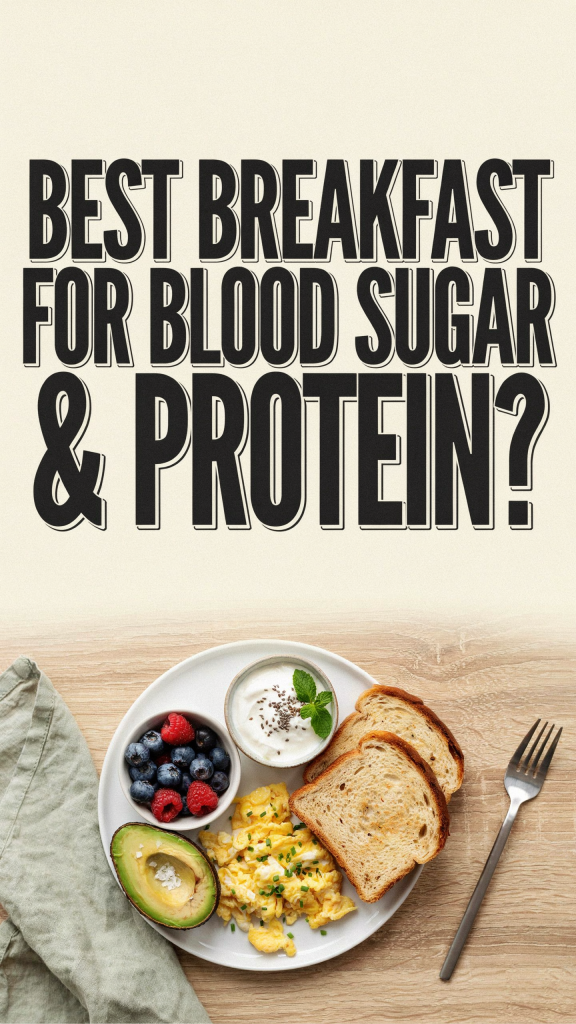
Combining any of the above, for example, Greek yogurt + chia + berries, or eggs + spinach + avocado, creates a breakfast that supports stable blood sugar and adequate protein.
Quick, Balanced Breakfast Ideas Backed By Nutrition Science
We’ll prioritize meals that are fast, scalable, and evidence-based: protein 20–35 g, fiber 5–10 g, healthy fats 10–20 g, and low added sugars. These templates work for weight management, glycemic control, and performance.
- Savory bowl: 2 eggs (or 1 cup egg whites) + 1/2 cup black beans + sautéed spinach + 1 tbsp olive oil. Protein ~28 g: fiber ~8 g.
- Greek yogurt parfait: 1 cup plain Greek yogurt + 1/2 cup mixed berries + 2 tbsp chia seeds + 1 tbsp chopped almonds. Protein ~25 g: fiber ~10 g.
- Protein smoothie: 1 scoop whey or pea protein + 1 cup unsweetened almond milk + 1/2 cup frozen berries + 1 tbsp peanut butter + 1 tbsp ground flax. Protein ~25–30 g: fiber ~7–9 g.
- Tofu scramble: 150 g firm tofu + mixed bell peppers + 1/2 cup cooked quinoa + 1/4 avocado. Protein ~22–28 g: fiber ~6–8 g.
These combinations slow glucose absorption, boost satiety, and are rooted in studies showing combined protein-carbohydrate-fiber meals reduce post-meal glycemia compared to high-carb breakfasts. We recommended rotating these templates across the week to avoid monotony and ensure micronutrient variety.
Busy-Morning Grab-And-Go Options That Stabilize Blood Sugar
Busy mornings shouldn’t force us into sugary convenience foods. With modest prep, we can grab breakfasts that meet our macronutrient goals.
- Hard-boiled eggs (2) + small apple + 10 almonds: portable, protein ~14 g, fiber ~4 g.
- Greek yogurt cup (unsweetened) + 2 tbsp granola (low-sugar) + 1 tbsp nut butter: keep yogurt chilled: protein ~20 g.
- Protein bar (choose one with ≥15 g protein, ≤8–10 g sugar, and ≥5 g fiber): check ingredient lists, prefer whole-food bars.
- Overnight oats (prep night before): 1/2 cup rolled oats + 1 scoop protein + 1 tbsp chia + 1/2 cup berries. Store in mason jar and take on the run.
- Cottage cheese + sliced pear + cinnamon in a container: protein ~18 g: fiber ~4–5 g.
A small cooler bag or insulated lunchbox makes these options realistic. We’ll emphasize ingredient labels: avoid bars/yogurts with hidden sweeteners and watch portion sizes of dried fruits or high-sugar granola.
Easy Meal-Prep Recipes For Consistent Protein-Rich Mornings
Consistency is the secret sauce. If we prep a few components weekly, morning assembly is quick. Here are reliable meal-prep builds.
- Egg muffins (makes 8): whisk 8 eggs + 1 cup chopped vegetables + 1/2 cup cottage cheese: bake in muffin tin. Two muffins provide ~18–20 g protein.
- Greek yogurt jars: portion 1 cup yogurt into containers, add sealed baggies of toppings (nuts, berries, seeds) to mix in mornings.
- Batch overnight oats (5 jars): combine oats, protein powder, chia, and almond milk. Add fresh fruit in the morning.
- Mason jar salads with smoked salmon: layer greens, cooked quinoa, smoked salmon, chickpeas, and vinaigrette: shake before eating.
Prep tips: cook proteins on Sunday (eggs, turkey bacon, tofu), pre-portion nuts and seeds, and wash/portion fruit. Label containers with dates. With one hour of weekend prep we can have 5–7 breakfasts ready that hit our protein and fiber aims.
Sample 7-Day Breakfast Plan With Macronutrient Targets And Swaps
Below is a practical seven-day plan. Our macronutrient target per breakfast: protein 25–35 g, carbs 30–45 g (favoring low-glycemic), fiber 6–12 g, fats 12–20 g. We include swaps for preferences and blood-sugar needs.
Day 1: Greek yogurt parfait, 1 cup plain Greek yogurt, 1/2 cup berries, 2 tbsp chia, 1 tbsp almonds. Protein ~28 g: fiber ~11 g.
Swap: cottage cheese + sliced peach.
Day 2: Savory bowl, 2 eggs, 1/2 cup black beans, spinach, 1 tbsp olive oil. Protein ~28 g: fiber ~9 g.
Swap: turkey sausage + lentils.
Day 3: Protein smoothie, 1 scoop whey, 1 cup unsweetened milk, 1/2 cup berries, 1 tbsp peanut butter, 1 tbsp flax. Protein ~30 g: fiber ~7 g.
Swap: plant protein powder + oats for extra carbs.
Day 4: Tofu scramble, 150 g tofu, bell peppers, 1/2 cup cooked quinoa, 1/4 avocado. Protein ~26 g: fiber ~7 g.
Swap: tempeh crumble.
Day 5: Overnight oats, 1/2 cup oats, 1 scoop protein, 1 tbsp chia, 1/2 banana (small). Protein ~27 g: fiber ~8 g.
Swap: steel-cut oats (longer cook) or swap banana for berries to lower glycemic load.
Day 6: Smoked salmon plate, 3 oz salmon, 2 boiled eggs, cucumber, 1 slice whole-grain toast. Protein ~32 g: fiber ~4–6 g (add 1/2 cup berries to raise fiber).
Swap: canned tuna salad.
Day 7: Chickpea pancake (besan) with spinach and feta, 1 cup chickpea batter + veggies. Protein ~25–30 g: fiber ~8–10 g.
Swap: lentil fritters.
Adjust portions if glucose monitoring shows unexpected spikes. If postprandial glucose exceeds targets, reduce starchy carbs, increase fiber, or add 5–10 g more protein. For weight loss, smaller carb portions and slightly higher protein help with satiety. For morning exercisers, add 10–20 g carbs pre-workout and maintain protein afterward.
Conclusion
A breakfast that combines 20–35 grams of protein, low-glycemic carbohydrates, fiber, and healthy fats gives us the best chance at stable blood sugar, sustained energy, and preserved muscle. Small changes, swapping sugary cereals for Greek yogurt and berries, prepping egg muffins, or adding chia to overnight oats, make a big difference. Use the 7-day plan as a framework, customize it based on glucose readings and preferences, and we’ll find a sustainable routine. Start by picking two grab-and-go options and one meal-prep recipe this week, consistency beats perfection, and steady mornings add up to healthier days.